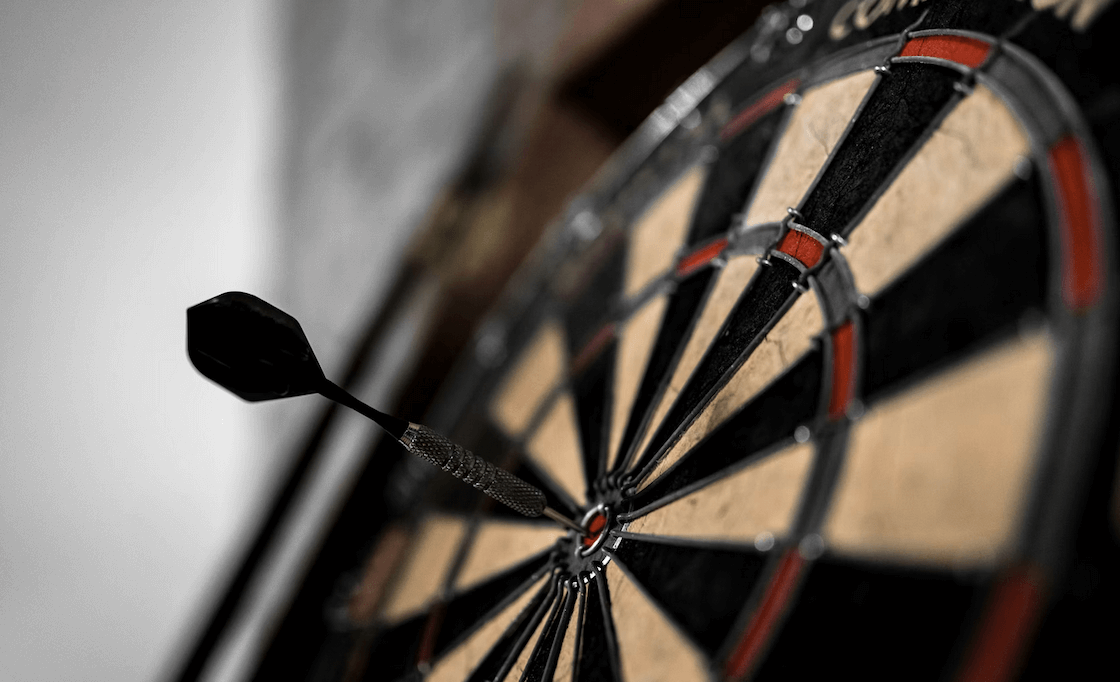
Best Dartboards for Your Man Cave
Last updated August 21, 2026 · By Zach Lane ·How we choose products · Affiliate disclosure

Ever had a night where everyone gathered in your den but left saying, "Nice place, wish it felt more... fun"? I have. Too many times I tried to host and ended up apologizing for the lopsided setup, the scuffed walls, or the cheap board that made every game feel amateur hour. Then one Friday I decided to take it seriously: proper board, decent darts, a wall saver, and a little tech to keep score. The difference was immediate. People lingered, and the stories afterwards started with that room.
Here is the part most roundups skip. A dartboard is only as good as the two measurements behind it. The bullseye sits 5 ft 8 in (1.73 m) off the floor, and the throw line sits 7 ft 9.25 in (2.37 m) back from the board face for steel tip, 8 ft (2.44 m) for soft-tip electronic play. Get those wrong and you own an expensive wall decoration that plays nothing like the game printed on the box. Get them right and a mid-range board beats a pricey one hung by eye, every night of the week.
I built my setup after learning a few things the hard way, mostly about the order to buy in. The target changes how the game feels and the darts change how you throw, but the wall protector and the way you light the thing are what stop a good night turning into a repair job or an argument. Below I walk you through what actually matters so your den becomes the place friends plan around instead of a fallback option.
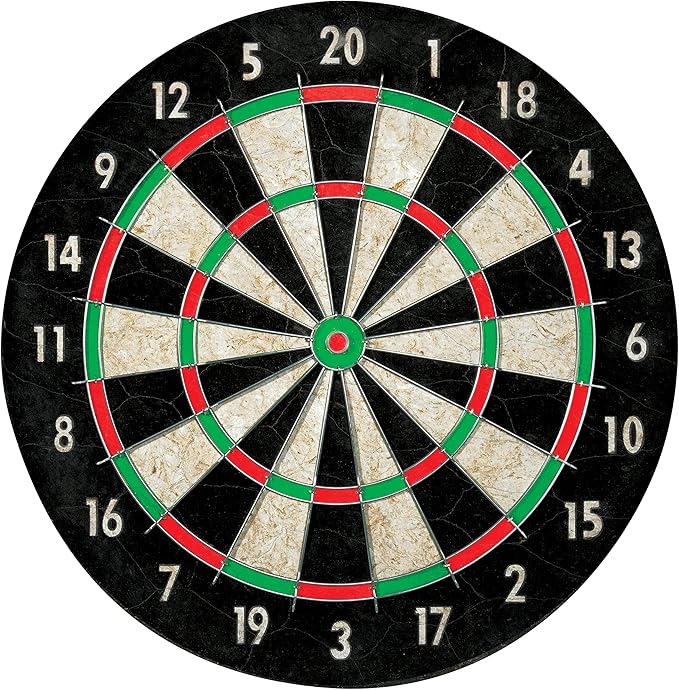
Franklin Sports Professional Dartboard - 18" Regulation Size

Franklin Sports Professional Dartboard - 18" Regulation Size
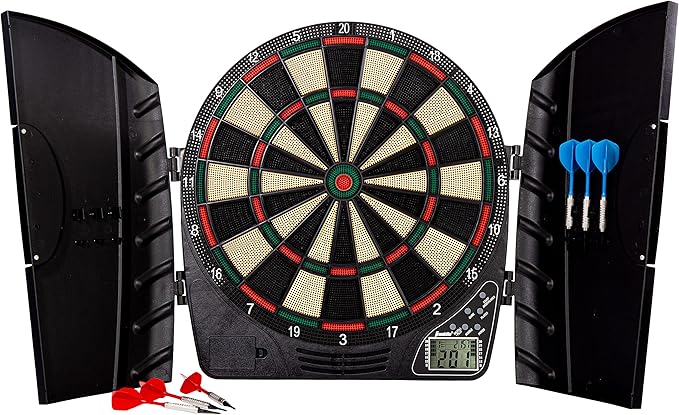
Franklin Sports Electronic Dart Board Sets - Soft Tip Electric Dartboard with Digital Scoreboard - (6) Darts Included

GRANBOARD Dash Blue - Electronic Dartboard

WINMAU Dart Board - Blade 6 Dartboard | Blade 6 Bundle - Professional PDC Darts Board with Official Tournament Specifications for Darts Enthusiasts
Our Top Pick
If you want tournament-style reliability and a board that will still look and play great after years, the WINMAU Blade 6 is where you land. It uses dense East African sisal and Winmau's Sixth Generation web to lock darts into the scoring zones. The ultra-thin 60 degree angled spider and Density Control wire cut bounce-outs, which means more clean trebles and fewer interrupted rounds. The Rota-Lock mount gets it perfectly centered fast, and the finish gives your den that authentic tournament vibe.
This is the pick for players who care about consistency. Serious hobbyists and weekend league folks notice the difference when darts sink predictably. At $89.00 it is the most expensive bristle board here and the only one I would call a lifetime purchase. That is the whole argument for it. The cheap boards get replaced and this one gets rotated.
My only practical notes: consider upgrading the metal bracket if you want extra peace of mind, and add a surround or backboard to protect the wall from the occasional miss. Otherwise it's a solid centerpiece that looks and plays like it belongs in a proper game room.
At a Glance
| Product | Best for | Rating | Why |
|---|---|---|---|
| WINMAU Dart Board - Blade 6 | Serious dart players | 4.8/5 | Thin angled spider wire cuts bounce-outs; the one lifetime board here. |
| Franklin Sports Professional Dartboard - 18" | Getting started cheaply | 4.6/5 | Regulation sisal and steel tips for under $30. |
| Franklin Sports Professional Dartboard - 18" (staple-free blade) | Most game rooms | 4.6/5 | Staple-free wire and a rotatable number ring for twice the entry price. |
| Franklin Sports Electronic Dart Board Set | Family and kid-safe play | 4.3/5 | Soft tips, a cabinet that shuts, and 65 game modes that score themselves. |
| GRANBOARD Dash Blue | App scoring and online play | 4.6/5 | Tracks averages and matches strangers through a phone or smart TV. |
Hang It Right: Height, Throw Line, and the Space You Need
Buy the board second. Measure first.
Every regulation figure traces back to two reference points, and neither one is the wall. The bullseye center goes 5 ft 8 in (1.73 m) off the finished floor, the same height for steel tip and soft tip under both WDF and PDC rules. The oche, the throw line your toe cannot cross, is measured along the floor from a plumb line dropped straight down from the face of the board. Not diagonally to the bullseye, and not from the wall behind the board. Those two errors account for most of the setups I have played on that felt subtly wrong without anyone being able to say why.
| Measurement | Steel tip | Soft-tip electronic |
|---|---|---|
| Bullseye height off the floor | 5 ft 8 in (1.73 m) | 5 ft 8 in (1.73 m) |
| Oche distance from the board face | 7 ft 9.25 in (2.37 m) | 8 ft (2.44 m) |
| Room depth, throw line plus backswing | about 9 ft 9 in | about 10 ft |
| Clear wall width | about 5 ft | about 5 ft |
| Practical minimum ceiling | 90 in | 90 in |
Depth is the figure that rules rooms out. You need the throw distance plus roughly 24 in behind the thrower for a backswing, which puts a steel-tip lane at close to 10 ft of uninterrupted floor. Cabinet boards add another 3–4 in of wall depth once the doors swing open, so take that off your wall width before you commit. The full room-by-room math, including how a dart lane collides with the arc of a pool cue, is in the dartboard room size guide.
The mistake I see most often is neither depth nor ceiling, though. It is circulation. The throwing lane is a no-cross zone for the length of a leg, so a board mounted where that lane cuts across a doorway, the path to the bar, or the route to the bathroom will irritate everyone in the room by the second game. The same goes for the couch, because a sofa that juts into the lane turns every leg into a game of excuse-me. Walk the room before you drill.
For the oche itself, WDF rules call for a raised marker 38 mm high and 610 mm long, tall enough that a player feels it underfoot without glancing down mid-throw. A strip of gaffer tape works fine for casual nights and costs nothing. It also lets people creep, which nobody minds right up until somebody's average starts mattering. If you ever see the throw line called a hockey in an old rulebook, that is not a typo. It is the word oche replaced.
The Heart of the Night: Picking the Right Target
If you only buy one thing for your den, make it the dartboard. A quality board does more than keep score. It affects sink, bounce-outs, and how satisfying the whole game feels. Think about how you and your friends play. Do you want low-maintenance social games or a practice board you can count on for meaningful improvement? Construction, material, mounting, and wiring matter. Some boards are made for steel tips and tight scoring, others for soft tips and electronic scoring. Match the board to the way you actually use the room, and the rest of the setup falls into place.
The first decision is the tip, and it is not reversible. Steel points punch straight through the plastic segments of an electronic board and wreck the sensors underneath, and there is no repair short of replacing the whole face. Soft tips on a sisal board fail the other direction: they are shaped for holes rather than fiber, so they barely register a score. Match the dart to the board before the first throw instead of after the first repair bill.
A regulation bristle board measures roughly 450 mm (about 17.75 in) across the face, with the playing surface out to the double ring at around 340 mm (13.4 in). Sisal is the reason a good board outlives everything else in this roundup. The fibers sit packed tight enough that a dart parts the strands instead of tearing them, so the face closes back up and a well-kept board shows almost no wear after thousands of throws. Wear does concentrate around the treble twenty, which is exactly what that rotating number ring is for. Turn it a few segments every couple of months and the damage spreads across the whole face instead of drilling one crater.
There is one thing bristle asks of you that plastic does not, and it is worth knowing before you buy. A dart that lands hard against a wire can bounce out and score nothing, which is maddening the first few times it happens and is the reason spider wire keeps getting thinner and more sharply angled with every generation of board. Somebody also has to keep score. An electronic board tallies for you and quietly forgives a borderline hit inside a segment, which is why it wins with kids and party crowds. What it gives up is the sound and the feel that steel-tip players turn up for.
The money bands are clear enough, and the boards below map onto them almost exactly. Entry-level boards sit under $30 and play like it, bouncing out shots that should have stuck. A mid-range regulation bristle board runs $60–$90, which is where I would put almost anyone reading this. A full electronic cabinet with a built-in scorer and dozens of game modes starts around $100 and climbs from there. If you are building the room in stages rather than all at once, the board is the piece worth overspending on first, and the phased budgeting guide covers how to sequence the rest.
Franklin Sports Professional Dartboard, 18 in
At $26.49 this Franklin Sports 18" board is the cheapest way into steel-tip darts that I would actually recommend, and it is a regulation board rather than a toy pretending to be one. The sisal face grips steel tips and heals from impacts, while the steel wire dividers and clear printed numbers give a familiar, pro feel. It takes weekly play without the face going soft, which is all most game rooms need it to do.
One important note: this board expects steel-tip darts. It's fairly heavy, so mount to a stud or use a backboard. Add a wall protector and rotate the board occasionally to even out wear. For a den that will actually see play, this one gives realistic performance without needing tournament-level maintenance.
Franklin Sports Professional Dartboard, Staple-Free Blade
This Franklin 18" regulation board carries the same name as the one above and costs $64.99 against $26.49, so the obvious question is what the extra money buys. Two things, both in the wire. Dense sisal bristles grip steel tips and reduce bounce-outs. The staple-free blade design tightens up scoring boundaries where the cheaper board uses ordinary staples, and the rotatable number ring stretches the board's life by letting you move the high-wear zones around.
Mounting was straightforward for me, but don't skimp on the backing. The included bracket and bumpers are fine, but mount into a stud or add a plywood backer for peace of mind. The board's weight gives it a solid presence in the room, and it looks great framed by LED accent lights if you want that bar look.
This is the board for a dedicated game space where nobody is chasing a league average. It gives you pro-style play without tournament money. Expect strong dart hold and an authentic surface, with the usual reminder to check wiring and the rim under heavy use.
Going Electronic: Soft-Tip Boards That Keep Their Own Score
Electronic boards win on one thing above all others, and it is not the game modes. It is that nobody has to do arithmetic at eleven at night after a few drinks. The board tallies the leg, announces it, and nobody argues with a machine the way they argue with the guy holding the chalk.
The trade is real, though. Plastic segments do not self-heal the way sisal does, the tips wear down and need replacing, and you are locked out of steel-tip darts forever. If you want the pub feel, buy bristle. If you want the room to be playable by a nine-year-old, a group of six, and a couple of people who have never thrown before, buy one of these.
Franklin Sports Electronic Dartboard
This Franklin Sports electronic board is the move-in-ready option at $34.99, scoring included. It handles 65 game variations, has sound effects, and the cabinet stores darts and accessories. The soft-tip darts and spare tips make it family-friendly and safer for busy spaces.
Expect the usual soft-tip caveats though: tips wear, darts and shafts can break under heavy play, and some units show display or sound quirks. It is the lowest-rated board in this roundup at 4.3, and the complaints cluster around the electronics rather than the playing surface. For casual play, family nights, or a garage setup, it's an entertaining centerpiece that reduces score disputes and gets people playing.
GRANBOARD Dash Blue
If your goal is to turn the den into a social hub with a tech edge, the GRANBOARD Dash Blue is the most capable board here and, at $149.00, the most expensive. It's an electronic board that talks to an app on phones and many smart TVs, so you can keep stats, track averages, and play online against friends or strangers. The Bluetooth connection is dependable, and it runs on two AA batteries, so you don't have to worry about hiding cords. Set it up, pair the device, and you'll be throwing in minutes.
What wins me over is the online play and the variety of game modes. It's perfect for casual nights or when you want to simulate a pub scoreboard on your TV. Downsides? Some users see segments come loose and tip performance varies depending on the darts you use. The included darts are forgettable, so plan to swap them for better soft tips. Also, mount the board to plywood on studs or use solid anchors; it's light, but repeated hits demand a sturdy backing. Most buyers praise the value and gameplay, and I agree. For social play with a tech layer, this board delivers.
Precision in Your Grip: Finding Darts That Feel Right
Darts are personal. The ones that work for you should feel like an extension of your hand from the first grab. Weight, barrel shape, grip pattern, and balance change release and flight more than a flashy logo ever will. For a man cave that gets a mix of players, choose sets that offer a middle-ground weight and the option to swap shafts, flights, and tips. Ergonomics beat brand names every time. And yes, durability matters, because nobody wants to chase bent shafts between rounds.
Nobody can tell you your weight from a product page, and anyone who claims otherwise is selling something. Borrow a few sets off whoever in your circle already throws, find the one that leaves your hand without you thinking about it, and buy that. Two evenings of trying beats a month of reading.
One habit worth picking up early: steel points go blunt, and a blunt point is what turns a good throw into a bounce-out off the wire. A cheap sharpening stone lives in the same drawer as the spare flights and takes a few seconds per dart. Round the tip slightly rather than filing it to a needle, because a needle point splits sisal fibers instead of parting them and chews the board up faster than ordinary play ever will.
Everything in One Box: What to Look for in Dart Sets
Buying a pre-built dart set saves you time, but it can also be where most people get stuck with cheap parts. A good set balances barrel weights, includes spare tips, and comes with decent shafts and flights. For a den that hosts different players, choose a set with a range of weights and modular parts so guests can find something comfortable.
Skip sets that skimp on shafts and flights, because those are the parts that snap first and always mid-game. Look for solid cases, spare parts, and components that fit snugly. A little extra spent here keeps nights going instead of turning them into a scavenger hunt for replacement pieces.
The boards above ship with darts of wildly different quality, and in both electronic cases the included set is the first thing worth replacing. Budget for a second set regardless. Two players sharing three darts is not a game night, it is a queue.
Why the Numbers Sit in That Order
Nobody arranges twenty numbers around a circle at random, and the dartboard sequence is the least random thing in the room. Clockwise from the top it runs 20, 1, 18, 4, 13, 6, 10, 15, 2, 17, 3, 19, 7, 16, 8, 11, 14, 9, 12, 5, and the whole point of that order is punishment. Every high number is flanked by low ones, so the twenty you were aiming at sits between one and five, and a throw that drifts a few millimeters costs you almost everything.
This is worth knowing for two practical reasons. It explains why the treble twenty wears out first on every board in every pub in the world, which is the thing the rotating number ring exists to fix. And it explains why a board hung crooked plays so strangely: rotate the face by a couple of segments without moving the number ring and you have quietly changed which misses are cheap and which are expensive.
Keep the Walls Happy: Backboards, Surrounds, and Cabinets
If you're going to throw a lot, plan to save the paint. Stray darts mean scuffs, chips, and a tedious repair job later. Drywall behind an unprotected board picks up pockmarks within a season of regular play, and careful throwing does not prevent it, because the darts that hit the wall are the ones you never meant to throw in the first place.
Three things work, in rough order of cost. A round foam surround roughly two feet across rings the board and swallows the near misses, which handles the great majority of them. A backboard, usually cork or timber, frames the board and covers a wider area, and it doubles as the plywood backer that a heavy bristle board wants to be mounted on anyway. A cabinet does both jobs and folds shut over the face, which matters if the room does something else on weeknights or if there are small children in the house. Any of the three costs less than the replacement board you would otherwise buy.
Some protectors build in a shelf or a dart rack, which saves you mounting a second thing next to the first. Whichever you choose, mount into a stud or add a backer behind the drywall. The board is heavier than it looks, and the failure mode of a cheap anchor is the whole assembly coming off the wall mid-leg.
Light It So You Can Actually See the Wires
This is the part nearly everyone gets wrong, and it costs nothing to get right. A single fixture on the ceiling behind the throwing position puts the thrower's own shadow across the board at the exact moment they are trying to aim, and the doubles ring is the first thing to disappear into it. Light the board from the front and slightly above, or ring it, so the wires stay legible from the oche.
The other half is glare. A glossy surround or a bare bulb in the wrong place bounces light straight back down the lane, and squinting is not a skill you can practice your way out of. If you are planning the room's lighting properly rather than working with what is already on the ceiling, treat the board like a small piece of art with a job to do: lit from its own side of the room, bright on the face, dark behind the thrower.
Keep Score, Keep the Pace: Choosing a Scoreboard
Scoring decides the pace of the night more than anyone gives it credit for. A score everyone can read at a glance keeps games moving and arguments short. Decide whether you want analog simplicity, digital auto-tallying, or a hybrid. Visibility, input speed, and support for your favorite game modes should drive the choice.
If you bought a bristle board, this is not optional, because sisal does no arithmetic. A dry-erase panel and a marker cost almost nothing and never run out of battery, and a chalkboard next to the board is how every pub in the country has done it for a century. Battery-powered electronic boards are convenient but check battery life.
Wherever you land, put the scorekeeper where both throwers can read it without turning their backs on the board. A display that needs a walk across the room stops getting updated by the third leg, and an out-of-date score is just an argument waiting for its cue. If you want the LED route rather than a dry-erase panel, that gets its own treatment in the programmable LED scoreboards roundup.
Board Care: Making the Sisal Last
A bristle board is the rare thing in a games room that gets better with a small amount of attention and worse with none. Three habits cover it.
Rotate the number ring every couple of months. The treble twenty takes the punishment on every board, and moving the ring a few segments spreads that wear across a face that is otherwise identical all the way round. Keep the board dry, because sisal is a natural fiber and damp is what makes a face go soft and stop closing up behind a dart. And never soak a board or scrub it; a dry brush is the whole of the cleaning routine.
The one thing that genuinely destroys a board early is not play. It is throwing at it with blunt or over-sharpened points, or leaving darts stuck in the face for weeks at a time. Pull the darts out at the end of the night and the sisal closes behind them. Leave them in and it learns the shape.
Final Thoughts: Turn Your Den into the Spot Everyone Wants to Visit
Build your den around how you actually use it. Want connected play, stats and online matches? The GRANBOARD Dash Blue is the most capable board here and priced accordingly. Want tournament feel and longevity? Go for sisal: the WINMAU Blade 6 if it is a lifetime purchase, the $64.99 Franklin if it is not. If the room needs to be family-friendly or kid-safe, the soft-tip electronic cabinet does the job for a third of the GRANBOARD's price. And if you just want to find out whether you like darts at all, the $26.49 Franklin is an honest answer to that question.
Don't neglect the parts that are not the board. A surround or backboard saves the wall, a scoreboard everyone can read saves the argument, and lighting placed on the right side of the room saves the squinting. Those three cost less together than the gap between the cheapest and dearest board on this page, and they change more about how the room plays. When the darts are sorted, a few well-placed signs finish the wall off.
Three questions settle it:
- How much permanent wall space can you dedicate, and does the throwing lane cross a walkway?
- Are your nights casual hangs or serious practice sessions?
- Will kids or pets be in the room during play?
If the lane crosses a doorway, move the board rather than living with it. If you want accuracy and longevity, choose sisal and pay for the thin spider wire. If the room is multipurpose or the audience is mixed, a cabinet-style or electronic board with storage closes up and disappears when the room has another job to do.
Practical tips from the trenches: mount to a stud or plywood backer, rotate the number ring every few months, and keep a small kit with extra tips, shafts, a sharpening stone, and a screwdriver. Do the basics well and you'll avoid ugly repairs later.
Pick one good board, hang it at 5 ft 8 in, mark the oche properly, invite the crew over, and iterate from there. Your den will stop feeling like an afterthought and start being the place people choose for plans.