October 19, 2026


What to buy first, the clearances that decide what fits, real price bands by piece, and the materials that survive a basement.
By Brandon Dixon, Senior Editor Last updated How we choose Affiliate disclosure


Furniture is where a man cave earns its keep. The right recliner, bar stool, or sectional decides whether people sink in for the whole game or drift back upstairs after one drink. Get the anchor piece right and the rest of the room has something to organise around. If the look is still open, start on our man cave ideas and themes guide instead: the theme settles the material and the silhouette, and this page settles the size and the price.
Most of what goes wrong is measurable before you spend anything. A recliner that never opens fully because nobody checked the clearance behind it, a sectional that swallows a small basement, a set of bar stools 6 inches too short for the counter: those are arithmetic problems, not taste problems. This guide is the arithmetic, followed by what we have learned writing our furniture roundups. Some of the product links below are affiliate links, which we explain on our disclaimer page.
The order you buy in matters more than most people expect. Buy the screen first and you have locked in a viewing distance before you know how deep your seating is, which is how people end up with a 75 inch TV 6 feet from a sectional. Buy the seat first and everything else has a fixed point to work back from.
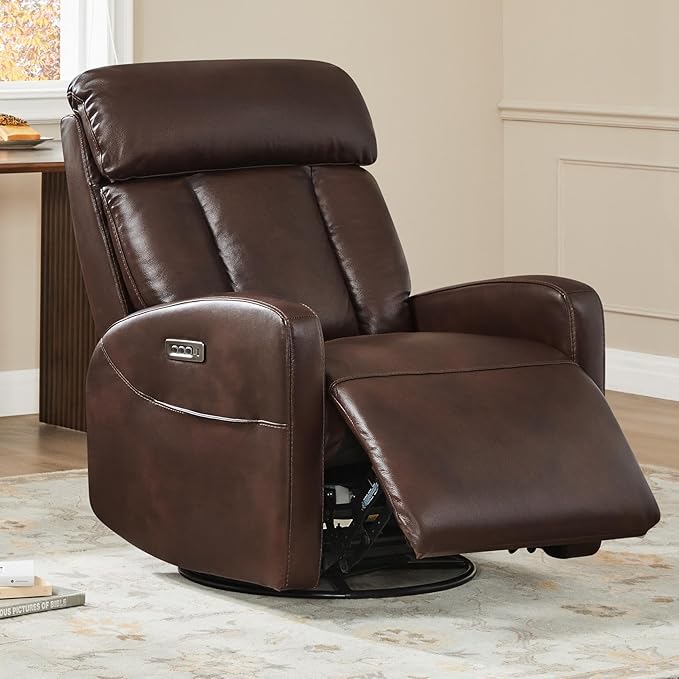
CHITA Leather Power Swivel Recliner Chair for Adults, Triple Motor Electric Rocker Recliner for Living Room with Adjustable Headrest and Lumbar Support, USB & Type-C Charging Ports, Cognac Brown

Shintenchi 103" Boneless Couches for Living Room with 2 Cup Holders,L Shaped Modular Sectional Sofa Set,No Assembly Needed Plush Corduroy Living Room Set,Dark Gray

Aheaplus Bar Cabinet with Power Outlets, 67" Tall Wine Bar Cabinet Liquor Cabinets with LED Lights and Glass Holder, Coffee Bars Station for Living Room, Microwave Stand Bakers Rack Cabinets, Black
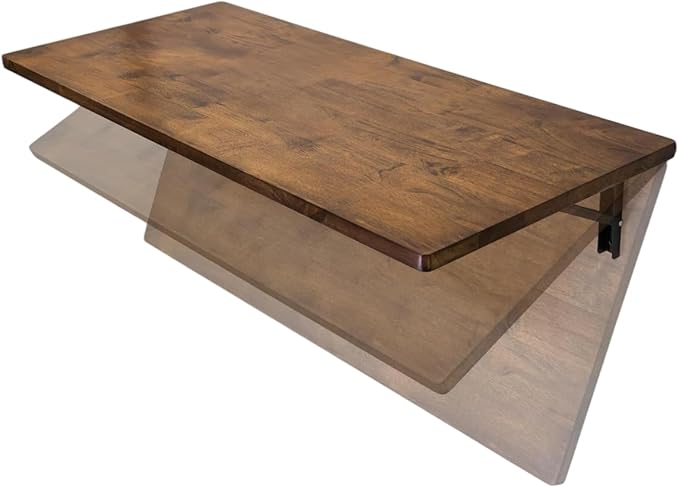
StoreYourBoard Wall Mounted Foldaway Table, Dark Wood Butcher Block Folding Desk, 40" x 18", Black Steel Brackets

FLEXISPOT E6G CyberX RGB LED Electric Gaming Standing Desk, 55 Inch Dual Motor 3-Stage Adjustable Desk up to 352 lbs, Large Ergonomic Computer Workstation for Gamers, Streamers & Home Studios (Black)

Howard Miller Davis II Corner Curio Cabinet – Lighted Glass Display Cabinet with Lock, 4 Adjustable Shelves, Wood Frame Glass Door Display Case for Living or Dining Room

Nathan James Dylan Media Console Cabinet or TV Stand with Doors for Hidden Storage in a Natural Reclaimed Oak Herringbone Wood Pattern and Metal, Oak/Matte Black
These are the numbers that decide whether a piece works in your room. Most furniture listings give you the closed dimensions and stop there, which is exactly the measurement that will not tell you whether a recliner opens.
| Piece | Space it needs | The bit people miss |
|---|---|---|
| Standard recliner | 6–18 in behind the chair | Manufacturers disagree; check the figure for your model |
| Wall-hugger / zero-wall recliner | 3–7 in behind the chair | It buys that space back from the floor in front instead |
| Recliner depth, open | A chair ~36 in deep upright reaches ~66 in reclined | The listing quotes the closed footprint |
| Home theater rows | 72–84 in back to back | Riser platforms run 78–84 in deep; leave 24 in behind the back row, 30 in to be comfortable |
| Sofa to coffee table | 14–18 in | Close enough to reach a drink, wide enough to step past |
| Main walkway | 36 in minimum, 42 in comfortable | 30 in is an absolute squeeze |
| Secondary walkway | 30 in | Edging past the end of a sofa |
| Bar stool spacing | 24–26 in backless, 28–30 in swivel, 30–32 in with arms | Measured centre to centre, not edge to edge |
| Doorway and stairs | Measure the carton, not the chair | Large seats ship in boxes wider than a 32 in interior door |
Two of those need spelling out. First, a recliner has to be measured reclined, not upright. Measuring the closed chair against the wall is the single most common way people end up with a seat that never fully opens. Second, if you are planning two rows of seating, the front row's fully reclined footprint has to clear the knees of the row behind it, which is why riser rows are usually deeper than people plan for. Our seating distance calculator and room size calculator work both of those out from your actual room.
Nobody publishes this, which is odd, because it is the first thing anyone wants to know. These are realistic US bands as of 2026 for new furniture from mainstream retailers. Second-hand changes the picture entirely. See the budget note below the table.
| Piece | Entry | Mid | Premium |
|---|---|---|---|
| Manual recliner | $250–$450 | $450–$900 | $900–$2,000+ |
| Power recliner | $400–$800 | $800–$1,600 | $1,600–$3,000+ |
| Home theater seat (per seat) | $200–$450 | $450–$900 | $900–$2,500+ |
| Three-seat sofa | $400–$800 | $800–$1,600 | $1,600–$4,000+ |
| L-shaped sectional | $900–$1,400 | $1,400–$2,500 | $2,500–$6,000+ |
| Bar stool (each) | $70–$130 | $130–$250 | $250–$600+ |
| Pub / bar-height table | $130–$300 | $300–$700 | $700–$1,500+ |
| Coffee table | $150–$300 | $300–$600 | $600–$1,500+ |
| Gaming chair | $70–$150 | $150–$350 | $350–$900+ |
| Gaming desk | $60–$150 | $150–$350 | $350–$900+ |
| Media console | $200–$350 | $350–$700 | $700–$1,800+ |
| Display cabinet | $400–$750 | $750–$1,300 | $1,300–$2,600+ |
| Home bar unit / bar cart | $60–$300 | $300–$1,000 | $1,500–$4,000+ |
| Pool table | $2,500–$3,000 | $3,500–$5,000 | $5,500–$8,500+ |
| Dartboard cabinet | $50–$90 | $100–$160 | $180–$250+ |
If the budget is tight, put it into the primary seat and buy everything else used or flat-pack. A cheap table is a table. A cheap recliner is a mechanism that will start clunking inside two years and foam that flattens inside one. Tables, shelving, and storage are the forgiving categories, and the second-hand market for them is excellent.
Seating is the category worth over-thinking, because it is the one people feel every session. Three things separate a chair that is still comfortable at hour three from one that is not: the frame, the mechanism, and the foam.
Which format suits you is mostly a question of how the room gets used. A recliner wins for one or two people who want the best seat in the house. Sectionals win for hosting, and modular ones have the side benefit of fitting through doors that a one-piece sofa will not. Riser seating wins when the room is genuinely a screening room. And a convertible sofa bed with storage earns its place in any room that occasionally has to sleep someone.
Bar stools are the piece people most often get wrong, and it is always the same mistake: buying the stool without measuring the counter. Stool height is set by the surface, not by preference.
| Surface | Surface height | Seat height | What it is called |
|---|---|---|---|
| Standard table | 28–30 in | 17–19 in | Dining chair or low stool |
| Kitchen counter | 34–36 in | 24–26 in | Counter stool |
| Home bar | 40–42 in | 28–30 in | Bar stool |
| Spectator / raised bar | 44–47 in | 33–34 in | Spectator stool |
Beyond the stools, the bar is where the most character per dollar lives. A whiskey barrel bar table or a height-adjustable pub table anchors a corner without needing a built-in. If you are working with an awkward footprint, an under-stair liquor cabinet turns dead space into the bar. And rotating decanter stands and industrial pipe shelving are the details that make a home bar look deliberate. For layout, our home bar dimensions guide covers straight, peninsula, and L-shaped runs.

Our pub table pick
Industrial Bistro Bar Table 38.6-44.4inch Height Adjustable Farmhouse Pub Table for Kitchen Dinning Room Office Swivel Wooden TopAffiliate link
A coffee table should sit at roughly the same height as the sofa seat or an inch or two below it, and run about two-thirds the length of the sofa. Leave 14 to 18 inches between the two: closer and you cannot get past, further and you cannot reach your drink. Lift-top models are worth the premium in any room that doubles as a workspace.
For small rooms, the highest-leverage piece is a wall-mounted foldaway table, which gives its entire footprint back to the room when it folds flat against the wall. If the room does double duty as a battlestation, a gaming desk with retractable console shelves keeps the hardware out of sight without burying it.

Our coffee table pick
Signature Design by Ashley Darborn Farmhouse Lift-Top Coffee Table with Drawers, Lower Shelf and Casters, Light Gray & Dark BrownAffiliate link
Storage is what separates a room people want to be in from a room that looks like a clearance sale. The general rule is to go vertical: shelving and wall-mounted cabinets cost you nothing in floor area, while a low sideboard costs you a walkway.
Display cases do the opposite job: they are for the things you want seen, and glass plus a light turns a collection into an exhibit. What goes on the wall around them is a different budget line, covered in our decor and accessories roundups. If the collection is records, a jukebox-style vinyl cabinet or a reclaimed media console with vinyl storage handles storage and display in one piece.
A man cave is harder on furniture than a living room. Drinks get spilled, the humidity is usually worse, and the room often runs cold. This is the comparison that matters most and that nobody publishes.
| Material | Durability | Spills | Pets | Feel | Cost | How it fails |
|---|---|---|---|---|---|---|
| Full-grain leather | 20–30 years, develops a patina | Wipes clean | Scratches show but blend in | Cold in an unheated room | Highest | Dries and cracks only if never conditioned |
| Top-grain leather | Long-lived with conditioning, short of full-grain | Wipes clean | Sanded surface scuffs more visibly | Cold in an unheated room | High | Applied top coat eventually cracks |
| Bonded leather | 2–5 years; 6–12 months in a humid room | Wipes clean while the surface lasts | Punctures easily | Plastic-like | Low | Peels off the backing in sheets, unrepairable |
| Faux leather / PU / PVC | PVC 2–3 yrs, PU 3–5, premium PU 5–10 | Wipes clean | Punctures easily | Does not breathe; sticky in summer | Low | Cracks and peels at the contact points |
| Microfiber | 7–10 years | Most spills lift with water | Best of the group; claws do not pull it | Warm and soft | Low–mid | Matting and pilling where you sit |
| Performance fabric | 10+ years | Engineered to release stains | Excellent | Warm and breathable | Mid–high | Topical barrier wears at the flex points first |
| Standard polyester | 2 years if cheap, 7–15 if good | Stains set quickly | Snags on claws | Warm | Lowest | Pilling and worn sheen where you sit |
The short version: buy top-grain leather if the budget allows and the room is heated, buy performance fabric or microfiber if it is not, and avoid bonded leather entirely. Bonded leather is roughly 10 to 20 percent leather fibre glued to a polyurethane film, and it does not wear. It peels, usually starting on the seat within two to five years, and cannot be repaired once it does. For the grade-by-grade detail (aniline versus semi-aniline finishing, split-grain, and how to read an abrasion rating), see our chairs guide.
The synthetics deserve the scepticism. In a Which? survey of 1,333 UK sofa owners, faux leather had the highest damage rate of any material tested at 57 percent, against a 33 percent average across all materials. If you want a wipe-clean surface without that risk, a performance fabric is the better bet: Crypton publishes a minimum of 50,000 double rubs and a five-year warranty on its moisture barrier, which is a firmer commitment than any faux leather comes with.
This is the decision most people actually get stuck on, and the honest answer is that the room decides it more than taste does. Leather wins on spills and on how it ages. Fabric wins on temperature, on pets, and on price. Everything else is a tie-break.
| What you care about | Leather | Fabric |
|---|---|---|
| How long it lasts | Full-grain 20–30 years; top-grain long-lived with conditioning | Performance fabric 10+ years, microfiber 7–10; cheap polyester can pill within 2 |
| Spilled drinks | Wipes straight off; nothing soaks in | Performance fabric is engineered to release stains; plain polyester sets fast |
| Pets | Claws leave scratches that stay visible | Microfiber is the best performer here: a tight weave gives claws nothing to pull |
| A cold room | Cold to sit on until you have warmed it up | Warm the moment you sit down |
| Cost | High to highest | Lowest to mid–high depending on the weave |
| How it eventually fails | Dries and cracks if it is never conditioned | Mats, pills, and goes shiny where you sit |
| The version to avoid | Bonded leather: peels in sheets within 2–5 years | Cheap polyester on a thin frame: sags and pills fast |
Most leather sofas at mainstream prices are not all leather. The convention is hide on the seat, back, and arm tops where your skin touches, with a colour-matched vinyl on the outside back, sides, and base. That is a reasonable way to keep the price sane, but the vinyl panels age on a shorter clock than the hide, so a sofa can end up with a seat that still looks good and sides that have cracked. Look for a materials line that names two coverings rather than one, or the phrase "leather match". Our couch guide covers how to spot it on a listing.
One thing that is not a tie-break: neither material saves a bad frame. A hide stretched over particleboard is still a chair that will creak, then lean. Get the frame and the foam right first, then pick the cover.
Almost every "small man cave" article tells you to measure the room and then never says what to measure against. Here is the shortcut, in square feet of usable floor area.
| Usable floor area | What fits comfortably | What to skip |
|---|---|---|
| Under 120 sq ft | Loveseat or two recliners, lift-top coffee table, wall-mounted foldaway table, vertical shelving | Sectionals, pool tables, a full bar with stools |
| 120–200 sq ft | Three-seat sofa or a pair of wall-hugger recliners, media console, two-stool counter, a dartboard | Multi-row theater seating, a nine-foot pool table |
| 200–350 sq ft | L-shaped sectional or a three-seat theater row, full bar with three to four stools, display cases | Anything that blocks a 36 in walkway |
| 350+ sq ft | Multi-row theater seating on a riser, a seven or eight-foot pool table, a bar with a back bar, separate lounge and games zones | Nothing: at this size, plan the zones before the furniture |
Every roundup linked above starts with a wide candidate list, gets cut on build quality, specs, and long-tail owner feedback, and gets bought and handled when a question cannot be settled any other way. We do not pretend to bench-test everything, and we say on each page what we actually did. The full process is on our how we choose page, and we earn affiliate commission on some links, which never decides a pick. Details on the disclaimer page.
The vocabulary that shows up in product listings, and what it actually means.
An armchair with a reclining back and a raising footrest, the default throne for movie nights. Manual, power, and wall-hugger variants change how much room the chair needs.
Also known as: La-Z-Boy, Rocker Recliner, Wall Hugger
Purpose-built home cinema recliners arranged in rows facing one screen, matched in height and often set on a riser so every seat holds the same sightline.
Also known as: Home Theater Seating, Cinema Seating
A multi-piece couch in an L or U shape that locks together into one continuous seating surface. Standard units run 95 to 110 inches wide and seat four to five.
Racing-inspired or ergonomic-hybrid seating built for long sessions at a desk, with adjustable recline, armrests, and lumbar support tuned for gaming rather than office work.
Also known as: Racing Chair
Seating sized by seat height rather than overall height. Bar height seats sit 28 to 30 inches off the floor, counter height 24 to 26, with 10 to 12 inches of legroom above.
Also known as: Counter Stool, Bar Chair
A tall table at bar height, 40 to 42 inches, usually round, meant for stools and standing drinks. Pub tables pair with 28 to 32 inch stools and fit two to four people around a 36 to 42 inch top.
Also known as: Bar Table, High-Top Table, Bar-Height Table
Coffee table whose surface rises on gas struts or a scissor lift to desk height, doubling as a workstation or dining spot. Quality lift brackets run $50 to $120 a pair; tables span $250 to $900.
A bench with a hinged lid over an enclosed box that seats adults at dining-chair height and stows shoes, bags, or gear; pick one by weight capacity and a lid that stays open.
A backless, armless upholstered seat that works as a footrest, an extra chair, or a coffee table with a tray; named for the Ottoman Empire, where it was the main domestic seat.
Also known as: Footstool, Storage Ottoman
A platform holding a game console under or beside a desk, keeping vents clear and cables routed out of sight. A well-placed shelf reclaims a square foot of desktop and prevents thermal throttling.
Freestanding cabinet built to store and display liquor bottles, with bottle-sized shelving, a mixing surface, and often a lock. Small units hold 12 to 25 bottles; large units hold 45 or more.
Also known as: Home Bar Cabinet, Drinks Cabinet
A tabletop hinged to a wall that folds flat when unused and drops down when needed, turning about 3 inches of wall space into a 30-to-45-inch working surface.
Also known as: Drop-Leaf Table, Murphy Desk, Fold-Down Table
Three pieces do almost all the work: a primary seat you will use every time you walk in, a surface within arm’s reach of it, and somewhere to put the screen and the gear. Everything after that (bar stools, a pub table, display cases, a games table) is an upgrade rather than a requirement. Buy the seat properly and add the rest over time.
A workable room built around one good recliner, a media console, and a side table lands somewhere near $900 to $1,800. A room with a sectional, two or three theater seats, a bar with stools, and storage runs $3,500 to $8,000. Individual pieces vary far more than the totals suggest, which is why the price band table above is broken out by piece rather than by room.
The seat you will spend the most hours in. It sets the sightline to the screen, it decides where the walkways run, and it is the piece people notice within ten seconds of walking in. Buying the screen first is the common mistake: it locks you into a viewing distance before you know what the seating footprint is.
Published guidance ranges from about 6 to 18 inches between the back of the chair and the wall, and manufacturers genuinely disagree, so check the figure for the model you are buying rather than trusting a single rule. A wall-hugger or zero-wall model needs roughly 3 to 7 inches because it slides forward on its base instead of tipping back. That space still comes out of the room in front of the chair, so you have to plan for it there instead.
They describe the same idea with different marketing. Both use a mechanism that carries the seat forward as it reclines rather than swinging the back into the wall behind it. In practice, check the manufacturer’s stated clearance figure rather than the label, because the number varies between about three and seven inches depending on the mechanism.
Measure your counter, not your stool. A 34 to 36 inch kitchen counter takes a 24 to 26 inch counter stool. A 40 to 42 inch bar takes a 28 to 30 inch bar stool. A 28 to 30 inch table takes a standard 17 to 19 inch chair. Aim for roughly 10 to 12 inches between the top of the seat and the top of the counter, which leaves about 18 inches of knee clearance at table height, 15 at counter height, and 12 at bar height.
Leather wipes clean, handles spills without staining, and ages rather than wears out. It is cold in an unheated basement, though, and it costs more than the alternatives. Performance fabric and microfiber are warmer, cheaper, and far more forgiving with pets. The material to avoid is bonded leather, which is leather scrap glued to a backing and tends to peel in sheets within a few years.
Fabric, and specifically microfiber. Claws slide off a tight microfiber weave instead of catching in it, and microfiber holds up around seven to ten years in normal use. Leather is the better material for spilled drinks, but claw marks in a hide are permanent: leather forgives the beer, not the dog. Performance fabric is the other good answer if you want stain resistance on top of the scratch resistance.
Microfiber. The trap at the bottom of the market is faux leather, which looks like the upgrade and is not. In a Which? survey of 1,333 sofa owners, faux leather had the highest damage rate of any material tested at 57 percent, against a 33 percent average. A plain microfiber or a decent woven fabric at the same money will outlast it. Bonded leather is worse again: it peels within two to five years and cannot be repaired.
A quick rule that works for most rooms: sit somewhere between 1.2 and 1.6 times the screen’s diagonal away from a 4K TV. For a 65 inch screen that puts the front row at roughly 6.5 to 8.5 feet. Our seating distance calculator works it out from your actual room and screen size, including projector setups.
Standard recliners are typically rated around 250 to 350 pounds, with oversized models going to 400 and beyond. Residential bar stools sit nearer 250 to 300. Gaming chairs often start around 240 to 275, with big-and-tall versions reaching about 400. The figure is usually buried in the spec sheet rather than the listing title. Leave headroom rather than buying to the limit, and treat 300 pounds as the sensible floor for a seat guests will use.
Measure the carton, not the chair. Theater seating and large recliners routinely ship in boxes wider than a standard 32 inch interior door, and basement stairs with a turn at the bottom are worse than the doorway itself. Modular sectionals exist partly to solve this: they arrive as separate pieces that each clear a normal door.
Pieces that do two jobs and pieces that get off the floor. A convertible sofa bed with storage under the seat, a lift-top coffee table, a wall-mounted foldaway table, and vertical shelving instead of a low sideboard will all buy back floor area. In a room under about 120 square feet, a loveseat plus one chair beats a sectional almost every time.
Spend on the primary seat and buy everything else second-hand or flat-pack. Seating is the piece whose failure you feel every single session, and it is the piece where the cheap version fails fastest: thin foam flattens, and a stapled softwood frame loosens. Tables, shelving, and storage are far more forgiving, and the used market for them is excellent.