Best Recliners for Your Man Cave
Last updated August 21, 2026 · By Zach Lane ·How we choose products · Affiliate disclosure

My basement always felt like it was missing something, until I worked out what: a chair that actually invited me to stay. One good seat can flip a man cave from cluttered hangout to intentional retreat. Sit down, stretch out, and you’ll see the difference right away.
This guide is the result of those little discoveries: what matters, what to avoid, and where you should spend your time (and money). I’m going to be blunt: the frame and mechanism matter more than fancy fabric, and tiny features like a USB port or a hidden pocket often outlive a flashy finish. I’ll help you match what the chair does to how you actually use the space, whether that’s gaming, movie marathons, naps, or hosting friends. Read on and you’ll know how to test recline action, judge materials, and pick a chair that feels like it belongs in your bunker for years.

FLEXISPOT XRC7 Swivel Rocker Recliner Chair, 360° Swivel Oversized Armless Recliner with Oeko-TEX Certified Three-Proof Fabric, Award-Winning Design, Gaming Chair for Living Room Gaming Room, White
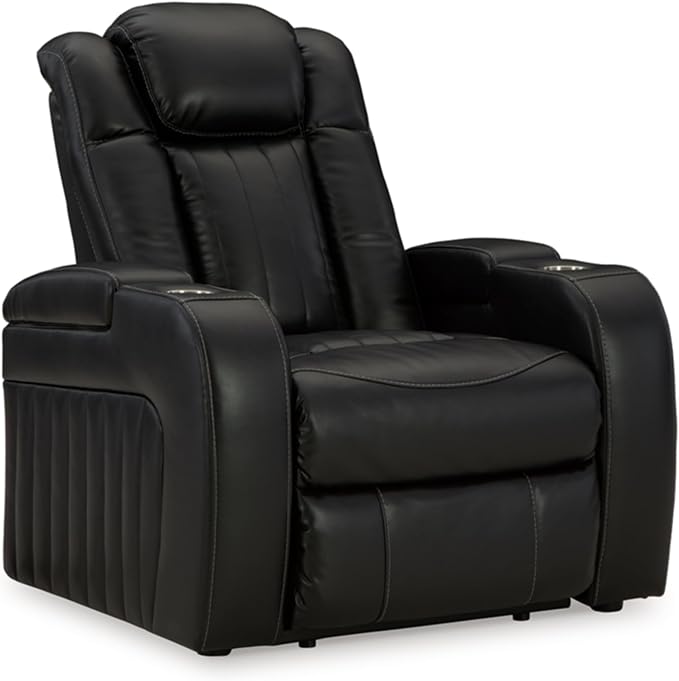
Signature Design by Ashley Caveman Den Modern Faux Leather Wall Hugger Power Recliner with Adjustable Headrest, Storage, Wireless, USB Ports and LED Lights, Black

CHITA Genuine Leather Power Recliner Chair for Adults, Super Zero Gravity Recliner with Adjustable Power Headrest & USB/Type-C Ports, for Living Room, Bedroom & Home Theater, Cafe Brown

CHITA Oversized Power Recliner Chair with Bluetooth Speakers for Adults, Lay Flat Recliner with Power Lumbar Support, Manual Winged Headrest and USB & Type-C Charging Ports, Taupe

FLEXISPOT Mochi Oversized 54" Power Recliner Chair for Big and Tall Adults, Chenille Fabric Electric Recliner with USB & Type-C Ports, Wide Single Sofa with Pillows for Living Room & Bedroom, Beige

CHITA Genuine Leather Power Recliner Chair for Adults, Electric Wall Hugger Recliner for Small Spaces, Modern Living Room and RV Recliner Chair with Power Headrest & Charging Ports, Dark Blue
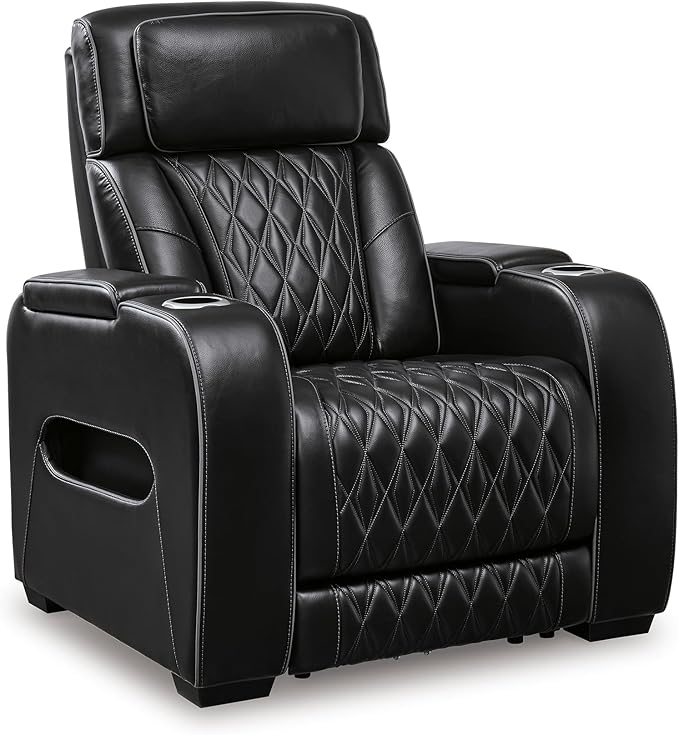
Signature Design by Ashley Boyington Contemporary Leather Match Power Recliner with Adjustable Headrest, Cup Holders, USB Port and Air Massage System, Black
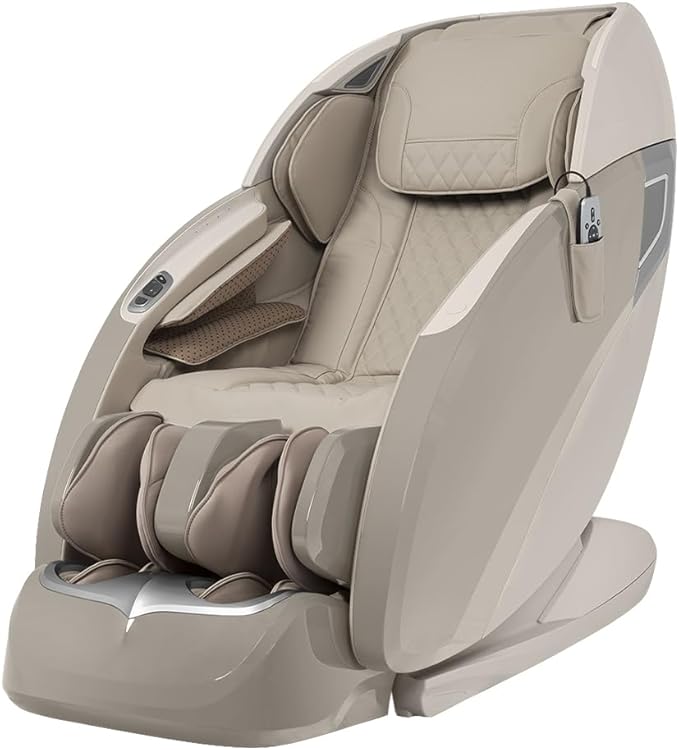
Osaki OS-Pro 3D Otamic LE | Full Body Massage Chair | 3D SL-Track Full Body Massage Chair | Zero Gravity | Lumbar Heating |Auto Body Scan | Bluetooth Speaker

FLEXISPOT Mochi Oversized 54" Power Recliner Chair for Big and Tall, Chenille Fabric Electric Recliner with USB & Type-C Ports, Wide Single Sofa with Pillow for Living Room Bedroom, Light Green

CHITA Oversized Power Recliner Chair with Bluetooth Speakers for Adults, Lay Flat Recliner with Power Lumbar Support, Manual Winged Headrest and USB & Type-C Charging Ports, Cream
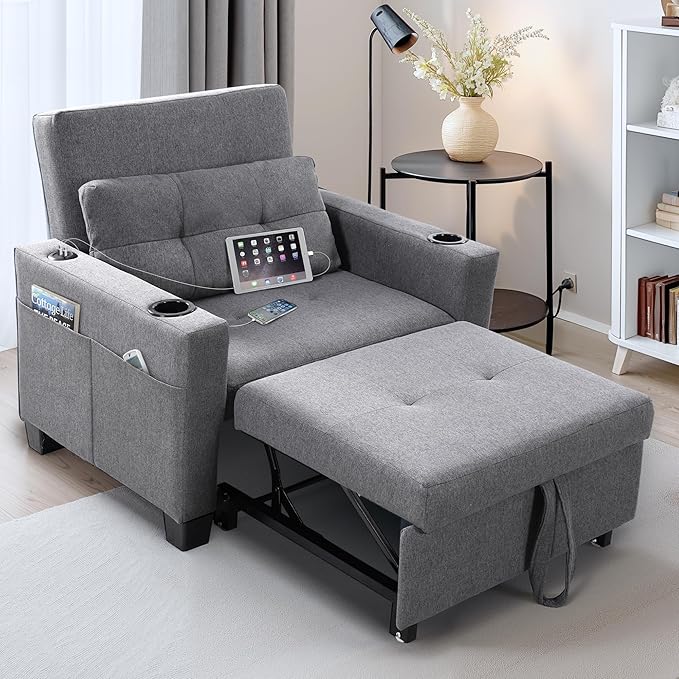
FLEXISPOT XCT2 Sleeper Chair Bed with USB Ports & Cup Holders, 3-in-1 Convertible Sofa Bed for Living Room, Pull-Out Recliner Chair with Pillows, Adjustable Backrest, Small Space Furniture (Gray)
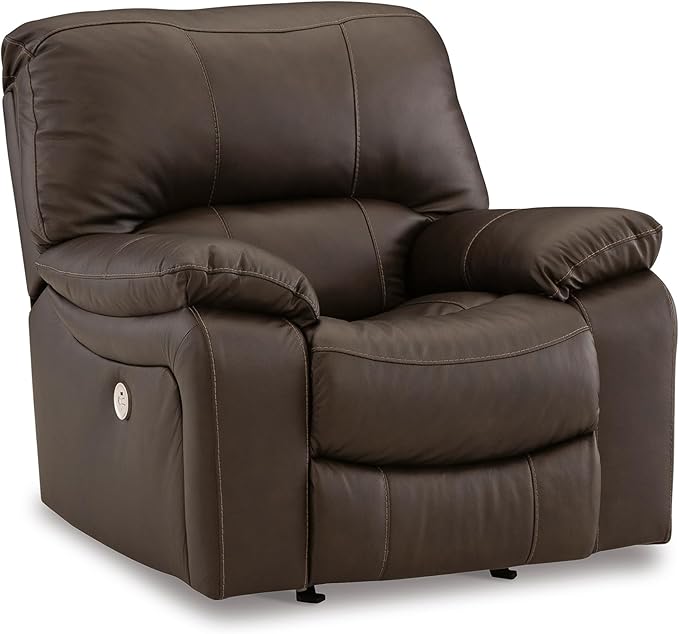
Signature Design by Ashley Leesworth Contemporary Leather Match Power Rocker Recliner with USB Ports, Dark Brown
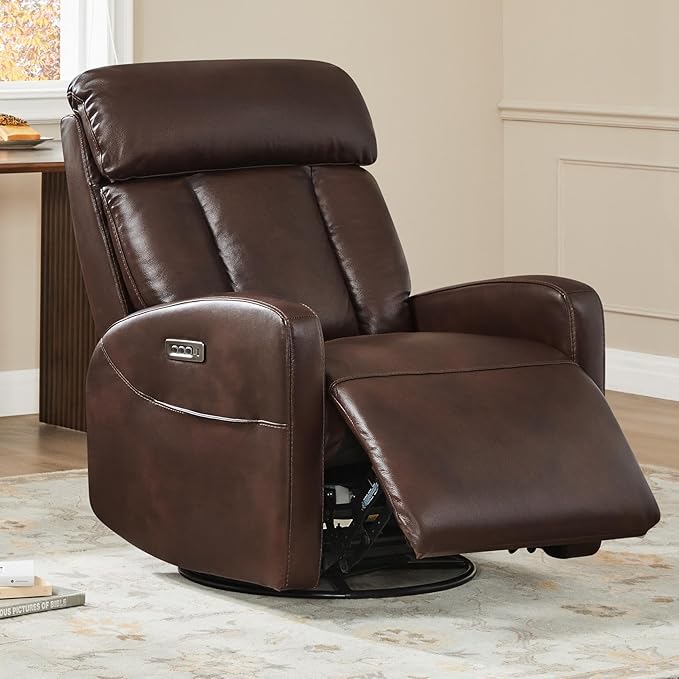
CHITA Leather Power Swivel Recliner Chair for Adults, Triple Motor Electric Rocker Recliner for Living Room with Adjustable Headrest and Lumbar Support, USB & Type-C Charging Ports, Cognac Brown
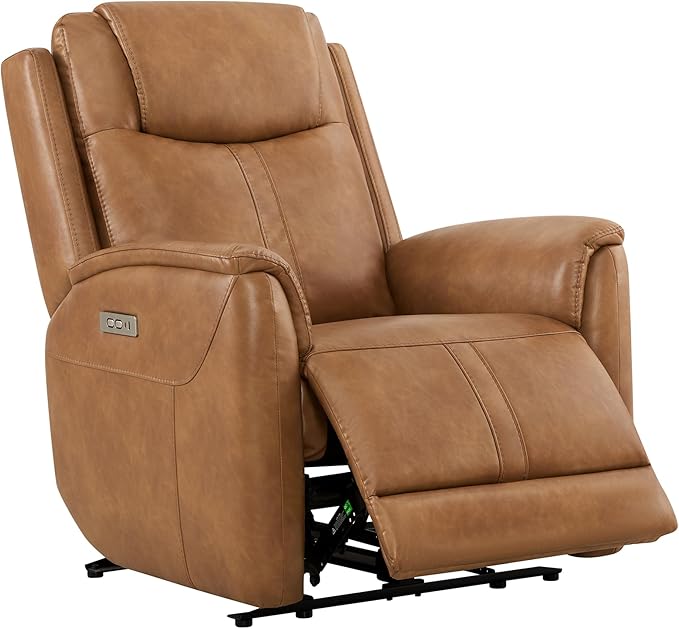
CHITA Super Zero Gravity Power Recliner Chair for Adults, Electric Faux Leather Recliner with USB & Type-C Charging Ports for Living Room, Bedroom & Home Theater Relaxation, Camel
Our Top Pick
The CHITA Super Zero Gravity is the recliner I would tell most people to buy, and the reason is the 140 degree zero-gravity position rather than any of the features on the box. Lifting your legs above heart level spreads your weight across the seat and back instead of loading it into your lower spine, and after a three hour session that is the difference you actually feel. Everything else on this page reclines. This one changes how long you can sit there.
The practical side holds up too. One-touch power gets you to the angle without wrestling a lever, the USB and USB-C ports mean your phone charges from the chair rather than from a hunt behind the sofa, and the faux leather wipes clean, which matters more in a man cave than it does in a showroom. It arrives in one box and goes together in minutes: slide the back on, connect one wire, done.
Two things to know before you commit. It is around 112 pounds, so decide where it lives before you unbox it, and it needs to sit near an outlet. It also does not rock or swivel, so if you want motion as well as recline, look at the rocker and swivel picks further down.
Zero-gravity is the one recline feature that changes how long you last in the chair, not just how it feels in the first minute.
Recliners That Turn a Chair into Your Personal Command Center
We all know the scenario: you sit down for what you think will be a quick episode and three hours later your back is protesting. The difference between "fine" and "fantastic" is almost always the frame and the recline mechanism. Start there. After that, check cushion density, lumbar support, and seat depth: those decide whether you feel great after two minutes or two hours.
Also think about layout. A recliner should be easy to get into and out of, match the room’s traffic patterns, and handle whatever you throw at it: snacks, pets, or a late-night nap. Below I break down models by how they move, what tech they offer, and who they actually suit so you can match a chair to what you do most in the space.
FLEXISPOT XRC7
If you want a chair that handles gaming marathons, movie nights, and the occasional nap without drama, the FLEXISPOT XRC7 is worth a look. It swivels a full 360 degrees and rocks gently, which is great when you want to follow the action or just chill without getting up. The oversized 40 inch, armless seat welcomes cross-legged lounging or sharing with a kid or dog. The metal frame is rated for up to 350 pounds, so it feels solid under heavier use.
The OEKO-TEX certified three-proof fabric is the real practical win here. It resists water, stains, and scratches, so spilled drinks and pet claws are less panic-inducing. Assembly is straightforward for one person, and the two-box shipment keeps parts protected (give the foam about 48 hours to fully expand). The breathable textile keeps things from getting clammy during long sessions.
What to watch for. The recline sometimes doesn’t lock fully and the back padding skews firmer than a plush recliner. If you like a sink-in feel, plan to add a lumbar cushion or a thin topper. There are occasional QC hiccups, so inspect alignment on arrival. Overall, this is a practical, low-maintenance throne for a man cave that balances function with clean design: a solid pick for gamers, home theater setups, and pet owners.
Pros: durable three-proof fabric, roomy armless design, smooth swivel and rock, sturdy build.
Cons: recline may not lock, cushioning is firmer than some expect, possible variability in QC.
CHITA Super Zero Gravity Recliner
If your back needs mercy after a long day, the CHITA Super Zero Gravity recliner is a serious option. The 140 degree zero-gravity angle lifts your legs above heart level, which really takes pressure off your spine and helps you recover between tasks or sessions. One-touch power control makes getting to the right angle effortless. The headrest is plush and the double-layer armrests feel substantial.
This model thinks about the small stuff. Built-in USB and Type-C ports let you charge without hunting for an outlet. Faux leather wipes clean after snack attacks. It ships in one box and snaps together fast: slide the back on, hook up a wire, and you’re done. Note: it’s heavy, around 112 pounds, so plan placement beforehand and keep it near an outlet. It does not swivel or rock.
Quality lines up with the price. The engineered wood frame and solid base give it a grounded presence that works well in a theater layout. If you want therapeutic recline and low-maintenance upholstery without fuss, this one earns its place.
Pros: true zero-gravity position, easy setup, built-in charging, low-maintenance upholstery.
Cons: not real leather, heavy to move, no rock or swivel, pet claws can be an issue on faux leather.
Leather Recliners: Rugged Elegance That Ages Gracefully
Leather adds instant character. It also asks more questions up front: what type of hide is it, how’s it finished, and where is the genuine leather versus imitation? Those choices determine durability, how it handles sweat, and how much care it needs. Look for tight stitching, reinforced stress points, and cushions that balance early softness with long-term support. Leather can feel warmer in winter and cooler in summer, so consider breathable construction or layerable cushions. And don’t let clunky hardware ruin the premium vibe.
The grade is the first thing to pin down. Full-grain is the whole hide with the grain intact: the most expensive option, and the one that ages into a patina rather than wearing out. Top-grain is the same hide sanded and refinished, long-lived with conditioning, and the grade most quality recliners actually use. Below those sits split-grain, and below that bonded leather, which is leather fibre glued to a polyurethane film. Bonded typically starts peeling within two to five years and cannot be repaired once it does.
Then check where the leather actually is. Most recliners in this price range use leather on the seat, back, and arm tops and a matched vinyl everywhere your body never touches. That is a legitimate way to keep the price down, but the vinyl panels age on a shorter clock than the hide, so a chair can end up with a seat that still looks good and sides that have cracked.
Leather is cold in an unheated basement and without regular conditioning the surface eventually dries and cracks. If the room runs cold or there are pets in the house, a performance fabric will serve you better than a mid-grade hide.
Power Recliners: One-Touch Precision for Everyday Comfort
If you want convenience or have mobility needs, a power recliner can be life-changing. Electric controls let you micro-adjust the back, leg rest, and sometimes headrest so you can find the exact angle that helps circulation and reduces pressure points. When you shop, test motor noise and feel, check how responsive the controls are, and note extras like preset positions, USB charging, and wall-hugger features if space is tight. Warranty and build quality matter: a quiet motor and solid engineering make these models worth the investment.
Signature Design Caveman Den
This chair packs theater-style features into a compact, practical seat. One-touch power controls and an adjustable headrest let you lock in the right angle for gaming or sinking in after work. Flip-top armrest storage and dual cup holders keep things tidy, and the zero-draw USB plus wireless charging means gadgets stay powered without cords everywhere. Ambient blue LED lighting gives late-night sessions a subtle cinematic glow. The faux leather cleans easily and the wall-hugger design only needs about 5 inches between chair and wall.
It’s a heavy and solid piece, around 158 pounds, which is a plus for stability. Seat depth is 21 inches and seat height 20 inches; fully reclined length is 68 inches. Shorter users will find it roomy; taller users might notice the footrest feels a bit short. A minority of owners report firmness or seat cushion breakdown over very long-term use, so factor that in if this will see daily heavy use.
Who this fits. If you want a tech-forward, feature-rich chair that creates a theater vibe without taking over the room, this is a strong contender. If you prefer a sink-in recliner or you’re very tall, test the dimensions first.
Pros: power adjustments, storage and cup holders, usb and wireless charging, wall-hugger design.
Cons: heavy, some reports of firmness or long-term cushion wear, footrest may feel short for tall users.
CHITA Power Recliner
This CHITA power recliner looks sharp and earns its keep. Top-grain leather on the touch points feels like an upgrade over typical faux setups, and the Super Zero Gravity position gives real circulation relief. Dual motors let you independently fine-tune the back and headrest so you can get the perfect TV or nap angle. Built-in USB-A and Type-C ports keep devices charged without cord acrobatics.
Mechanically, it’s smooth and quiet. The frame is sturdy, the reclining action is pleasing, and the 140 degree max plus adjustable headrest make it great for watching, reading, or proper naps without craning your neck. The back slides into the base for a quick setup that takes minutes. Downsides: it’s heavy at over 100 pounds and doesn’t rock or swivel. Very tall users over about 6'1" may find head support less ideal.
Who it’s for. If you want a centerpiece that performs as well as it looks, this is a smart upgrade. It fits well beside media cabinets or a bar cart and gives adjustable comfort without fuss.
Pros: genuine leather touch surfaces, dual motors, convenient charging, solid build.
Cons: heavyweight, no rocking or swivel, taller users may want to test head support.
Rocker Recliners: Gentle Motion That Calms the Room
Sometimes motion fixes what a static chair cannot. Rocker recliners add a steady, soothing sway that makes long sessions feel lighter. The trick is balance: look for smooth, controlled motion and a base that absorbs movement rather than jolting you. Suspension, padding, and lumbar shaping matter because you’ll be in these for awhile. Also think about flooring and footprint.
The footprint point is the one people miss. A rocker pivots on a curved base, which means it sweeps through an arc behind it even when nobody is reclining. Push a rocker tight against a wall or a console table and you either lose the rocking motion or start knocking the wall every time someone shifts their weight. Leave clearance behind a rocker whether or not it also reclines.
A glider solves the same problem differently. It sits on a fixed base and swings on a track, so the seat travels front to back without the whole chair tipping, and it does not need that swept clearance. Gliders tend to feel steadier and quieter than rockers; rockers feel looser and more traditional. Neither is better, but they are not interchangeable in a tight room.
On flooring, a rocking base concentrates weight into a small contact patch that moves. On hard floors that means scuffing over time, and a rug or a set of felt pads is worth adding before the marks appear rather than after.
Oversized Recliners: Thrones for Comfort and Command
If you like to sprawl, standard recliners feel cramped fast. Oversized recliners give deeper seats, wider armrests, and higher capacity so you can relax without losing support. Measure doorways and the placement area before you buy: these are big units. Check internal frame quality and foam layering, since larger cushions need denser support to avoid sag. Below are models that keep structure while giving room to stretch out.
CHITA Power Recliner
This model mixes comfort and tech into an oversized package built for a man cave. Dual motors let you go from upright to a 165 degree lay-flat, and independent footrest and power lumbar support attack back and hip pressure so you can binge, nap, or watch without constant shifting. The oversized frame and 21.5 inch seat feel roomy without swallowing the room, and the textured polyester fabric reads ruggedly casual.
It’s designed with convenience in mind. Tool-free assembly and a removable back that fits through most 27 inch-plus doorways mean you won’t need a moving crew. Bluetooth speakers live in the winged headrest and fold away for private audio, while armrest touch sensors control playback. USB and Type-C charging live right at the controls, and tall side pockets swallow a 14 inch laptop. The underlying metal and engineered wood frame supports up to 350 pounds.
What to know. Some users report occasional Bluetooth waking or powering off unexpectedly, and the taupe finish can come lighter than photos suggest. Still, for a chair that doubles as a command center for streaming, gaming, and naps, this one punches above its weight.
Pros: targeted lumbar relief, immersive headrest audio, built-in charging, easy setup.
Cons: Bluetooth quirks, color can be lighter than expected.
FLEXISPOT Mochi Recliner
If you want a seat that feels like first-class for downtime, the FLEXISPOT Mochi delivers. The 54 inch overall width and 35 inch seat give you room to sprawl, share with a pup, or stack snacks and remotes. Plush chenille and overstuffed cushions create that sink-in comfort that turns a marathon into a pleasure.
The power recline moves smoothly from reading to nearly flat for naps, and built-in USB-A and Type-C ports keep devices charged. The frame is rated to 350 pounds and neutral color options mean it blends with most decor. It ships in three manageable boxes and snaps together quickly, though you’ll want a second person for the heavier pieces.
Who this fits. Big and tall users, anyone who wants a dedicated lounging spot for streaming or gaming, and folks who prefer a soft, roomy seat will like this. Just measure your space first.
Pros: ample room, power recline, device charging built in, plush upholstery.
Cons: large footprint, heavy boxes on delivery.
Massage Recliners: Recovery and Relaxation Without Leaving Your Bunker
If you want recovery and comfort in one seat, massage recliners bring rollers, airbags, heat, and targeted programs to the party. When you shop, evaluate the massage coverage, track design, program variety, and noise level: a loud motor ruins the relaxation. Also check electrical needs and how features like zero-gravity position and lumbar heating work together. These models have more moving parts, so durability matters. Below I dig into how intense the programs feel, whether controls make sense, and whether the chair helps you recover or just looks flashy.
CHITA Leather Power Recliner
This CHITA power recliner packs useful features into a compact footprint. Dual motors give a 90-135° range that works well for watching or napping, and the chair uses top-grain leather where it matters (the seat, armrests, and front of the backrest) with faux leather on the outside. The true zero wall hugger design is a highlight. You can place it against a wall and it still fully reclines because the unit moves forward as it opens.
USB and Type-C ports built into the control keep devices charged, and the motors are quiet, so late-night movies won’t wake the house. Assembly is tool-free and the single-box sizing means you can slide it through a 30 inch doorway. A few real notes: the controls are small and can be fiddly to find by feel, the headrest runs firmer than some expect, and it does not swivel or glide. It’s not full leather, so check finish if you want leather everywhere.
If your space is tight and you want a handsome, solid recliner that maximizes floor space, this one fits well. It’s ideal for a basement den, a small living room, or even an RV lounge.
Pros: compact zero-wall design, quiet motors, leather touch points, easy setup.
Cons: small controls, firmer headrest, partial leather coverage.
Signature Boyington Power Recliner
If you want a centerpiece that actually earns its keep, the Signature Boyington is worth a hard look. It uses genuine leather where you sit and matched faux leather elsewhere for a clean, durable finish. Power recline and adjustable headrest let you dial in your posture, and the ambient blue LED adds a subtle theater vibe.
This chair mixes comfort tech that works. There’s an air massage system and a heated seat. I tested the massage during a long playoff game and it helped my lower back loosen up between commercials. Built-in USB and cup holders are small conveniences that matter. The diamond-stitched look keeps it sharper than a utilitarian recliner.
Practical details: seat is 24 inches wide, seat depth 20.5 inches, seat height 20.25 inches, and it reclines to about 71 inches fully extended. It’s heavy at 151 pounds, so plan placement and allow at least 8.75 inches from the wall. Assembly is light; snap the back in and plug the 132 inch power cord into a UL listed outlet.
Pros: genuine leather where you touch, heat and massage, USB and cup holders, solid construction.
Cons: firmer feel, heavy to move once in place.
Osaki Otamic LE
If you take downtime seriously, the Osaki Otamic LE is engineered for results. It uses 3D rollers on a long SL-track that work from neck down to hamstrings, plus full-body air compression, dual-zone lumbar and foot heating, and zero-gravity recline. Extras like automatic footrest extension, foot rollers, body-scan tech, and Bluetooth speakers make it feel like a recovery station.
What stands out is the quiet, smooth engineering. Japanese brushless motors and a responsive tri-core processor keep transitions quiet and quick, so you can nap through halftime or unwind without motor noise ruining it. Pros: deep, customizable massage, heating, Bluetooth, and a thoughtful leg system. Cons: large and heavy, needs help to install, and some buyers note cosmetic scuffs on delivery. If you want a man cave that doubles as a recovery hub, this one works hard.
Pros: powerful, customizable massage, heating zones, strong build.
Cons: big and heavy, delivery scuffs reported, requires setup help.
Home Theater Chairs: Cinema Comfort for Your Personal Screening Room
A true home theater needs seating that supports long viewing sessions and keeps everything within reach. Look for forward-facing ergonomics, cup holders, storage, and wiring-friendly designs. Opt for slim, supportive profiles that work in rows and fabrics that manage sound and spills. Below I lay out which seats hold up during marathons and which give you the best bang for your cinematic buck.
FLEXISPOT Mochi Recliner
This oversized power recliner gives you wide, supportive seating and smart conveniences you’ll actually use. The 35 inch extra-wide seat and high-density foam feel plush without collapsing, and the chenille fabric is soft while still rugged enough for daily use. Power recline offers smooth, infinite positioning with presets for reading, watching, or drifting off, and integrated USB-A and Type-C ports keep devices topped up.
What sets it apart is scale plus practical details. It’s a single-seat sofa that can handle lounging solo or sharing with a dog. The removable, pet-friendly cushion is a small detail that pays off. Assembly is tool-free; slide the pieces together, though the three heavy boxes mean you’ll want a helper. The frame feels solid and blends with dark, industrial, or mid-century styles commonly used in man caves.
Pros: oversized comfort, power recline, charging ports, soft chenille, fast tool-free assembly.
Cons: heavy delivery, large footprint, color may vary from photos.
CHITA Power Recliner
If you want a man cave centerpiece that handles lounging, gaming, and napping, this CHITA Power Recliner balances comfort and tech. Dual motors let you independently raise the footrest and adjust the back up to a 165 degree lay-flat, and the power lumbar support actually makes a measurable difference after long sessions. The winged headrest hides FCC-certified Bluetooth speakers so you can create a private audio zone, and armrest touch controls make skipping tracks painless. USB and Type-C ports sit right in the armrest, and side pockets hold a 14 inch laptop.
The fabric is plush, assembly is tool-free, and the removable back helps get it through tight doorways. Pros: strong lumbar support, immersive speakers, lay-flat option, easy setup. Cons: heavy to move, speakers can be triggered from the arm area, seat width focuses on support rather than sprawling. If you want one chair that does everything without extra speakers or chargers, this is a top pick.
Pros: lay-flat, Bluetooth headrest, strong lumbar, built-in charging.
Cons: heavy, speaker sensitivity, not the widest seat.
Loungers That Make Napping a Strategic Move
Loungers give you a comfortable place to stretch out without committing to a full recliner profile, which is useful when the chair has to double as a nap spot or an overflow seat. Check adjustability, cushion quality, and whether the fabric survives your habits. Storage footprint matters too if the room does more than one job, the way a garage build usually does. The pick below is the one that folds out into an actual bed rather than just leaning back.
FLEXISPOT XCT2
The FLEXISPOT XCT2 earns its keep by pulling double duty. This 3-in-1 sleeper flips from armchair to lounger to flat bed with a simple pull-out. It’s a space-saver for smaller caves and doubles as a guest bed without stealing square footage. Built-in USB ports and dual cup holders keep devices and drinks close, and the linen upholstery with high-density foam keeps the seat firm and supportive.
It’s compact and practical, with three back positions and side storage pockets to keep remotes off the floor. Downsides: the seat runs firm and sits a bit low, which can bother anyone with knee or back issues. There have been occasional QC hiccups like missing cup holders or fiddly screws, so check parts during unpacking. Consider a thin topper if you want a plusher nap.
Pros: multipurpose sleeper, integrated charging, compact design, useful storage.
Cons: firm seat, sits low, occasional QC issues.
Man Cave Recliners: Build a Seat That Fits Your Lifestyle
Your man cave should reflect how you relax. Pick a chair that complements the room’s vibe and stands up to heavy use. Ask yourself what you do most in the space: game, watch sports, work from the recliner, or recover after workouts? Focus on frame and mechanism first, then seat depth and lumbar support, and finally upholstery that fits your lifestyle (top-grain leather where you touch it, breathable fabric if you run hot, or durable three-proof textiles if you have pets). If possible, sit for at least 10 minutes, test the footrest and headrest, and imagine your typical session with a controller, a cold drink, or a nap.
Signature Design Leesworth Recliner
This power rocker blends smooth control with a relaxed feel. One-touch power lets you lock in the exact angle, and the gentle rocking motion takes the edge off tense moments. It uses genuine leather on high-contact areas and faux leather elsewhere for an easy-care yet premium look.
Practical features matter here. USB charging is within reach so devices stay powered, and the frame uses corner-blocking and metal reinforcement for durability. The chair is heavy in a reassuring way; the snap-on back makes getting it through doorways less of a wrestling match.
Who should consider it. If you want a reliable rocker that fits a theater, reading nook, or dedicated man cave, this is a solid choice. Tall users report comfortable proportions and a smooth recline.
Pros: smooth power recline, built-in USB, sturdy feel, easy setup.
Cons: not full-aniline leather, heavy, needs nearby outlet.
CHITA Power Swivel Recliner
This CHITA packs customization into a compact footprint. Triple motors control the headrest, lumbar, and recline independently, giving you 90-135° positions plus smooth gliding and a full 270° swivel. Top-grain leather where you touch it keeps comfort high while matching faux leather outside keeps the look cohesive. The Leggett & Platt mechanism passed a 25,000-cycle life test and the no-sag spring platform keeps support consistent.
The chair supports up to 350 pounds and includes handy side pockets for remotes and cables. Assembly is simple: slide the back into the seat, and you can have it ready for the next game. Be realistic about tradeoffs: the swivel/glide action can feel too mobile if you like a locked seat, and some users report a deep seat and low armrests as personal fit issues. New-chair smell and occasional mechanical noise have been mentioned.
If you want adjustability and a compact footprint with legit durability, this is a strong option.
Pros: triple-motor adjustability, durable mechanism, swivel/glide, leather touch points.
Cons: very mobile for some tastes, seat depth and arm height may not suit all, occasional noise.
How Much Space a Recliner Actually Needs
A recliner's listing dimensions almost always describe the chair closed: sitting upright, footrest tucked away. That number tells you almost nothing about whether the chair will fit, because you don't use a recliner closed. Measure it reclined, footrest out, and check that shape against the room.
Wall clearance is the first variable, and it is worth knowing that manufacturers disagree about it. Published guidance for a standard recliner runs anywhere from about 6 inches to 18 inches of open space behind the back of the chair, depending on the mechanism, so treat that as a range and check the figure for the specific model rather than trusting a rule of thumb. Put the chair closer than its stated clearance and it simply won't recline all the way. A wall-hugger or zero-wall-clearance design solves this differently: it needs roughly 3 to 7 inches behind it, because the whole seat slides forward as it opens. That trade-off matters: a wall-hugger saves wall space but eats floor space in front of the chair instead, so check the front clearance too, not just the back.
The depth change is the part people forget to measure. A chair that measures around 36 inches deep sitting upright can reach roughly 66 inches deep fully reclined. In a small room that's often the dimension that actually decides whether the layout works, not the wall gap.
If you're setting up two rows (a home theater layout, say), the front row's fully reclined footprint has to clear the knees of whoever sits behind it. Reclining the front row shortens the usable depth of the row behind it, so plan the second row around the front row reclined, not closed. Row-to-row spacing in the region of 72 to 84 inches back to back is the usual starting point, and you want at least 24 inches of walkway behind the back row, with 30 inches being comfortable.
Zero-Gravity, Rocker, and Glider Motion Explained
These terms get used loosely, but they describe different mechanisms with different footprints.
Zero-gravity recline lifts your legs above heart level and tilts the backrest to match, so your body weight spreads across the seat and backrest instead of concentrating on your lower spine and hips. It's usually a fixed end position you move into rather than continuous motion: the chair doesn't sway or rock once you're reclined into it.
A rocker recliner sits on a curved base and rocks in place, a gentle continuous back-and-forth motion driven by shifting your weight. Because the whole chair pivots on that curve, it needs clearance behind it even when you're sitting upright and not reclining: the base still swings through its arc. Don't push a rocker tight against a wall or a console table expecting it to stay put.
A glider has a fixed base and swings on a track or arm mechanism instead of rocking on a curved bottom. The seat moves in a smooth front-to-back line rather than tipping, which tends to feel steadier and quieter than a rocker, and it doesn't need the same swept clearance behind it.
Swivel is a separate feature layered on top of any of these: the seat rotates on its base, useful for turning toward a doorway or a second screen without standing. A chair can rock and swivel together, recline and swivel with no rocking at all, or do none of the above. Check which combination a given model actually offers rather than assuming.
Frames, Motors, and What Fails First
The frame decides how long a recliner lasts more than anything else on the spec sheet. Kiln-dried hardwood with corner blocks, dowel joints, or mortise-and-tenon construction is the quality marker. Furniture-grade stock is dried to around 6 to 8 percent moisture content so it matches indoor humidity and doesn't warp, and a rigid frame holds its screws over years of use. Particleboard or thin plywood held together with staples is the failure mode: it starts as a faint creak and ends as a lean. Listings rarely spell out which one you're getting, so look for the joinery language in the description, not just the word "hardwood."
Power mechanisms add motors, and every motor is a point of failure. A single-motor chair drives the recline action alone. Dual-motor chairs typically split control between the back and the headrest, or the back and the footrest, so you can adjust each independently instead of in one linked motion. Triple-motor chairs add a third independent function (commonly headrest, lumbar, and recline controlled separately) for finer positioning, at the cost of one more motor that can eventually need replacing. More motors mean more adjustability and more things that can break; there's no way around that trade-off.
Manual recliners skip motors, but the mechanism works differently than people expect: many rely on sustained body pressure to hold a mid-recline position; let go, and the back returns to upright. If you want to lock a specific angle without holding it there, that's a lever-latch or power feature to check for, not something every manual chair does.
Foam density matters more than foam thickness, and it's almost never on the listing. Anything under about 1.5 lb per cubic foot breaks down quickly; around 1.8 lb per cubic foot is the residential sweet spot; 2.5 lb per cubic foot and above is high-resilience foam that can hold its shape through ten years or more of daily use. Low-density foam looks identical on day one and compresses into a dish where you sit. When you check the warranty, look at what's actually covered and for how long: frame, motor, and fabric are often covered separately, and a long frame warranty paired with a short motor warranty tells you where the manufacturer expects problems to show up.
Weight Capacity and Body Fit
A recliner's weight rating and its recommended user height are usually buried in the spec sheet, not the title or the main description. You have to dig for them the way you'd check a warranty. Standard models in this category are typically rated somewhere around 250 to 350 lb, with oversized and big-and-tall builds going to 400 lb and beyond. Treat 300 lb as the sensible floor for a chair that guests as well as you will use.
Buy with headroom, not to the limit. A chair rated right at your weight has no margin for how you actually sit (leaning, shifting, getting in and out), and a rating that looked comfortable on paper can feel marginal in daily use. Headroom also matters because the published number is for one person. It is not a combined figure, so don't treat a high rating as license for two people to share a recliner built for one, even briefly.
Capacity is only half the fit question. Seat width, seat depth, and back height decide whether a chair actually suits your body as much as the weight rating does. A chair rated well above your weight can still feel wrong if the seat is too shallow for your legs or the back doesn't reach your shoulders. A seat that suits one person can feel cramped for another at the same rated capacity. Check all three dimensions against how you actually sit, not just the number on the capacity line.
What Your Money Buys: Recliner Price Bands
Manual recliners run roughly $250 to $450 at the entry level, $450 to $900 in the middle, and $900 to $2,000 and up at the top. Power recliners start higher, at $400 to $800, move through $800 to $1,600, and reach $1,600 to $3,000 and beyond. Home theater seats, priced per seat, run about $200 to $450, then $450 to $900, then $900 to $2,500 and up. Those bands move with sale cycles, so treat them as orientation rather than quotes.
What actually changes as you move up a tier isn't magic: it's the same handful of components getting upgraded one at a time. At the bottom, expect particleboard or thin-plywood framing, low-density foam that will compress with use, and standard polyester or basic faux-leather upholstery. Motors, if there are any, tend to be single-function. Warranty coverage is usually short and often doesn't separate frame from motor from fabric.
Move into the middle band and the frame typically switches to kiln-dried hardwood with real joinery, foam density improves enough to hold its shape longer, and upholstery steps up to better-graded faux leather or performance fabric. Dual motors become common, giving independent control over the back and headrest or footrest. Warranty terms usually lengthen and start covering the frame separately from the mechanical parts.
At the top, you're paying for top-grain or full-grain leather on the touch points, denser foam throughout rather than just at the seat, triple-motor mechanisms with finer control, and warranties built for long ownership. Frame quality and upholstery grade tend to be solid across the whole range at this level; the real differentiation is in the mechanism and the finish.
If you're deciding where to put the money, put it into the frame and the motor before the upholstery. Worn fabric can be reupholstered or covered with a throw; a cracked frame or a failed motor takes the whole chair out of use.
How Many Recliners Fit Across a Wall
Everything above is about depth: how far the chair reaches when it opens, how much wall it needs behind it. Width gets skipped, and it is the number that decides how many of these you can actually own.
Budget 24 to 32 inches of width per person for seating that is genuinely comfortable side by side. A single recliner measured across both armrests commonly runs about 35 inches, which is wider than most people picture before they hold a tape measure up to a wall. Three of them in a row is therefore closer to nine feet than to seven, and that is before you leave any gap between them.
Run the arithmetic before you fall for a second chair. A 12 foot wall takes three 35 inch recliners with about a foot left over, and none of that foot is walkway. A 10 foot wall takes two comfortably and three only if you accept armrests touching, which also means one person's recline nudges the chair beside them.
If you are building rows rather than a line, leave 6 to 7 feet between rows for reclining seats, and make sure 20 to 30 inches of that is clear floor somebody can walk through. A row spaced so tightly that guests have to climb over a reclined footrest to reach the far seat is a row that will only ever be half used.
One more number worth checking against the people who will actually sit in these: big and tall models are commonly rated to 350 or 400 pounds, and they are usually wider as well as stronger. If one of your regulars needs that chair, size the wall around its width rather than the standard one.
Powering a Row of Motors
Every power recliner on this page has the same unglamorous requirement, and none of the listings lead with it: it has to reach an outlet.
That is easy for one chair against a wall with a receptacle behind it. It stops being easy the moment you want two or three across a wall that has one outlet at the far end, because the answer is either a cord run along the baseboard or an extension you will look at every day. Work out where the receptacle is before you decide where the chairs go, not after.
The chairs that also carry USB ports are drawing from the same cord, so a chair with charging built in is a chair that stays plugged in permanently rather than only when someone is reclining. Treat it as a device with a standby draw, not as furniture that happens to have a socket.
If you are consolidating several chairs plus the screen and the audio onto one receptacle, put a surge-protected power strip between them and the wall rather than a bare splitter. Recliner motors are the cheapest thing on that strip and the least likely to be missed, but the television and the receiver sharing the circuit are not, and a strip is the least expensive insurance that stack of gear will ever get.
The last thing to plan for is a power cut with the chair fully reclined. A manual recliner does not care. A powered one without a battery backup leaves you climbing out of a chair that is stuck flat, which is a nuisance for most people and a genuine problem for anyone who bought the chair for mobility reasons. If that describes the person using it, check whether the model takes a backup pack before you buy.
Final Thoughts: Pick the Throne That Fits Your Bunker
A man cave is part comfort zone, part ritual space. The chair you choose should reflect that. Across these models you’ll see the same themes: strong frames and smooth mechanisms win, cushion density and lumbar support decide long-term comfort, and practical extras (USB ports, cup holders, storage) determine how useful a recliner is day to day.
My short list from this roundup: the FLEXISPOT XCT2 if you want a lounger that converts to a bed, the FLEXISPOT XRC7 for a low-maintenance gaming throne, the CHITA Super Zero Gravity or the Osaki Otamic LE if recovery and circulation relief matter, and the FLEXISPOT Mochi if oversized scale is your priority.
Before you buy, do the practical stuff: measure doorways and placement, check outlet access, and plan for assembly and moving. Try to sit for at least 10 minutes in the models you’re choosing between. Test the footrest and headrest, and imagine your typical session. Read a handful of owner reports to catch any recurring issues with motors or cushions.
Now take action. Narrow your top two or three picks, measure the space, and either test in person or read concentrated user feedback. When your new chair arrives, set it up intentionally: position for sightlines, secure power, add a throw or head pillow, and stock the cup holder. Do that and your man cave stops being a room where you sit and becomes a bunker where you actually unwind, recover, and enjoy every minute.