Best Coffee Tables for Your Man Lounge
Last updated August 21, 2026 · By Zach Lane ·How we choose products · Affiliate disclosure

The first time I bolted a reclaimed slab of wood to a low pedestal in my garage, set an old ashtray on it, and stepped back, the room finally felt finished. A coffee table does more than hold cups. It anchors the man lounge, becomes the landing spot for controllers, the snack staging area, and the place where half the stories get told. I built this guide from that same feeling: I want you to pick a table that brings function and personality, and to understand how build, finish, and engineering affect how it wears over time.
I learned, the hard way, to look past looks. You'll get a sense for how material choices change maintenance, why reinforced bases or casters matter if the space gets heavy use, and how lift-tops or hidden storage actually improve day-to-day life. I’ll also help you match scale and texture so your centerpiece feels intentional, not an afterthought.
I won’t dance around tradeoffs. I’ll point out the tough-as-nails pieces, the sleek modern options, and the tables that double as work stations or storage hubs, whether you're after warm, wood-forward character or a metal-framed table that can take a knock. Pick wisely and your man lounge will suddenly work better and feel better.

Nathan James Asher Mid-Century Rectangle Coffee Table Glass Top and Rustic Oak Storage Shelf with Sleek Brass Metal Legs, Gold

SAFAVIEH Couture Collection Sasha Contemporary Medium Oak Round Coffee Table

Martin Svensson Home LAX Retro Mid-Century Modern Round Wood End Table, Solid Grain Side Table with Lower Shelf, Small Accent Table for Living Room or Nightstand. Caramel Brown Top & Walnut Legs
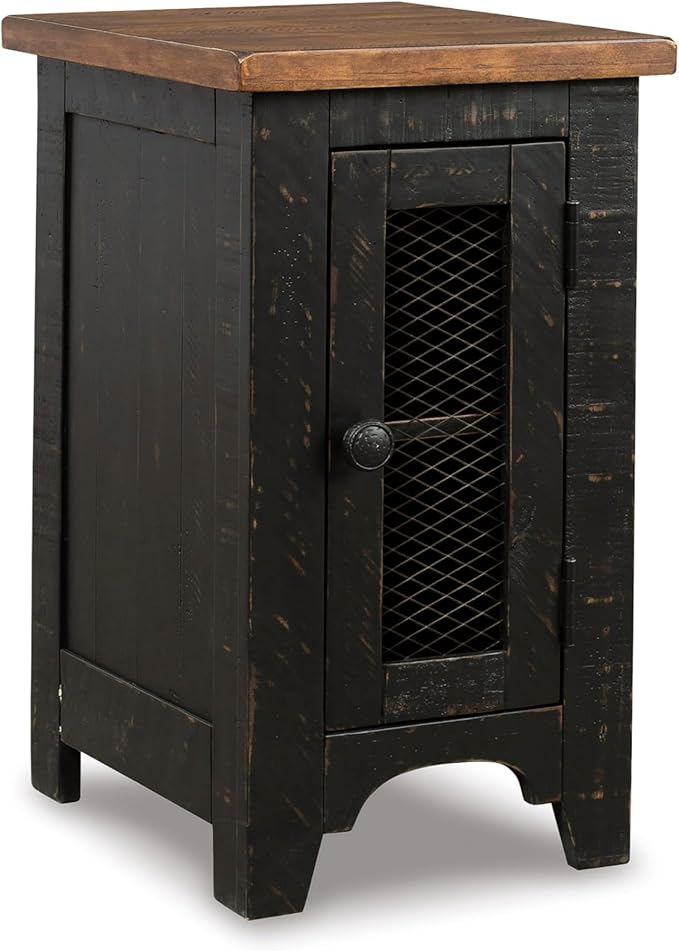
Signature Design by Ashley Valebeck Rustic Farmhouse Chair Side End Table with Cabinet Door, Distressed Black

Signature Design by Ashley Darborn Farmhouse Lift-Top Coffee Table with Drawers, Lower Shelf and Casters, Light Gray & Dark Brown
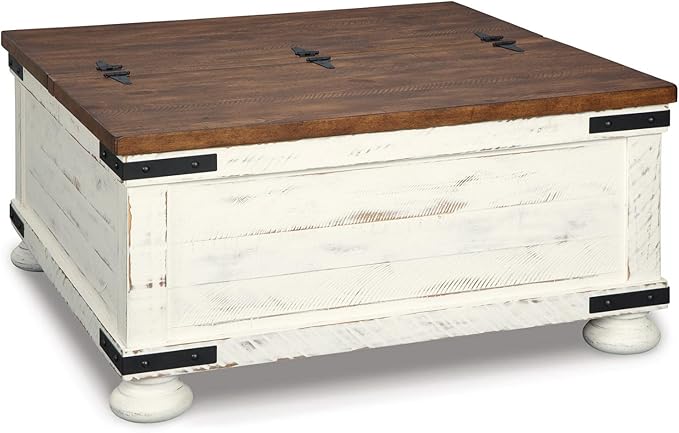
Signature Design by Ashley Wystfield Farmhouse Square Storage Coffee Table with Hinged Lift Top, Distressed White

Signature Design by Ashley Breckington Modern Coffee Table with Trestle Base, Dark Brown

Henn&Hart 44" Fluted Rectangular Wood Pedestal Low-Profile Coffee Table for Living Room, Family Room or Office, Alder White
Our Top Pick
Henn&Hart 44-inch Fluted Alder Coffee Table is the kind of piece that anchors a man cave. It sits low and rectangular, the fluted pedestal giving it presence without screaming for attention. At 44 inches you get plenty of room for game-night gear, remotes, and snacks, but it won’t overpower your seating area. It feels practical and solid, like furniture that belongs in the room rather than something temporary.
Rated 5.0 out of 5.0 by buyers, this table delivers on sturdiness and style. It adds a textured, architectural touch to a casual setup. No gimmicks, just a clean silhouette and real wood character that handles the occasional spilled drink or clumsy guest.
The low-profile height keeps sightlines clear for TVs and wall art, and the fluted rectangular pedestal gives vertical texture while saving legroom. Alder construction is durable, and the light white finish brightens darker spaces without feeling fragile. It's easy to style and easy to maintain, and it works in a garage den, a finished basement, or a dedicated lounge. If you want a man cave that looks put together and stays functional, this belongs on your shortlist.
At a Glance
| Product | Best for | Rating | Why |
|---|---|---|---|
| Henn&Hart 44" Fluted Rectangular Wood Pedestal | Minimalist decor | 5.0/5 | Fluted pedestal adds visual depth. |
| Signature Design by Ashley Breckington Modern | Contemporary living rooms | 5.0/5 | Sleek lines and spacious tabletop. |
| Signature Design by Ashley Darborn Farmhouse | Rustic farmhouse style | 5.0/5 | Weathered finish and sturdy construction. |
| SAFAVIEH Couture Collection Sasha Contemporary Medium | Luxury contemporary spaces | 5.0/5 | Artisan craftsmanship and premium materials. |
| Signature Design by Ashley Valebeck Rustic | Rustic industrial look | 4.9/5 | Reclaimed wood appearance with metal accents. |
| Martin Svensson Home LAX Retro Mid-Century | Mid-century enthusiasts | 4.8/5 | Iconic retro profile with clean lines. |
The Centerpiece: Coffee Tables That Make Your Lounge Sing
I reworked an entire room around a coffee table once and watched everything click into place. A coffee table needs to be tough for game nights, low and reachable for lounging, and stylish enough to set the room’s tone. When you shop, think scale versus your seating, surface durability for spills and dents, and stability so you never worry about coasters sliding off. Pay attention to traffic flow and whether the finish will age nicely. The reviews below trade bold looks for real-world performance so you can pick a table that anchors the room and survives daily life.
Nathan James Asher
If you want to upgrade the look without stealing floor space, the Nathan James Asher is worth a look. It pairs a crystal-clear tempered glass top with a rustic oak lower shelf, giving you an open surface for snacks and remotes and a discreet spot for magazines, blankets, or board games. Slim brass legs keep the profile light and stylish. Assembly is straightforward; I had one together in about 30 minutes with a screwdriver. At roughly 39 inches wide, it fits in smaller rooms or in front of a single recliner.
The mix of materials is the selling point. Tempered glass reads upscale and makes the room feel bigger. The lower shelf brings warmth and practical storage for controllers or that stack of vinyl you never quite rotate. It suits mid-century, industrial, or mixed-material setups. Good for poker nights, puzzles, or a tidy drinks setup. The 99 lb weight limit handles everyday use, but don’t drop heavy gear on the glass.
Pros: clean mid-century look, useful lower shelf, easy assembly, lightweight but sturdy. Cons: some buyers report color variation and occasional scratches or shipping damage to the wood shelf, so inspect delivery and use coasters on the glass. If you want brass-and-glass pop without the bulk, this is a solid, space-efficient choice.
SAFAVIEH Sasha Coffee Table
This round Sasha table brings mid-century flair without calling too much attention to itself. The sculpted trestle base and medium oak finish pair nicely with leather seating, vintage cabinets, or a game-night corner. At 40 inches across and 17.5 inches high it keeps sight lines open and traffic flowing around the room.
Built from a durable wood blend, it feels solid for everyday use. The oak-style top handles drinks and board games, and assembly is straightforward with clear hardware. A few small habits help: felt pads under décor and quick wipe-ups keep the finish looking sharp.
What stands out is the balance of style and practicality. The rounded shape encourages conversation and is friendlier around kids or pets. Best for guys who want a refined, low-maintenance focal point that lifts the room without fuss.
Pros: attractive mid-century lines, sturdy feel, easy assembly, great scale for casual hangouts. Cons: recommended 100 lb max load and a lacquer finish that needs a little upkeep. If you want an attractive, no-fuss table that improves the vibe, this Sasha model is worth a look.
Warmth and Weight: Wood Tables That Age Like Fine Gear
I have a soft spot for wood. Run your hand along a well-oiled grain and you’ll feel why wood carries a room differently than metal. Wood brings warmth, tactile depth, and a sense of permanence. When you’re looking at solid wood or veneer tops, pay attention to species, finish, edge banding, and joinery. Think about hardness for scratch resistance, how the finish handles spills, and whether the piece will move with humidity in your climate. The options below separate the knockoffs from the genuinely well made and point out which pieces reward a little maintenance with lasting character.
Martin Svensson LAX End Table
This compact round table has real mid-century swagger. The caramel top with a starburst Mindi veneer pattern catches the eye, while walnut legs anchor the look. At 20 inches wide and 24 inches high it slips beside an armchair or couch without hogging floor space. There’s a roomy lower shelf for books, remotes, or your go-to mags, so the top stays clear for beer, a snack plate, or whatever’s in your hand during game night.
What sets it apart is the feel. Owners call it solid wood rather than the cheap laminate most knockoffs use. The grain and finish belong next to a leather recliner or retro lounge chair. Assembly is pleasant: the five-step setup many people report being done with in under 10 minutes means more time setting the mood and less time with Allen wrenches.
Who is this for? If you care about craftsmanship but need compact, functional pieces, this fits. It pairs with mid-century, industrial, or eclectic decor and doubles as a nightstand. Pros: authentic wood look, sturdy construction, quick assembly, practical lower shelf. Cons: small surface area, not meant as a platform for heavy gear or oversized items.
If you want a tasteful, durable end table that lifts the room without fuss, this one is worth a look.
Sleek Edge: Metal Tables for Clean Lines and Bulletproof Duty
Drop a metal-framed piece into a room and it immediately reads modern and unflappable. Metal brings industrial confidence and handles heavy use without drama, which is why it keeps turning up in rooms that double as workshops. It also fails differently from wood, so it is worth knowing what to look at.
Start with how the frame is joined, because that is what decides whether it stays square. Welded joints are one piece of metal and stay tight indefinitely. Bolted frames are serviceable, which is genuinely useful if the table has to come apart to get down a stairwell, but every bolted joint is a joint that can work loose, and a table that develops a wobble usually just needs the hardware retorqued rather than replacing. Check whether the bolts are reachable once the table is assembled. Some are not.
Then the finish. Powder coat is baked on and considerably tougher than wet paint, and the place it fails first is any edge or weld the coating had to wrap around, so look at corners and feet rather than the flat surfaces in the photograph. Chrome and polished steel show fingerprints and water spots in a way matte black does not, which matters more on a coffee table than on a workbench because people put their hands on it all evening.
Floor protection is the detail that gets skipped and costs the most. A steel frame concentrates real weight onto four small feet, and on a hard floor that is how you get gouges. Check that the feet have pads and that the pads are replaceable rather than glued on, because they wear.
The last thing is visual weight. Metal reads heavier than it measures, so a metal table in a small room can dominate it in a way an equivalent wood piece does not. Pairing metal with a wood or glass top softens that, and if the room is already leaning spare, it is worth reading our take on minimalism against maximalism before you commit to an all-steel piece.
Workshop to Living Room: Industrial Tables That Work Hard and Look Great
I once rolled a utility cart into a living room and it became a talking point for weeks. Industrial-style tables keep that utilitarian charm while giving you furniture with real muscle. Look for heavy-duty casters, sturdy undersides, and finishes that shrug off scuffs and grease. Many use reclaimed materials or stainless tops that tolerate food, tools, and a busy social life. Below are models that keep the rugged vibe while staying reliable for everyday use.
Ashley Valebeck End Table
This rustic farmhouse chair-side table adds character without fuss. The plank-effect top, distress marks, and wire-mesh cabinet door give it personality, while the mix of pine and engineered wood keeps it sturdy at about 18 pounds. A center shelf behind the metal-grilled door tucks away remotes, controllers, or a stack of paperbacks. Its compact footprint (14" W x 17" D x 25" H) fits tight spaces beside a recliner or between chairs.
Practicality is where this piece shines. The cabinet hides clutter and leaves a clean surface for a lamp, speaker, or your beer. Build quality feels solid for the price point and owners call it well packaged. Pros: authentic farmhouse look, usable storage, compact sizing, heavy-duty feel. Cons: scratch resistance seems mixed (use coasters), a few buyers reported damaged shelves out of the box, and the top is functional but not oversized. Small tip: anchor it if you have kids or big dogs, as recommended for stability.
If you want a table that adds lived-in style and actually holds useful gear, this is a smart pick.
Lift-Top Tables: A Surface That Doubles as a Desk
I learned the value of a lift-top the first time I worked a full afternoon from my couch and my laptop sat stable and spill-free. A lift-top table is worth it if you want a coffee table that doubles as a laptop desk, snack station, or crafting surface. Pay attention to the lifting mechanism, locking stability, and how the top balances when raised. Check for storage under the top and whether the edge hits your knees when it's up. Below are models with mechanisms that feel premium and some that could use reinforcement.
Signature Design Darborn
This lift-top coffee table brings farmhouse character plus real utility. The two-tone finish pairs a glazed light gray base with a brown cherry-stained planked top, so it reads rustic without being fussy. Built from solid acacia with cherry veneer and an MDF substrate it feels weighty at about 110 pounds. The square footprint (35.5" x 35.5") works well in front of a sofa or between recliners. Casters and an open lower shelf add mobility and display space for consoles or mags.
The lift-top raises to about 27.5 inches, giving you a stable surface for a laptop or a meal. Two shallow drawers are handy for controllers and cables, and the lift-top opening (22" W x 16.5" D x 6.63" H) hides remotes or small boxes. Everything is built for usefulness rather than decoration.
Who should buy it. If you want a durable centerpiece that blends style with storage and a usable raised surface, this is a good match. Pros: sturdy acacia construction, functional lift-top, practical storage, caster mobility, timeless farmhouse look. Cons: heavy and needs two people for assembly, drawers are not deep for large items, anchor if casters are used to prevent tipping. Solid pick for a man cave that values function and rugged style.
Smart Stow: Storage Tables That Hide Clutter Without Hiding Style
If your lounge doubles as a game den, office, or bar, storage saves the day. I tripled usable surface by swapping to a table with drawers and hidden compartments. When assessing storage pieces, look at drawer glide quality, internal depth, and how easy it is to access storage during normal use. Casters help if you move things around, and make sure compartments are deep enough for remotes, magazines, or controllers. The picks below keep clutter out of sight while reinforcing the room’s look.
Ashley Wystfield Coffee Table
If you need something practical and stylish, the Ashley Wystfield farmhouse coffee table checks a lot of boxes. The square design with a hinged lift top gives you a usable work or snack surface while hiding a deep storage cavity that swallows throws, board games, or controllers. The plank-effect top and industrial hardware read weathered and lived-in, which suits a garage-bar or rustic loft. Assembly is straightforward and the top arrives mostly assembled, so setup is quick.
What makes it stand out for a man cave is function first. You get real-feel wood, a lot of internal space, and a lift mechanism that stays open when you need it. Pros: lots of storage, solid construction, easy setup, and a style that hides scuffs well. Cons: color can vary from photos, the center hinge can make the lid uneven so you can’t put a perfectly flat centerpiece in the middle, and a few buyers reported delivery damage or slower support. If you want a durable, multipurpose table that keeps game-night detritus out of sight, this one hits most of the marks. Click through to see current availability and photos.
Clean Lines, Bold Statements: Modern Tables That Define a Space
A modern table can be the visual mic drop of a man lounge. I once used a minimalist table with brass legs to lift a muted room and the whole place felt intentional. For modern pieces, check materials for crisp edges and consistent finishes, the way metal and glass or wood play together, and how low silhouettes affect balance. Durability matters behind polished surfaces. Below are modern designs that behave well in both formal and relaxed settings.
Ashley Breckington Coffee Table
The Breckington brings a clean, modern look with real presence. Thick solid wood edges, softly rounded corners, a trestle base, and a dark brown tone give it a grounded, masculine vibe. At 56.25 inches wide and 30 inches deep it offers a generous top for snacks, remotes, pitchers, and decor without feeling oversized. A low 17-inch profile keeps sightlines to the TV clear.
It’s built to take wear. Hardwood solids, a hickory veneer, and MDF substrates combine for a heavy, stable piece that won’t wobble during game night. That weight is a feature: it stays put when the crew leans on it. Assembly is straightforward but plan on two people; this one is not for solo wrestling. Care is easy: wipe with a damp cloth and dry.
Who should consider this? Guys who want a reliable centerpiece that looks sharp and handles rough-and-tumble use. Pros: substantial build, classic dark finish, generous top area, stable trestle base. Cons: heavy to move, built with engineered components so not pure hardwood throughout. If you want a dependable, statement-making table, this delivers.
Living Room Essentials: Tables That Fit Everyday Lounging and Entertaining
I’ve hosted movie nights where the coffee table became MVP: snacks, controllers, and a cold pitcher all found a place. A living room table needs to juggle aesthetics, practicality, and durability every night. Think about height vs seating, ease of cleaning, and whether the surface tolerates coasters and heat. If your lounge serves many purposes, pick multi-functional pieces. Below are versatile tables that balance presence with performance and make hosting easier.
Henn&Hart Fluted Coffee Table
This 44-inch fluted pedestal table brings legit style and real-world function to a man cave. The double-fluted pedestal reads like a small piece of architecture, so your space moves from "garage" to "purpose-built hangout" pretty quickly. The alder white finish brightens a dark room, which works well with vintage leather and moody walls. Low height keeps sightlines clear while the rectangular top holds drinks, remotes, controllers, board games, and reading material with room to spare. It’s engineered wood, so the surface wipes clean after accidental spills, and reviewers say assembly is straightforward even solo.
Who is this for? Guys building a classy, functional man cave who want a centerpiece that looks expensive but stays practical. Pros: distinctive fluted base that hides minor scuffs and dust, easy to move for reconfiguring seating, well-proportioned for medium rooms. Cons: not solid hardwood if you were after full timber, and no under-shelf for extra storage. Bottom line: it lifts the room’s style and stands up to everyday use. Worth a look.
Getting the Proportions Right: Height, Length, and Clearance
Three measurements decide whether a coffee table looks right and works right in front of a sofa.
Height. The tabletop should sit level with the sofa seat, or one to two inches below it. Match the height and you can set a drink down without leaning up or reaching down: your arm moves out, not up or down. Go much lower and the table reads as a footstool; go higher and it blocks the sightline to the screen and turns into a barrier instead of a surface.
Length. Aim for roughly two-thirds the length of the sofa. A table that runs the full length of the sofa looks like it is competing with it. A table a third of the length looks lost. Two-thirds keeps the table subordinate to the seating while still giving each seat a stretch of surface within reach.
Clearance. Leave 14 to 18 inches between the front edge of the sofa and the near edge of the table. Less than that and knees hit the table every time someone sits down or stands up. More and you are leaning forward to reach anything on it.
End tables follow a different rule: the top should sit roughly level with the sofa arm, not the seat. That keeps a drink or a lamp within reach of the person beside it without the table competing with the armrest for elbow room.
Measure your sofa before you shop. All three rules are relative to the sofa's dimensions, not fixed numbers: a table that is perfect for one sofa can be wrong for another.
The Rug Underneath It, and Why It Decides the Table Size
Nothing on this page is bought in isolation, and the piece that most often ruins the proportions of a good coffee table is the rug it lands on.
The rule that matters is about legs. Every seat in the group should have its front legs on the rug, and the coffee table should sit entirely on it. Get that right and the rug reads as the floor of the seating zone, holding the sofa, the chairs and the table together as one arrangement. Get it wrong, with the table marooned on a rug too small for the group or half the sofa on bare floor, and the room reads as furniture that happens to be near a rug.
Work outward from the sofa. The rug wants to run at least 6 to 8 inches past each side of the sofa, so a 90 inch sofa is already asking for something around 8 by 10 feet once you allow for the chairs across from it. Then leave 18 to 24 inches of bare floor between the rug edge and the wall, which is what makes the room look framed rather than fitted, and is the difference between an area rug and a bad carpet impression.
Now put the table back in. Your table is already sized to roughly two-thirds the sofa length with 14 to 18 inches of clearance in front of the seat. Both of those numbers live inside the rug, not beside it, so the rug has to be long enough for the table plus that clearance plus the sofa's own footprint. This is the arithmetic that catches people who buy the rug first, size it to the sofa alone, and then discover the coffee table's far legs are hanging off the edge.
There is a practical reason to care beyond appearance. A table with two legs on a rug and two on hard floor sits at a slight angle forever, and on a lift-top that angle is enough to make the mechanism feel notchy and to let a drink slide. Anything with casters is worse, because a caster half on pile and half on wood does not roll, it drags.
If the rug is already down and the wrong size, the fixable version of the problem is usually the table, not the rug. A round table forgives a slightly small rug better than a rectangle does, because there are no corners to hang off an edge.
Hard Surfaces Compared: Solid Wood, Veneer, MDF, Metal, Glass
| Material | Holds up to | Weak point | Repairable? | Cost tier |
|---|---|---|---|---|
| Solid hardwood | Daily use, drink rings, moderate impact | Moves with humidity; needs refinishing eventually | Yes: sand and refinish | Upper ($600–1,500+) |
| Wood veneer over plywood | Normal daily use | Edge chipping exposes the substrate | No: chips cannot be blended back in | Mid ($300–600) |
| Veneer over MDF / particleboard | Light use, dry rooms | Swells irreversibly if a spill sits on it | No | Entry ($150–300) |
| Powder-coated or raw steel | Heavy daily abuse, feet up | Every scratch shows, especially on raw or matte finishes | Partial: touch-up paint, but repairs are visible | Entry to mid |
| Tempered glass | Light use, drinks with coasters | Shows every fingerprint and dust mark; cannot be refinished | No: replace, don't repair | Mid |
Solid hardwood is the material that ages instead of just wearing out. It takes drink rings and knocks without much drama, and a dent or a ring can usually be sanded and refinished away. The trade-off is movement: it expands and contracts with humidity, and a top made from a single wide board can cup or crack in a dry room over a heating season.
Veneer is a thin layer of real wood glued to a substrate, and the substrate decides how the table behaves. Veneer over plywood is reasonably durable day to day, but the edge is the weak point: chip the veneer at a corner and you are looking at bare substrate with no way to blend a repair. Veneer over MDF or particleboard is the cheapest version of this construction, and it fails differently. A spill left standing swells the substrate underneath rather than just marking the finish, and that swelling does not reverse.
The finish matters as much as the wood under it. An oiled finish takes a ring mark more forgivingly and can be spot-refreshed with more oil. A lacquered or varnished finish resists moisture better up front but shows a ring as damage to the coating itself, which means refinishing the whole surface rather than a quick touch-up.
Steel shrugs off weight and heat better than any wood option, which is why it turns up on utility and work-style tables. What it does not hide is a scratch; raw and matte finishes especially show every mark. Tempered glass is the cleanest-looking surface until it is in use: it reads every fingerprint, dust mark, and water ring, and there is no repairing a chipped or scratched pane.
Edge banding (the strip glued over a veneer or MDF panel's cut edge) is the tell on a cheap table. Look closely at a corner: a thin, visibly separate strip that does not wrap or line up with the grain means the top is a panel product, not solid wood, whatever the finish looks like from a distance.
Weight Limits and Using the Table as a Footrest
A coffee table's published weight limit is lower than most people expect, and it is easy to blow past without realising. The tables in this guide list limits like 99 lb and 100 lb: numbers that sound low next to a couch or a chair, but that is the nature of the category. A coffee table is a wide, thin surface, not a seat built to take a sitting adult's full weight.
That rating assumes a load spread evenly across the top. Real use rarely works that way. Feet up on the edge, someone perched on the corner to reach a remote, a full crate of drinks set down in one spot: those are point loads concentrated on a small area rather than distributed across the surface. A table rated for 100 lb spread evenly can still flex, mark, or fail at a single stressed corner well under that number.
Treat the published figure as a ceiling for gentle, distributed use, not a target. If the table is going to double as a footrest regularly, look for a rating with real headroom above what you expect to put on it, and favour a wide, sturdy base over a slim pedestal.
Lift-top tables add another number to check. The lift mechanism carries its own weight limit, separate from and lower than the rating for the closed table's base. A table that comfortably holds a crate of drinks when flat may not tolerate the same load once the top is raised and resting on the lift arms alone.
Lift-Tops, Drawers, and Mechanisms Worth Paying For
A listing photo cannot tell you how a mechanism will feel in six months. A few details in the description can.
Lift-top mechanism. Gas struts hold the top at any height with light, one-handed control and tend to stay smooth for years. A friction hinge (no strut, just tension in the joint) is cheaper and looser out of the box, and that tension is the first thing to wear out. Once it does, the top starts drifting down under its own weight. Check whether the top locks in the raised position or just rests there under friction, because a lock means you can lean on it while working. Also check what the raised height actually gets you: some lift-tops rise to something close to a working desk height, others only clear a snack plate.
Drawers. Ball-bearing glides move smoothly for the life of the table and carry real weight without sagging. Plastic runners are cheaper and are usually the first part to wear loose; a drawer on worn plastic glides starts to bind or drop at the front. Full-extension glides let the whole drawer clear the frame so you can see and reach the back; three-quarter extension leaves a strip permanently hidden inside the case.
Soft-close. Treat it as a durability feature rather than a luxury. A soft-close mechanism absorbs the slam every time the drawer or lid shuts, and that repeated impact is exactly what loosens glides and hinges over years of use. Without it, the force goes straight into the joinery.
Across all of these, the mechanism is usually the first thing to fail: the wood or metal it is mounted to tends to outlast it.
Shape and Size for Your Seating Layout
Match the table's shape to how people actually move around it, not just to the sofa's shape.
- Rectangle: the default for a straight sofa against a wall. It mirrors the sofa's own shape and gives the longest run of surface for the narrowest footprint.
- Round or oval: the better choice for an L-shaped sectional, and for any room where people walk past the table constantly. There is no corner to catch a shin on when the route to the door cuts across the seating area.
- Square: works for a deep U-shaped layout or two sofas facing each other, where the table needs to be reachable from more than one side rather than favouring a long front edge.
- Nesting tables or a pair of smaller tables: the right call when the layout is not fixed. Pull one out for extra surface on game night, tuck it away for normal use, or split them to opposite ends of a sectional.
Shape also does real work on walkway maths. A main route through the room wants 36 inches to feel genuinely clear, and 30 is an absolute squeeze; a secondary path that people only edge past occasionally can work at around 30. A rectangle's square corners eat into that width from a fixed point, so a path that is wide enough on paper can still feel tight where it clips the corner. A round or oval table gives up a little surface area at the ends but keeps the walkway open along its whole length, which is why it is the better fit for a room with a lot of traffic crossing the seating area.
Final Thoughts
A coffee table is both the visual and functional anchor of a man lounge. Across these categories the message is simple: match material and features to how you actually use the room. Wood pieces like the Henn&Hart fluted table or the Martin Svensson LAX bring warmth and character but ask for a little upkeep. Metal and industrial framing delivers durability and mobility. Lift-top and storage-focused tables like the Signature Design Darborn or the Ashley Wystfield add everyday utility that changes how you use the room. Modern pieces like the Ashley Breckington make a bold statement while living-room tables balance comfort and hosting performance.
There’s no single winner. If your man cave doubles as a workshop or entertaining hub, lean into metal and industrial builds. If you want an anchor that ages like good gear, a solid or well-constructed veneer wood table rewards maintenance. Short on space or after mid-century vibes, the Nathan James Asher or SAFAVIEH Sasha are smart picks. If working from the couch or clearing game-night detritus matters most, a lift-top or deep-storage piece will change your daily life more than any decorative item.
A few practical rules I follow: measure first, make sure table height plays with your seating, and leave room for traffic flow. Consider weight and how you’ll assemble or move the piece. Test lift mechanisms and drawer glides if possible. If mobility matters, prioritize casters. And think about finish hardness if you host messy nights or run projects in the same space.
Ready to upgrade your lounge? Pick two or three finalists that fit your lifestyle, measure the space, and mock them up if you can. If you want an all-rounder that elevates a room without fuss, the Henn&Hart fluted piece is a smart place to start. If you need to work, store, or clear game-night detritus in one motion, give the Darborn lift-top close consideration. Do the measuring this week, pick your winner, and make the table the anchor your man lounge deserves.