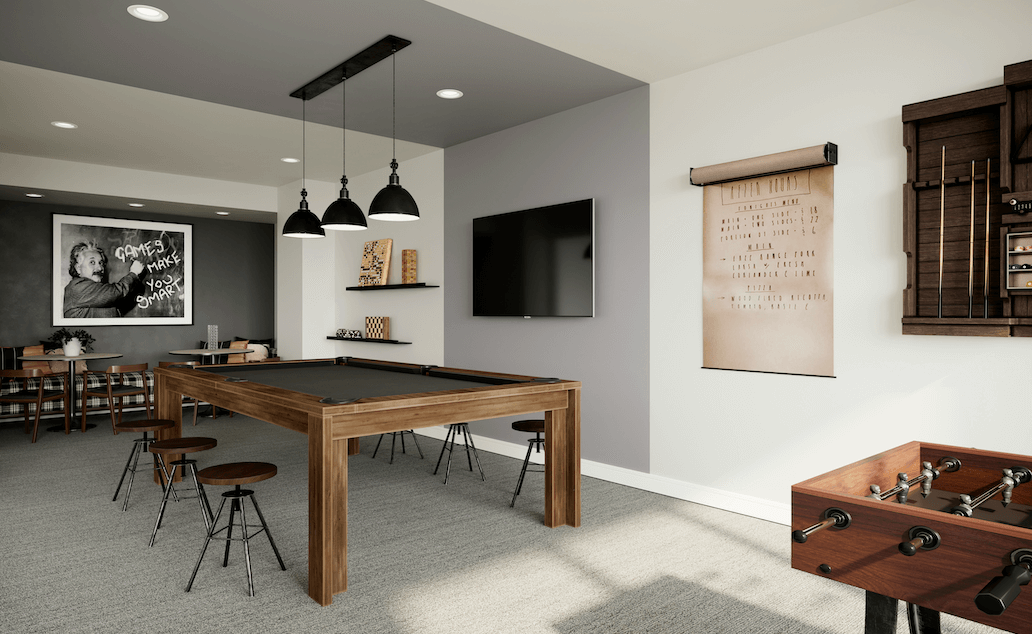
Basement Man Cave Radiant Floors: Design Checklist & Trade Handoff
Last updated September 3, 2026 · By Brandon Dixon

Safety callout: This is safety-critical work. Hire a licensed plumber, HVAC technician, electrician, or structural engineer for any regulated or high-risk tasks. Don't attempt gas, electrical, structural, or major plumbing work unless you're already qualified. Unpermitted or unlicensed work can void your insurance, fail inspections, and create life-safety hazards.
You're probably here because your basement man cave is supposed to be warm, comfortable, and gadget-forward, but the cold concrete slab keeps killing the vibe. Picture a low-profile sectional, a finished bar, and a silent AV rack, all running off a floor that heats evenly and never battles the thermostat. This post walks through what you need to plan, specify, and hand off to your trades so a hydronic radiant floor actually delivers that vision. It's not a DIY how-to. Instead, you'll learn which decisions matter, which numbers to gather, and how to turn your comfort and automation goals into a clear brief for licensed contractors.
Specifically, this post covers five things you must get right: safety and permits, heat-loss and load calculation, system types and components, materials/piping and controls, and hiring and trade handoff. Expect practical checklists, tech-forward spec considerations, and the red flags you should spot when vetting bids. After these sections you'll be ready to gather reports, set performance targets, and hand a solid package to the pros who will do the work and sign the permits.
Difficulty: Intermediate · Time: 1 weekend · Cost: $200-$400
Safety First: Permits, Inspections, and Why You Need a Pro
Radiant underfloor heating looks straightforward until you factor in gas lines, boiler clearances, electrical pumps, and changes to a slab or subfloor. Bottom line: this is a what-to-know-before-you-hire guide, not a how-to manual. For any regulated work, bring in licensed trades. Local building departments usually require permits for boilers, fuel piping, significant plumbing changes, and any structural work. Pulling permits protects you and the project. It forces plan review, inspection points, and a paper trail that keeps your homeowner insurance valid and avoids ugly surprises on resale.
Plan permit interactions early. Expect to hand an inspector a system schematic, a heat-loss report, and a basic wiring diagram. Ask your contractor which permits they will pull and confirm they carry liability insurance and workers compensation. Put access and serviceability requirements into the plans so manifolds, pumps, and mixing valves are reachable without wrecking the finished floors. Finally, write commissioning, pressure-test witness points, and O&M handoff expectations into the contract. That's how a warm-floor idea becomes a code-compliant, insurable system.
Safety callout

This project is safety-critical. Hire a licensed plumber, HVAC technician, electrician, or structural engineer for any regulated or dangerous work, unless you are already qualified. Don't attempt gas, electrical, major plumbing, or structural modifications yourself. Unpermitted or unlicensed work can void insurance, fail inspections, and create life-safety hazards. This section is about what to know before you hire, how to plan, and what to hand off to the pros.
Permits and inspections: what to expect
Most places want permits when hydronic systems tie into boilers, change plumbing, alter mechanical systems, or modify a slab. Typical permit types: plumbing, mechanical, electrical, and sometimes structural if you core or alter the slab. Review times vary a lot-plan on anywhere from 1 to 8 weeks depending on where you live. Fees are usually from roughly $50 to a few hundred dollars for a residential job. Expect at least one rough inspection (piping, penetrations) and one final inspection. Confirm with your contractor who will pull the permits and who will represent the work at inspections.
What to prepare for the trade handoff
Come to bids with these items so contractors can price accurately and you avoid surprises:
- Heat-loss calculation for the basement area (room-by-room if it's an open plan). This is the single most important document.
- Floor assembly section: existing slab thickness, whether there’s under-slab insulation, and finish floor types and thicknesses.
- Performance targets: preferred slab surface range (for example 75 to 85°F for comfort), or the interior setpoint and how fast you expect recovery.
- Service constraints: space for a manifold, electrical feed availability (pumps and controls typically need 120/240 V), and where the boiler or heat source will sit.
- Access and finish constraints: where you want access panels, finished floor elevations, and what floor build-up you’ll accept.
Useful planning numbers (for specification, not DIY)
- Typical supply water temps for slab systems: 85 to 125°F depending on floor build-up and load. Lower temps work when the floor and building are well insulated.
- Typical heat output range: 10 to 40 BTU/hr/ft2 depending on tube spacing, floor covering, and insulation.
- Tube spacing used in proposals: often 6 to 12 inches. Tighter spacing raises output and increases system cost.
Red flags when vetting bids
Be wary of contractors who refuse to pull permits, offer verbal-only quotes, can't provide references or proof of license, or recommend unusually high supply temps without justification. Cash-only pricing or no written warranty are big warning signs.
Final note: get at least two written bids that include permit responsibility, an inspection schedule, and as-built drawings so your man cave ends up warm, legal, and insured.
Get the Numbers Right: Heat-Loss and Load Calculation Essentials
If your radiant floor feels lukewarm on a cold morning, the culprit is almost always poor sizing, not a defective product. Accurate heat-loss and load calculations are the backbone of a reliable design. For a basement man cave you need a room-by-room Manual J style calculation or an equivalent. Basements present unique challenges: cold-slab conduction, high thermal mass, lower window areas but potential infiltration at rim joists, and occasionally higher moisture levels. The load calc tells you tube spacing, target slab surface temperature, and the capacity of your heat source, whether that’s a modulating condensing boiler or an air-to-water heat pump.
Don't approximate. Give the pros as-built dimensions, wall assembly R-values, slab insulation details, window types, and the intended floor covering. Those things change the surface-temperature needed and the watts per square meter. The heat-loss decides whether you need closer tube spacing, higher water temps, or supplemental perimeter radiation. It also guides selection of buffer tanks, plate heat exchangers, and the right pump curve. If you plan zoned control, the load calc tells you how many zones a single manifold can handle and whether you need staged equipment or a variable-speed circulator to keep control smooth and efficient.
Safety callout. This is safety-critical, regulated work. Hire a licensed plumber, HVAC technician, electrician, or structural engineer for any mechanical, gas, electrical, or structural tasks unless you are already qualified. Don't attempt regulated work yourself. Unpermitted or unlicensed work can void insurance, fail inspection, and create life-safety hazards. This section explains what to know before you hire and what to hand off to the pros.
Who should run the heat-loss and why it matters
A qualified HVAC designer or licensed contractor should run a room-by-room heat-loss (not a ballpark "rule of thumb") for the basement and any connected zones. Software or Manual J-style calculations account for glazing, below-grade walls, slab conduction, infiltration, and internal gains. The result drives pipe spacing, supply temperature, loop count, pump sizing, and the heat-source capacity. Get this early so bids are apples-to-apples.
Key inputs the calculation needs
- Design indoor temperature and the local design outdoor temp (use your jurisdiction’s design temp or ask the contractor to).
- Construction details: slab thickness, under-slab insulation R-value, wall assembly, window types and sizes, and finished floor materials.
- Room-by-room program: intended use, furniture, and heat gains from AV gear.
- Desired slab surface temperature target (your comfort preference influences supply temp).
How loads translate to system specs (practical numbers)
- Use the hydronics rule: BTU/hr = 500 × GPM × ΔT. Rearranged: GPM = BTU / (500 × ΔT). Example: a 5,000 BTU room at a 10°F ΔT needs 1.0 GPM.
- Designers commonly assume a 10°F ΔT for radiant floors to maximize floor-area output and comfort. Confirm what your contractor assumes.
- Loop length limits matter. Typical 1/2-inch PEX loop practical lengths are up to roughly 300 feet, but verify manufacturer limits. Longer loops reduce output and increase head loss.
- Boiler/heat-source sizing. Size gross output with a 10 to 20% margin above calculated peak load to allow for pump head and simultaneous zone operation.
What to hand off to trades
Give the heat-loss report (room-by-room), suggested loop layout or floor plan notes, floor assembly section (insulation and finish), and performance targets (surface temp or room setpoint and allowable recovery time). Ask bidders to return: loop lengths, GPM per loop, pump curve and head, manifold port count, and recommended supply temperature range.
Common pitfalls and red flags
Avoid single-number quotes that skip a proper heat-loss. Walk away from proposals that ignore floor-covering corrections (carpet vs tile), skip loop-length limits, or specify unusually high supply temperatures without a heat-loss basis. If a contractor refuses to provide a basis-of-design or won't pull permits, move on.
Choosing the System: Heat Sources, Manifolds, and Smart Controls
Once the load is known, pick the system architecture. Hydronic radiant floors sit in a few families that trade off cost, complexity, and efficiency. The big decision is the heat source. Options include high-efficiency condensing boilers, air-to-water heat pumps, or hybrids that pair heat pumps with boilers for peak loads. Use a buffer tank if short-cycling is a risk. From there you design hydraulic distribution: a central manifold with flow meters and balancing valves, or decentralized manifolds for multi-zone setups. Each choice affects installation complexity and serviceability.
Controls are where your man cave gets smart. Zone thermostats, actuated manifold valves, outdoor reset or weather compensation, and home-automation integration cut energy use while keeping comfort tight. If you're planning automation, look for Modbus, OpenTherm, or other interfaces. Specify actuator types, control voltage, and required I/O early so your electrician can run the correct low-voltage wiring. The right control strategy improves efficiency, comfort, and makes commissioning straightforward for the trades.
Safety callout. This is safety-critical work. Hire a licensed plumber, HVAC technician, electrician, or structural engineer for any regulated or dangerous work, unless you are already qualified. Don't attempt gas, electrical, structural, or major plumbing work yourself. Unpermitted or unlicensed work can void insurance, fail inspections, and create life-safety hazards. This section is about what to know before you hire, how to plan the system, and how to choose the right spec, not a how-to.
System types: pick the right approach for your basement
Hydronic radiant floors fall into three common families. Embedded slab systems cast tubing directly into a concrete slab. They're thermally stable and play well with basements on-grade because the slab already is the thermal mass. Thin-slab or "screed over" systems use a thin cementitious layer over tubing when you can't raise floor elevation much. They heat faster but store less heat. Suspended systems (timber or framed floors) use aluminum plates or plywood with tubing stapled or routed; these are common when you need a floating floor or a retrofit over joists.
Pick based on floor build-up, desired thermal response, and finish floor. Timber floors need lower surface temperatures (keep them under about 85°F). Tile or stone tolerate higher slab temps and higher heat flux.
Core components and what they do
- Manifold. Distributes flow to loops, provides flow metering and balancing, and is the primary service point. Put it where you can reach it without tearing up finishes.
- Circulator pump. Size the pump for calculated GPM and system head. Variable-speed ECM pumps save energy and improve control during partial loads.
- Mixing device. A thermostatic or motorized mixing valve keeps supply water in a safe and efficient range. For on-slab systems you'll commonly see 85 to 125°F supply choices; aim for the lower end when possible.
- Heat source. Condensing boilers, heat pumps, or water heaters can supply heat. Size gross output with a 10 to 20% margin above peak load. Buffer tanks are common to prevent short-cycling on small loads.
- Safety and service items. Expansion tank, pressure relief valve, air separator, fill/backflow assembly, and isolation valves for each loop. Include check valves and a pressure gauge near the manifold.
- Tubing and accessories. Use oxygen-barrier PEX sized per loop. Typical practical loop lengths: about 200 to 300 ft for 1/2-inch PEX; 5/8-inch PEX extends that range. Loop spacing usually varies 6 to 12 inches, depending on required BTU/ft2.
Practical numbers and handoff tips
A simple GPM rule: GPM = BTU / (500 × ΔT). At a 10°F ΔT, a 10,000 BTU zone needs 2.0 GPM. Example: a 600 ft2 basement needing 20,000 BTU at 10°F needs roughly 4.0 GPM total. Ask bidders to return loop lengths, GPM per loop, pump head curve, manifold port schedule, and the mixing strategy. Red flags include proposals that skip mixing valves, recommend very high supply temps without a heat-loss basis, or place the manifold in a concealed, inaccessible spot.
Side note: your AV rack sheds real heat. Treat that as an internal gain in the design and you might relax loop spacing around the bar or equipment nook.
Plan these choices now so your contractor can quote accurately, pull the right permits, and deliver a warm, code-compliant man cave.
Materials, Piping, and Controls: Spec Decisions That Matter for Longevity
Materials determine performance and long-term reliability. PEX-A with an oxygen barrier is the common standard for radiant loops because it expands under freeze, uses proven fittings, and resists oxygen diffusion. Specify tubing diameter-1/2-inch for most residential loops, or 5/8-inch when you need longer runs or lower head loss-and insist on reputable fittings like press or ASTM-rated crimp systems. Manifold construction matters too. Brass or stainless manifolds with integrated flow meters and check valves simplify balancing and troubleshooting, and a manifold with serviceable ports makes future maintenance painless. Insulation under the slab and around perimeter edges prevents thermal bleed and dramatically reduces run-time.
On controls, size circulators and mixing valves from the heat-loss numbers, and specify serviceable expansion tanks, pressure relief, and isolation valves. If the design uses antifreeze, pick the right glycol concentration and a water-treatment plan to protect metals and polymers. Wiring and control specs must include thermostat type, actuator voltage, and communications protocol for automation. These are the items you hand to a tradesperson so they can quote accurately and avoid last-minute swaps that inflate cost or hurt warranty.
Safety callout. This is safety-critical work. Hire a licensed plumber, HVAC technician, electrician, or structural engineer for any regulated or dangerous tasks unless you are already qualified. This section explains what to specify, what questions to ask, and how to hand off details to trades. Don't attempt gas, electrical, structural, or major plumbing work yourself. Unpermitted or unlicensed work can void insurance, fail inspection, and create life-safety hazards.
Materials choices that matter
- Tubing. Specify oxygen-barrier PEX. For new slabs use 1/2 inch PEX for typical comfort loads and 5/8 inch PEX when you need longer loops or lower head loss. Ask the designer for loop-length limits; a common guideline is about 200 to 300 ft for 1/2 inch, and up to 350 to 400 ft for 5/8 inch depending on layout and pump choice.
- Under-slab insulation. Call out continuous rigid insulation under the slab. Typical design ranges are R-10 to R-20 (roughly 2 to 4 inches of XPS or equivalent) for on-grade basements to maximize floor output and reduce heat loss to soil. Specify perimeter edge insulation as well.
- Manifold and fittings. Require a serviceable manifold assembly with individual flow meters and isolation valves. Stainless or brass manifolds with removable flow meters make commissioning and future servicing easier. Require isolation valves, check valves, a pressure gauge, and a fill/backflow assembly at the manifold.
Piping, protection, and routing tips
- Sleeves and protection. Require sleeves for any tubing passing through concrete or fire-rated assemblies. Protect exposed runs with conduit or protective plates where foot traffic or finishing trades could damage tubing.
- Support and expansion. Call for clip spacing per manufacturer (typically 12 to 18 inches for exposed runs). Include details for expansion joints where PEX crosses control or structural joints.
- Penetration detail. Provide a penetration schedule in the handoff: sleeve size, firestop type, and location so plumber and inspector agree before cores are drilled.
Controls and wiring to specify
- Actuator voltage and transformer sizing. State the actuator voltage you want (commonly 24 VAC). Ask bidders to provide a VA load calc. Typical 24 VAC actuators draw about 3 to 7 VA each. For a 6-zone manifold plan on a 60 to 120 VA transformer unless the contractor calculates otherwise.
- Thermostat and sensor plan. Call for one floor sensor per zone (in a sensor well) plus an air thermostat if you prefer room-air control. If you want smart integration, request Modbus, BACnet, or other I/O options now so wiring can be provisioned.
- Low-voltage and power runs. Require conduit paths and labeled pulls: thermostat cable from each zone to the manifold/controller, a dedicated circuit for the circulator pump (120 or 240 VAC as specified), and a clear power disconnect location. Leave one extra conductor per thermostat run for future expansion.
Commissioning and handoff items to require
- Loop schedule showing lengths, GPM, and expected BTU/ft2 for each loop.
- Pump curve and selected head.
- Hydraulic schematic showing mixing strategy and safety devices.
- Hydrostatic pressure test record (pressure and hold time). Typical bids should state the test pressure used and duration so inspectors can verify.
Include these spec items in your bid package and you'll force apples-to-apples pricing and a serviceable installation that keeps your man cave warm for years.
Hiring and Handoff: How to Brief Pros, Verify Specs, and Close the Job
The final phase is all about a disciplined handoff. You want one package that lets a qualified contractor price the job with confidence. That packet should include the heat-loss report, desired floor buildup and finish types, manifold location, expected floor surface temperatures, a zone schematic, electrical needs for pumps and controls, and any water treatment or glycol requirements. Add your automation goals, including which home-automation protocols you want supported. Ask bidders to confirm they will handle permits, inspections, and commissioning, and to provide references with similar radiant installs.
When evaluating bids, verify licenses, insurance, and manufacturer-authorized installer status for boilers or pumps. Build the contract with clear milestones: permit pulled, pre-pour pressure test, cover pour, rough-in signoff, and final commissioning with recorded flow and delta T. Require as-built drawings and an O&M manual at handoff, and schedule a final walk with the installer to record test results and set up your smart controls. This structure reduces surprises, preserves warranties, and gets you the warm floor you planned.
SAFETY CALLOUT. Hire a licensed plumber, HVAC technician, electrician, or structural engineer for any regulated or dangerous work unless you are already qualified. This section is about what to know before you hire and how to plan the trade handoff. Do not use this as a how-to. Unpermitted or unlicensed work can void insurance, fail inspections, and create life-safety hazards.
What to include in your bid package
Give bidders a single packet so comparisons are fair. At minimum include:
- Room-by-room heat-loss report and desired room setpoints.
- Floor build-up drawing with insulation, slab thickness, and finish flooring.
- Manifold preferred location and minimum clearance for service access.
- Electrical service notes: available breakers, desired pump voltage (120/240 V), and a request for a VA count for 24 VAC transformers.
- Control expectations: number of zones, floor sensor wells, and any required home-automation interfaces.
- Schedule constraints and sequencing notes (example: slab pour date, drywall, flooring).
Contractors should return a quote with loop lengths, GPM per loop, pump curve, manifold port schedule, mixing strategy, permit responsibility, and a list of exclusions.
Contract items to insist on
Be explicit in the contract. Include permit pull responsibility, inspection milestones, final as-built drawings, an O&M manual, warranty terms, and a clear change-order process. Hold final payment until you receive pressure-test documentation, signed inspection releases, and as-built schematics. A common payment model is deposit, a progress milestone (materials in place), and a final holdback (10 to 15%) released after commissioning.
Site coordination and sequencing
Plan coordination meetings with the plumber, electrician, concrete subcontractor, and finish trades. Key sequencing items:
- Electrical rough-in before manifold installation.
- Tubing layout verification and photos before concrete pour if tubing is cast in-slab.
- Manifold rough-in and control wiring prior to drywall/finish enclosure.
- Thermostat and sensor wiring pulled to a labeled home-run location.
A quick on-site pre-install walk with marked drawings avoids mid-job surprises.
Commissioning, documentation, and training
Require a documented commissioning report. It should include loop test pressures and hold time used, loop-by-loop lengths, measured GPM, pump selection and head, final mixing setpoint range, and control wiring diagrams. Ask for a short walkthrough with the installer at handoff. Have them demonstrate thermostat operation, point out maintenance items (air bleed points, manifold isolation), and leave a small spares kit (extra flow-meter cartridges or an actuator).
Practical tips and red flags
Allow a contingency of 10 to 20 percent in your budget for basement unknowns. Red flags: contractors who refuse to provide written loop schedules, won't pull permits, or give vague descriptions of control wiring. If someone balks at producing as-builts or refuses an on-site pre-install review, move on. A clear, documented handoff keeps the project on time and your floor reliably warm.
Common Mistakes to Avoid
- Skipping the room-by-room heat loss calculation: Loop spacing and supply temperature depend on real heat loss numbers, and guessing leaves cold zones that balancing cannot fix, so have your designer run the calculation first.
- Pouring the slab without a pressure test: Hold the required test pressure through the entire pour and log the reading, because a pinhole leak under cured concrete means jackhammering the slab you just poured.
- Handing the work to an unlicensed helper: Unlicensed work risks denied insurance claims, failed inspections, and genuine safety hazards, so hire a licensed plumber and pull the permit before work starts.
- Burying the manifold behind finished walls: Because balancing, bleeding, and future service all happen at the manifold, give it an accessible utility spot with working clearance before the drywall goes up.
- Picking flooring after the loops are designed: Tell your designer the exact floor covering before loop spacing is finalized, because thick carpet pad and certain laminates choke heat output and leave rooms cold.
- Starting the pour before documenting the layout: Photograph the loop pattern and file the pressure test results with your permit paperwork, because once concrete covers the tubing nobody can trace the runs.
Start Today
SAFETY CALLOUT: This is safety-critical work. Hire a licensed plumber, HVAC technician, electrician, or structural engineer for any regulated or dangerous tasks unless you are already qualified. This post is what to know before you hire, how to plan the project, and how to choose the right spec. Don't perform gas, electrical, major plumbing, or structural work yourself. Unpermitted or unlicensed work can void insurance, fail inspections, and create life-safety hazards.
You now have the checklist to turn a cold slab into a gadget-forward, code-compliant radiant floor: get a room-by-room heat-loss, specify floor build-up and insulation, pick the right heat source and manifold architecture, size loops and pumps from your load (GPM = BTU / (500 × ΔT)), and lock down piping and control specs (oxygen-barrier PEX, loop-length limits, mixing strategy, actuator voltage, and Modbus/OpenTherm/BACnet if you plan automation). Your choices on supply temperature (85 to 125°F), loop spacing (6 to 12 inches), and whether to include a buffer tank will define not just comfort but efficiency and serviceability for years.
The next step is practical: assemble the packet and hire the right team. Gather your heat-loss report, floor assembly drawings, performance targets, manifold location, and automation goals, then get at least two written bids that include permit responsibility, inspection schedule, as-built drawings, and commissioning. Book a pre-bid site walk with prospective contractors so tubing layout, sleeves, and electrical provisioning are confirmed, and hold final payment until you have pressure-test documentation and a recorded commissioning report. Ready to build your man cave properly? Plan the spec, hire licensed pros, and start the build.