Best LED Lighting Kits for Pinball Machines
Last updated August 21, 2026 · By Zach Lane ·How we choose products · Affiliate disclosure

A tiny switch can change everything. I still get a little buzz thinking about the first time I yanked an old incandescent from my machine and dropped in a crisp LED. The playfield woke up: colors sharpened, corners revealed details I hadn't noticed in years. That tiny win is exactly why I wrote this. I want to celebrate those moments and give you practical, hands-on advice to make your pinball sing, from how the light sits on the playfield to how the parts hold up over time.
Bring curiosity. I walk you through squeezing lights into tight, varnished rails, testing brightness and color balance so ramps and plastics glow with purpose, and matching control gear so your effects behave without flicker or fuss. I’ll also give real-world notes on wiring, power choices, and the point where a soldering iron actually pays for itself. Expect straightforward observations on durability and finish, and how each choice changes the quiet zone’s vibe.
Read on for sensory-driven reviews and installation tips that respect both craftsmanship and atmosphere. I’ll point out easy weekend upgrades and cleaner, more refined options if you want your machine to read like curated furniture. By the end you’ll know what to buy, how to install it, and how to tune the glow so your quiet zone feels intentional, immersive, and unmistakably yours.
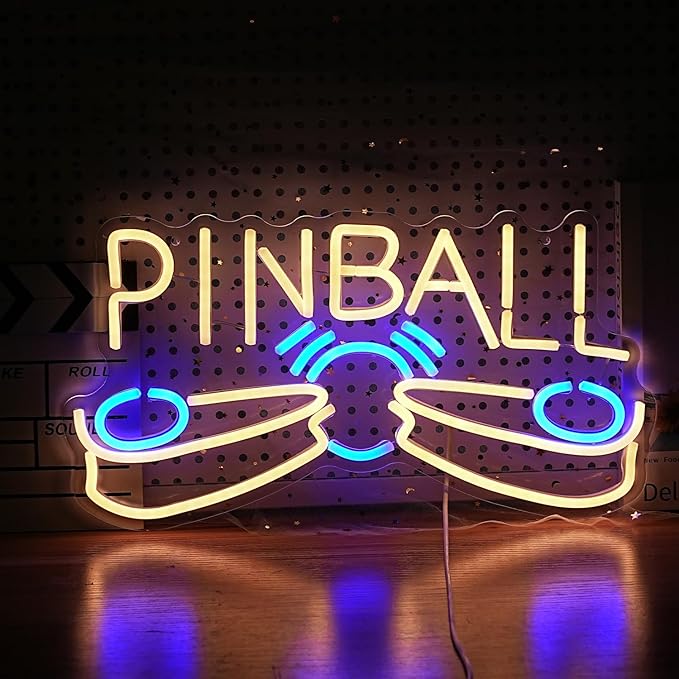
Pinball Neon Sign USB Powered Pinball Neon Light for Wall Decor Dimmable LED Pinball Light Up Sign for Game Room Club Man Cave Neon Signs Decor Birthday Party Gift(16.7 * 9In)
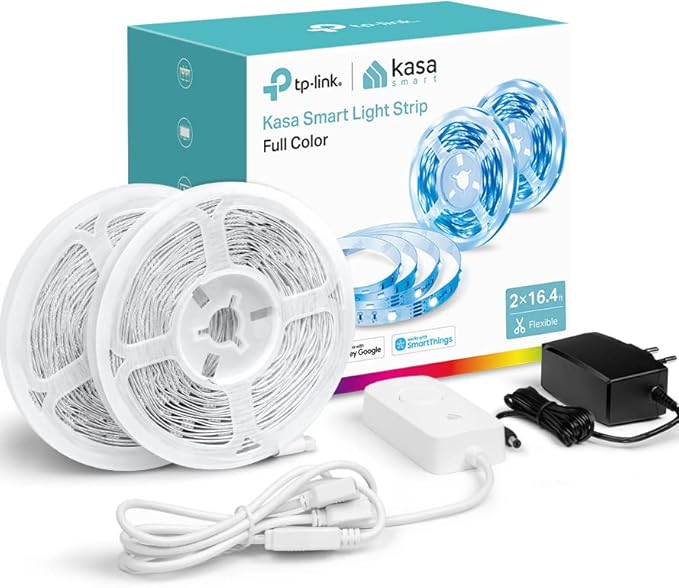
Kasa Smart LED Light Strip, RGB, 32.8ft(2 Rolls of 16.4ft.) Wi-Fi LED Strip Works w/ Alexa & Google Assistant,High Brightness, Trimmable, Up to 25,000 Hours,2Yr Warranty (KL400L10),Multicolor

Philips Hue Indoor 6-Foot Smart LED Light Strip Base Kit with Plug - Flowing Multicolor Effect - 1 Pack - Control with Hue App - Works with Alexa, Google Assistant and Apple HomeKit

Govee 100ft RGBIC LED Strip Lights, Smart LED Lights Work with Alexa and Google Assistant, LED Lights for Bedroom WiFi App Control Segmented DIY Multiple Colors, Color Changing Light, (2 x 50ft)

PHILIPS Hue Indoor 10 Ft Smart RGBWW LED Solo Lightstrip Base Kit, 1 Pack, Control with Hue App, LED Strip Lights Compatible with Alexa, Google Assistant and Apple HomeKit

Govee Gaming Light Bars Pro, Upgraded 16-Inch Smart Triple-Sided RGBIC Illumination Wi-Fi LED Gaming Lights, Music Sync & 60+ Scene Modes, Works with Alexa & Google Home, Game Room Decor
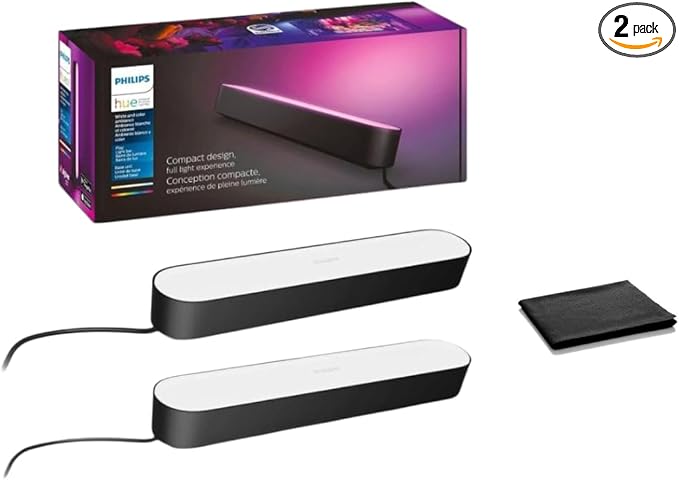
Philips Hue White & Color Ambiance Play Light Bar 2 Pack, Smart LED Light, Compatible with Alexa Google Assistant, 16 Million Colors, Hue Bridge Required, Sync TV Movies Music Games, 2 Pack, W/Cloth

RetroArcade.us 10 Pack Pinball Replacement Bulb LED 6.3 Volt AC, 555 Clear Wedge Base T10 Cool White
Our Top Pick
A ten-pack of 555 wedge bulbs for $4.99 is the top pick, and I am aware of how that reads next to a $159 Hue strip. It is still correct. Every other product on this page sits outside the cabinet and washes the room. These go into the sockets under the playfield, which is the only place on a pinball machine where light is actually doing a job.
They are 6.3 V AC, which is the voltage the general illumination circuit and the insert lamps both run at, and they drop into the same T10 wedge bases the incandescents came out of. No adapters, no rewiring, no soldering. Pull the old bulb straight out, push the new one straight in. The cool white cleans up decades of amber drift, brings engraved detail back out from under the plastics, and runs cool enough that you stop worrying about a lens softening during a long session.
Four dollars ninety-nine changes more about how a machine looks than four hundred dollars of strip lighting around it.
Key benefits and standout features:
- True drop-in for 555 and T10 wedge sockets, so a whole insert bank is a twenty-minute job.
- 6.3 V AC, matching the circuits these sockets are actually on.
- Cool white output that sharpens artwork the old bulbs had gone yellow over.
- Much lower heat than the incandescent it replaces, which matters directly above a plastic.
- Ten in a pack, so you can do one bank, look at it, and decide before committing to the rest.
- Honest limits: single-colour cool white, not addressable, and no dynamic anything.
Two cautions before you buy sixty of them. Cool white can wash out a coloured insert, which is a real effect and covered further down the page, so test a handful in place first. And these are standard bulbs rather than non-ghosting ones, which matters on some solid-state machines for reasons that also get their own section below.
Glow Where It Matters: Pinball-Specific LED Kits That Transform Play
Pinball-specific LED kits are the quickest way to give an older machine new personality. These kits are designed around the playfield, so they think about bulb fitment, how light diffuses through plastics, and the contrast you want between bumpers and ramps. When choosing one look for accurate color temperature and even beam spread so decals pop without harsh hotspots. Material quality matters too, since solid connectors and neat wire routing age better than flimsy tape and brittle leads. Some kits give brilliant color but demand more cutting and wiring; others are plug-and-play but skip nuance. I’ll help you choose the right balance of ease, finish, and longevity.
RetroArcade.us 555 T10 LEDs
If you want a quick, no-fuss way to sharpen a vintage playfield, these RetroArcade.us 555 T10 LEDs are exactly the kind of plug-and-play swap that makes a weekend feel productive. They’re made for 6.3V AC sockets, so they drop into the same wedge bases your old incandescents used without adapters or rewiring. The cool-white output cleans up muddled tones and teases out engraved details under plastics and ramps. They run cooler too, so you worry less about melted lenses during marathon sessions in the quiet zone. Toss a handful into key lanes and the improvement is immediate: targets pop, artwork reads better, and that decade-old amber melt simply disappears.
These are for hobbyists who want reliable, affordable swaps rather than RGB theatrics. Pros: true drop-in compatibility with 555/T10 wedge sockets, low heat and long life, easy install for beginners (no soldering), and a consistent cool-white that modernizes older tables. Cons: single-color cool white only, not addressable for dynamic effects, and the clinical brightness can wash certain plastics-test a few before you run the whole field. Quick tip: replace bulbs in matched groups (backbox, inserts, ramps) to keep color balance even. If you want a straightforward refresh that looks sharper without a rewiring headache, these are a smart start.
LIUOZHTEA Pinball Neon Sign
This USB-powered pinball neon sign is the kind of accent that turns a corner of your quiet zone into a destination. Laser-cut acrylic and a soft LED neon strip give an even, low-voltage glow with three-button dimming so you can go from subtle backlight to bold arcade pop. The 78-inch USB cord and included hooks, chain, and nails make it a one-coffee-job to hang. I put mine above the bar and it instantly pulled the area together, nostalgic but not toy-like. It comes in a few color combos and includes a protective film you should peel off before showing it off.
Where this sign really helps in a pinball-focused quiet zone is atmosphere, not playfield lighting. It complements playfield LEDs by creating a wall focal point or background behind a cabinet, lifting the vibe when the machine idles between games. Practical notes: use a discreet USB adapter or a powered USB hub tucked behind the cabinet to hide the cable, and try command strips if the chain feels fiddly. Pros: easy install, dimmable, great mood lighting, solid finish for the price. Cons: acrylic (not glass neon), fixed color choices, and it won’t replace purpose-built playfield LEDs. If you want a low-effort piece that makes your quiet zone feel curated, this is an excellent add-on.
Accent Strips That Contour the Machine and the Room
LED strips are the chameleons of lighting, hugging curves and filling cavities with consistent color. In the quiet zone they set atmosphere: warm white feels cozy, saturated RGB makes every multiball cinematic. When shopping, check adhesive strength, IP rating for longevity near glass or moisture, and the strip’s color rendering so printed artwork looks natural. Cut points and connector quality matter too. A tidy solder or a solid quick connector keeps an install clean. I’ll show how different strips behave under gloss plastics and how diffusers or cloth covers soften hotspots, so you can pick strips that deliver both wow factor and refined material quality.
Kasa Smart LED Light Strip
This 32.8 ft Kasa Smart LED strip is a solid way to add rich, controllable ambient light to your quiet zone and pinball setup. Two 16.4 ft rolls, 16 million RGB colors, animated effects, and app or voice control make scene-setting simple. I liked firing up a few presets or having the lights follow a schedule during late-night sessions.
What stands out is the length and the smarter ecosystem. Two rolls let you run one strip behind the backbox and another under the cabinet without buying extra kits. The app presets and voice integration make it easy to match wall color, TV bias lighting, or a game-night vibe. This model is single-zone (non-addressable), so you won’t get per-segment chases. If you want tiny, pinball-style pixel effects, look at addressable options.
Installation is easy but worth doing carefully. Clean the mounting surface with alcohol, unroll and test before you stick, and cut only at marked intervals. The adhesive is fine on painted surfaces, but on varnished wood I add clear mounting clips or clamps for insurance. Long runs may show slight dimming; plan power injection or support clips where needed.
Bottom line: a budget-friendly, smart accent light that transforms a room and complements a cabinet without complex wiring. Pros: lots of length, solid app/voice integration, easy install. Cons: single-zone, mixed reports of Wi-Fi reliability, adhesive can be hit or miss, moderate brightness (great for accent, not primary lighting).
Pixel-Perfect Drama: Addressable Strips for Dynamic Effects
Addressable strips let each LED behave independently, producing flowing chases, per-segment colors, and precise highlights that make a playfield feel alive. They’re the obvious choice if you want scenes that follow ball motion or sync to sound, but they come with more wiring and planning. Look for strips with dense, well-balanced diodes for smooth gradients and minimal banding, and match voltage and data protocol to your controller. Power injection and heat management matter, because long runs dim toward the end if you skimp on supply. I’ll walk you through the visual payoff versus the extra wiring so you can decide if the choreography is worth it.
Philips Hue Lightstrip 6ft
This Hue gradient lightstrip brings cinema-grade color and a soft, even glow that makes a pinball playfield sing. The silicone milky sleeve smooths individual LEDs so plastics, ramps, and toys glow without hot spots. Gradient blending lets you paint a ramp with flowing hues instead of one flat color. Pair it with the Hue app, voice assistants, and a Hue Bridge and you get dynamic scenes, timed automations, and sync-with-audio or game effects, which is what you want if the backbox and apron should react to music or match a table theme. The strip is flexible, extendable, and bright enough to be seen across a dim quiet zone without blinding you while you play.
Practical note: this is premium and user-friendly, not a hacker’s dream. Finish, color fidelity, and app control are excellent, but adhesive and reliability can be picky. If you plan to route it into tight cabinet corners or cut and rewire segments, bring extra mounting clips, 3M tape, and test the strip on arrival. Best for enthusiasts who value color quality, smooth gradients, and smart-home integration. If you want full per-segment scripting right out of the box, a dedicated addressable controller will be more flexible. For most builds though, this Hue strip upgrades vibe and polish in one tidy package.
Govee RGBIC LED Strips
If you want a playfield with personality, this Govee RGBIC kit is a fast, high-impact move. The addressable RGBIC chips let you paint segmented colors along a single strip so ramps, plastics, and backglass can each wear their own hue. The app and voice control make quick scene changes painless. Music-sync and the built-in mic add a party layer for gatherings, and the two long rolls mean you can run strips around the cabinet perimeter, under rails, and along the backbox without scavenging parts.
Practical stuff: the adhesive sticks well on clean, smooth surfaces but bring 3M for textured wood or varnished rails. These strips aren’t waterproof, and the power and controller layout matters, so plan where the controller sits and where you’ll inject 24V power. Cutting points and solder pads are usable if you want tidy joins or to tuck strips into recesses. Color fidelity is impressive for mood lighting, though whites skew warm and occasional units can be flaky; treat this as a high-value upgrade, not industrial gear.
Who should buy it? Weekend tinkerers who love customization and quiet zone builders aiming for immersive ambiance. Pros: dramatic multi-zone effects, app/voice control, long length for full coverage. Cons: adhesive variability, not waterproof, occasional reliability outliers, whites not studio-true. If you want your pinball to look staged for highlight reels, this is a playful, solid choice.
Controllers That Turn Light Into Atmosphere
A controller is the brain of your lighting, deciding whether lights breathe, chase, or explode on command. Responsiveness, channel/zone count, and addressable pixel support are the big callouts. Build quality and mounting options matter too, and a sturdy enclosure with clear labeling saves a lot of headaches later. I’ll be blunt about features that matter versus gimmicks so you pick a controller that fits your skill level and design goals.
Philips Hue Lightstrip Solo
If you want a playfield to pop without wrestling with custom controllers, this Philips Hue Solo 10 ft strip is very practical. It gives true RGBWW plus a dedicated white channel, so you get rich hues for mood and a clean warm white for visibility. At 1700 lumens the strip is bright enough to wash cabinet interiors or underside of ramps and plastics, revealing detail cheap RGB strips often wash out. The soft silicone sleeve smooths the glow for photos and for showing off decals.
What sets this apart is the Hue ecosystem. Use Bluetooth for quick tests or add a Hue Bridge for automations, remote control, and sync options. It is not addressable per LED, so you won’t get chasing pixel effects unless you mix it with other Hue gear or external controllers. That makes it ideal for consistent ambient washes and color scenes rather than complex light-chase showpieces.
Practical tips: measure twice before you cut, because trimmed pieces can’t be reconnected. Reinforce the adhesive with 3M or mounting clips for vertical runs inside a cabinet. Power lead length can be limiting in tight builds, so route carefully and hide the transformer behind the apron. If you want effects tied directly to gameplay, expect to add a Hue Bridge or third-party interface.
Bottom line. Pros: brilliant true whites, smooth diffusion, great app ecosystem and reliability. Cons: not extendable, pieces are single-use once cut, adhesive can fail, not pixel-addressable. Perfect for quiet zone owners who want a premium, low-fuss ambient upgrade that lifts a cabinet from good to gallery-ready.
Light Bars That Add Punch and Clean Lines
Light bars give architectural impact: focused, even illumination for backboxes, cabinets, and shelving with a slim, finished look. Look for diffusers that eliminate hot spots, robust mounting brackets that sit flush, and finishes that resist fingerprints and dust. Dimming range and beam angle matter, because too narrow gives you streaks and too wide makes the contrast disappear. I’ll describe how different bars sit under glossy plastics so you choose units that feel integrated and elevate the material story of your machine.
Govee Light Bars Pro
If you want an easy, high-impact way to make a pinball cabinet feel like curated furniture, these Govee Light Bars Pro are worth a look. The triple-sided RGBIC design gives a layered, 3D glow that makes plastics, ramps, and backglass art pop without blinding glare. The weighted bases work great for shelf or cabinet-top placement and the diffusion softens LED dots so you get smooth washes. App control, music sync, and voice control are handy during late-night sessions when you don’t want to fumble with switches.
Practical setup notes: they’re plug-and-play for ambient cabinet lighting, but DreamView screen-sync needs a Windows PC and the same 2.4 GHz LAN. For in-cabinet installs you can mount them behind plastics or inside the headbox; route the power cable through an existing grommet and secure the base with double-sided foam tape for vibration resistance. Expect great color accuracy and presets. Downsides: some users report clunky pairing and occasional resets after power loss, and they are not per-LED individually addressable like some premium strips.
Who should buy these: pick them if you want a fast, stylish upgrade that elevates cabinet presentation and room mood with minimal wiring and solid build quality. Pros: immersive triple-sided light, lots of scenes, easy voice and music sync. Cons: desktop color-matching limited to Windows and occasional app quirks. If you want theatrical, low-effort glow that makes your machine read like a centerpiece, these deliver.
Philips Hue Play Light Bar
If you want your pinball to be the room’s centerpiece, Philips Hue Play bars are a quietly powerful option. They bring 16 million colors, flexible mounts, and smart voice control to whatever you bolt them to. Behind a backglass they create a halo that makes art pop. Behind a TV or on a shelf they layer ambient color that reacts to music and movies. The ecosystem is the standout: vivid color, smooth transitions, and media sync for immersive moments. Full feature use requires a Hue Bridge and the Hue Sync setup if you want game-synced effects. For pure in-cabinet matrix tricks you may miss direct machine integration, but for room ambience and quick scene-setting these are hard to beat.
Who should buy this for their quiet zone? People who care about mood, want easy control, and like tinkering with lighting scenes more than rewiring the whole cabinet. Pros: stellar color range, multiple mounting options, and smart-home control that just works. Cons: not a drop-in lamp-matrix replacement, and advanced syncing relies on the Hue Bridge. Installation tips: use the supplied stands or mounts, test color temps on your playfield plastics before final placement, and run power outside the cabinet when possible to keep wiring tidy. These add a polished, controllable glow that makes game nights feel cinematic.
What Is Actually Inside the Machine
Everything above this point is a strip or a bar that lives near a pinball machine. The lamps inside one are a different subject, and it is the subject nobody covers before you order sixty of the wrong bulb. This section is the part I wish somebody had written for me.
Two socket types, one voltage
There are two lamp bases in play and they are not interchangeable. Bayonet, the twist-lock BA9s style, takes a #44 or a #47 and turns up almost everywhere across Williams, Stern, Bally and Chicago Coin machines regardless of era. Wedge, which takes the #555 in a T10 base, shows up almost exclusively under playfield inserts on later machines, and older tables often have none at all. Look before you order, because a wedge bulb will not go into a bayonet socket no matter how firmly you believe in it.
| Lamp | Base | Nominal voltage | Where it lives |
|---|---|---|---|
| #44 | bayonet, BA9s | 6.3 V | general illumination and playfield, every era |
| #47 | bayonet, BA9s | 6.3 V | the same sockets as a #44, cooler and dimmer |
| #555 | wedge, T10 | 6.3 V | under inserts on later machines |
| #89 and #906 | bayonet and wedge | 12 to 13 V, depending whose chart you read | flashers |
The #44 and the #47 are physically identical and differ in draw: a #44 pulls 0.25 A, a #47 pulls 0.15 A. That is the entire distinction, and it is why a machine full of #47s runs cooler and slightly dimmer than the same machine full of #44s. Flashers are a separate category, physically bigger and running at a different voltage, and the vendor charts do not agree with each other on whether that voltage is 12 or 13, so treat it as a range rather than a spec.
One more distinction that trips people up. General illumination runs on AC, straight off a transformer secondary, which is where the 6.3 V AC on the packaging comes from. The controlled lamps and inserts run on pulsed DC at the same nominal voltage, even though they can look like they are flickering on AC. Two different supplies, one number.
Polarity, and why a bulb sometimes just does not light
Cheap LED replacements without an internal bridge rectifier care which way round they go. Put one in backwards and it simply will not light. Put a DC-only bulb into an AC general illumination socket and it lights on the positive half of the waveform only, which you see as a visible strobe. Bulbs sold as AC or AC/DC have a rectifier inside and do not care, which is why the pinball-specific vendors sell everything that way and say so on the page.
There is a second, more annoying version of the same symptom that is not the bulb's fault at all. Some bayonet sockets left the factory wired backwards. If a correctly polarised bulb refuses to light in one socket while working fine in the next one along, rotate it 180 degrees in the socket before you conclude the bulb is dead. It is a five-second test and it saves a lot of swearing.
Ghosting, and two fixes that fight each other
Ghosting is when an LED glows faintly, or flickers, at moments the game intends it to be completely off. It happens because the electrical characteristics of an LED interact badly with the matrix-style row and column switching that solid-state machines use to drive their lamps. An incandescent draws enough current to swamp the effect. An LED does not, so what was invisible becomes a lamp that will not go dark.
Three fixes exist and you should pick one rather than stacking them. Non-ghosting bulbs, sold under names like Ghostbuster, carry a small internal resistor that keeps the LED dark until the voltage reaches roughly 2.5 V. An add-on OCD board is the second route, sold in an insert version and a general illumination version, though its stated purpose is restoring the smooth incandescent-style fade rather than curing binary ghosting. The third is low-tech: solder a resistor in parallel across a switched lamp socket to raise the current enough that the driver stays properly latched, with 470 ohms the value most often quoted and a 1.5k variant also in circulation.
Here is the trap, and it is a well-documented one. Non-ghosting bulbs and an OCD board work against each other, because the resistor inside the bulb interferes with the board's ability to produce a smooth fade. If you fit a board, the vendors tell you to use standard bulbs with it. Decide which route you are taking before you buy either.
The transformer detail nobody warns you about
General illumination transformers in these machines are unregulated, which means output voltage rises as the load on them falls. Convert a machine to LED and you are cutting the load substantially. One documented case had GI voltage climb from 4 V to 4.3 V after converting only the backbox lamp door, and the effect compounds as more of the machine goes over.
Related but separate: current draw at the socket matters on its own. The gap between a #44 at 0.25 A and a #47 at 0.15 A is enough, cumulatively across a machine, to burn connectors that were marginal from the factory, which is a genuine argument for LEDs beyond how they look. What I cannot give you is a number for how much less an LED draws. Every vendor and every forum thread says "significantly less" and not one of them publishes a milliamp figure, so take the direction and do not trust anybody who quotes you a percentage.
Match the LED to the insert, not to your taste
This is the mistake that makes a converted machine look worse than the one you started with. A bright cool-white LED under a coloured insert washes the colour out. Reds go pink, blues go pale, and the playfield ends up looking flat and clinical instead of deep. The community consensus on this is loud and consistent, and it is the reason to test a handful of bulbs in place before doing the whole field.
Comet Pinball publishes an actual mapping, which is worth following: white inserts take cool white, yellow inserts take sunlight white or golden yellow, light orange takes warm white, dark orange takes pink, and everything else gets matched directly, green to green and red to red. Follow it and the inserts keep the rich tint the artwork was drawn around. A machine done this way reads as a piece of furniture in the room, the way a good jukebox cabinet does, rather than as a bright box in the corner.
Budget for the whole job rather than a pack at a time. Comet's complete kit for Williams' Medieval Madness, covering general illumination, inserts and controlled lamps in non-ghosting LEDs, is $174.99 with flashers sold separately. As for how many bulbs a machine holds, nobody publishes a real figure. The forum estimates run to around 65 for a whole machine, roughly 12 per GI circuit on WPC-era games with several circuits, and 15 or more in the backbox alone. Treat that as a rough guide and count your own sockets.
When a Soldering Iron Is Actually Required
Almost never, for the job this page describes, and that is worth saying plainly because the internet implies otherwise. Swapping #44, #47 or #555 incandescents for LEDs is a drop-in operation. Bayonet bulbs come out and go in with a push and a twist. Wedge bulbs pull straight out and push straight back. Mechanically it is identical to changing the original bulb, which people have been doing without tools since 1947.
Soldering enters a pinball lighting project in three specific places, and none of them is the bulbs. Wiring a non-stock LED strip into the flasher circuit is one. Replacing a cracked socket on a flasher board is another. Repairing lamp sockets or connectors that years of incandescent heat have cooked is the third, and that one is a repair job rather than an upgrade. Even the first has no-solder alternatives, since spotlight kits exist that use the connectors and clips already in the machine.
So the sensible order is bulbs first. Do the whole field in an afternoon with no tools at all, live with it for a few weeks, and only buy an iron once you have decided you genuinely want strips wired into the cabinet. That is also the cheaper order, and it keeps the machine looking like something that was designed rather than something that was modified.
Your Next Steps
You’ve got a clear map. Small swaps like the RetroArcade.us 555 T10 LEDs give instant, clean white light that sharpens artwork and brings out texture. Accent pieces such as the LIUOZHTEA neon sign or a Kasa Smart LED strip can pull a corner together and set mood. For cinematic, soft gradients and fuss-free app control, the Philips Hue Lightstrip and Hue Play bars give polished diffusion and true whites. The Govee family, the RGBIC strips and the Light Bars Pro, pushes playful segmented effects and music sync.
Practical threads run through every review: strong adhesive or mounting clips matter on varnished rails, silicone sleeves and diffusers prevent hotspots, and honest power planning keeps colors stable and prevents flicker. Recommendations are simple when you match ambition to tools.
Weekend refresh plan: start with drop-in bulbs (RetroArcade T10s), do one insert bank, look at it under the plastics, and only then commit to the rest of the field. Match the bulb colour to the insert colour while you are at it. Next-level, theater-grade build: commit to addressable strips (Govee RGBIC or Philips Hue gradient), plan your injection points before you cut anything, and pick either non-ghosting bulbs or an OCD board rather than both. The more you invest in material quality, in diffusers and solid connectors and honest colour matching, the more your machine ages like furniture instead of a tinkerer’s project.
How to decide in practice. If you care most about atmosphere and low fuss, go Hue Solo or Govee Light Bars Pro to get an even, curated glow with simple app scenes and voice control. If you crave playfield choreography and per-segment color, commit to addressable strips, plan power injection points, and accept that this is the one path where an iron eventually comes out. One quick bench tip that saved me time: test a single lamp or a short strip in place before you commit to a full run. Color balance can lie under old plastics and varnish, and one trial will save you a weekend of rework.
Take action this weekend. Pick the category that matches your goals, buy a ten-pack of the right base before anything else, and schedule a night to install and tune one zone. If you want help laying out a wiring plan, choosing cut points, or dialing color temperature to flatter your table art, ask and I’ll help you plot it step by step. Make the quiet zone feel intentional, let the playfield sing, and enjoy that tiny thrill of flipping a switch and watching your space come alive.