Build the Ultimate Home Gym: Top Equipment & Design Essentials
Last updated September 15, 2026 · By Zach Lane ·How we choose products · Affiliate disclosure
Six years ago I was squatting heavy in a garage with no heat, no AC, and nothing between my elbows and bare concrete during floor presses. My timer was a phone propped on a bucket. Every plate I owned lived in one teetering tower in the corner, and I did a silent risk assessment on that tower before every session. Technically, the space worked. Mentally, every workout felt like an apology instead of a training block.
What follows is the guide I wish somebody had handed me back then. Below, I break down the equipment worth buying for serious training: the iron that anchors your strength work, the machines that fill the gaps, and the cardio that earns its footprint. Just as important, I cover the infrastructure most people skip until it's too late. Flooring that protects concrete and joints. Ventilation that keeps a garage livable through summer. Mirrors that catch form faults before they turn into injuries. Storage that kills the corner-pile chaos for good.
You'll get real numbers the whole way through: load ratings, steel gauges, motor specs, decibel levels, plus honest notes on where each product falls short. Every review comes from somebody who trains in the space, not just decorates it. By the end, you'll know exactly which pieces deserve your square footage and which ones are destined to become a very expensive clothes rack. Let's build something worth sweating in.

CAP Barbell 260 lb Elite Olympic Weight Set with 7ft Chrome Barbell & Black Bumper Plates

TOUSAINS CR63PRO Foldable Cable Machine for Home Gym, 71-Inch Frame
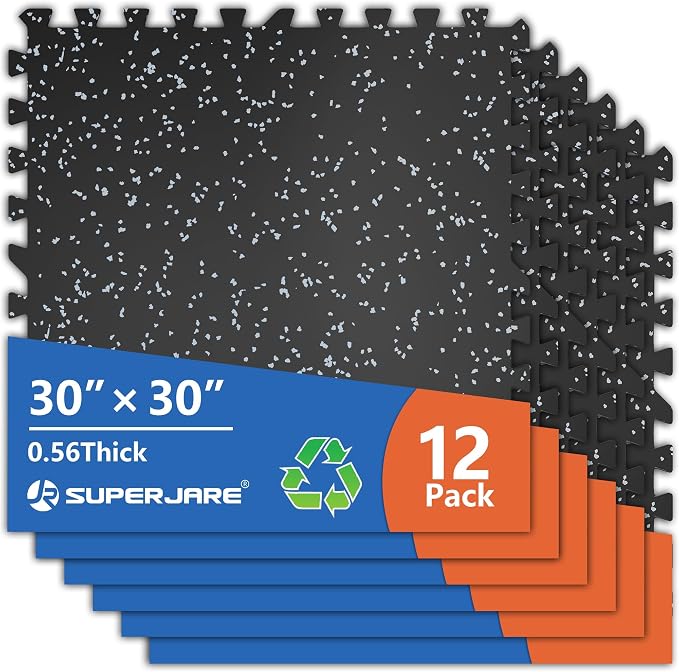
SUPERJARE 30" x 30" Larger Rubber Top Exercise Equipment Mats, 0.56" Thick 12PCS 75 Sq Ft High-Density EVA Foam Interlocking Gym Flooring, Big Workout Mat for Home Gym, Floor Protection, Black/Grey

Fitness Reality X-Class Olympic Weight Tree - Heavy-Duty Bumper Plate Rack for Home Gym - Chrome Storage Posts - Includes 2 Barbell Holders - 1,000 Lb. Capacity

15.2" Gym Timer, App & Remote Control, Gym Clock for Home Garage Outdoor

Lasko High Velocity Wall Mount and Floor Fan - 20" - 2264QM - Black

PowerBlock Elite EXP Adjustable Dumbbells, Sold in Pairs, Stage 1, 5-50 lb.
Adjustable Dumbbells That Replace an Entire Rack Wall
Come stand in my garage sometime. Two selectorized handles, doing the work of fifteen pairs of hex dumbbells. That's the whole pitch for adjustable dumbbells: a 5-to-50-pound range (and beyond, with expansion stages) squeezed into roughly one square foot of floor. If you're training progressively in a shared room or a single-car garage, the math makes itself.
When I judge these, the selector mechanism matters more than everything else combined. Pin-and-rail systems survive drops better than dial mechanisms stuffed with plastic detents, and handle geometry affects your pressing more than the top-end number does. Look for 2.5-pound increments at the lower range, steel instead of composite load plates, and a grip circumference that doesn't wreck your forearms on heavy sets. The reviews below cover adjustment speed, drop durability, and long-term expansion paths.
PowerBlock Elite EXP Adjustable Dumbbells
If square footage is the currency of your personal haven, this set offers the best exchange rate in strength training. Each pair replaces sixteen sets of dumbbells, roughly 825 pounds of iron condensed into a footprint smaller than a shoebox per hand. Stage 1 covers 5 to 50 pounds per hand, and here's the detail that matters most: it grows with you. Stage 2 and 3 expansion kits push each hand up to 70 and then 90 pounds, so you buy capacity when you need it instead of guessing on day one. Almost nobody else in this category lets you do that.
PowerBlock invented the category, and the adjustment system is why it's outlasted every imitator since. A magnetic pin slides into the steel stack and locks your selection in about two seconds. Two seconds. That's fast enough to change weight mid-superset without killing your rhythm. Want finer progressions? Two removable 2.5-pound adder weights tuck inside the handle, delivering increments most adjustable sets can't touch. Construction is powder-coated steel with solid welds and no fragile dial mechanism to wear out, backed by a five-year residential warranty. Dig around long-term owner reviews and you'll find people running these flawlessly past the six-year mark. That's not luck. That's design.
Nothing's perfect, so here's the fine print: the square cage design feels strange for a session or two, especially on overhead presses and wrist curls, and those little adder weights are slightly clumsy to swap. That's the whole list. The odd shape fades fast, and the balance ends up working in your favor on presses and rows once you adapt. Bonus trick from veteran owners: grip the bottom frame bars and you've got a serviceable kettlebell for goblet squats. This is the anchor purchase for any guy building a serious training space without surrendering an entire wall to a dumbbell rack. Pair it with the matching stand and enjoy a clear floor and a clean setup.
At a Glance
| Product | Best for | Rating | Why |
|---|---|---|---|
| CAP Barbell 260 lb Elite Olympic | First serious barbell setup | 4.9/5 | Full 260-pound bar and plate set ready for squats, presses, pulls |
| 15.2" Gym Timer, App & Remote | HIIT and EMOM training | 4.7/5 | Reads clearly across the room and syncs with your phone |
| Fitness Reality X-Class Olympic Weight Tree | Olympic plate owners | 4.7/5 | Keeps a full plate collection organized and off the floor |
| SUPERJARE 30" x 30" Larger Rubber | Garage floors under load | 4.7/5 | Thick rubber absorbs deadlift drops and quiets the clatter |
| TOUSAINS CR63PRO Foldable Cable Machine for | Apartment and spare-room gyms | 4.7/5 | Folds flat when the workout ends to clear the room |
| PowerBlock Elite EXP Adjustable Dumbbells, Sold | Lifters short on space | 4.6/5 | Adjusts from 5 to 50 pounds and expands to 90 |
Folding Weight Benches That Stow Without Sacrificing Stability
Every bench in this category is trying to do two jobs that fight each other. Stay rock solid under 300 pounds of load, then fold flat enough to slide into a corner or under a bed. I've tested a few wobbly ones. Nearly ended up underneath one during a heavy incline set, and I still think about that rep. Since then I've learned that hinge engineering is exactly where brands cut corners.
Here's the thing: the spec that matters most isn't the advertised capacity, it's the locking mechanism. Look for multi-position ladder locks with positive engagement rather than spring pins that can dislodge under lateral pressure. Pad density comes next, and high-density foam with a firm top layer beats plush padding that bottoms out and shifts your arch mid-press. Check the seat-to-backrest gap too, because a wide gap turns every bench session into an awkward wedgie. The benches below earned their spots by staying rigid under real loading while folding to a profile you can live with.
Compact Power Racks Built for Single-Car Garages
If you buy one anchor for your strength training, make it a rack. A quality power rack turns a barbell into a safe solo training station, catching failed squats and bench presses without a spotter. The compact category exists because most of us don't have room for a commercial monster with a 4x4-foot footprint and 8-foot uprights.
Steel gauge is the first spec I check. 11-gauge steel (the commercial standard, roughly 3mm wall thickness) resists flex under heavy loads, while 14-gauge works fine for sub-400-pound training if you accept a little movement. Hole spacing matters more than buyers realize: 3-inch spacing through the main frame with tighter 2-inch spacing through the bench zone lets you dial in J-hook height precisely. Confirm bolt-together construction for future relocation, verify internal depth clears your bench, and always anchor to concrete. No exceptions on that last one. The racks below balance footprint against rock-solid performance.
Squat Racks with Pull-Up Bars: Two Stations, One Footprint
There's an elegant efficiency in a stand that takes your barbell through squats and presses, then hands you a knurled bar overhead for pull-ups. This is the value play of the home gym world, and it's where I send anyone training in under 200 square feet.
The trade-off versus a full rack is stability, so here's what to scrutinize. Base footprint width drives everything: wider bases and integrated plate pegs (loaded plates act as ballast, a legitimately effective trick) keep the unit planted during heavy unracks. Check the J-hook or bar catch material too, because bare steel contact chews your bar's knurling over time, and lined saddles are worth seeking out. On the pull-up side, bar diameter matters: a 1.25-inch bar challenges grip strength, while thinner bars feel easier on the hands. Multi-grip positions multiply your exercise variety. The picks below pass both my kipping test and my load test.
Olympic Barbell and Bumper Sets That Actually Meet Spec
Nothing in a home gym gets abused like a barbell, and nothing gets marketed with vaguer numbers. I've owned bars claiming competition-grade specs that shipped with sleeves spinning like rusty gate hinges. This category demands receipts.
The numbers to memorize: a men's Olympic bar should run a 28.5 to 29mm shaft diameter with tensile strength rated at 150,000 PSI minimum (I look for 185,000+ for serious loading, which correlates with whip and fatigue resistance). Bushings or bearings in the sleeves determine rotation smoothness; composite bushings suit general training while needle bearings serve dedicated Olympic lifting. For bumper plates, durometer rating dictates bounce and durability, and the insert (brass or stainless, never plastic) is where cheap plates fail first. A chrome shaft with protective coating resists the garage humidity that killed two of my early bars. Rest in peace, both of them. The set reviewed below punches well above its tier on every one of these specs.
CAP Elite Olympic Weight Set
Every home gym needs a cornerstone. This is mine. The CAP Elite set shows up as one complete strength package: a 7-foot chrome barbell plus ten bumper plates in pairs from 10 to 45 pounds, spring collars included. That's 260 pounds of training-ready weight covering squats, bench, deadlifts, and cleans straight out of the box, and the math scales with you from a light 65-pound warm-up up past 300 as you grow. The rotating sleeves are the sleeper feature. They spin freely under load, which saves your wrists during cleans and keeps the bar from torqueing your shoulders on heavy presses. The Elite plates use cast iron cores with anchored stainless steel hubs, so they seat tight on the sleeve without the rattle you get from cheaper floating-hub designs. Uniform diameter across the set means your lightest plate sits at the same height as your heaviest. Your positioning stays honest from the first rep to the last.
Where it falls short: the bar is rated to 500 pounds, plenty for most lifters for years but it'll eventually pinch stronger pullers chasing big pulls. The 54,000 PSI tensile strength is home-gym grade rather than competition grade, and the medium-bounce rubber handles occasional drops far better than daily Olympic lifting sessions. Chrome can also show wear faster than a bare steel shaft. None of that changes my verdict. This is the smartest foundation buy for anyone building a strength zone, and the obvious upgrade path for lifters still clanging around mismatched cast iron plates. Bumpers keep dropped lifts quiet enough for late-night sessions in an attached garage, and they look sharp racked beside your plate storage. This set turned my training corner into the part of the room I show off first.
Adjustable Kettlebells That Keep the Bell Shape Honest
Here's the uncomfortable truth about adjustable kettlebells: the form factor IS the exercise. Swings, cleans, and snatches depend on a bell's center of mass sitting below and behind the handle. Get the geometry wrong and every swing feels like fighting a suitcase full of loose change. That's why I test these harder than any other adjustable weight.
The designs worth owning use stacked plates that lock into a shell, keeping loaded weight distributed like a real bell rather than clumped at the handle. Handle diameter should sit in the 30-35mm range (standard competition sizing) with a powder-coat finish that chalk grips well. Weight increments matter for pressing progress: 8-to-10-pound jumps are workable, but finer adjustments serve strict presses and get-ups far better. Scrutinize the locking mechanism's security too, because a plate shifting mid-clean isn't an annoyance. It's a safety event. My picks below hold their geometry across the entire weight range.
Resistance Band Sets with Handles for Real Accessory Work
I used to write bands off as physical therapy toys. Then I started using them for accommodating resistance on big lifts and structured warm-up protocols, and now a full set lives permanently on my wall. The good sets punch far above their storage footprint.
Layered construction separates contenders from snapping hazards. Continuous-layer latex, pulled in multiple thin layers rather than molded in one pour, resists the micro-tearing that kills cheap bands mid-stretch, which is exactly as dangerous as it sounds. Check resistance ratings per band (ideally color-coded and spanning 10 to 50+ pounds) and inspect the hardware: solid carabiners and door anchors rated beyond your heaviest band's peak tension. Handle quality is underrated; padded grips prevent the wrist strain that thin nylon straps cause during rows and pulls. Used for assistance work, band-resisted pressing, and mobility training, a quality set adds a dimension no iron can replicate.
Wall-Mounted Pull-Up Bars That Survive Kipping
A doorway bar was fine for my apartment years. The day I started training weighted pull-ups and kipping variations, I needed steel bolted into studs. A wall-mounted bar is the closest thing to a pull-up rig without dedicating floor space, and the engineering spread in this category is wide.
Mounting is everything. A bar's weight rating means nothing if the included hardware is soft, so I source Grade 8 bolts independently and mount into two studs minimum, ideally with a backing board spanning them. Frame geometry determines head clearance: quality units space the bar 20-plus inches from the wall so your head isn't tracking drywall on every rep. Grip surface matters too, since knurled steel beats foam sleeves that compress and eventually tear. Multi-grip frames (neutral, wide, close) expand your exercise options considerably. Weight ratings of 300 to 500 pounds are standard, but verify against dynamic load rather than a static hang, because kipping roughly doubles peak forces. The bars below handle both.
Compact Cable Machines: Commercial Smoothness, Home Footprint
Cable work is the one gap most garage gyms never close. You can press and pull with iron all day, but nothing replicates constant-tension cable resistance for lateral raises, face pulls, curls, and triceps work. Compact cable machines finally fixed this, and the current generation is impressively engineered.
Pulley ratio is the spec that changes everything: a 2:1 ratio halves the felt weight while doubling travel distance (great for high-rep accessory work), while 1:1 delivers true weight feel for heavier pulls. Cable quality is non-negotiable. Look for aircraft-grade steel cable rated to 2,000+ pounds breaking strength running through nylon pulleys with sealed bearings. Foldable designs with frame heights around 71 inches solve the storage problem entirely, collapsing against a wall when not in use, though I verify wall-mount hardware quality on any unit meant for loaded work. Standard 1-inch carabiner connector compatibility keeps your attachment options wide open. The reviews below focus on smoothness under load and long-term cable wear.
TOUSAINS CR63PRO Cable Machine
Cable work is the part of home gym planning most guys get wrong. They budget for the rack and the bench, then realize there's nowhere to do pulldowns, rows, face pulls, or triceps. The CR63PRO solves that without eating your space alive. At under ten inches wide, it slips against a wall or into a corner that a commercial crossover unit would laugh at. Since it's freestanding, there's no drilling into drywall you don't own. Renters, take note.
It performs bigger than it looks, too. The 71-inch uprights give you real clearance for overhead pulldowns, something shorter compact trainers butcher. Dual-bearing pulleys keep cable travel smooth and controlled, and the alloy steel frame is rated to 450 pounds. Better yet for your budget: it's plate-loaded and accepts both 1-inch and 2-inch plates. The iron you already own becomes your resistance stack, so no buying a proprietary weight pile.
The included attachment package is generous for this category. You get a LAT bar, straight bar, triceps rope, V-handle, double D-row handle, collars, and more. Plenty of brands ship a single bar and wish you luck. Assembly is about 80% done out of the box, so you're training within half an hour. Built-in wheels let you roll it aside when the space pulls double duty as a hangout, and the dark green finish reads more whiskey lounge than big-box gym. I mean that as a compliment.
The catches: plates aren't included, and this model is new with a short review history, so you're an early adopter. TOUSAINS also doesn't publish the pulley ratio, which affects how heavy a given load feels. Even so, for renters, garage trainers, and anyone squeezing serious back and arm work into limited square footage, this is one of the smartest cable buys I've come across.
All-in-One Home Gym Machines That Earn Their Footprint
The all-in-one gym is the original home gym centerpiece: one station handling lat pulldowns, seated rows, chest presses, and leg work. Modern versions pack four or five movement patterns into frames under seven feet wide, and while they'll never fully replace a barbell rack, they fill genuine training gaps.
Stack-loaded designs deserve first look for solo training (no loading plates between sets), but check the stack ceiling. 150 pounds feels light fast on lat work, so plate-loaded or upgradable-stack designs have longer legs. Cable routing and pulley quality determine whether the machine feels fluid or grindy within a month, so sealed bearings and nylon pulleys top my checklist again here. Frame construction should be 12-gauge steel minimum with a powder-coat finish that shrugs off garage humidity. Seat and arm pad adjustability matters more than station count; a machine fitted to your torso geometry gets used daily, while a bad fit becomes laundry storage. The machines below survived my repetition-count abuse test.
Folding Treadmills That Won't Take Over Your Space
Cardio equipment has the worst space-to-use ratio in fitness, which is exactly why folding treadmills exist. The engineering challenge is real: a deck that absorbs running impact and a motor that sustains daily sessions, packaged in something you can tilt and roll into a corner between workouts.
Motor specification is where I start, and I ignore peak horsepower marketing entirely. Continuous horsepower (CHP) is the honest number: 2.5 CHP handles walking and jogging indefinitely, while running at a true pace for 30-plus minutes wants 3.0 CHP. Belt dimensions matter for taller runners; a 55-inch belt is the minimum comfortable running length for anyone over six feet. The folding mechanism itself ranges from basic pin hinges to hydraulic-assist lifts, and gas struts that lower the deck slowly are worth paying for, because free-falling decks are genuine knuckle hazards. Deck cushioning, incline range, and console connectivity round out my evaluation. I also test decibel output at running speed, because shared walls are real.
Compact Exercise Bikes Built for Daily Punishment
An exercise bike is the quiet workhorse of home cardio. Mine gets ridden during meetings, game broadcasts, and early mornings when the treadmill would wake the whole house. The compact category has matured dramatically, with magnetic resistance systems delivering smooth, silent pedaling in frames under four feet long.
Magnetic resistance wins this category outright: no friction pads to replace, no contact wear, and resistance adjustments that respond instantly through a dial or console. Flywheel weight drives ride quality; heavier flywheels (13 pounds and up) maintain momentum through the pedal stroke, killing the choppy, leg-taxing feel of light-flywheel budget units. Check the drive system too, since belt drives run quieter and cleaner than chains, and inspect the crank assembly, where three-piece cranked bearings outlast one-piece stamped cranks by years. Dual-axis seat and handlebar adjustability accommodates multiple riders, and a 300-pound user capacity usually signals honest frame engineering. The bikes below balance footprint, noise, and ride feel.
Interlocking Gym Floor Tiles That Protect Concrete and Joints
My first garage gym floor was bare concrete, and my elbows paid for it during every floor press. Interlocking tiles solved that, but the quality spread is enormous, from foam that dents under a bench's feet to dense rubber-topped tiles that shrug off loaded barbells.
Material construction is the deciding spec. EVA foam cores provide cushioning and insulation, but foam alone compresses permanently under equipment; a bonded rubber top layer (the design I favor) adds abrasion resistance and drop protection exactly where you need it. Thickness should match your activity: roughly half an inch covers general training and machine loads, while heavy barbell drops want 15mm-plus or a dedicated platform. Interlock quality separates good systems from frustrating ones, because shallow or brittle teeth separate under lateral load and create trip edges. Density ratings matter too; higher-density EVA resists the compression set that leaves equipment footprints forever. The tiles reviewed below cover 75 square feet per pack and survived a full year of dropped dumbbells on my floor.
SUPERJARE Interlocking Gym Floor Tiles
Floor first, because everything else sits on it. The SUPERJARE tiles run 30 by 30 inches, which sounds like a boring spec until you realize bigger tiles mean fewer seams. Fewer seams means faster install and fewer edges to curl up under a rack foot. I laid a 75 square foot kit under my rack and dumbbell corner in a single afternoon, and the interlocks cinched down tight with no visible gaps. The construction is where this setup earns its keep: a rubber top layer bonded over a high-density EVA foam base. You get a textured grip surface that held steady through heavy lunges and kettlebell work, plus just enough give to make floor presses and kneeling tolerable on a cold slab. One reviewer running a power rack with 400 pounds on it reported zero shifting during squats, and that tracks with my experience. Bonus for anyone whose room shares a wall with a nursery or a neighbor: the rubber layer genuinely cuts impact noise. Nearly five stars across hundreds of training sessions says a lot too.
Time for the fine print. These arrive smelling like a tire shop, and the off-gassing is real. Unbox them in the garage or crack a window for a few days before you call the room finished. Also, at just over half an inch thick, this is flooring for lifting on, not flooring for slamming loaded barbells from overhead every session. Dedicated Olympic lifters will want thicker stall mats under their platform. For everyone else, the tradeoff works in your favor. The tiles stay firm underfoot with no squishy ankle wobble when you're under load, sweat wipes right off, and a spilled shaker bottle won't stain them. Waterproof, anti-slip, and rock solid under serious weight. For a garage, basement, or spare room build, they're the smartest first purchase you can make. Get the floor right and every other piece of equipment feels like an upgrade instead of a band-aid.
Full-Length Gym Mirrors for Honest Form Checks
You can't fix a form fault you can't see. A full-length mirror is the cheapest coaching upgrade in fitness, and after years of training blind, I consider mirrors essential equipment rather than decoration.
Glass quality is the entire product. True silvered mirror glass, 4 to 6mm thick, reflects without the funhouse distortion of cheaper polished-steel or thin-glass panels; stand square and move side to side to test for warping before committing. Thickness correlates directly with distortion resistance, so I favor 5mm and up. Shatter-resistant backing film is essential in a gym where a dropped plate can travel, and it's a real spec worth verifying rather than assuming. Mounting hardware matters more than people expect: French-cleat style hangers distribute weight across the frame and sit the glass flush to the wall, while cheap clip brackets leave a wobble that makes every reflection vibrate mid-set. On size, go 48 inches tall minimum for full-body checks during deadlifts and overhead work. The mirrors below passed my distortion and durability tests.
Dumbbell Racks That Get Iron Off the Floor
Every dumbbell on the floor is a toe-strike waiting to happen, and the ergonomics matter too: picking weights off a rack keeps your back in the loading position it prefers. Beyond safety, a good rack ends the mid-superset scavenger hunt for the pair you need right now.
Capacity ratings need scrutiny. A rack advertising total capacity might mean evenly distributed; loaded adjustable dumbbells concentrate serious weight on individual shelf points, so per-shelf ratings are the honest figure. Steel gauge and weld quality separate racks that sit motionless for a decade from those that sway under load; 14-gauge steel with reinforced shelf joints is my baseline. Angled shelf designs make grabbing and racking substantially easier than flat trays, and rubber-lined cradles protect both the rack finish and your dumbbells' coating. Shelf spacing matters if you run adjustable dumbbells, since block-style units need more vertical clearance than hex pairs. The racks below earned their spots through assembly quality and genuine stability under full load.
Weight Plate Trees That End the Corner Pile
For two years my bumper plates lived in a corner pyramid that metastasized every time I hit a new PR. A dedicated plate tree fixed the chaos and, honestly, made the whole garage look like a training space instead of a storage unit.
The specs that matter start with post diameter: Olympic plates need 2-inch posts, because a 1-inch post leaves your plates wobbling on the sleeve bore. Post length determines how many plates stack per peg, so plan for the collection you'll have in two years, not today. Capacity claims deserve verification; a 1,000-pound rated tree with beefy chrome posts is genuinely useful as bumper plates accumulate, but check whether the base footprint supports that rating. Tipping resistance comes down to base width and weight distribution, and loaded trees become tip hazards during plate swaps if the base runs narrow. Integrated vertical barbell holders add serious utility in tight spaces. Finish quality matters in garages, where chrome plating resists the humidity rust that trapped moisture under powder coat causes. The trees below anchor my corner.
Fitness Reality X-Class Weight Tree
Sooner or later, every serious gym hits the same crossroads: either the plates get a proper home or they colonize the floor around your rack. This weight tree is the fix I point people toward. The frame is built from 2 x 3 powder-coated steel with a 1,000-pound rated capacity, and it shows. Loaded with 45s on every post, there's zero flex and zero wobble. You also get two dedicated holders for 2-inch Olympic bars, which ends the annoyance of bars leaning against the wall or rolling across your platform mid-set.
The details are what separate this from the cheap trees that rust and flake within a year. The storage posts are chrome-plated rather than painted, so they won't chip into your plate inserts with regular loading. Post caps help guide each plate on straight, and curved floor stabilizers keep the whole unit planted even when one side carries more weight. The footprint is genuinely compact at roughly 22 by 26.5 inches, which matters in a garage or basement where every square foot of floor competes with your lifting zone. Assembly takes minutes, all tools included. At 4.7 stars across nearly a thousand ratings, this thing has been battle-tested by plenty of home gym builders before you.
One honest caveat: some bumper plates with wider steel inserts won't slide onto the middle posts, so measure your plate inserts before ordering if you run bumpers. Iron and standard Olympic plates fit without issue. The chrome can also show scuffing after months of use, though that's purely cosmetic. If you train with iron, this tree is the upgrade that makes the rest of your space look intentional instead of improvised.
Wall Organizers That Tame Bands, Ropes, and Stray Accessories
The floor is sacred territory in a compact gym, which makes vertical storage the highest-leverage organizational upgrade there is. A proper wall organizer turns wasted wall space into homes for resistance bands, jump ropes, lifting straps, ab wheels, and every accessory that otherwise migrates underfoot.
Hook design is the core spec. Wide-saddle hooks cradle bands without creasing them, and that matters more than it sounds, because a creased band develops stress points and eventually fails at the fold. That's a safety issue, not a cosmetic one. J-hooks and pegboard-style pegs suit ropes, chains, and straps. Steel hooks with powder-coat finishes outlast plastic alternatives by years, and each hook should carry its own weight rating rather than a single aggregate figure. Mount into studs, always; drywall anchors fail under the daily grab-and-hang cycle of gym accessories. Modular systems earn bonus points because accessory collections grow faster than anyone plans for. Do the capacity math too: count your accessories, then add 40 percent for what you'll own next year. The organizers below hold my real wall setup.
Wall-Mounted Workout Timers That Keep Intervals Honest
A training timer sounds like a luxury until you run your first structured interval block. My phone-timer era involved squinting at a dim screen mid-burpee and nursing a dying battery through every session. A dedicated gym timer with digits readable across the room is a completely different experience. Trust me on this one.
Programmability sits at the top of the feature hierarchy: preset modes (Tabata's 20/10 intervals, EMOM structures, custom work/rest rounds) should be one-button accessible, with custom programming for interval schemes the presets miss. Display quality splits this category hard. Look for digit heights in the 15-inch range for garage-distance readability, with brightness adjustment for spaces that swing from dim mornings to glaring afternoons. Remote control changes daily usability, because nobody wants to cross the room mid-warm-up, and app connectivity adds programming convenience on newer models. Buzzer volume needs to punch through music and fan noise; verify this spec rather than assume it, because some units whisper. Battery versus plug-in power is a genuine trade-off depending on your garage wiring. The timer reviewed below handles all of it.
SERPHIX Gym Timer
Every serious training space eventually outgrows the phone-on-the-floor phase. You're three rounds into an AMRAP, sweat is stinging your eyes, and the screen has gone dark again. That's where this SERPHIX earns its wall space. The 15.2-inch panel pushes 2.7-inch digits that stay readable clear across a two-car garage, and six brightness levels handle everything from a 5 a.m. session to a full-sun afternoon with the door open. It's also an aluminum body that mounts slim and flush, so it looks intentional up there rather than bolted-on.
Where it earns the rating is programming depth. You get Tabata, EMOM, AMRAP, countdown, count-up, stopwatch, plus nine custom interval slots you build in the app and save to the timer itself. Here's the part I care about most: once your programs are stored, the included remote runs everything. Start the clock without breaking grip position or wiping chalk off your hands. Voice countdown alerts (male or female, your pick) call the final seconds so you can stay locked on the bar instead of glancing at the wall.
The fun part is real too. Full RGB customization means you can match the digits to your LED strips, your team colors, whatever the room is running that week. It doubles as a legit wall clock with Bluetooth time sync, ten alarms, and an hourly chime if you want it. The 95-inch power cord gives you mounting flexibility, and there's a USB option for running it off a power bank if you train in the driveway.
A couple of gripes: a few owners report the app's Bluetooth connection dropping, and the built-in speaker is functional rather than impressive. The remote is your reliable fallback in both cases. For anyone building a training-focused space who wants gym-grade function without commercial-timer money, this is the smart buy. Mount it above the rack and your room finally feels official.
High-Velocity Fans That Actually Move Air in a Garage
Ventilation is the most overlooked spec in home gym design. A still garage hits oppressive heat and humidity within twenty minutes of hard work in summer, and no amount of motivation offsets poor thermal management. High-velocity fans exist because standard box fans simply don't move enough air to matter.
The number to compare is CFM (cubic feet per minute), the honest measure of air movement. A quality 20-inch high-velocity unit pushes thousands of CFM, enough to create real crossflow in a two-car garage when positioned near a door or window. Motor construction matters for longevity: permanently sealed motors resist the dust environment that kills cheap fan bearings, and metal blade construction with aluminum guards survives the gym environment far better than plastic. Pivot function (aiming airflow from floor level to directly overhead) doubles the use cases, and wall-mount capability takes the unit's footprint to zero. Noise is the honest trade-off, since high-velocity means high-decibel, so I test at the settings I'd run mid-workout. The fan reviewed below earned its permanent mount.
Lasko 20" High Velocity Fan
Airflow is the cheapest upgrade you can make to a garage gym, and this Lasko is the one I point people toward first. It's built like real gym equipment. Tubular steel frame, metal blade cage, no flimsy plastic housing waiting to crack the first time a plate clips it or it takes a tumble off a shelf. Fifteen pounds of hardware with a built-in carry handle that shrugs off the dust, humidity, and temperature swings that kill lesser fans within a season.
The QuickMount system is what makes it gym-ready instead of just garage-ready. Screw one bracket into a stud and the fan snaps between floor duty and the wall in seconds. That keeps your flooring clear for lifting instead of fan footprints. Aim the pivoting head down your rack for conditioning work, angle it across the bench on heavy days, whatever the session calls for. Rubber pads stop it from walking across the floor at full blast, the fused safety plug protects against power surges, and assembly takes minutes with zero tools.
Straight talk: this fan is loud. It moves serious air at around 53 decibels on low, and high speed sounds like a small hangar. Plenty of owners treat that as a feature. It masks street noise and drowns out the neighbor's leaf blower during morning sessions. Mine spent its first summer aimed at the ceiling because even low mode pushed my chalk dust across the whole garage. Anyway. Two more caveats: the gap between speed settings is smaller than the dial suggests, and a minority of buyers report motors dying after a few hard years. Run it on medium, pull the cage off for a cleaning twice a season, and it should outlast gear costing three times as much.
If your entertainment den doubles as a training space and you'd rather spend on iron than climate control, this is the airflow workhorse to buy. Check current pricing and specs at the link below.
Buyer's Guide: What to Look For
Mistake #1: Buying before you know your space (and your style). This is the classic rookie error: falling in love with gear online, then watching it swallow the room. Measure ceiling height, floor footprint, and doorway clearance before anything hits the cart! Better yet, treat this as a design decision, not just a practical one. Matte black steel, warm wood accents, sleek folding frames that disappear when guests arrive. Modern fitness equipment can be seriously good-looking. Choose pieces that match your room's theme, whether that's industrial loft, retro arcade, or moody speakeasy, and your gym becomes part of the décor instead of an afterthought.
Mistake #2: Going cheap on materials. Budget matters, but the bargain option often costs you twice. Flimsy frames wobble, thin flooring tears, plastic parts crack under real training. Hunt for solid steel construction, high-density rubber, and powder-coated finishes that shrug off chips, sweat, and scratches. Quality gear doesn't just last longer. It looks better doing it, and nothing elevates a hangout space like equipment that gleams.
Mistake #3: Ignoring compatibility. Oh, the heartbreak of gear that doesn't play nicely together! Check weight capacities, sizing standards, and attachment points before buying. Will your barbell work with your plates? Does your rack accept the accessories you're dreaming about? Will your flooring protect both the subfloor and your dropped weights? Five minutes of research saves you from a corner full of mismatched gear.
Mistake #4: Forgetting storage, flow, and smart spending. Even the coolest equipment looks like chaos when it's scattered everywhere. Plan storage from day one: wall-mounted organizers, dedicated racks, everything with a home. That's how your space stays tidy, safe, and photo-ready. Then spend strategically. Go big on the pieces you'll touch every single day, save on the extras, and let every dollar show. Nail these four moves and you'll end up with an at-home getaway that trains hard, looks incredible, and makes every workout feel like an event.
Time to Decide
Six years in that garage taught me to run every purchase through one filter: the spec sheet never lies, but the marketing copy always exaggerates. Every pick on this list survived it. The PowerBlock Elite EXP made the cut because the magnetic pin selector and the stage expansion path to 90 pounds per hand fix the two chronic failures of adjustable dumbbells. Slow changes, and outgrowing your purchase. The CAP Elite earned cornerstone status by being honest about itself. A 54,000 PSI tensile rating is home-gym grade, and the listing says so plainly. The anchored stainless hubs fix the sleeve rattle that plagues floating-hub bumpers. Nothing here is flawless. That was the point. You deserve to know where each piece falls short before it claims your square footage.
If you take one lesson from the strength categories, make it this: steel gauge and mechanism quality beat every advertised capacity number. An 11-gauge rack resists flex where a 14-gauge frame asks you to stay under 400 honest pounds. A barbell wants a 28.5mm shaft and 150,000 PSI minimum tensile strength, with sleeves spinning on real bushings, not "competition-grade" chrome that shows up rusting in the box. Yes, that really happened to me. The same discipline applies to the smaller stuff. Verify your folding bench uses ladder locks instead of spring pins. Confirm your adjustable kettlebell keeps its center of mass below the handle across the full range. Match your cable machine's pulley ratio to how you train. These details are the difference between equipment and furniture.
Infrastructure matters just as much as the iron, because it decides whether the space gets used at all. The SUPERJARE tiles work because of their construction, rubber top bonded over high-density EVA foam, not despite it. The Lasko earns its wall bracket by moving serious air at 53 decibels on low, a trade-off you accept with eyes open. The SERPHIX puts 2.7-inch digits on your wall, readable across a two-car garage, and that ends the phone-on-the-bucket era for good. Storage closes the loop. The Fitness Reality tree with chrome-plated posts and dual bar holders kills the corner pyramid, and a wall organizer with wide-saddle hooks keeps your bands from creasing into future failure points. Floor, fan, timer, mirror, storage. Skip any one of those and even great gear feels like a compromise.
So how do you decide? Match the build to your reality. Training in a shared room or a rental where drilling is off the table? Start with the PowerBlocks, a folding bench, the SUPERJARE floor, and the freestanding CR63PRO, which gives you plate-loaded cable work without touching drywall. Garage with real square footage and strength goals? The order is non-negotiable: floor first, then an 11-gauge compact rack or squat stand with pull-up bar, the CAP Elite barbell and bumpers, then the tree and mirror. Cardio-focused, or training at 5 a.m. with sleepers down the hall? A magnetic-resistance bike with a 13-pound-plus flywheel or a folding treadmill with an honest 3.0 CHP motor, plus the Lasko to keep the space livable. Buy what you'll touch every session first. Everything else can wait for the next training block.
Here's the truth I opened with, and it's the only closing argument I need. That old garage worked, technically, but it never felt like mine until I made deliberate choices about what earned its footprint. Your move is simple. Measure your ceiling height, floor space, and doorway clearance this week. Mistake #1 exists for a reason. Pick your floor and your anchor piece, whether that's the PowerBlocks or the rack, and get them in the room. Mount the timer, angle the fan, rack the plates. A personal haven isn't built in a day, but it starts the moment the first honest purchase hits the floor. Order the tiles and your anchor this week, and let the first session in a space built for real training be the one that convinces you the rest was worth it.