
Best Bluetooth Multi-Zone Amps for Home Entertainment
Last updated August 21, 2026 · By Zach Lane ·How we choose products · Affiliate disclosure

I still get a little jolt when a system finally clicks. One evening my amp, wireless receiver and in-ceiling speakers all decided to behave like they'd rehearsed for months, and the retreat room finally sounded like one living thing. That's why I nerd out on specs.
In this guide I'll walk you through the engineering bits, the setup tricks I use in real installs, and the listening notes that turn a good system into a retreat room soundtrack you can feel in your chest.
You'll learn how to match power, impedance and codecs so bass stays tight and mids stay clear across multiple zones. I'll lay out the tradeoffs between integrated streamers, tone-first stereo amps and multi-zone matrices, and show how in-ceiling transducers, selector switches and wall-mounted controls play together. Expect practical build-quality checks, installation pointers and comparison criteria so you can pick gear confidently, avoid surprises during install, and get a lot more nights of flawless playback.

Denon PMA-600NE Bluetooth Stereo Amplifier | 2 Channel Amplifier Home Audio | Integrated Amp | 70W x 2 | Built-in DAC & Phono Pre-Amp | Analog Mode | Advanced Ultra High Current Power

Marantz Model M1 Wireless Streaming Amplifier with HEOS Built in

Bluesound Powernode (2025) Wireless Multi-Room High Resolution Music Streaming Amplifier 100W x 2 Stereo / 80W x 3 LCR (8 Ohms) - Black

Denon AVR-X1700H 7.2 Channel AV Receiver - 80W/Channel, Advanced 8K HDMI Video w/eARC, Dolby Atmos, DTS:X, Built-in HEOS, Amazon Alexa Voice Control

YAMAHA RX-V385 5.1-Channel 4K Ultra HD AV Receiver with Bluetooth

Focal 100 ICW 8 in-Ceiling Speaker

Douk Audio VU3 PRO Dual Analog VU Meter, 2-Way Amplifier Switch, Speaker Selector, Amp Audio Switcher Box 2-IN-2-OUT with DB Panel Display

Pyle 6 Channel Speaker Selector Switch - Multi Zone A B Speaker Distribution Controller Box w/ Independent Audio Source Volume Control, Supports Home Theater Stereo Receiver System - Pyle PSLSW6
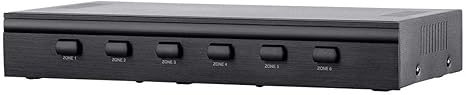
Monoprice SS-6 Premium 6 Channel Speaker Selector, with Impedance Protection, Supports 12-16 AWG Speaker Wire, Individual Zone On/Off Buttons, 138158, Black

StarTech.com Bluetooth 5.0 Audio Receiver with NFC - Bluetooth Wireless Audio Adapter BT 5.0-66ft (20m) Range - 3.5mm/RCA or Digital Toslink/SPDIF Optical Output - Lossless HiFi Wolfson DAC (BT52A)

SVS SoundPath Tri-Band Wireless Audio Adapter

Sonos Wall Mount for All-New Beam Sound Bar - Easy to Install Speaker Wallmount Kit (Black) (BM1WMWW1BLK)
Our Top Pick
The Sonos Beam Wall Mount is one of those small upgrades that pays off the minute you install it in your retreat room with multi-zone audio. Mounting the Beam at the right height gets the soundbar aimed across zones, cuts reflections off furniture and frees shelf space for consoles, drinks, or whatever nerdy trophies you've collected. The bracket fits the Beam perfectly, so it looks intentional instead of thrown together.
Installation is a weekend job. The mount keeps the Beam close to the wall for a low-profile look, includes the hardware you need, and tidies up cabling so your multi-zone amplifier and speaker wiring stay organized. That consistent placement matters when you're calibrating zones or A/Bing sound between rooms, which makes it easier to trust what you hear and tune each zone accurately.
A small mount can make your whole system sound and look more deliberate. Simple, secure installs lead to better placement and better results.
Beyond looks, the mount protects the Beam from accidental knocks during parties and keeps it out of reach of kids or pets. If you want your retreat room to feel like a dedicated audio space, this is one of the easiest, most effective accessories to add.
Bluetooth Amplifiers That Bring Convenience Without Compromise
Bluetooth-enabled amps let you cut the cable between your phone and the amplifier while keeping the level of sound quality that actually matters. For a retreat room that doubles as music room, home theater and hangout, a Bluetooth amp needs stable RF performance, wide codec support and a power stage that doesn't collapse when someone cranks it. Look for low-latency profiles and modern Bluetooth versions to avoid sync headaches, and a DAC stage that keeps detail intact. A sloppy wireless front end will show up as a raised noise floor or thin treble pretty quickly.
When you're choosing, dig into the implementation. Does it support aptX Low Latency, AAC or LDAC if you want higher-res streaming? What DAC chip is used, what are the SNR and THD numbers at rated output, and is the amp Class D or Class AB, since each topology sounds and behaves differently and has different thermal needs. Also check optical, coaxial and RCA inputs so the amp can play nicely with older gear.
Below I'll test real-world Bluetooth range, how codecs behave under interference, and how each amp handles sustained power. I'll also call out build-quality features that matter long-term, like heat sinking, toroidal transformers and multi-layer PCBs, and explain how those things affect sound and reliability for marathon listening sessions.
Denon PMA-600NE
Denon's PMA-600NE is a mature, sensible choice as the heartbeat of a retreat room listening zone. It delivers 70W per channel into 4 ohms, so bookshelf towers or in-ceiling speakers get tight bass and detailed mids. Bluetooth streaming and a built-in 192 kHz/24-bit DAC give fast wireless access and clean digital audio for TV or a streamer. There's a phono input too, so vinyl nights are covered without juggling boxes.
What separates it is practical engineering aimed at listeners who care. Analog Mode lets you shut down the digital stage and Bluetooth for a pure analog path when you cue records. The high-current push-pull amplifier topology and subwoofer output make adding chest-thumping low end simple without muddying the mains. The chassis is compact and solid, so it tucks into AV cabinets or a small rack without hogging space.
If you want a reliable stereo zone that sounds grown-up, this is for you. It’s ideal as the primary music hub in a retreat room, or as the main stereo zone paired with a speaker selector or a secondary amp to feed another area. It handles a wide range of speaker impedances, meaning it will drive efficient monitors and more demanding floorstanders alike.
Pros: balanced, detailed sound; flexible inputs; phono and sub output; Analog Mode.
Cons: it is a two-channel amp, so not multi-zone by itself; some users report coarse remote volume and audible relay clicks when switching inputs. For a retreat room focused on fidelity and easy streaming, the PMA-600NE is a sensible, enjoyable choice.
Multi-Room Amplifiers That Keep Every Zone Independent
Multi-room amplifiers are the backbone when your retreat room needs separate zones for the TV area, bar and patio. The right multi-room unit gives independent volume, source routing and reliable isolation so one zone's heavy bass doesn't collapse another zone's imaging. Key things to watch are per-zone power ratings, channel bridging capability, per-zone DSP or EQ, and whether the unit supports matrix switching or fixed groupings. Robust cooling and protection circuits are essential if you plan on driving multiple zones loud at the same time.
Look closely at the matrix architecture and how sources are routed to zones. Does each zone get EQ or delay to fix speaker placement differences? Is there impedance protection or automatic load detection to protect the amp when you wire multiple speakers? Check streaming ecosystem compatibility and whether it integrates with standard remotes or smart-home systems.
In the reviews ahead I'll measure sustained power delivery across zones, note how each model handles heavy bass transients when multiple zones play different content, and time control latency when switching sources. Expect notes on channel isolation, cooling solutions and any intelligence that makes complicated wiring topologies cleaner and more dependable.
Marantz M1
This compact stereo streamer/amp punches well above its size. Built-in HEOS, AirPlay2 and Bluetooth let you drop into your retreat room and stream from any phone. The M1 delivers 100 watts per channel into 8 ohms (and higher current into 4 ohm loads), plus a dedicated sub out, so it fills medium to large rooms without sounding strained. Marantz’s MMDF filtering preserves musical detail, giving vocals and acoustic instruments a natural, analog-like presence.
What stands out is the combination of power, streaming smarts and TV friendliness. HDMI eARC and Dolby decoding make the M1 a tidy soundbar alternative for a projector or TV, with the TV remote controlling volume. In listening sessions it produces tight, controlled bass when paired with a sub and clean mids that make classic rock and jazz sing. Owners report driving demanding speakers (KEF, Revel) and SVS subs with authority, so it behaves more like a serious amp than a lifestyle streamer.
If you’re building or upgrading a retreat room, the M1 is great for anyone who wants true stereo in a small footprint and the flexibility to add zones via HEOS grouping or extra units. Match speaker impedance (4-16 ohm) and aim for speakers with reasonable sensitivity if you want room-filling SPL. Use the sub out and tone controls in the app to tune bass for in-ceiling or bookshelf systems. For multi-zone installs, plan wiring and wall controls before committing to one unit.
Pros: powerful, compact, excellent streaming and TV integration, musical presentation.
Cons: occasional reports of idle hiss (firmware may help), no Bluetooth transmit, and HEOS lacks a full parametric EQ. Overall, the M1 is a refined, practical choice for a retreat room that wants hi-fi sound without a rack of gear.
Bluesound Powernode 2025
If you want a compact amp that actually behaves like the beating heart of a retreat room, the Powernode 2025 nails it. BluOS gives you high-resolution streaming and wide codec support, so playlists, hi-res albums and streaming services all sound detailed. HDMI eARC and a dedicated subwoofer output make it an ideal single-box solution for pairing a TV with ceiling or bookshelf speakers, so movie soundtracks hit hard without adding rack clutter. The touch glass presets are a surprisingly nice quality-of-life touch for quick mood changes: party playlist, late-night jazz, game mode.
What makes it stand out is how it blends everyday convenience with audiophile-grade pieces. The DirectDigital amplification keeps distortion down even when you push it, and the THX AAA headphone stage turns late-night listening into a proper private session. Wireless surround pairing and multi-room BluOS control mean you can feed music to other zones while the main room rattles the windows. Setup is straightforward for anyone comfortable with apps and an HDMI cable, and the minimalist footprint keeps your retreat room looking sharp rather than gear-cribbed.
Who should buy it. People who want big, clean sound from a tidy box that plays nice with modern streaming and TV gear. Pros: powerful, flexible, great app ecosystem, excellent headphone output, sub out and eARC. Cons: not a full-blown AV receiver if you need many discrete inputs, and the price is premium for a compact unit. Bottom line: If you want a polished, multi-room-ready amp that simplifies a retreat room audio system while delivering real punch, this is a top pick.
Stereo Receivers That Deliver Musicality and Flexibility
A stereo receiver is still the most adaptable core for a music-first retreat room. Modern receivers combine amplification, network streaming, preamp outputs and often multiroom features in one chassis. What matters is how a receiver balances measurements with musicality. Look for honest continuous power per channel into realistic loads, a low noise floor, tight channel separation and a high damping factor to keep woofers under control. The internal DAC and analog input stage will define dynamics and microdetail more than any flashy UI.
Dig into power ratings into 8 and 4 ohms, THD+N curves and SNR. Consider the digital section too; HDMI eARC support, reliable room-correction DSP and stable wireless codecs make life easier. Watch thermal design and PCB layout; analog and digital section separation matters for crosstalk. Think about expansion like preouts if you plan to upgrade later.
In the detailed reviews you'll see A/B comparisons, idle-noise measurements and verdicts from real listening. I'll explain how built-in room correction or network streaming change installation choices and flag chassis-level shortcuts that can bite you in long-term multi-source setups.
Denon AVR-X1700H
If your retreat room needs more than a soundbar, the Denon AVR-X1700H gives immersive surround and flexible multi-room options without turning your space into a wiring nightmare. It drives up to seven channels at a solid 80W per channel, supports Dolby Atmos/DTS:X for height effects, and includes HEOS built-in so you can pipe different playlists to the main system and a second zone. Audyssey MultEQ XT and the clear on-screen setup assistant take a lot of guesswork out of placement and tuning, which matters when you're balancing ceiling speakers, a sub under the couch and a wall-mounted center.
What makes this receiver stand out is the mix of modern video/gaming features (8K-ready inputs, eARC, VRR/ALLM) and practical multi-source handling. Use it for 5.1 movie nights, flip to game mode for low latency, or send background music to the bar area via HEOS or Bluetooth. Real talk: Bluetooth behavior is mixed in some reports, so rely on HEOS or wired connections for the most stable multi-zone streaming. Also note the tradeoff between extra surround channels and zone flexibility, because you might need to reconfigure speaker wiring if you want Zone 2 and full Atmos at the same time.
Pros include strong feature density, good room correction and wide speaker compatibility. Cons are occasional connectivity quirks and limited simultaneous zone/options without rewiring. If you want a powerful, versatile centerpiece that makes your retreat room feel like a proper entertainment hub, this Denon is a very practical pick.
YAMAHA RX-V385
This Yamaha RX-V385 is the kind of receiver that turns a retreat room into a proper hangout without needing an engineering degree. It handles 5.1 surround, Bluetooth streaming and 4K HDMI pass-through with HDR formats. In practical terms that means easy Bluetooth music from your phone, clean HDMI switching for consoles and a surround punch that makes movies and game explosions feel visceral. The front-panel controls and on-screen YPAO setup get you sounding good fast.
Yamaha's tuning helps compact fronts deliver more authority. YPAO auto-calibration, Cinema DSP modes and the low-range enhancement give smaller speakers more presence. Bi-amp capability and full five-channel binding posts are welcome for DIY upgrades. Virtual Cinema Front is useful if you can't place surrounds behind the couch. The HDMI feature set is modern enough for current 4K sources, and the AVR's low-standby power is a small win for a system that lives on.
If your retreat room is a single dedicated zone (screen, couch, sub, a few shelves of vinyl) this unit is an excellent core. If you want multi-room audio across the garage, bar and patio you'll need a workaround: add a powered Zone amp, use a speaker-selector matrix, or link Bluetooth speakers to the receiver's source. In short, great main-zone performance, workable multi-zone with extra gear.
Pros: solid 5.1 imaging, YPAO calibration, Bluetooth convenience, bi-amp-ready.
Cons: no powered Zone 2, limited HDMI I/O for heavy A/V fleets, a handful of users report long-term reliability or Bluetooth dropouts. For most builders who want theater-grade sound plus easy wireless playback, this RX-V385 is a pragmatic, well-rounded choice.
In-Ceiling Speakers: Invisible Installation, Audible Impact
In-ceiling speakers are the go-to for a clean retreat room aesthetic while delivering wide dispersion and stable imaging. The trick is to pick transducers with the right sensitivity, frequency response and mounting depth for your room. High-sensitivity drivers with appropriate power deliver more SPL with less amplifier stress. Pay attention to woofer cone materials, tweeter type and crossover topology since these shape tonal balance and off-axis response. Measure cutout dimensions and mounting depth too so you don't hit a joist or HVAC duct during install.
When evaluating models, look at CEA-2034 sensitivity figures and impedance curve behavior, not just nominal impedance. Sealed backboxes or proper chambering help with consistent low end if speakers are near cavities. See whether the tweeter can be angled, and whether the grille is paintable so it disappears into the ceiling. Durable terminals and corrosion-resistant hardware are worth the extra money in humid areas.
The reviews will include frequency-response measurements, sensitivity charts and recommended amp pairings based on impedance and power handling. I'll note how each speaker sounds up close and at a distance, describe installation challenges like joist placement or shallow ceilings, and suggest crossover and EQ tweaks to improve imaging and bass extension in real rooms.
Focal 100 ICW8
If you want in-ceiling speakers that sound like real speakers and disappear into the ceiling, the Focal 100 ICW8 hits that sweet spot. The 8-inch Polyglass woofer and pivoting aluminum inverted-dome tweeter deliver a full midrange and crisp highs, and the three-position tweeter level control lets you tame or brighten the top end depending on tile, drywall or concrete. Build quality feels premium, the grille is magnetic and paint-ready, and the tropicalized cone gives confidence near a wet bar or bathroom (not submerged, but tolerant of humidity). In multi-zone retreat room setups this speaker pairs well with compact Bluetooth amps and zone controllers, offering enough efficiency and headroom to be driven cleanly without needing a monster receiver.
Practical notes: these work great as stereo pairs over seating areas or as overhead effects for movie nights. Because the tweeter can rotate and switch levels, you can steer detail toward a listening couch or a games table without moving speakers. Tip from the trenches: if your garage or basement ceiling has joists or ducts, measure clearance first; the shallow mounting helps but you may still need a tile bridge. Also plan for a sub if you want true chest-thumping bass for vinyl nights or big action scenes. If you value clarity and discreet aesthetics, these are a very sensible upgrade.
Speaker Selector Switches to Manage Multiple Listening Areas
A proper speaker selector lets you route one amplifier to several speaker pairs without risking impedance damage or audible degradation. These boxes are the practical foundation of multi-zone speaker systems where discrete source control is not required for every speaker. Look for impedance-protection circuits, selectable impedance-matching networks and per-zone attenuation so the amp sees a safe, predictable load when multiple zones are active. Bad selectors can create unstable loads that force an amp into thermal protection.
Inspect whether a selector uses transformers, L-pad attenuators or electronic impedance matching. Transformer designs offer galvanic isolation and can be forgiving but add weight and possible coloration. Electronic solutions can be more transparent but must be well engineered to avoid introducing noise. Also check terminal quality, wire gauge support and mechanical durability for repeated use.
In the product reviews I'll test how each selector behaves under simultaneous high-power playback, measure load presentation to amplifiers and compare per-zone volume tracking. Expect notes on build quality, thermal behavior and recommended amplifier/spec combos so you avoid selectors that compromise dynamics or safety.
Douk Audio VU3 PRO
If you want a bit of theater and real utility in your retreat room rack, the Douk Audio VU3 PRO is the kind of gadget that pulls both duties. It works as a 2-in/2-out speaker and amp selector so you can A/B two amplifiers or two speaker pairs without crawling behind gear. The oversized analog VU meters and 35-color backlight give instant visual feedback and set a mood when friends are over. It supports up to 350W pass-through and includes protective load resistors and a Hall current sensor, so it plays nicely with solid-state and tube amps. Relays switch cleanly with negligible audible impact, and the ability to run two speaker sets simultaneously turns a single amp into a flexible multi-zone setup for a bar area plus listening corner.
For a retreat room owner this unit shines when you want quick sonic comparisons, rack eye candy, and an easy way to expand speaker coverage without rewire hassles. Pros: robust metal chassis, large VU meters, remote control, adjustable gain/sensitivity, good terminal quality for banana plugs. Cons: VU meter accuracy is more show than lab-precision, the remote is small and sometimes finicky, there is no physical on/off on the chassis, and rear spade connectors can be awkward. Installation tips: use banana plugs, confirm each amp stays under 350W actual output, and stash the remote or add a manual inline power switch if you prefer front-panel control. If you value both function and style in a compact box, this is a strong addition to a retreat room audio rack.
Pyle PSLSW6
If you want a simple, physical command center for multiple speaker zones in your retreat room, this Pyle 6-channel selector is surprisingly satisfying. It lets you run up to six pairs of speakers and flip them on or off with front-panel buttons while trimming each zone with its own rotary control. The heavy metal chassis and screw/banana-capable terminals feel built to last. There’s built-in overload protection and the unit doesn't add another power brick to your rack, so cable clutter stays low.
What makes it stand out is practical focus: reliable connectivity (14 AWG screw posts and banana plug compatibility), independent volume per zone, and a straightforward master switch so you can route music exactly where you want it. Install tips that saved me time: tighten the banana posts securely, use ferrules on stranded speaker wire, and place the selector near your amp to minimize long run losses. It’s perfect for wiring ceiling speakers, patio sets and a dedicated listening corner for folks who want tactile control instead of relying only on apps.
Pros: rugged build, true multi-zone control, easy wiring and no external power.
Cons: the volume knobs have coarse detents so fine-grain leveling can be awkward, some users report quirky channels which warrants a quick bench test before wall mounting, and it’s rated around 100W per channel so reserve it for mid-power systems. If you like manual, dependable control of multiple speaker areas, this is a very strong tool for your retreat room setup.
Monoprice SS-6
If you want a straightforward way to run up to six speaker pairs from a single amplifier, the Monoprice SS-6 is the kind of no-nonsense tool that makes a retreat room feel smart without a lot of drama. It gives individual zone on/off buttons, heavy-duty screw terminals that accept 12-16 AWG, and automatic impedance protection so you do not have to worry about accidentally killing your amp when you switch multiple zones on. I used it to split an AVR feed to ceiling speakers, a bookshelf pair and an outdoor patio pair.
What stands out is practical engineering: 100 watts RMS per channel capacity and isolated left/right grounds mean this box plays nicely with bridged amps or receivers that use floating grounds. Installation is simple but hands-on. Expect to fumble with tight screw clamps if you have big-gauge speaker leads, and plan wire runs so you can access the unit easily. Soundwise you will not hear magic; instead you get safe, consistent multi-zone behavior. For a retreat room that hosts movie nights, game days and backyard parties, that predictability is more valuable than exotic features.
Who should buy this. DIYers building zones with in-ceiling or bookshelf speakers will save on the cost and complexity of multi-zone amps while protecting their gear. If you're chasing absolute damping and ultra-low loss, a purpose-built multi-channel amp or matrix might be preferable. Pros: simple zone control, impedance protection, solid connectors. Cons: resistor-based switching can slightly affect damping and the clamps can be fiddly. For a robust, budget-friendly way to tame multiple zones, this is a sharp, practical choice.
Wall-Mounted Volume Controls That Blend Convenience with Fidelity
Wall-mounted volume controls are the tactile interface for distributed audio in a retreat room. A good control preserves the amplifier’s damping and impedance characteristics while letting locals adjust the level. Decide on attenuator type, stepped or continuous, and whether you need stereo or mono. High-quality stepped attenuators give repeatable channel matching, while continuous L-pads offer smooth adjustment but can shift channel balance at low settings. Terminal robustness and compatibility with standard wall plates are practical details that make installs neater.
Think about how the control interacts with your amplifier and selector. Some controls include impedance compensation networks to prevent undue stress on the amp when multiple zones are connected. Others are passive and rely on the selector or amp to handle load management. Mounting depth, mechanical clearance and the ability to integrate with remote control or smart-home systems are things that make life easier.
Upcoming reviews will check channel balance across attenuation positions, mechanical feel, and how each control affects system damping and bass. I’ll note ease of wiring in retrofit scenarios versus new construction and recommend pairings for typical amplifier outputs and speaker loads.
Sonos Wall Mount
If you want your Beam tucked neatly under the TV and out of the way of pool tables, dartboards or your neon sign collection, this Sonos-designed wall mount is a finishing touch that makes a retreat room feel finished. It hugs the Beam’s footprint so the install looks intentional, not like you duct-taped a speaker to the wall. The bottom cover lines up with the Beam’s mounting points so the bar locks in place instead of teetering on a generic bracket.
What sets it apart from bargain mounts is fit and finish. The bracket is built for the Beam and color options match the soundbar. You get a low-profile look and a physical lock point that keeps the Beam from sliding if someone bumps the wall during a game night. Small but real: the mount’s spacing makes it easier to route power and optical/HDMI cables cleanly into your AV channel or wall raceway so your rack stays tidy.
Best for the person who cares about aesthetics and reliability and who runs a multi-zone setup where cabinet space is reserved for amps and selectors. Install tip: aim for eye/ear level for the sweet spot under the TV, secure into studs if possible, and plan a short raceway for the power cable. If you’re expanding zones later, mounting the Beam leaves the console shelf available for matrix switches and wall-mounted volume controls.
Pros: perfect fit, clean looks, secure lock.
Cons: limited to the Beam (not universal), and sometimes out of stock. If you value a polished, permanent install in your retreat room, this is a simple upgrade that pays off every time you walk in.
Zone Math, Before You Price Any of This
Nearly every over-spend on a system like this comes from planning by room instead of by zone, so it is worth getting the vocabulary straight before you look at a price.
A zone is an area of audio, not a square of floor plan. Every zone needs two channels, left and right, so a twelve-channel amplifier is a six-zone amplifier. The saving is that one zone can cover several rooms whenever they always listen to the same thing. Wire the cave and the bar as one zone if they will never run different sources, and you have spent one pair of channels and one volume decision instead of two. Plan the same space by room count and you have doubled the amplifier you need for no audible benefit.
Power follows the room's job rather than its size. A background zone is fine on 20 to 50 watts per channel into 8 ohms. A critical-listening space or an outdoor zone competing with ambient noise wants 75 to 150 watts. That spread is why zone count, not brand, sets most budgets: a basic four-zone amplifier runs $400 to $800, while an eight-zone unit with built-in DSP runs $1,200 to $2,500 before you have bought a single speaker or a foot of cable.
Impedance is the trap hiding in the wiring, and it is the reason the speaker selectors on this page carry impedance protection. Two pairs of speakers wired in parallel on one channel drop an 8 ohm load to 4 ohms. Three pairs push it below 3 ohms, and most consumer amplifiers are not stable there, which is exactly how an amp ends up overheating and shutting itself down mid-party. Constant-voltage 70-volt distribution sidesteps the problem entirely, but a home cave rarely needs it, because the runs are short and the speaker count is low.
One last check before ordering: confirm the secondary zones can decode the digital sources you actually use. A receiver with a powered Zone 2 that only passes analog to it is a common and expensive surprise.
Wireless Audio Transmitters That Extend Reach Without Latency Headaches
Wireless audio transmitters make it possible to feed a remote zone without long runs of speaker cable, which is invaluable for patios, bars or secondary rooms. The critical metrics are latency, codec support, RF robustness and power. In a retreat room environment with lots of RF, choose transmitters that implement frequency-hopping or adaptive bitrate and support low-latency codecs if you plan to watch video while streaming to remote speakers. Also check whether the unit offers a return channel or monitoring so you know it's connected.
Look at audio fidelity in terms of supported bitrates and whether the device uses S/PDIF optical, coaxial or balanced analog inputs. Multi-device support, secure pairing and clear range specs under real-world conditions matter. Battery life and power handling matter for portable setups, while wall-powered units should have surge protection and good thermal design to avoid throttling during long sessions.
In the analysis I'll report true measured latency in milliseconds, codec fallbacks under interference and how transmitters handle multipath conditions common in basements and garages. You'll get antenna-placement tips, coexistence advice for Wi-Fi and Bluetooth, and pairing recommendations that preserve dynamic range and timing for immersive multi-zone setups.
StarTech Bluetooth Receiver
If you're retrofitting a multi-zone amp or giving an old AVR Bluetooth superpowers, this StarTech BT52A is an elegant little bridge. It brings Bluetooth 5.0/NFC pairing, aptX variants, and a Wolfson WM8524 DAC into a compact box with both analog (3.5mm/RCA) and optical (Toslink/SPDIF) outputs. In a retreat room that needs one clean source to feed a zone matrix or a stereo amp, the optical output is the winner, because it bypasses the internal DAC of the receiver and gives you lossless-ish clarity into your zone controller or AVR. Tap-to-pair with NFC. Store multiple devices. Plug into USB power and you’re live. Easy to hide in a rack. Real-world note: audio quality is noticeably better than bargain dongles; vocals and mids are crisp and bass stays tight when you feed a decent amp.
Practical, with caveats. Pros: solid build, versatile outputs, good codec support, simple setup, sounds far better than its size suggests. Cons: Bluetooth range and reliability are mixed depending on your phone and walls in the way, it’s a receiver not a transmitter, and it only streams from one device at a time (so zone handoff needs planning). Tip for installers: place it centrally to your primary source device or hard-wire a spare old phone or tablet as a dedicated streamer so zone switching stays instant. Great choice for DIY retreat rooms that want high-quality streaming without replacing their whole amplifier stack.
SVS SoundPath Tri-Band
If you want to cut cable clutter in your retreat room without surrendering fidelity, the SVS SoundPath Tri-Band is easy to recommend. It passes full-range CD-quality audio with a flat response down to the lowest sub frequencies, and its reported 14 ms latency keeps bass and visuals in sync for movies and games. The tri-band radio actively switches between 2.4, 5.2 and 5.8 GHz to avoid congested channels, so you get a more stable link in crowded Wi-Fi environments.
What sets this adapter apart is the practical problem it solves. I moved a powered sub and a pair of remote powered surrounds away from a crowded AV rack and the SoundPath made placement painless (no new runs through the wall). In quiet listening it's transparent. Pros: true stereo/full-range transmission, straightforward plug-and-play setup, and robust behavior in crowded wireless environments. Cons: a few users report occasional background hiss or rare dropouts in tricky RF conditions, and very occasionally it can interact with nearby networked devices. If you run mission-critical gaming or streaming gear in the same room, plan simple mitigations (move the adapter a few inches, try a different USB power source, or hardwire the streaming device).
Best for retreat room builds where speaker placement matters and you want wired-sound results without the conduit. Ideal when you're pairing powered speakers or a powered sub that accepts RCA line input and you don't want long LFE runs. If you value clean setup and predictable performance, this is a solid bridge between wired fidelity and wireless convenience.
Final Verdict
Short technical summary: Bluetooth multi-zone setups work when the RF front end, DAC stage and power topology are all engineered to professional tolerances. Look for aptX Low Latency or LDAC support, a low measured noise floor and low THD+N at realistic continuous power. Multi-room amplifiers should expose per-zone power, DSP/EQ or delay, and robust impedance protection so one zone does not collapse another. Stereo receivers still win when you want generous continuous power per channel, a high damping factor and superior analog input stages for vinyl or dedicated preamps. In-ceiling speakers should be chosen by CEA-2034 sensitivity, impedance curve behavior and mounting depth. Speaker selectors and wall-mounted attenuators must explicitly manage impedance or use transformer/electronic matching to protect the amp.
My engineering-first picks. For a fidelity-first retreat room that stays simple, the Denon PMA-600NE is a rock-solid heartbeat (70W into 4 ohms, high-current push-pull topology, Analog Mode and dedicated sub out). If you want streaming smarts in a compact footprint, the Marantz M1 (100W into 8 ohms, HEOS, HDMI eARC) or the Bluesound Powernode 2025 (DirectDigital amp, BluOS, touch presets, sub out) give the best blend of modern codecs and real power. For a multi-zone centerpiece that handles TV, Atmos and multiple sources, the Denon AVR-X1700H is the practical choice (80W per channel, HEOS and Audyssey). For a single-zone, theater-first retreat room the Yamaha RX-V385 offers dependable 5.1 performance with YPAO tuning. For invisible installs and clean imaging, the Focal 100 ICW8 is my pick for in-ceiling duties (8 inch Polyglass woofer, pivoting tweeter, three-position level control).
Match the kit to how you use the room. If most nights are music with the occasional movie, favor the PMA-600NE or Marantz M1 and add a proper sub via the dedicated output. If your retreat room is the party hub with separate patio and bar zones, prioritize a multi-room amp or AVR that exposes per-zone routing and has a robust thermal design. If you’re retrofitting an existing amp or AVR, add the StarTech Bluetooth receiver for a clean optical input with a Wolfson DAC, or use the SVS SoundPath Tri-Band for remote powered speakers when you need low measured latency (~14 ms) and tri-band RF resilience. For speaker distribution, choose the Douk Audio VU3 PRO when you want A/B flexibility and 350W pass-through, the Monoprice SS-6 for simple, resistor-based protected multi-zone work, or the Pyle PSLSW6 for tactile, front-panel zone control.
A few no-nonsense install moves that save headaches. Always match amplifier continuous RMS power to speaker sensitivity and nominal impedance, check impedance curves instead of just nominal values, and leave headroom for bass transients. Use 14-16 AWG for runs under 25 meters and ferrules on stranded wire for secure terminals. Plan ventilation and heat sinking in rack installs (toroidal transformers and Class AB stages need airflow). Prefer optical S/PDIF to bypass poor internal DACs when retrofitting, and verify latency and codec behavior before committing remote zones to Bluetooth-only links. For wall-mounted volume controls choose high-quality stepped attenuators for channel matching or compensated L-pads if you need smooth movement, and always use selectors with impedance protection for simultaneous zones.
Now take action. Sketch your zones, list speakers and their sensitivities, then pick a primary use case (audiophile listening, streaming plus TV, or multi-zone entertaining). Narrow to two amps or receivers from the shortlist above, order any mounting hardware (Sonos Wall Mount if you run a Beam) and a speaker selector or wall control that matches your wiring plan. If you want help turning that sketch into a parts list or wiring diagram, send me your room dimensions, speaker models and preferred listening spots and I will map the ideal amp, selector and control topology so your retreat room sounds like a single, well-tuned organism from day one.


