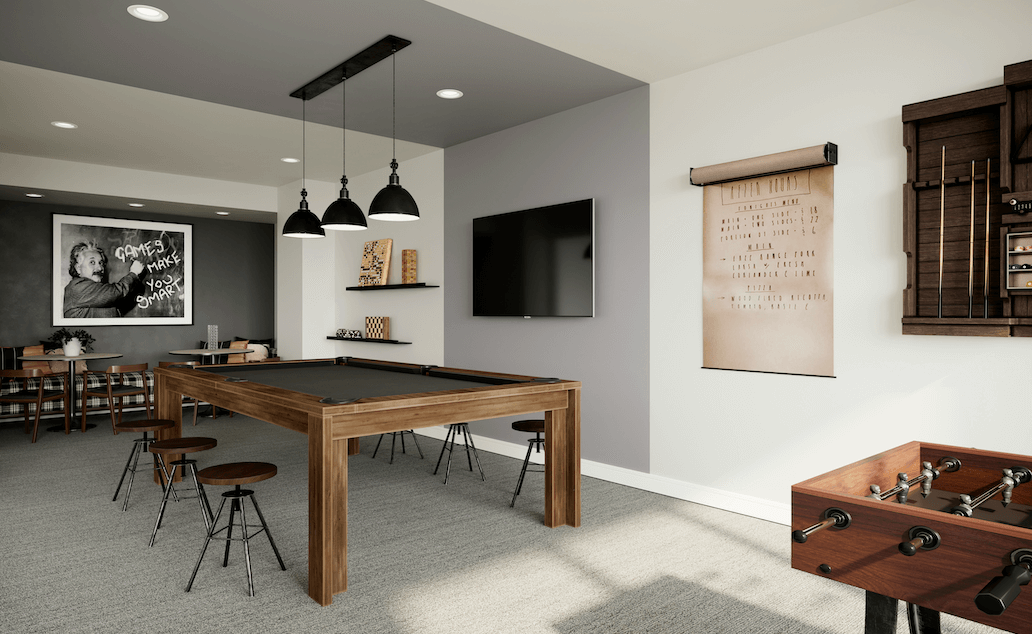
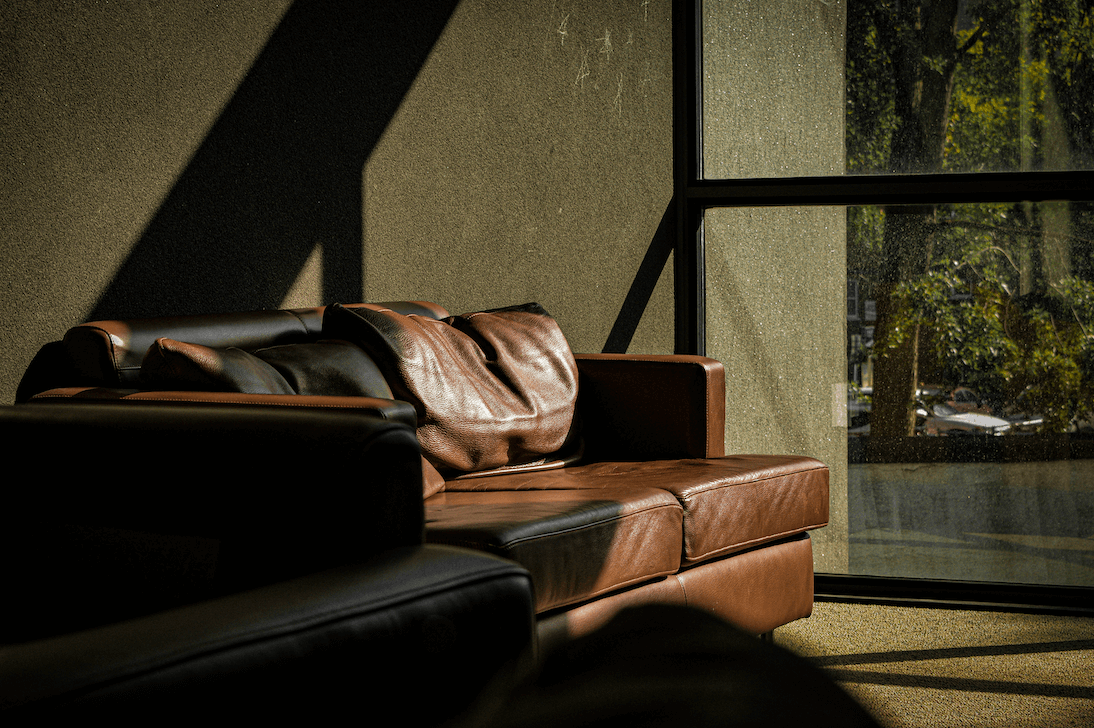
A room concept where automation is the design driver: lighting scenes, motorized shades, sensors, and voice control planned in from the start so the space runs itself.
What this look costs to build, the room it needs, and how it compares on fit is in our man cave ideas and themes guide.
A smart home theme is a whole-room concept that makes automation the organizing idea of the space, the way industrial or rustic sets the visual language. The lighting plan, window coverings, seating, and the tech get specified together, so the room runs as one system instead of a collection of gadgets. On movie night the ceiling cans dim, the shades drop, and the bias lighting behind the screen settles into a soft glow, all from a single scene, and the room returns to bright and open for game night with one more command. That orchestration is the point: the space behaves differently for every activity without anyone touching a switch. The payoff is a cave that sets its own mood, and the numbers say people are ready for it. More than half of U.S. households, roughly 77 million homes, now run at least one smart device, and smart speakers and entertainment gear make up about 37 percent of the global smart home device market. For a man cave that means the theme is no longer a futuristic stretch: it is the same automation that runs the rest of the house, scaled down to one room and tuned for play. The cost of entry is modest, a hub and a few smart bulbs start under a couple of hundred dollars, and the room still works perfectly if the tech is off. A smart home theme is not a wiring standard, a brand ecosystem, or a product list. It is a design decision, and a light touch is a legitimate version of it: a cave with three lighting scenes and a voice-controlled TV is as much a smart theme as one with sensors on every door. It also is not the same thing as a tech cave, which collects hardware; this theme coordinates what you already have. The two ideas overlap, but they answer different questions about what the room is for, which is exactly the choice the smart cave ideas page lays out.
Designing a room around automation
Start with the light, because it does the most work for the least money. Build scenes, not single bulbs: a layer of dimmable ceiling cans for ambient, a bias light behind the screen for contrast, and an accent strip for the shelves, each on its own zone so a scene can blend them. Then add what moves, motorized or smart shades that close on a schedule, and consider blackout curtains over the TV wall before a projector or OLED fights afternoon glare. Sensors come next: a motion sensor turns the room on as you walk in and off after it empties, and a door sensor can arm the lights to shut when someone leaves. Finish with the control surface, a smart home hub and a speaker or two, because a room full of automation you have to open an app to reach is not a theme, it is a chore. Wire for it during the build: an ethernet drop and in-wall wiring to the shade and TV positions cost little in the framing stage and save a fishing expedition later. Order matters as much as selection. Lights and control surfaces go first, because they deliver the visible payoff quickly, and everything else stacks on top: a hub bought late means re-pairing every device you already set up, and shades added after the finish mean surface wiring or a professional. Leave one empty gang box and one outlet high on the TV wall even if you are not sure what goes there yet, because automation has a way of finding a use for spare power and spare data. Cheap wins exist at every rung, a $15 plug-in dimmer, a $25 motion sensor, a $40 streaming stick, so the theme builds in layers rather than one big purchase. The test of a smart theme is not how much gear the room holds; it is whether the person in it touches fewer switches than they used to.
Smart home theme versus a tech cave
The one-line difference: a tech cave collects gear, a smart theme coordinates it. A tech cave can have a wall of consoles, a racing rig, and a 77-inch TV with no automation at all, horsepower without orchestration. A smart theme can be modest on hardware, a good TV, decent lights, a hub, and still feel far more advanced because everything responds together. The consequence shows up in planning and money. A tech cave spends on panels, PCs, and peripherals, while a smart theme spends on control, sensors, and connectivity, and the two budgets rarely overlap much. The mistake is assuming a room full of expensive gear is automatically a smart home theme, or that automation requires buying the biggest and newest of everything. It requires a plan, not a budget. The budget split is the practical tell. A gear-heavy cave spends hundreds on a GPU and dozens on the bulb in the lamp next to it; a smart theme inverts that, spending on the controls that multiply what the gear already does. A two-hundred-dollar hub and sensor kit can make a mid-range setup feel more responsive than a five-thousand-dollar one that still needs someone to walk to a switch.
Where the term came from
The phrase smart house was coined in 1984 by the American Association of Home Builders to promote the idea of technology designed into homes, which is oddly early given how little of it worked then. The automation itself went back to X10 in 1975, control signals sent over the home's power wiring. The modern idea of a smart room as a theme, rather than a utility, took shape after 2014, when Amazon Echo, Alexa, and Apple HomeKit made voice control a thing you could touch, and again in 2022 when Matter promised devices that stop caring which ecosystem made them. What changed in the last decade is the cost curve: sensors, bulbs, and hubs that cost hundreds now cost tens, which is what turned automation from a smart home feature into a decorating choice.
Common mistakes
The first mistake is treating the theme as a shopping list, ending up with twelve apps, forty gadgets, and no scenes, because nothing was planned to work together. Buy for the scenes first, then add devices that fit them. The second is going all-in on cloud-dependent Wi-Fi gadgets, so the room goes dark and dumb the moment the internet blips; keep the pieces that matter on a local hub that works without the cloud. The third is skipping the wiring while the walls are open. Shades, bias lights, and sensors all want power and data where the drywall will go, and adding them after a finish costs multiples of the framing-stage price. The last is letting the automation dictate the look, exposed sensors, tangled cables, blinking hubs, because a smart theme still has to look like a room.
Frequently asked questions
What is a smart home theme in interior design?
A smart home theme is a design approach where automation drives the room's layout and finishes, not a product you buy. Lighting is planned in zones so scenes can change the mood, window coverings are chosen so they can move on schedule, and sensors and voice control become part of how the space is used. It is a decorating decision, like industrial or rustic, except the material is technology. A modest version can be a couple of lighting scenes and a voice-controlled TV.
What do I need to start a smart man cave?
Start with a hub and smart bulbs, then add from there. The hub runs your scenes, the bulbs are the cheapest visible win, and a voice assistant or speaker gives you control without opening an app. That foundation handles lighting scenes and voice commands. Add motorized shades, sensors, and a smart TV or streaming device as the budget allows. Most rooms do not need more than one hub, and you can build the whole system gradually.
How much does it cost to make a room smart?
A starter setup, a hub and a few smart bulbs, lands under a couple of hundred dollars. Add motorized shades and you are in the low hundreds more per window, sensors cost tens each, and a smart TV adds nothing if you were buying a TV anyway. A full room with scenes, shades, sensors, and voice control typically runs a few hundred to about a thousand dollars, before any wiring work for new construction.
Do smart devices work when the internet goes down?
Some do and some do not. Wi-Fi gadgets that route commands through the cloud stop responding when the internet drops, which is the most common surprise. Zigbee, Z-Wave, and Thread devices running through a local hub keep working, because commands never leave your network. The practical rule for a man cave is to keep the lights, shades, and TV on a local hub and accept that remote control from your phone needs the internet. Plan for the outage and the room still works.
Can I add automation to an existing man cave without rewiring?
Yes, for most of it. Smart bulbs and plug-in switches need no wiring at all, and battery sensors can be placed almost anywhere, which covers lighting scenes, presence detection, and most automation. The hard part is anything that wants line power or wall control: in-wall smart switches, motorized shades, and recessed lighting need power at the fixture. Those can still be added, but they involve either surface or minimal in-wall work, or a professional for the harder runs.
Related terms
Smart Home Hub
The box that hosts the Zigbee, Z-Wave, Thread, or Wi-Fi radios in a smart home and turns a pile of gadget apps into one system of scenes, schedules, and voice commands.
Audio/Visual & TechSmart Bulbs
LED bulbs with a built-in radio that dim, shift color, and switch from an app or voice assistant over Wi-Fi, Zigbee, or Thread, with or without a hub.
Audio/Visual & TechRGB Lighting
Lighting that mixes red, green, and blue emitters to shift color, from color-changing strips to addressable LEDs that chase, pulse, and sync with games. The building block of the modern man cave glow.
LightingBias Lighting
A dim, neutral 6500K light behind a screen that raises perceived contrast and softens the jump between a bright picture and a dark room. Around 10 percent of peak white.
Comfort & ClimateBlackout Curtain
A multi-layer window covering that blocks 99 to 100 percent of external light, using coated or woven fabric to deliver near-total darkness for home theatre and screen performance.
Room Types & SpacesHome Theater
A dedicated room with a large screen, surround sound, controlled lighting and tiered seating built for an immersive cinema experience. Room dimensions and viewing angles follow THX or SMPTE standards.
Audio/Visual & TechMedia Server
Home-network computer running Plex, Jellyfin, or Emby that stores your media library and streams it to every screen. Transcoding demand picks the hardware; 4K HDR needs far more CPU than 1080p.
LightingLED Strip (RGBW)
Flexible tape of LEDs on adhesive backing; RGBW adds a dedicated white diode for true white. Runs $5 to $15 per meter; 5050 strips at 60 LEDs/m draw about 14 to 18 W/m.