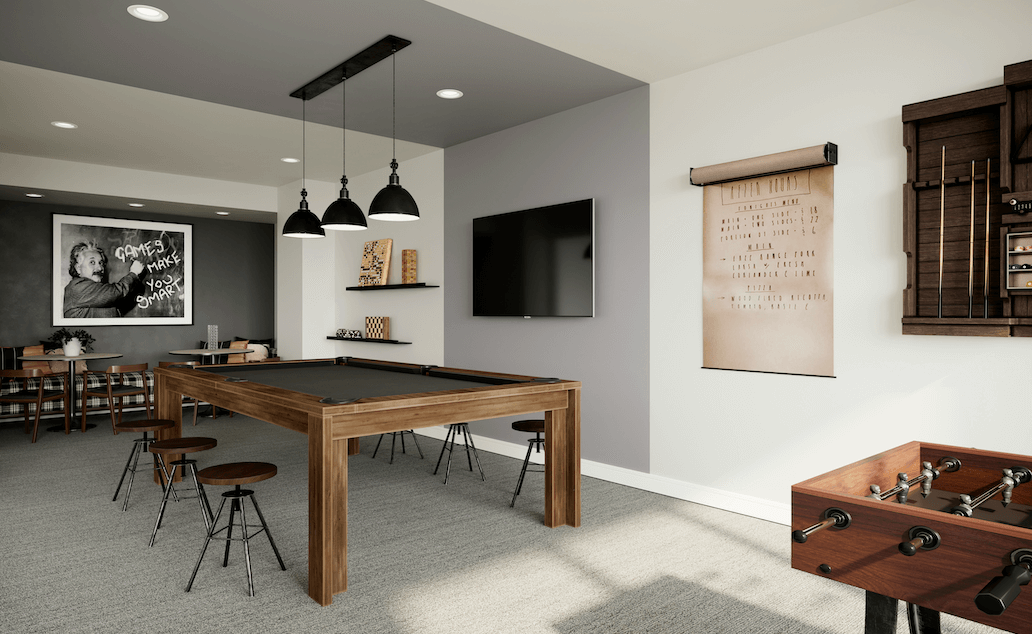
Replacing a home's main breaker panel with a higher-capacity, safer unit, typically 100A to 200A or more, so it can carry a home theater, kegerator, mini-split, or EV charger without tripping.
Also known as: Service Panel UpgradeBreaker Box Upgrade
An electrical panel upgrade replaces a home's main breaker panel with a unit rated for more amperage, more breaker slots, or both. The job starts at the meter: the utility disconnects power, an electrician pulls the old panel off the wall, runs a heavier service conductor from the meter base, and mounts a new panel sized for the load the house actually draws. A 100-amp panel might get swapped for 200-amp service, or a maxed-out 200-amp panel might step up to 400-amp to feed a detached shop or a heavily wired man cave. The new panel arrives with open slots for future circuits, modern breaker types, and, in most jurisdictions, a main disconnect that shuts the whole house down from one switch.
The reason it matters shows up the day a homeowner tries to add a load the old panel was never sized for. A Level 2 EV charger draws 40 to 50 amps on a dedicated circuit, a ductless mini-split can pull 15 to 30 amps depending on BTU size, and a home theater rack, kegerator, and gaming rig stacked onto one man cave build add up fast. A panel with no spare slots forces a choice: skip the upgrade, in which case a homeowner ends up running an extension cord to a dedicated circuit that should have been permanent, or double up two circuits on one breaker, which is itself a common failure point. Getting the sizing wrong at renovation time means a second, more disruptive service call later, once walls are already closed up.
A panel upgrade is not the same job as adding a subpanel. A subpanel branches additional breaker space off the existing service without touching the amperage coming in from the street, which works fine when the main panel has capacity to spare. An upgrade replaces the main panel itself and increases what the whole house can draw at once, while a subpanel bolted onto a main that is already full adds slots but no incoming capacity, so the new circuits still trip and the upgrade bill comes anyway. Anyone planning a garage or basement conversion with a home theater, a wet bar, and a backup generator, the kind of build covered in guides on backup power wiring for an entertainment space, needs to know which of the two problems they actually have before calling an electrician.
How panel sizing and load calculations work
Panel amperage is not a guess. Electricians run a load calculation under NEC Article 220, adding up general lighting at 3 volt-amps per square foot, fixed appliances, HVAC, and any large single loads like a range or EV charger, then applying demand factors because a house never runs everything at once. The total tells the electrician the minimum panel size the code allows, and NEC Article 408 sets the rules for how that panelboard itself has to be built and rated. Local code, the authority having jurisdiction, governs the exact permit process and inspection sequence on top of the national code.
Several signs point to a panel that has run out of room before a load calculation is even done. Breakers that trip often under normal use, a panel warm to the touch, lights that flicker or dim when the air conditioner or microwave kicks on, and a maze of power strips standing in for circuits that were never added are the common ones. A double-tapped breaker, two wires jammed under a lug rated for one, is a frequent finding on older panels that were expanded informally over the years rather than upgraded properly.
100A vs. 200A vs. 400A panels
Most homes built or rewired in the last few decades run 100 to 200 amp service, and 200 amps has become the practical default for new construction because it leaves room for central air, an electric range, and a car charger without a second visit. A 100-amp panel still runs a modest house fine, but it has little slack for large additions, and it is the panel most likely to force a choice between a man cave build-out and everything else already on the circuit. National cost guides put a 100-to-200-amp upgrade in roughly the $750 to $2,000 range, moving toward $1,800 to $2,500 for a full 200-amp installation.
400-amp service is a different tier, generally reserved for larger homes, properties with a detached shop or guest structure, or anyone running a heavy mix of EV charging, hot tub, sauna, and shop equipment off one meter. Cost guides put a straight 400-amp install closer to $4,000 to $6,000, since it usually means larger service conductors and sometimes a meter upgrade alongside the panel itself. Permit fees for the work typically run in the $50 to $300 range on top of the labor and materials, and most utilities require a scheduled outage to disconnect and reconnect service at the meter.
From fuse boxes to breaker panels
Homes wired before the mid-20th century ran on fuse boxes, where a blown fuse had to be physically replaced rather than reset. Circuit breaker panels started displacing fuse boxes in the years around 1950, and by the mid-to-late 1950s breaker-based load centers were the norm in new construction. Two brands from that transition era earn special mention for the wrong reasons. Federal Pacific Electric's Stab-Lok panels, sold from the 1950s into the mid-1980s, used a breaker design that a 1982 CPSC-contracted test found failed to trip at a high rate under overload conditions. Zinsco panels, common through the 1960s and into the mid-1970s, used aluminum bus bars and breaker clips that lost spring tension over time, letting breakers arc and sometimes weld themselves to the bus. Both brands are now treated by most electricians and insurers as a reason to replace the panel outright rather than repair it, regardless of how it is currently performing.
Common mistakes
The most expensive mistake is sizing for today's loads instead of the next decade's. A homeowner who upgrades to 150 amps to cover a home theater and a mini-split system, then adds an EV charger and a hot tub two years later, often ends up paying for a second upgrade that a single jump to 200 amps would have avoided. Panel work is also one of the worst places to save money with DIY effort. Working inside a live panel, or one that is not fully de-energized at the meter, carries a real shock and arc-flash risk, and most jurisdictions require a licensed electrician's permit specifically for main panel and service work, not just a general handyman permit.
Skipping the permit and inspection step is the third common failure, and it tends to surface at the worst possible time: when a home is sold and the inspector flags unpermitted panel work, or when an insurer denies a claim tied to an electrical fire in an unpermitted installation. A permitted upgrade also gets a second set of eyes on the GFCI outlet requirements and in-wall wiring that feed off the new panel, which catches problems before drywall goes back up rather than after.
Frequently asked questions
What does an electrical panel upgrade actually involve?
A licensed electrician coordinates with the utility to disconnect power at the meter, removes the old panel, runs a heavier service conductor if the amperage is increasing, and mounts a new panel with more breaker slots. The utility reconnects service once the new panel passes inspection. Most jurisdictions require a permit specifically for main panel and service work, separate from a general electrical permit, and the outage typically lasts a few hours on the day of the swap.
How is a panel upgrade different from adding a subpanel?
A subpanel adds breaker space by branching off the existing main panel, without changing how much power comes in from the street. It works when the main panel still has capacity to spare. A panel upgrade replaces the main panel itself and raises the total amperage available to the house. If the main panel is already full and nothing is left to branch off, a subpanel will not solve the problem and a full upgrade is the only fix.
How much does it cost to upgrade a home's electrical panel?
National cost guides put a 100-to-200-amp upgrade in the range of roughly $750 to $2,000, with a full 200-amp installation running closer to $1,800 to $2,500 depending on the market and whether the service conductor also needs replacing. Jumping to 400-amp service, typical for larger homes or detached shops, runs closer to $4,000 to $6,000. Permit fees usually add another $50 to $300 on top of labor and materials.
What are the warning signs a panel needs to be upgraded?
Breakers that trip often during normal use, a panel that feels warm to the touch, lights that flicker or dim when a large appliance starts up, and a permanent reliance on power strips because there is nowhere left to add a circuit are the clearest signals. A double-tapped breaker, two wires forced under one lug, is a common finding on panels that were expanded informally rather than upgraded. A panel built by Federal Pacific Electric or Zinsco is also a reason to replace it regardless of how it is currently performing.
Can a homeowner upgrade their own electrical panel to save money?
Panel and service work is one of the worst places to cut corners with DIY effort. The panel connects directly to utility-supplied power, and working inside one that is not fully de-energized at the meter carries a real shock and arc-flash risk that most homeowners are not equipped to manage safely. Most jurisdictions also require a licensed electrician to pull the permit for main panel work, so unpermitted DIY work can create problems at resale or with an insurance claim later.
Related terms
Dedicated Circuit
A branch circuit wired to power only one outlet or appliance, with a breaker sized to that single load and nothing else sharing the line.
Building & ConstructionGFCI Outlet (Ground Fault Circuit Interrupter)
A wall receptacle that trips in 25 milliseconds when it senses a 4 to 6 milliamp leak to ground, required by code in bathrooms, kitchens, basements, garages, and any room within six feet of a sink.
Building & ConstructionIn-Wall Wiring
Low-voltage cable inside walls and ceilings for speakers, data and control, governed by NEC Article 725. Must be CL2/CL3 rated, separated from line-voltage, and firestopped at penetrations.
Comfort & ClimateMini-Split (Ductless HVAC)
Ductless heat pump that cools and heats a room through a wall-mounted head fed by an outdoor condenser. A 12,000 BTU head suits about 350 to 550 sq ft; single-zone installs run $3,000 to $6,000.
Bar & BeverageKegerator
Refrigerator built or converted to store a keg and pour draft beer at 36-40 F under CO2 pressure. Draft costs up to 60% less than bottles; home units run $400 to $1,500.
Building & ConstructionBuilding Permit
Official authorisation from the local building department needed before starting most construction work. It triggers plan review and scheduled inspections confirming the work meets code.