A wall shelf with no visible bracket underneath, held level by a hidden cleat or rod anchored into wall studs so the board appears to float against the wall.
Picks and buying advice for this are in our decor and accessories guide.
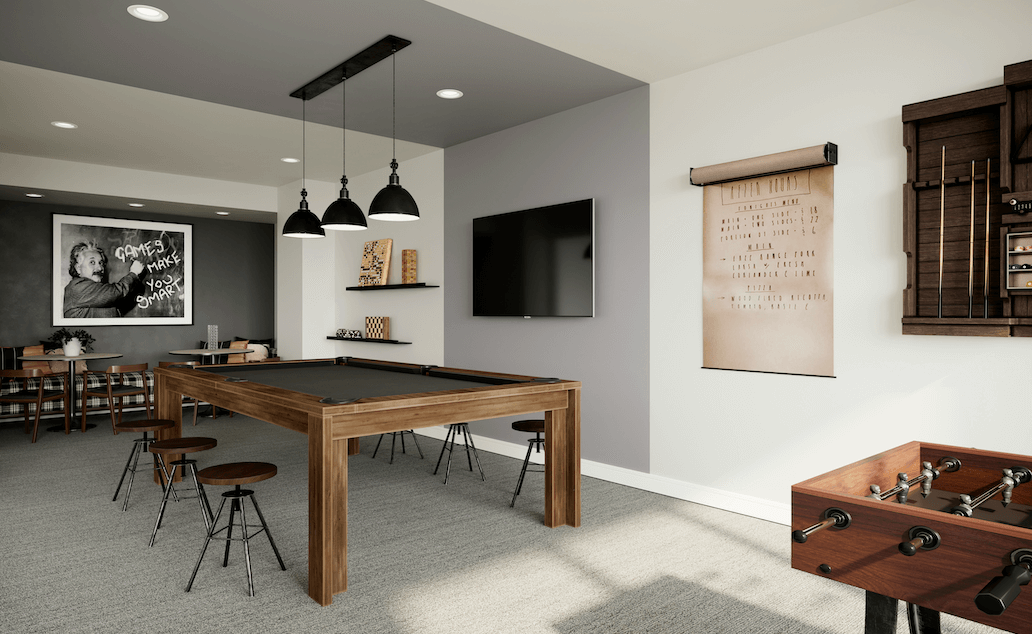
A floating shelf hangs a board on a wall with no bracket, arm, or leg visible underneath it, so the wood or metal appears to sit in mid-air. The trick lives inside the wall: a steel cleat, a pair of rods, or an interlocking bracket is screwed into the studs first, then the hollow underside of the shelf slides over it and the wall covers everything but a flat plank. In a man cave this shows up above a bar for a row of bottles, along a stairwell for a lineup of trophy shelf style awards, or flanking a TV for speakers and a game console, anywhere a clean horizontal line matters more than storage depth.
What holds the shelf up matters more than what it is made of. A shelf anchored into a single stud through a quality hidden bracket typically caps out around 45 to 50 lbs, and that number roughly doubles when the bracket catches two studs along its length. Skip the stud and rely on drywall alone, and the number collapses: standard plastic anchors are only rated for 10 to 20 lbs combined, nowhere near enough for a stacked row of bottles or a cast-iron trophy. That gap between what a shelf looks capable of and what its anchoring actually supports is the single biggest source of comeback repairs in this category.
A floating shelf is not a piece of furniture that happens to look attached, and it is not rated the same way a bracket shelf or a cabinet is. It carries weight through two or three fastener points hidden inside a wall cavity rather than a continuous support running the full width underneath, so its real limit is set by the wall, not the wood. Anyone shopping for one should think of it as a hardware purchase with a shelf attached, not the other way around.
Hidden brackets, cleats, and what they actually carry
Three hardware styles cover most of what is sold as a floating shelf. A French cleat is two interlocking angled strips, one on the wall and one on the shelf's back edge, and it is the simplest version to build at home; screwed into studs, a solid cleat can carry well over 100 lbs. Rod-and-sleeve systems drive one or two steel rods straight into the wall, and the shelf itself is drilled with matching holes, a look favored for thin, minimal shelves where a cleat's extra depth would show. Interlocking aluminum bracket systems, the kind sold with load ratings printed on the box, are the heaviest-duty option: 6063-T6 aircraft-grade aluminum brackets rated up to 300 lbs at 8 inches of depth exist for exactly this reason, aimed at buyers who want a shelf that reads as decor but performs as storage.
Material changes durability more than capacity. Solid hardwood, usually oak, walnut, or acacia, holds its shape under sustained load and can run a thinner profile, 1 to 2 inches, without sagging. MDF is the budget option, and because the core is compressed fiber rather than solid grain, it needs a thicker board, 2 inches or more, to avoid bowing at the same load a thinner hardwood shelf would handle. Metal shelves, typically welded steel or aluminum, trade warmth for the highest capacity per inch of thickness and show up most in garage or workshop-style caves. Depth matters too: 10 to 12 inches is standard, and most manufacturers stop recommending depths past 12 to 14 inches because the pull on the wall fasteners grows faster than the shelf's usefulness.
Floating shelf vs. bracket shelf
A bracket shelf keeps its support visible: a metal L-bracket or angled arm sits under the board and carries weight straight down into the wall over a wide footprint. A floating shelf hides that same job inside the wall cavity, so the load travels through two or three small, concealed points instead of one continuous bracket. That difference is the whole trade-off.
Bracket shelves win on raw capacity and forgiveness. Because the bracket does the structural work, the shelf itself barely matters, and installation tolerates a little misalignment since the board just sets down on top. A floating shelf demands a level, precisely drilled cleat or rod before the shelf ever touches the wall, and a fraction of an inch off means the board sits crooked or will not slide on at all. In exchange, a floating shelf reads as a single clean plane, which is why it shows up in gallery wall layouts and minimalist builds where a visible bracket would break the line. For anything meant to hold serious weight, like a boxed display case full of vintage cans, a bracket or an industrial pipe shelving unit built around exposed supports is usually the safer call.
Where the look came from
The clean-line aesthetic behind the floating shelf traces to mid-century modern design, which took hold through the 1950s and 60s as Bauhaus-influenced architects and furniture makers pushed rooms toward open layouts and unbroken horizontal surfaces. Open shelving in general grew out of that period, favored over bulky cabinetry for its lighter visual weight, and floating hardware caught up once cleat and rod systems became cheap enough to manufacture at scale rather than custom-built by a cabinetmaker.
The current wave of popularity is more recent. Floating shelves became a default fixture of small-space and open-concept homes starting in the early 2010s, pushed by the same minimalist and Scandinavian-influenced design trend that popularized floating vanities and wall-mounted TV consoles. For man caves specifically, the appeal is practical as much as stylistic: a floating shelf adds display space above a bar or workbench without eating floor area or requiring a full shelving unit, which matters in converted garages and basements where square footage is already tight.
Common mistakes with floating shelves
Missing the stud is the mistake that ends careers of otherwise good-looking shelves. Drywall alone cannot carry a loaded shelf long term, no matter how strong the anchor claims to be on the packaging; run a stud finder before drilling, and if the studs do not line up where the shelf needs to go, use toggle bolts rated for the load rather than standard plastic anchors, and still expect a lower ceiling on total weight.
Overloading is the second failure mode, and it is usually gradual rather than sudden. A shelf rated for 50 lbs that carries 65 lbs for a year will not necessarily fall on day one, but the bracket works loose, the shelf droops at the front edge, or the wall anchor slowly tears the drywall paper around it. Stay under the rated capacity, not right at it, especially for anything holding glass or a pegboard of tools where a fall does real damage.
The third mistake is choosing the wrong depth for the job. A 10-inch shelf looks identical to a 6-inch shelf until it is loaded with binders, a stereo receiver, or a row of tall bottles, at which point the extra strain on the hidden bracket becomes the limiting factor, not the wood. Match depth to what will actually sit on the shelf: narrow and shallow for photos and small trophies, deeper and rated for real weight when the plan involves anything heavier than decor.
Frequently asked questions
What is a floating shelf?
It is a wall-mounted shelf with no visible support underneath, only a flat board projecting from the wall. The hardware that carries the weight, a cleat, a set of steel rods, or an interlocking bracket, sits hidden inside the shelf's hollow underside and is screwed straight into wall studs. From the front the board looks unsupported. In practice it behaves like any other wall shelf: what changes is that the fasteners are concealed rather than visible below the board.
Are floating shelves as strong as bracket shelves?
Generally no. A bracket shelf carries weight through a continuous metal arm under the board, spreading the load over a wider footprint, while a floating shelf relies on two or three concealed fastener points inside the wall. Stud-mounted floating brackets typically rate around 45 to 50 lbs per stud, which is solid for most decor, but a bracket shelf built for heavy loads will usually out-carry it. Choose bracket hardware when raw capacity matters more than a clean line.
How much does a floating shelf cost?
Budget MDF shelves with basic hardware run about $20 to $80, and most show wear or sag within a couple of years under real use. Solid hardwood shelves in oak, walnut, or acacia run roughly $150 to well over $1,200 for custom sizes, and hold up for decades when properly anchored. Premium aluminum bracket systems rated for 200 to 300 lbs add to that cost but matter for anyone planning to load the shelf heavily.
Do floating shelves need to be mounted into a stud?
Yes, for anything beyond very light decor. Standard plastic drywall anchors alone are rated for only 10 to 20 lbs combined, far below what most bracket systems can otherwise support. Locate studs with a stud finder before drilling, and if the shelf's ideal position does not land on a stud, use toggle bolts rated for the intended load rather than standard anchors, and plan on a lower total weight capacity than the bracket's packaging claims.
Can a floating shelf hold a TV or a full display case?
Not safely, in most cases. A television or a loaded display case concentrates weight over a small footprint and often includes ongoing vibration or repeated handling, both of which stress the two or three hidden fastener points a floating shelf relies on. A wall mount rated specifically for the TV's weight, or a case built with its own structural base, carries that kind of load far more reliably than a shelf designed for books and decor.
Related terms
Gallery Wall
A curated arrangement of framed art, photos, and memorabilia hung together on one wall, planned around consistent spacing and a shared eye-level centerline rather than added piece by piece.
Decor & Wall ArtDisplay Case
A glass or acrylic enclosure that holds and protects a collection, from vintage beer cans to game-worn jerseys, keeping dust, fingerprints, and light damage away from what's inside.
Furniture & SeatingIndustrial Pipe Shelving
Threaded steel pipe frames with wood plank shelves, usually 3/4 or 1 in schedule 40, bolted to studs. A 3/4 in build carries 50 to 80 lb per shelf; 1 in carries 80 to 120 lb.
Decor & Wall ArtTrophy Shelf
Open or floating wall shelving for trophies, helmets and signed pieces, where the wall fixing rather than the shelf sets the real load limit and extra depth derates the bracket.
Decor & Wall ArtPegboard
Perforated hardboard wall grid, holes 1 inch on center, that holds repositionable hooks and shelves for tools. A 4 by 8 foot panel runs under $25 and mounts on furring strips.
Building & ConstructionDrywall
Gypsum panels faced in paper, screwed to studs and taped at the seams, sized by thickness for fire rating, sag resistance, or soundproofing in a finished wall or ceiling.
Read more about Floating Shelf

Create a Man Cave Makerspace: Tools, Tips & Pitfalls
Set up a man cave makerspace: pick essential tools, avoid common mistakes, and start building projects that boost creativity and practical skills. Start today.

Convert Your Personal Retreat into a Guest-Ready Room Overnight
Learn quick, practical tricks to convert your personal retreat into a guest-ready space overnight—space-saving furniture, bedding, privacy tips and layouts.

Best LED Cup Lights for Man Cave Game Nights
Find the best LED cup lights to upgrade your man cave game nights: compare brightness, battery life, color modes, durability, mounting options and top picks.