A bound ledger, digital app, or creative alternative that visitors sign at a man cave, home bar, or private event, capturing names, messages, and the simple fact that someone showed up.
Also known as: Visitors BookVisitors' BookGuest Register
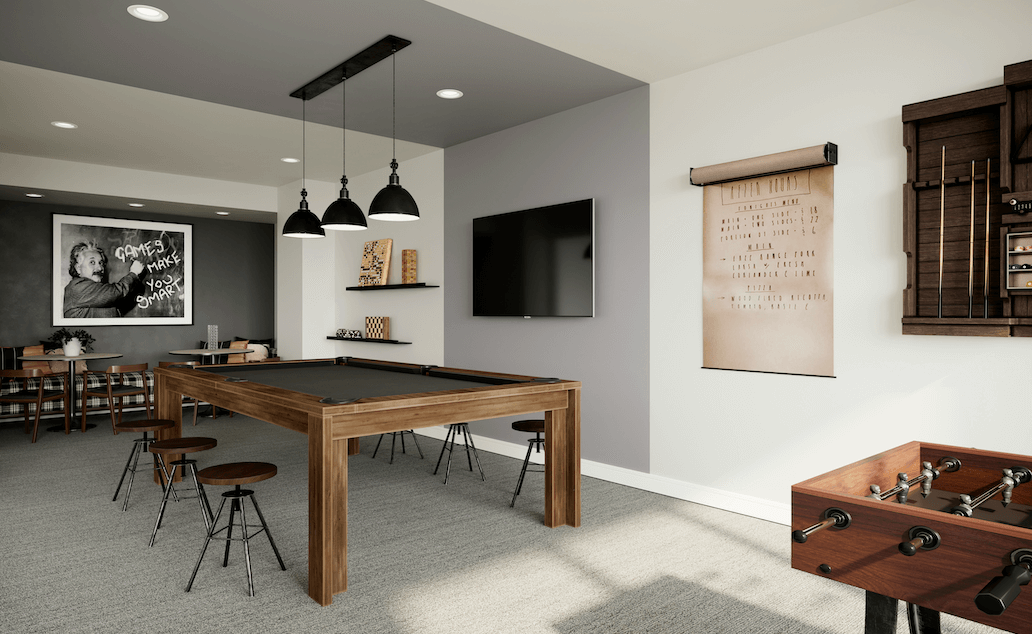
A guest book is a designated place for visitors to record their presence, usually with their name, the date, and a short note, and it can be a leather-bound volume on a stand in the entryway, a tablet running a dedicated app on the bar, or a creative object customised to the room\u2019s theme that people sign, mark, or add to. The format is less important than the fact of it: a guest book turns a gathering into a deliberate event with a record, and the record turns into something worth keeping long after the last person leaves. In a home bar, a guest book clipped to the bar back next to the bottle opener collects signatures and tasting notes across dozens of evenings. In a game room, a chalkboard wall with a frame around it serves the same purpose with fewer pages to flip.
The object outlasts the evening in a way photos do not. A guest book from twenty years ago lists names and dates that nobody present would otherwise recall, and the handwriting itself carries information: the careful cursive of an older relative, the scrawl of a teenager who had just been taught to pour a proper pint, the doodle someone drew in the margin that now anchors a specific memory. Historians treat guest books as primary sources, and social historians have used hotel registers and museum visitor books to reconstruct patterns of travel, class, and leisure going back to the seventeenth century. The same impulse that drives someone to sign a castle guest book in Yorkshire in 1750 drives someone to sign the history wall of a man cave today.
A guest book is not a mailing list, not a comment card, and not a review platform, though all three overlap in practice. A guest book collects presence and an impression. A mailing list collects contact information and consent, which is a different transaction with different legal obligations. A comment card collects feedback and a review platform collects public ratings, and both are transactional in a way a signature on a page is not. The line matters because treating a guest book like a lead generation tool gets the tone wrong, and guests read that tone in the questions asked.
Creative formats that work in a man cave
The leather-bound guest book on a wooden stand is the classic for a reason, but a man cave rewards formats that double as decor. A framed photo mat at the room\u2019s entrance, with a fine-tip marker on a chain, lets guests sign the wide border around a print or a map and turns the finished piece into wall art after the mat fills. A chalkboard or dry-erase panel mounted inside a picture frame captures signatures that live for a season, photograph well, and wipe clean for the next rotation. A voice memo station using a small digital recorder on a shelf gathers spoken messages that survive in a way handwriting cannot, capturing tone of voice and background laughter along with the words. A Polaroid guest book pairs a camera and an album, with each guest taking a photo and writing a caption underneath, generating a visual record that is more interesting to flip through than a list of names. A custom banner laid flat on a table with fabric markers lets guests sign a piece that later hangs on the wall, turning the guest book into permanent accent wall decor.
The paper ledger that started it all
The guest book traces its lineage to the album amicorum, or book of friends, that German and Dutch university students began keeping in the mid-sixteenth century. The oldest surviving example belongs to Claude de Senarclens, an associate of John Calvin, and dates to 1545. Students carried these books between universities and collected signatures, poems, drawings, and heraldic shields from classmates and professors, functioning as both a sentimental record and a crude form of academic credential: who had signed your book said something about who you knew. The tradition spread through aristocratic European circles in the Victorian era, where guest books at country houses became formal records of social standing, capturing names and titles in ledgers whose leather bindings matched the library furniture. The word \u201cguestbook\u201d as a single compound first appeared in American English in an 1855 book by actor and playwright John Brougham, while the \u201cvisitors\u2019 book\u201d variant had been in use in Britain since at least 1798 in the context of charity soup kitchens recording attendance.
Digital guest books and the ones that miss the point
An iPad on a stand running a guest book app is the modern default for weddings and corporate events, and it works in a room if the wifi is reliable and someone remembers to charge the tablet. The advantage is searchable text, exportable records, and no storage box of heavy books that nobody opens. The disadvantage is that a glowing screen at the entrance changes the energy of the room, and typing a message on glass feels like a form, not a signature. The gap between a physical guest book and a digital one is the gap between an artefact and a database, and which one suits a given room depends on whether the goal is a historical record or a searchable log. The worst version of both is the website guestbook from the 1990s internet, a public comment section where strangers left links and spam, and while that format is effectively dead, it did establish the word \u201cguestbook\u201d in digital usage in a way that shaped the tablet apps that followed.
Common guest book mistakes
The first mistake is putting the book in the wrong place. A guest book on a shelf behind the bar that nobody can see will stay empty, because signing it requires knowing it exists and having a reason to walk over. The fix is placing it where every guest passes, at the entrance or on a console table immediately inside the door, with a pen that writes without skipping and a small light on the surface so nobody is signing in the dark. The second mistake is asking for too much. A page that demands a full name, an email address, a mailing address, and a comment gets left blank. The fix is two lines: name and a short note, with the date already printed. The third mistake is never looking at it again. A guest book that goes into a drawer after the first year misses its own value as an object people pull out during the next gathering, flip through, and talk about. A guest book belongs on display, not in storage.
Frequently asked questions
What is a guest book used for?
A guest book collects the names, dates, and short messages of people who visit a room, event, or home, creating a permanent record of who was present and when. It serves as both a sentimental object and a historical document. In a man cave, a guest book turns an ordinary gathering into an event with a record, and the accumulated entries over months and years become a unique chronicle of the room\u2019s social life that no photograph album can replicate because it captures each person\u2019s own words in their own handwriting.
What are creative alternatives to a traditional paper guest book?
A framed photo mat with a marker lets guests sign around a central print and becomes wall art when filled. A Polaroid guest book pairs a camera with an album where each guest takes a photo and writes a caption. A chalkboard panel inside a picture frame captures signatures for a season, photographs well, and wipes clean. A voice memo recorder gathers spoken messages that preserve tone of voice and background laughter. A leather-bound volume on a wooden stand remains the classic option for a reason.
Should I use a digital guest book or a paper one?
A paper guest book becomes a physical artefact that people can hold, flip through, and display, and handwriting carries a personal quality that typed text cannot match. A digital guest book on a tablet is searchable, exportable, and takes up no shelf space, but it feels less personal and requires a charged, functioning device at the entrance. The right choice depends on whether the goal is a historical object that lives on a shelf or a searchable log, and most man cave setups lean toward paper because the room itself is already full of screens.
Why do historians care about old guest books?
Guest books serve as primary sources that reveal patterns of travel, social class, and leisure over centuries. Historians use hotel registers and museum visitor books to reconstruct who visited which places and when, what names and titles they considered worth recording, and what handwriting and language choices reveal about the signer\u2019s education and background. The entries are candid in a way formal documents are not, and the accumulation of decades of signatures creates a dataset that no other source replicates.
What is the biggest mistake people make with a guest book?
Placing it where nobody sees it. A guest book on a shelf behind the bar, inside a cabinet, or in a dark corner will stay empty because signing it requires knowing it exists and having a reason to approach. The book belongs where every guest passes: at the entrance, on a console table inside the door, with a pen that writes without skipping and a light on the surface. It also belongs on display between gatherings, not in a drawer, because the value of a guest book grows every time someone picks it up and flips through it.
Related terms
Accent Wall
One wall finished differently from the other three, in paint, wood slats, veneer stone or LED panels, to give a room a single deliberate focal point.
Comfort & ClimateArea Rug
A loose-laid rug sized to a seating group rather than a room, adding measurable warmth over a slab and taking the edge off hard-floor echo without committing to wall-to-wall carpet.
Decor & Wall ArtBanner
Printed vinyl or sewn felt hung flat against the wall, sized to cover ground a framed print cannot afford to. Grommets every two to three feet do the work.
Audio/Visual & TechAcoustic Panel
Fabric-wrapped mineral wool or fibreglass hung on walls and ceilings to absorb reflections and cut reverb, sharpening dialogue without stopping sound leaving the room.
Bar & BeverageHome Bar
A built-in counter with cabinetry, storage and a sink or plug-in fridge that serves drinks in a finished room. The wet-versus-dry decision depends on the nearest drain stack.
Furniture & SeatingBar Stool
Seating sized by seat height rather than overall height. Bar height seats sit 28 to 30 inches off the floor, counter height 24 to 26, with 10 to 12 inches of legroom above.