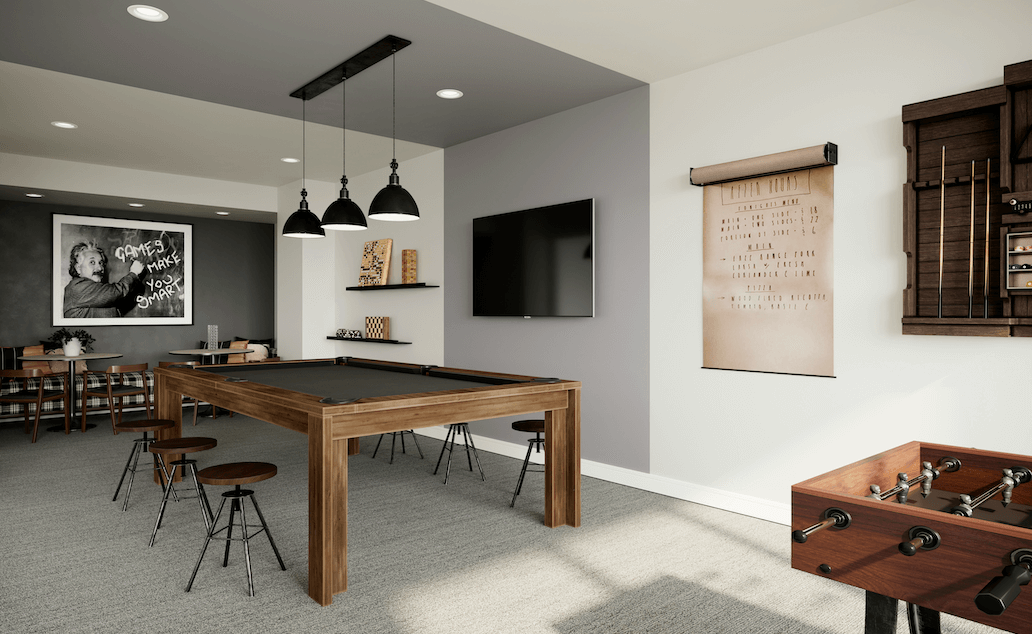
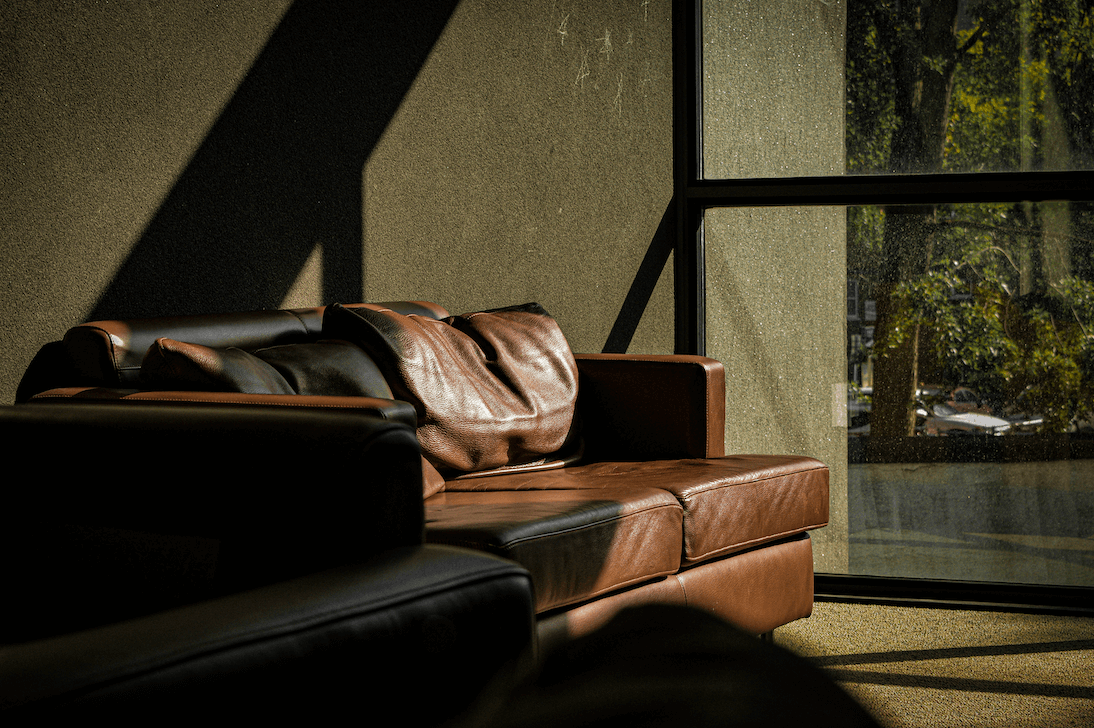
A loose-laid rug sized to a seating group rather than a room, adding measurable warmth over a slab and taking the edge off hard-floor echo without committing to wall-to-wall carpet.
Also known as: RugFloor Rug
An area rug is sized to furniture, not to walls. It sits loose over a finished floor, most often in one of the standard US sizes running 3x5, 4x6, 5x8, 6x9, 8x10, 9x12, 10x14 and 12x15 ft, and its job is to pull a seating group into a single zone while putting something soft between bare feet and a concrete slab. The sizing rules are older than any of us and still hold: the rug should reach at least 6 to 8 in past each side of a sofa, the front legs of every seat should land on it, and roughly 18 to 24 in of bare floor should show between its edge and the wall so the room reads framed rather than fitted.
In a basement the rug earns its place thermally and acoustically, which is why it belongs in a comfort discussion rather than a decor one. Carpet R-value works out to roughly pile thickness in inches multiplied by 2.6 in testing at Georgia Tech and published by the Carpet and Rug Institute, giving measured values from R-0.55 for a low nylon loop to R-2.46 for a 1.25 in shag, and pad values add on top: a 3/8 in rebond pad measures R-1.37, bonded polyurethane R-2.09. On sound, CRI testing under ASTM C-423 put carpet laid on concrete between NRC 0.15 and 0.55, with a cushion underneath adding another 0.10 to 0.20, and impact ratings tell a stronger story still, moving a bare concrete assembly from IIC 34 to IIC 70 with carpet alone and IIC 80 with carpet over an 80 oz sponge rubber cushion.
What a rug will not do is treat a room acoustically. NRC averages absorption across 250 to 2000 Hz only, and CRI’s own bulletin says plainly that the rating understates perceived loudness for low-frequency sound such as a motor, a fan or bass-heavy music. A rug tames footfall and flutter echo off hard floors. Bass needs soundproofing or absorption with real depth behind it.
Sizing it to the furniture, not the room
Start with the seating and work outward. A rug should extend 6 to 8 in beyond each side of a sofa, which is why an 84 in sofa pushes you to an 8 ft width and why 8x10 outsells every other size. Sectionals want more, 8 to 12 in past the edges and especially past the open side, so an 11 or 12 ft sectional generally needs a 9x12 or 10x14. Front legs on the rug is the minimum; all legs on looks deliberate rather than economical.
Tables change the maths because chairs move. For a dining or poker table, the rug needs 24 to 36 in beyond the table edge on every side so a chair pulled back still has all four legs on the surface, and 24 in is the workable floor rather than the comfortable figure. Anything less and chair legs catch the edge every time someone stands.
A pool table is the demanding case. Guidance runs to 3 to 4 ft of rug beyond the table on all sides, which pairs a 7 or 8 ft table with a 12x15 and a 9 ft table with a 12x18, and that sits inside the roughly 5 ft of cue clearance the table already needs to the wall. Pile height matters more than size here: flatweave or low pile only, because a shooter’s back foot rolling on a thick pile is both a bad stance and a genuine trip hazard. The same logic applies wherever a gaming chair rolls, since hard casters fight deep pile. Layouts like the ones in basement entertainment essentials live or die on these clearances.
Fibres and pads that survive a bar
Wool is the durable default. The fibre bends thousands of times without breaking, lanolin gives it natural stain resistance, and it runs roughly $3 to $21 per square foot depending on construction. Nylon is the most durable synthetic and the sensible pick for a high-traffic path between the stairs and the bar. Polypropylene resists stains well and costs little, but it crushes under heavy traffic and does not spring back, so it suits a low-use zone rather than the walkway.
Two fibres fail badly near drinks. Viscose absorbs water fast, swells, loses strength while wet and bleeds dye, with mould risk climbing after about 24 hours of dampness, which is what happens when a pint goes over at 11pm and nobody notices until morning. Jute shrinks and yellows with moisture, so it belongs upstairs rather than in a basement. Construction sets lifespan as firmly as fibre does: hand-knotted rugs commonly last 50 to 100 years and more, while hand-tufted rugs typically manage 5 to 15 because the latex adhesive holding the backing on dries out and lets go.
The pad is not an accessory. Felt, natural rubber and felt-and-rubber combinations are safe on hardwood and add both cushioning and grip, while PVC and vinyl-backed pads migrate plasticizers into a polyurethane finish and leave permanent yellow staining that shows up months later. Over a slab, choose a ventilated waffle rubber or breathable felt so vapour can escape, and pair it with a proper moisture barrier underneath the flooring itself. One caveat for heated floors: manufacturers cap combined carpet and cushion R-value at 4.0, so a thick rug over radiant floor heating can insulate the room from its own heat source.
Pill tests, labels and the loom that made rugs cheap
Every rug sold in the US passes a flammability standard, and size decides which one. 16 CFR Part 1630, the FF 1-70 standard published at 40 FR 59931 on 30 December 1975, covers carpets and rugs with one dimension over 6 ft and an area over 24 sq ft; 16 CFR Part 1631, FF 2-70 at 40 FR 59935 the same day, covers everything smaller. Both use the methenamine pill test: a 150 mg tablet is ignited on each of eight 9 by 9 in specimens, and the sample passes if the char stays more than 1.0 in from the edge of the flattening frame hole on at least seven of them. Rugs treated with fire retardant carry a T label under section 1630.5. On air quality, CRI Green Label Plus certifies low-emission carpet, cushion and adhesive through a 14-day chamber test co-developed with the EPA and standardised as ASTM D5116.
Mass-produced rugs exist because of one American invention. Erastus Bigelow patented a power loom for carpet weaving in 1839 and introduced the first broadloom carpet in 1877, after which output rose fast enough to move rugs from luxury to household purchase. Tufting, revived from a Dalton, Georgia bedspread craft around 1900 and mechanised in the 1930s, now accounts for more than 90 percent of US carpet and rug production, with Dalton alone making over 70 percent of world output. The direction of travel since then favours exactly this product: carpet and rugs held about 62.1 percent of the US flooring market a decade before 2024 and 43.8 percent in 2024, as hard surfaces took over and area rugs went down on top of them.
Common mistakes
Buying too small is the one almost everybody makes. A 5x8 in front of a full sofa leaves the furniture floating and the room disconnected, so measure the seating spread first and let that pick the size.
Skipping the pad costs more than it saves. Without one the rug creeps, the edges curl into a trip hazard, friction wears the backing from underneath, and the acoustic benefit measured in the CRI testing largely disappears. Cut the pad an inch or two smaller than the rug on every side. On a slab, use a breathable pad rather than a closed-cell one, because the same material that traps vapour against concrete is the one that grows mildew under it.
The last mistakes are about care. New wool sheds for months, which is normal rather than a defect, though running a beater bar against the nap accelerates it and mats the pile, so vacuum with the beater off and in the direction of the pile. Over-wetting jute or viscose shrinks and bleeds them, which is why delicate fibres go out for professional cleaning at roughly $2 to $8 per square foot. Keeping the room dry matters as much, and the advice in damp-proofing a basement man cave protects the rug as much as the walls.
Frequently asked questions
What size area rug do I need for a sofa or sectional?
The rug should extend at least 6 to 8 inches past each side of a sofa, so an 84 inch sofa pushes you to an 8 foot width and an 8x10 rug. Sectionals want 8 to 12 inches past the edges, especially on the open side, which puts an 11 or 12 foot sectional on a 9x12 or 10x14. Front legs of every seat should sit on the rug at minimum. Leave roughly 18 to 24 inches of bare floor between the rug and the wall.
Does an area rug actually make a basement warmer?
It measurably reduces heat loss underfoot. Carpet R-value works out to about pile thickness in inches times 2.6, so a thick rug measures around R-2 and a quarter inch rebond pad adds roughly another R-0.9, and the two are additive. Over an uninsulated slab that is the difference between a floor that feels cold through socks and one that does not. The caveat is radiant heating, where manufacturers cap combined carpet and pad R-value at 4.0.
Will a rug help with noise in a game room?
It helps with the right kind of noise. Carpet on concrete measures NRC 0.15 to 0.55 in Carpet and Rug Institute testing, and adding a cushion lifts that by another 0.10 to 0.20, which takes the hard edge off footfall and flutter echo. Impact noise improves dramatically, from IIC 34 on bare concrete to IIC 80 with carpet over a heavy cushion. Bass is a different problem, since NRC only averages 250 to 2000 Hz and rugs do almost nothing below that.
What rug material holds up near a home bar?
Wool and nylon. Wool resists staining naturally through its lanolin content and takes heavy foot traffic for decades, while nylon is the toughest synthetic and handles a busy walkway well. Avoid viscose entirely near drinks, because it absorbs water fast, swells, bleeds dye and grows mould after around 24 hours damp. Jute shrinks and yellows with moisture, so it suits a dry upstairs room rather than a basement. Keep pile low wherever chairs roll.
Do I really need a rug pad?
Yes, on any hard floor. A pad stops the rug creeping and the edges curling into a trip hazard, reduces the friction wear that destroys backing from underneath, and preserves most of the acoustic benefit. Match the material to the floor: felt, natural rubber or a felt and rubber combination on hardwood, and a ventilated waffle rubber over a slab so vapour can escape. Avoid PVC and vinyl backing on wood, since plasticizers migrate into the finish and stain it permanently.
Related terms
Soundproofing (MLV / Green Glue / Resilient Channel / Double Drywall)
Construction that stops sound crossing a partition, using mass, damping, and decoupling: mass loaded vinyl, Green Glue, resilient channel, and extra drywall to lift a wall's STC rating.
Audio/Visual & TechAcoustic Panel
Fabric-wrapped mineral wool or fibreglass hung on walls and ceilings to absorb reflections and cut reverb, sharpening dialogue without stopping sound leaving the room.
Comfort & ClimateRadiant Floor Heating
Warmth delivered through the floor itself, via electric cables or water-filled PEX tubing under the finish. Electric suits small rooms; hydronic pays off across large, cold basements.
Building & ConstructionLVP (Luxury Vinyl Plank)
Fully synthetic plank flooring that mimics wood, waterproof through the core, with a wear layer measured in mils. Materials run about $2 to $5 per square foot; installed, $4 to $11.
Building & ConstructionFloating Floor
Click-lock LVP, laminate, or engineered wood flooring that rests on underlayment instead of nailing or gluing to the subfloor, common in basements over concrete.
Building & ConstructionMoisture Barrier
Sheet, coating, or membrane that blocks water and vapor through walls, floors, foundations. Typical form: 6-mil polyethylene under a slab or over a crawlspace floor, rated in perms.
Building & ConstructionDehumidifier
A compressor or desiccant appliance that pulls water vapor out of basement air, keeping relative humidity in the 30-50% range that resists mold, musty odors and warped gear.
Entertainment & GamesPool Table
Six-pocket pocket billiards table sized 7, 8, or 9 feet, with a slate bed for tournament play. A standard 58 inch cue needs a room about 13 by 16 feet or larger, and slate tables start around $1,500.
Read more about Area Rug

Wabi-Sabi Man Cave Design Guide
Design a calm, functional Wabi-Sabi man cave with practical tips on furniture, materials, lighting, storage, DIY projects, layout and upkeep for real comfort.

Flooring Cost Showdown: Epoxy vs Carpet vs Vinyl vs Polished Concrete – Budget Tiers & Hidden Costs
Compare flooring costs for your space: epoxy, carpet, vinyl, concrete. Low to high budgets, hidden expenses, and smart trade-offs to save money.

Monte Carlo Casino Room Design Guide
Transform your game room with Monte Carlo-inspired layouts, furniture, and lighting. Get practical tips for a luxurious casino atmosphere without overspending.