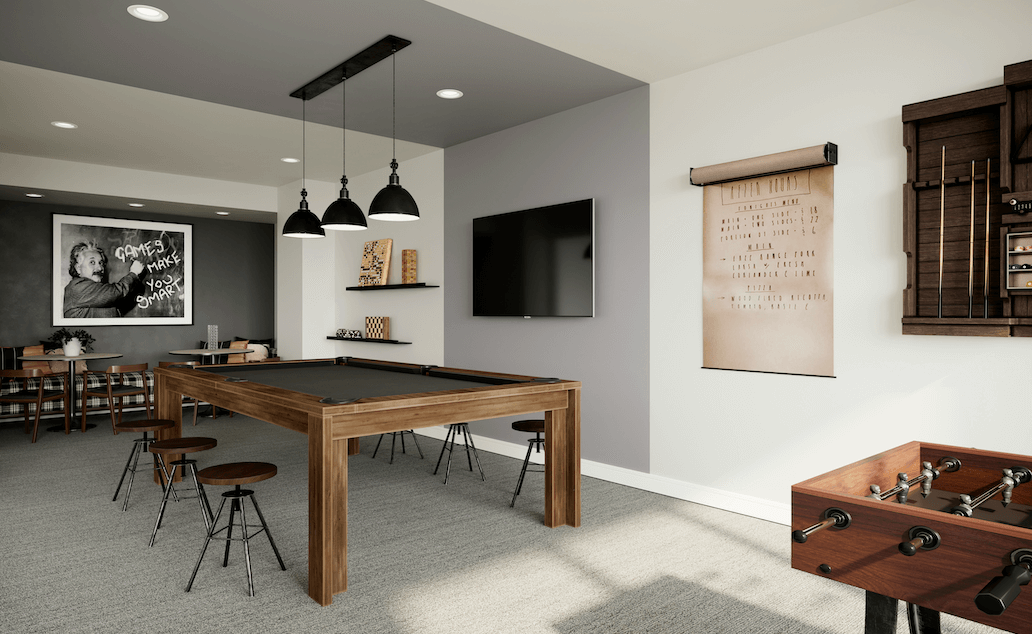
Construction that stops sound crossing a partition, using mass, damping, and decoupling: mass loaded vinyl, Green Glue, resilient channel, and extra drywall to lift a wall's STC rating.
Also known as: Sound IsolationSound Insulation
Soundproofing is construction that stops sound moving from one space to another, and it runs on three principles: mass, damping, and decoupling. Mass loaded vinyl adds heavy limp weight to a wall. Green Glue, a viscoelastic compound, damps a double-drywall layer so vibration turns to heat instead of passing through. Resilient channel and staggered studs decouple the two faces of a wall so they no longer act as one resonant sheet. Add an airtight seal on top and you have the standard toolkit named in this term's own parentheses. A typical interior wall built with one layer of drywall on each side of 2x4 studs rates around STC 33, and the whole game of soundproofing is pushing that number into the 50s. The number matters because the difference between STC 33 and STC 50 is the difference between your neighbors hearing a conversation and hearing nothing intelligible. STC 50 is also the level the International Building Code sets for separating dwelling units, and STC 60 and up is what acoustic engineers call good soundproofing, where most sounds no longer disturb the room next door. For a man cave with a subwoofer, the math is brutal: low-frequency energy shakes the whole partition, and only an assembly with real mass and decoupling keeps it home. The infrastructure build guide covers the room-level picture, but the physics on any shared wall is the same. Soundproofing is not acoustic treatment, and confusing the two is the most expensive mistake in the hobby. Panels, foam, bass traps, and diffusers change how a room sounds from the inside; they add almost no mass and do nothing to stop sound escaping. A wall covered in acoustic foam still lets the neighbor hear the movie, because foam does not block, it absorbs. If the goal is keeping sound in or out, you are doing soundproofing, and that means construction, not decoration.
Mass, damping, and decoupling
Mass is the blunt instrument. Sound pushes on a wall, and a heavier wall pushes back harder; each additional layer of drywall adds a few STC points, though the returns shrink, with the second layer on a wood-stud wall worth only 2 to 3 points and the third worth even less. Mass loaded vinyl, a mineral-filled flexible sheet typically weighing 1 pound per square foot, is the shortcut when you cannot add more layers: installed loose on the framing and sealed at the seams, it lifts a typical assembly by 5 to 10 STC points and runs about 1 to 2 dollars per square foot. MLV blocks airborne sound but not impact noise, and it should never be squeezed rigid between two layers of drywall, which kills its limp-mass action. Damping is what Green Glue does between two sheets of drywall. The compound stays viscoelastic, so when the panels flex with sound the material shears and converts that motion to heat rather than transmitting it. Green Glue's own lab data shows roughly 10 STC points added on a wood-stud wall and up to 12 dB of extra loss at low frequencies, the exact band a subwoofer lives in. Application is two tubes per 4 by 8 foot panel on average, with a range of 1 to 3 depending on how much low-frequency performance you want. Decoupling breaks the vibration path. Resilient channel, a thin steel furring bent in a Z, sits between the studs and the drywall so the panel hangs from a spring rather than being screwed hard to the frame. A screw that bites through the channel into the stud shorts the whole thing out, and installers do it constantly. Staggered studs and double-stud frames decouple at the framing level and reach the high STC 50s without any clips. The perimeter seal matters as much as the framing: a 1/4-inch gap around the partition and at every outlet is filled with acoustical caulk, because even a 1 percent opening can cut a wall's transmission loss by more than 10 dB.
Soundproofing vs. sound treatment
The one-line distinction: soundproofing controls what leaves the room, and treatment controls what it sounds like inside. Soundproofing is measured with an STC rating, tested in a lab per ASTM E90 across 16 frequencies from 125 to 4,000 Hz; treatment is measured with absorption and scattering coefficients. A room can be fully treated, full of panels and traps, and still be the noisiest room in the house from next door's perspective. A room can be fully soundproofed, a bunker of mass and decoupling, and still sound dead and dull inside. Most man cave budgets try to buy both at once and end up with neither done well. The common path is to hang a few acoustic panels to quiet the room, discover the neighbor still hears the sub, and assume panels are a scam. They are not; they were the wrong tool. Even the stylish graphic panels made for chill zones are treatment, not blocking. Treat the room for its own acoustics, and separately decide whether the shared walls need soundproofing. If you only have money for one, soundproofing wins for anyone with neighbors, because a treated room that leaks sound is pointless, while a soundproofed room that sounds dry is livable and fixable later.
Where the numbers come from
The STC scale grew out of work in the 1950s and 1960s on how to rate the sound isolation of partitions, standardized in 1961 when ASTM adopted E90-61T, the laboratory test that still underlies the rating. The modern rating method is ASTM E413, which turns the 16-frequency transmission loss curve into a single integer. The scale is built around speech: STC 25 lets normal speech through, STC 40 turns it into a murmur, and STC 60 is the point where most sounds no longer disturb anyone. The code side is simpler: the 2021 IBC requires STC 50 between dwelling units, measured per ASTM E90. Real-world numbers run a few points below the lab because of flanking paths, sound that travels through joists, ducts, and gaps rather than the wall itself. Codes allow about a 5-point tolerance between tested and field performance, and the difference is the reason a wall that rated STC 55 on paper can still leak bass in a real house. The fix is always the same: more mass, more damping, more decoupling, and a sealed envelope.
Common mistakes
The first mistake is buying panels for a blocking problem. Foam, fabric panels, and diffusers never quiet the neighbors, and a room covered in them still leaks. Spend on construction, not decoration, when the goal is keeping sound home. The second is installing the building products wrong. A screw driven through resilient channel into the stud creates a short circuit that returns the wall to its ordinary STC. Green Glue applied too thin, or one layer of drywall carrying it instead of two, gets a fraction of the rated gain. MLV compressed between rigid layers, or hung without sealing the seams, does almost nothing. Every one of these failures reads as a bad product when it is actually bad installation. The third is ignoring flanking and leaks. Sound travels through the path of least resistance, so a sealed wall with an unsealed outlet, a gap under the door, or a shared duct is a sieve. Fill every hole with acoustical caulk, putty pads behind outlets, weatherstripping on the door, and insulation in the drop ceiling cavity. A 5 percent opening can drop a wall's transmission loss from 40 dB to about 13 dB, which makes every dollar spent on mass a waste. If you are doing the full treatment, plan the electrical and in-wall wiring before the drywall goes up, because retrofitting a sealed wall is where budgets die.
Frequently asked questions
What is the difference between soundproofing and acoustic treatment?
Soundproofing stops sound moving between spaces; it adds mass, damping, and decoupling to a wall, floor, or ceiling, and it is measured with an STC rating. Acoustic treatment changes how sound behaves inside a room; it uses panels, bass traps, and diffusers to absorb or scatter reflections. Acoustic panels on the wall will not quiet your neighbor's bass, and soundproofing a wall will not make your own room sound better. You fix the first with construction and the second with panels.
What STC rating do I need to stop sound getting through a wall?
A typical interior wall with one layer of drywall on each side rates around STC 33, which lets normal speech be heard clearly. To stop loud speech being understood you want STC 50, which is also the level the building code requires between dwelling units under the IBC. For a man cave with a subwoofer, aim for the mid-50s to 60s, which reads as good soundproofing where most sounds do not disturb the next room. Field results usually run a few points below lab numbers.
Does mass loaded vinyl work for soundproofing?
Yes, for the part it is meant to do. MLV is a heavy, mineral-filled sheet that adds limp mass to a wall or floor, and a 1 pound per square foot barrier typically lifts an assembly by about 5 to 10 STC points when installed correctly. It blocks airborne sound, not impact noise like footsteps. It needs to be fastened at the edges, taped or caulked at the seams, and it performs best in a decoupled wall. Standard 1 pound MLV runs roughly 1 to 2 dollars per square foot.
Can I soundproof an existing wall without tearing it down?
Yes, with some loss of room. The common retrofit is to screw an extra layer of drywall onto the existing wall with Green Glue sandwiched between, which is how most people add damping after the fact. You can also add insulation in the cavity if it is empty, seal every gap and outlet with acoustical caulk and putty pads, and cover electrical boxes. A second drywall layer with Green Glue typically gains several STC points, though a full re-framed wall with resilient channel does better.
Will acoustic foam panels stop my neighbors hearing my TV?
No. Foam and fabric panels absorb sound inside the room; they add almost no mass and do nothing to stop vibration crossing a partition, so the neighbor hears roughly the same volume either way. To reduce transmission you need to upgrade the construction with mass, damping, and decoupling. Panels are for making the room you are in sound better, not for keeping sound in. If the goal is not disturbing anyone, spend on the wall, not on foam.
Related terms
Resilient Channel
A springy metal strip screwed between wall studs and drywall that decouples the two so sound stops travelling through. Installed correctly it lifts a wall's STC rating by 5 to 10 points.
Audio/Visual & TechBass Trap
Deep corner absorption, usually four inches and up, that drains low-frequency energy where boundaries meet. NRC ignores everything below 250 Hz, so it cannot rate one.
Audio/Visual & TechAcoustic Panel
Fabric-wrapped mineral wool or fibreglass hung on walls and ceilings to absorb reflections and cut reverb, sharpening dialogue without stopping sound leaving the room.
Audio/Visual & TechSound Diffuser
A panel with precisely varied surface depth that scatters reflected sound across many angles instead of absorbing or mirroring it, used to keep a listening room live.
Building & ConstructionInsulation (Fiberglass / Spray Foam / Rigid Board)
Material inside the building envelope that slows heat flow: fiberglass batts, spray foam, or rigid board. 2021 IECC calls for attic R-30 to R-60 and wall R-13 and up by zone.
Building & ConstructionDrywall
Gypsum panels faced in paper, screwed to studs and taped at the seams, sized by thickness for fire rating, sag resistance, or soundproofing in a finished wall or ceiling.
Building & ConstructionDrop Ceiling
A grid of metal track and lift-out tiles hung a few inches below the joists, giving basements quick access to ductwork, wiring, and pipes without cutting into drywall.
Building & ConstructionIn-Wall Wiring
Low-voltage cable inside walls and ceilings for speakers, data and control, governed by NEC Article 725. Must be CL2/CL3 rated, separated from line-voltage, and firestopped at penetrations.
Read more about Soundproofing (MLV / Green Glue / Resilient Channel / Double Drywall)

Drop Ceiling vs Drywall: Pros and Cons for Access & Soundproofing
Compare drop ceiling vs drywall for your room. Learn pros and cons for access and soundproofing, plus key questions to ask your contractor before you start.

Soundproofing Your Man Cave: 3 Budget Tiers, Hidden Costs & Trade-Offs
Compare three budget tiers for soundproofing your man cave, from panels to floating rooms. Learn the real hidden costs and DIY vs contractor trade-offs.

Phased Budgeting for Your Room Conversion: Cost Tiers, Timelines & Trade-offs
Plan your room conversion budget in phases: low, mid, high cost tiers. Compare DIY vs contractor, hidden fees, and realistic timelines for each stage.

Two-Car Garage Split: Workshop & Media Room Planning Guide
Plan your two-car garage split conversion into a workshop and media room. Includes permits, wiring, soundproofing, HVAC, and safety pitfalls to avoid.

Workshop Man Cave Budget Trade-Offs: Dust Control, Electrical, Ventilation & Finishes
Learn to budget for a workshop man cave: compare low/mid/high costs for dust control, power, ventilation, and finishes. Includes hidden costs and permit fees.

How Sound Shapes Your Space: Boost Mood, Focus & Comfort
Learn simple acoustic tweaks and smart soundproofing to boost mood, focus and comfort in your personal space. Practical tips to shape the perfect retreat.

Historic Home Conversion Budget: A Practical Guide to Permits, Costs & Timelines
A practical guide to real costs of converting a historic home into your dream space. Budget tiers, permit fees, hidden expenses, contractor vs DIY timelines.

Best Graphic Acoustic Panels for Your Chill Zone
Graphic acoustic panels for a chill zone: what thickness and air gap really buy you, what the NRC number hides, and where the first panels should go.

Doug Gottlieb's Man Cave Tour: Design Ideas, Gear & Sale Details
Take a guided tour of Doug Gottlieb's famous man cave, grab bold design ideas, gear and layout tips, plus sale details to inspire your own upgrade today.