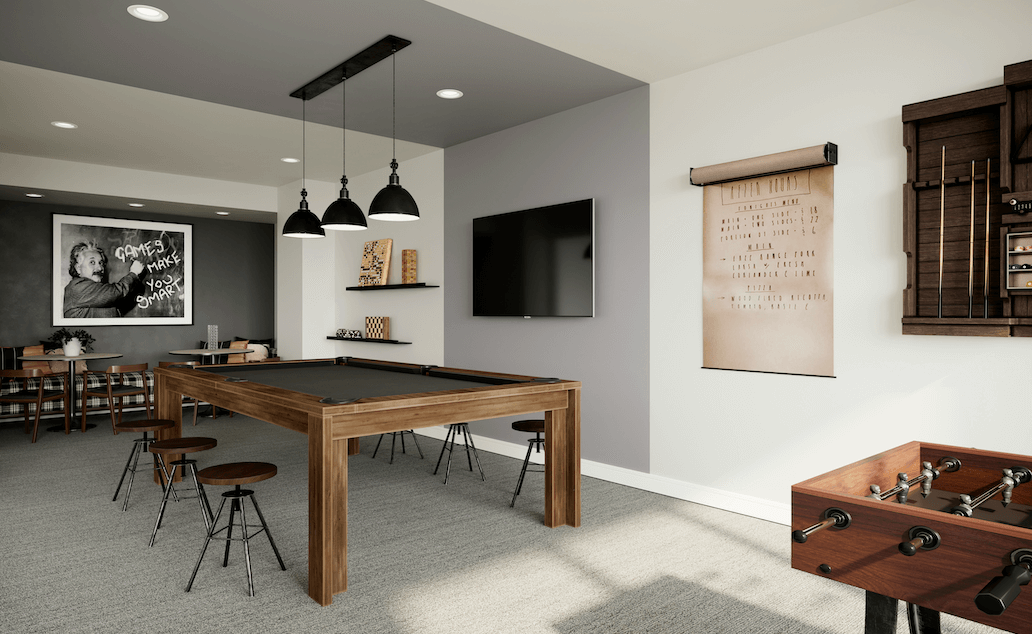
Six-pocket pocket billiards table sized 7, 8, or 9 feet, with a slate bed for tournament play. A standard 58 inch cue needs a room about 13 by 16 feet or larger, and slate tables start around $1,500.
Tables, boards, and the gear that goes with them are in our decor and accessories guide.
A pool table is a six-pocket pocket billiards table, a slate bed covered in cloth under a set of rails, sized by the playing surface in seven, eight, or nine foot lengths. It is the anchor of a game room, the piece that turns an empty space into a place people gather, and it earns the comparison to furniture: a slate eight footer is a serious object that arrives in pieces and needs professional leveling. The home market runs on three sizes: the 7 foot bar box, the 8 foot home standard, and the 9 foot tournament table.
The number that decides whether a table fits is the cue, not the table. A standard cue runs 58 inches, and the swing needs that length plus a few inches clear of the walls, so a 7 foot table with a 38 by 76 inch playing surface wants a room about 13 by 16 feet, an 8 footer with a 44 by 88 surface wants 13 by 17, and a 9 footer with a 50 by 100 surface wants 14 by 18. That room math is the whole buying decision, and it is the reason corner pool tables exist for the tight rooms covered in the guide to corner tables for small game rooms.
A pool table is not a billiards table, and the distinction matters at purchase. A billiards table has no pockets and runs 10 to 12 feet, built for carom games, while a pool table has six pockets. It is also not a snooker table, which is 12 feet long with small pockets. Buy a table labeled billiard and you may get a pocketless carom table that cannot play the eight ball games everyone means when they say pool.
Sizing a table to your room
Table sizes describe the playing surface, not the furniture. A 7 foot table plays on a 38 by 76 inch bed, an 8 foot table on 44 by 88, an oversize 8 foot on 46 by 92, and a 9 foot regulation table on 50 by 100 inches, about 2.54 by 1.27 meters. The exterior cabinet adds roughly a foot on each dimension, and the bed sits about 30 inches off the floor.
Clearance is cue length plus a cushion. Plan for the 58 inch cue plus about 4 inches of backstroke, which is why the industry charts ask for 13 by 16 feet around a 7 footer and 14 by 18 around a 9 footer, and why shorter 48 or 52 inch cues can rescue a tight corner. Shorter cues are the honest fix for a room that is a few feet short, but every serious player will tell you that a full 58 inch cue on an 8 footer is the standard a room should aim for.
Slate versus MDF
The bed is the single most important material decision, because it decides flatness and longevity. Slate, a quarried stone cut into three pieces and leveled on site, stays flat for decades, holds the tolerance the game needs, and shrugs off humidity. MDF or plywood beds cost less, weigh a fraction as much, and warp with moisture, and a warped bed is a dead table, because balls roll nowhere they are aimed.
Price follows the bed. MDF tables run $400 to $1,800 and realistically last 3 to 5 years before the surface goes uneven, while slate tables start around $1,500 to $3,500 for an entry level eight footer, reach $3,000 to $7,000 for mid-range, and climb past $5,000 for premium models. The slate table costs more once and lasts decades, which is why a well-serviced used slate table beats a new MDF one on both price and play.
Cloth is the second cost to plan for. Worsted cloth plays fast and resists wear, napped cloth is slower and cheaper, and a full recovering runs roughly $300 to $500 in parts and labor, a bill that arrives every five to ten years on a busy table. Ball sets, a rack, and chalk are small change by comparison, but the cue rack and the overhead light belong in the same budget as the table itself.
Where the pool table came from
Billiards began as a lawn game in 15th century Northern Europe, moved indoors to a table covered in green cloth meant to mimic grass, and Louis XI of France had a table made in 1470. The slate bed replaced wood around 1835 because stone does not warp, and vulcanized rubber cushions followed in 1845. The word pool is the odd part: it comes from the collective bet, and in the 19th century a poolroom was a horse-racing betting parlor where billiards tables kept patrons busy between races.
American Fifteen-Ball Pool, the ancestor of modern play, gave way to continuous pool in 1888 and to eight ball after 1900, and the 9 foot table became the tournament standard while bars and home bars standardized on the 7 foot coin-op. The home boom came later, pushed by The Hustler in 1961 and the arrival of coin-op tables, and by the 1980s the slate eight footer was a fixture of American rec rooms.
Standards now govern the tournament table. The Billiards Congress of America and the World Pool-Billiard Association both publish equipment specifications, and a 9 foot table with a 50 by 100 inch playing surface, a 1 inch thick 3-piece slate bed, and a 30 inch playing height is the accepted tournament spec worldwide.
Common mistakes
Buying before measuring the room is the first and most expensive error. A 9 footer looks correct in a showroom and hits the wall on every break in a 12 by 16 foot room, so tape out the table size plus the 58 inch cue swing before you write the check.
Choosing MDF to save money in a humid space is the second. A basement or garage table sits in the worst environment for a wood composite bed, and warping shows up in months, not years. If the room is damp, slate is the only honest choice, and a dehumidifier belongs on the same budget.
Skipping professional setup is the third. Slate arrives in three pieces that must be leveled and shimmed so the joints sit flush, and cloth has to be stretched tight or the table plays dead. The installation on a slate table is not optional labor, it is the difference between a flat table and a frustrating one, the same reason a cue rack and proper lights complete the corner.
Frequently asked questions
What size pool table should I get?
Match the table to your room, then to how you play. A 7 foot table, the bar size, plays on a 38 by 76 inch surface and fits a room around 13 by 16 feet. An 8 foot table on a 44 by 88 inch surface is the most common home size and wants about 13 by 17 feet. A 9 foot regulation table on a 50 by 100 inch surface needs a room near 14 by 18 feet. If your room is smaller, plan on shorter cues or a smaller table.
How much room do I need for a pool table?
You need the table plus room to swing a cue. A standard cue is 58 inches, and the industry rule is that length plus a few inches of clearance on every side. That puts a 7 foot table in a room about 13 by 16 feet, an 8 footer in 13 by 17, and a 9 footer in 14 by 18. If the room comes up short, 48 or 52 inch cues let you fit a bigger table in a smaller space, but a full cue on the right table plays best.
Is slate or MDF better for a pool table?
Slate is better for anyone who plans to play for years. Slate is a quarried stone bed that stays flat within fractions of a millimeter, ignores humidity, and lasts decades, with only the cloth needing replacement. MDF or plywood beds are cheaper and lighter but warp with moisture, and a warped bed ruins the roll within a few years. Slate costs more up front but survives a lifetime, which makes it the cheaper table over a decade of play.
How much does a pool table cost?
MDF tables run about $400 to $1,800 and are effectively disposable in a few years. Entry-level slate tables start around $1,500 to $3,500 including installation, mid-range models run $3,000 to $7,000, and premium designer tables go well past $5,000. Installation is usually included in the slate price and covers assembly, leveling, and cloth fitting. A used slate table, properly serviced, often beats a new MDF table on both price and play.
Why is it called a pool table?
The word pool comes from a collective bet, not from water. In the 19th century, poolrooms were horse-racing betting parlors where people pooled their money on races, and billiards tables were installed so patrons had something to do between races. The game, called pocket billiards or Fifteen-Ball Pool, picked up the name pool from those rooms, and it stuck even as the betting parlors disappeared.
Related terms
Billiards
The umbrella term for cue sports, and specifically the pocketless carom game on a 10 foot table. In everyday American usage it usually just means pool.
Entertainment & GamesCue Rack
A wall-mounted or floor-standing wood rack that holds pool cues upright in tapered clips, keeping shafts off the felt and clear of the swing radius between shots.
Room Types & SpacesGame Room
A room built around active games such as pool, foosball, darts, and arcade cabinets, sized and laid out for group play rather than solo retreat.
Entertainment & GamesChalk Holder
A pocket, belt-clip, or magnetic accessory that keeps billiard chalk within reach during play. It prevents lost chalk and fits the shape of the chalk you use.
Entertainment & GamesPing Pong Table
Regulation table tennis surface measuring 2.74 m by 1.525 m, standing 76 cm high with a net 15.25 cm off the table. Tabletop thickness runs 16 to 25 mm and sets the bounce.
Entertainment & GamesShuffleboard Table
A long, narrow hardwood table where players slide pucks into scoring zones. Regulation tables run 22 feet; home tables are usually 12 to 16 feet, needing 2 to 3 feet of side clearance.
Bar & BeverageBar Top
The serving surface of a bar: usually 42 inches off the floor, 16 to 20 inches deep, with a 10 to 12 inch overhang for knees and a finish that survives spilled spirits.
Read more about Pool Table

Convert Your Enclosed Balcony: Load, Drainage & Code Tips for a Safe Space
Learn crucial load checks, drainage, insulation, and permit requirements for converting an enclosed balcony into a usable room. Avoid costly mistakes.

Best Corner Pool Tables for Small Game Rooms
Find space-saving corner pool tables that maximize play in tight game rooms. Compare sizes, materials, assembly, and play quality to pick the best fit. Plus tips.

Phased Budgeting for Your Room Conversion: Cost Tiers, Timelines & Trade-offs
Plan your room conversion budget in phases: low, mid, high cost tiers. Compare DIY vs contractor, hidden fees, and realistic timelines for each stage.

Historic Home Conversion Budget: A Practical Guide to Permits, Costs & Timelines
A practical guide to real costs of converting a historic home into your dream space. Budget tiers, permit fees, hidden expenses, contractor vs DIY timelines.
Garage Loft Conversion: Load, Stair & Electrical Guide for a Safe Living Space
Turn a garage loft into a livable space: evaluate floor loads, plan stairs/egress, map wiring, navigate permits, hire pros when needed, and avoid common pitfalls

Moisture-Resistant Subfloor Systems: How to Spec and Hire for Your Basement Retreat
Avoid costly mistakes. Learn key specs, prep steps, and drainage options for moisture-resistant subfloors over concrete. Hire the right pro for your basement hideout.

The Spending Paradox: How to Budget Your Sanctuary for True Joy
Discover how to balance cost and joy in your personal sanctuary with psychology-backed budget tips. Create true lasting happiness without overspending.

Turn Your Attic into a Cozy Retreat: Structure, Insulation & Safe Access
Convert your attic into a comfortable, code-compliant retreat: structural checks, insulation choices, safe access, permits, HVAC tips and layout ideas.

Steampunk Man Cave Design Guide
Practical guide to styling a steampunk man cave: furniture, lighting, materials, storage, DIY projects and finishing accents for a durable, mechanic-chic den.