A wall-mounted or floor-standing wood rack that holds pool cues upright in tapered clips, keeping shafts off the felt and clear of the swing radius between shots.
Also known as: Pool Cue RackCue Holder
Tables, boards, and the gear that goes with them are in our decor and accessories guide.
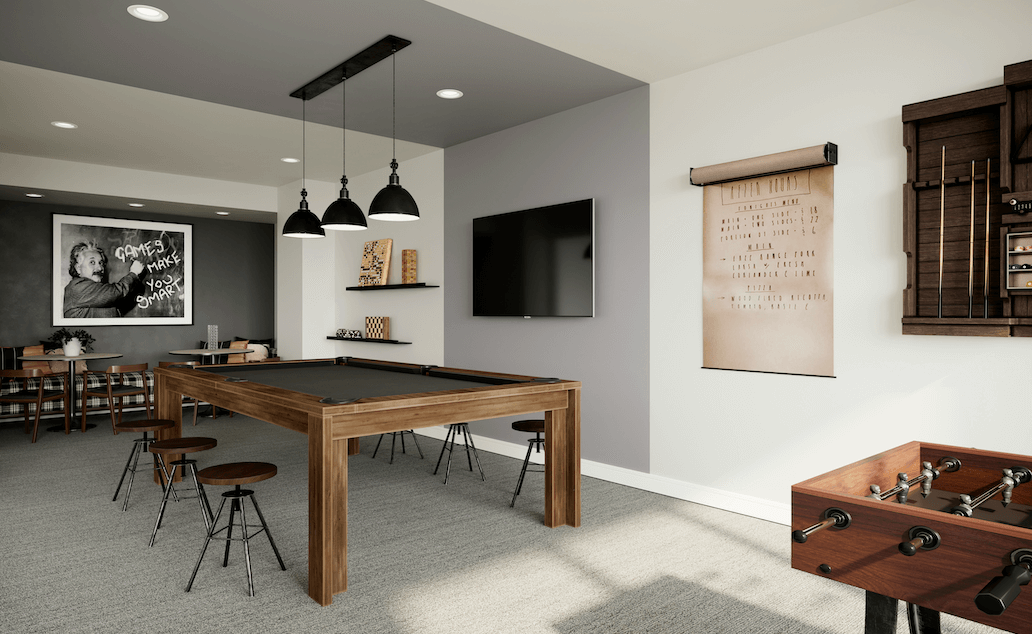
A cue rack holds pool cues upright and off the table felt, usually a strip of oak, mahogany, or maple mounted flat against a wall with a row of tapered clips or drilled holes that cradle each shaft near the tip and butt. Wall-mounted versions run 6, 8, 10, or 12 cues wide and hang flush against a wall a few feet back from the table, while floor-standing versions stand on their own base near a corner and often add a slot for chalk, house balls, or a scorekeeper. Some combo models fold in a chalk holder or a compartment for a triangle rack, so the whole kit lives in one place instead of scattered across a shelf. Either way the job is the same: get the cues off the rail, off the floor, and out of the way between shots.
A cue left leaning in a corner picks up a bow within a season, especially near a heat vent or a sunny window, and a warped shaft throws off every shot that follows. Cue-care guides recommend storing sticks upright in stable conditions, roughly 64 to 75°F and 45 to 50 percent humidity, rather than propped against furniture. A basic oak wall rack runs $20 to $40; a matched floor rack from a table manufacturer runs $500 to $600, and the gap between those numbers is mostly about matching the table's wood and finish rather than function.
A cue rack is not a cue case, and it is not a substitute for a bridge. A case zips shut and travels; a rack stays on the wall and displays. Some wall and floor racks add a dedicated clip for the bridge stick, the rest used to reach a shot the cue can't line up directly, but a plain rack with no bridge slot still needs somewhere else for that stick to live.
Choosing capacity, material, and mount
Cue racks size around the number of house cues a table sees regular use, plus a couple of spares. Wall racks commonly come in 6-, 8-, 10-, and 12-cue widths, with holes or clips spaced roughly 2 inches apart down a board that is typically 4 to 5 inches deep. An 8-cue wall rack such as Imperial's Deluxe model runs about 35.5 inches wide and 58 inches tall, sized to hold a full-length cue vertically. Floor stands trade width for footprint: most sit on a base 14.5 to 19 inches square and stand 23 to 37 inches tall, and a Brunswick Heritage floor rack runs roughly 32 by 17 by 13.5 inches and holds up to 8 cues plus ball racks and chalk.
Bridge-style racks add one more decision. A plain wall or floor rack holds only cues, so the bridge, the forked rest stick used to reach a shot the cue can't line up directly, ends up leaning against a wall or forgotten in a closet. Racks built with a dedicated bridge clip solve that in one mount, and they're worth the small premium over a plain rack if the room sees regular play rather than the occasional weekend game.
Material tends to follow the table. Oak, mahogany, walnut, and maple are the common woods, and a handful of makers finish racks to match a specific pool table line rather than sell a generic rack. That matching is where the price spread comes from: a mass-market oak wall rack runs $20 to $40, mid-tier floor racks from brands like PoolDawg or American Heritage run $65 to $600, and a rack cut and finished to match a specific high-end table can run well past that.
Wall rack vs. floor rack
The choice between a wall rack and a floor rack comes down to wall space and table position, not capacity. A wall rack needs a clear stretch of wall, ideally within the room but outside the swing radius of a full stroke, and it adds nothing to the floor plan. A floor rack needs no wall at all, which matters in a converted garage or basement with concrete or brick behind the drywall, but it claims a footprint of its own and can crowd a small game room. Corner racks split the difference, sitting flush against two walls in a triangular base that eats less floor space than a straight floor stand.
Neither style should sit inside the clearance a player needs for a full stroke. Brunswick's own room-size guide, built around a standard 58-inch cue, recommends minimum rooms of 13 by 16 feet for a 7-foot table and up to 14 by 18 feet for a 9-foot table, and a rack mounted inside that zone gets bumped mid-game and blocks the backswing. In tight layouts, including the compact rooms covered in our guide to corner pool tables for small game rooms, the rack usually ends up on the wall farthest from play, or the household switches to shorter 52-inch cues that shrink the required clearance by roughly 10 inches a side.
From pool hall fixture to game room staple
Cue storage has been part of commercial billiard rooms since American manufacturing scaled up in the 19th century. Brunswick and the rival Balke-Collender company merged in 1873, consolidating equipment production under one of the dominant American billiards manufacturers of the era, and the catalogs that followed standardized much of the gear found in a pool hall, cue storage included.
What changed since is where the racks ended up. For most of the 20th century, a cue rack meant a fixture bolted to a pool hall wall. As home game rooms and finished basements spread, brands like Viper, Imperial, and Hathaway started selling the same wall and floor racks direct to homeowners at a fraction of commercial pricing, and matched-to-table versions from Brunswick and Legacy followed for buyers who wanted the rack to look like it shipped with the table. A basic model is now a $20 to $40 add-on to a game room build rather than a piece of shop equipment.
Common mistakes
Three mistakes show up more than any others. The first is mounting the rack too close to the table, inside the clearance a player needs for a full backswing; the cue clips the rack mid-shot or the rack blocks the shot entirely, and the fix is measuring the swing radius before drilling anything. The second is mounting a wall rack without accounting for the cue's full length: a 58-inch cue held vertically needs close to five feet of clear wall from the bottom clip to the nearest obstruction, and racks hung without checking that measurement end up with tips bumping the ceiling or butts dragging the floor. The third is treating the rack as optional and leaning cues in a corner instead. A leaned cue picks up a bow within a season near a heat vent or window, and once a shaft warps, no amount of rack storage afterward straightens it back out.
Frequently asked questions
What is a cue rack used for?
A cue rack holds pool cues upright when they are not in use, keeping them off the table felt and off the floor between shots. Most are a strip of wood, often oak, mahogany, or maple, fitted with tapered clips or drilled holes that cradle each cue near the tip and butt. Wall-mounted versions hang flush against a wall; floor-standing versions stand on their own base and sometimes add storage for balls, chalk, or a scorekeeper.
Should I get a wall rack or a floor rack?
A wall rack makes sense if you have a clear stretch of wall outside the table's swing radius and want the floor plan untouched. A floor rack makes sense if the wall behind your table is concrete, brick, or otherwise hard to mount into, common in converted garages and basements. Floor racks claim their own footprint, so in a small game room a wall rack or a triangular corner rack usually fits better.
How much does a cue rack cost and what size do I need?
Basic oak wall racks run about $20 to $40 and typically hold 6 to 12 cues. Mid-tier floor racks from brands like PoolDawg or American Heritage run roughly $65 to $600, and racks cut and finished to match a specific high-end table cost more. Size around the cues your table actually sees in regular use, plus one or two spares, rather than buying the largest rack available.
How do I mount a wall-mounted cue rack?
Measure your longest cue, typically 58 inches, and leave close to five feet of clear wall from the bottom clip to the nearest obstruction so the tip clears the ceiling and the butt clears the floor. Mount into wall studs with screws spaced across the full width of the rack for support, or use drywall anchors rated for the rack's loaded weight if studs aren't available. Keep the rack outside the table's swing clearance so a backswing never clips it.
Can a cue rack fix a warped cue?
No. A rack only prevents future warping by keeping a cue stored upright and away from heat or humidity swings; it does nothing to reverse a bow that has already set into the wood. Once a shaft warps, the usual fixes are professional straightening or replacement, not different storage. Racking cues consistently from the start is what actually protects them.
Related terms
Pool Table
Six-pocket pocket billiards table sized 7, 8, or 9 feet, with a slate bed for tournament play. A standard 58 inch cue needs a room about 13 by 16 feet or larger, and slate tables start around $1,500.
Entertainment & GamesBilliards
The umbrella term for cue sports, and specifically the pocketless carom game on a 10 foot table. In everyday American usage it usually just means pool.
Entertainment & GamesChalk Holder
A pocket, belt-clip, or magnetic accessory that keeps billiard chalk within reach during play. It prevents lost chalk and fits the shape of the chalk you use.
Room Types & SpacesGame Room
A room built around active games such as pool, foosball, darts, and arcade cabinets, sized and laid out for group play rather than solo retreat.
Entertainment & GamesScorekeeper
The person, board, or app that records and displays points during a game, from a peg counter and dry-erase tally to a programmable LED scoreboard with a remote.
Room Types & SpacesMan Cave
A room set aside for one person's hobbies and entertainment, typically a home bar, game room, theater, or all three. The term dates to a 1992 Toronto Star column.