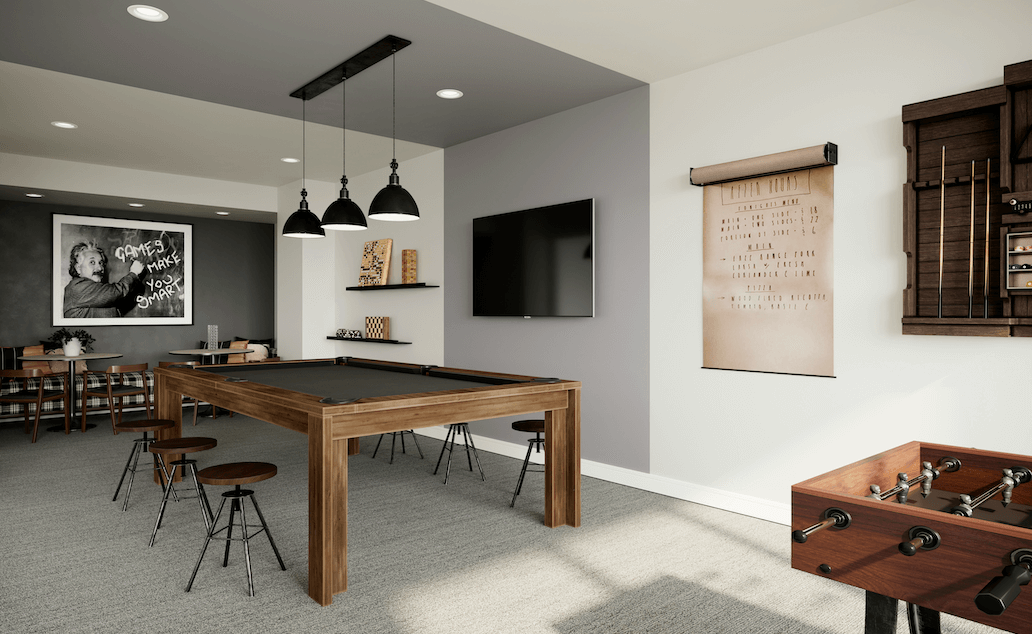
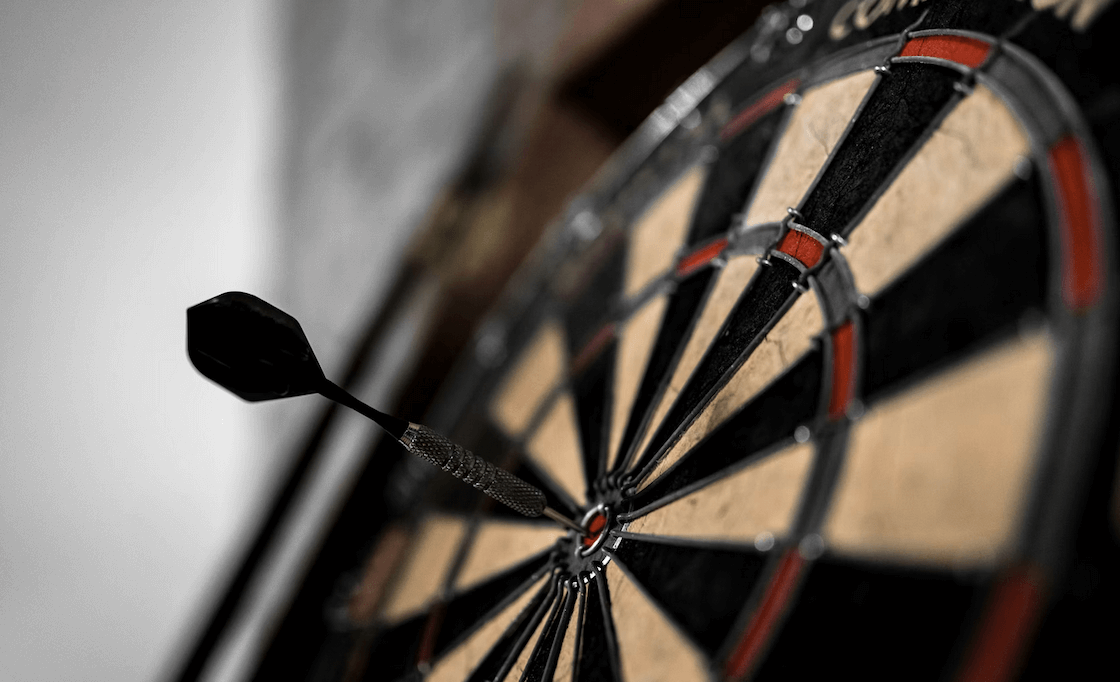
The person, board, or app that records and displays points during a game, from a peg counter and dry-erase tally to a programmable LED scoreboard with a remote.
Also known as: Score Keeper
Tables, boards, and the gear that goes with them are in our decor and accessories guide.
A scorekeeper is the person, the board, or the app that records and displays the points in a game, and in a man cave it is usually a physical device: a peg counter, a dry-erase board, or a programmable LED scoreboard. The term covers everything from a chalk mark on the wall to a wifi-connected board with a phone app, and which one fits depends entirely on the game. A dartboard and a foosball table keep score at very different speeds, and the right keeper matches the pace. A cribbage board scores with pegs, a darts match needs a sharp eye or a board that does the arithmetic, and a beer pong game runs on a few tally marks, so the keeper is really whatever the game demands. Scorekeepers matter because manual tallying is where game night dies. Someone loses count, a dispute starts, the rhythm stalls, and a visible, unambiguous score settles arguments before they begin. For fast games like darts, foosball, and ping pong, an electronic scorer keeps the pace, and a portable LED board with a remote typically lands in the $40 to $200 range before the bigger wall-mounted displays climb higher. The game room guides on this site round up the best programmable LED scoreboards for the quiet zone, because a board that is legible from across the room changes how a tournament night feels. Mount the display where both teams can see it without turning their backs on the table, because a scorer that requires a walk across the room will not get updated. The visible tally is also a social prop: it turns a casual game into a match with a story, which is most of the appeal of game night in the first place. A scorekeeper is not the score, and it is not a decorative scoreboard. The keeper is the mechanism that tracks; the board is the display. It is also not a referee: it records points, it does not judge a shot. And for many games the cheapest keeper, a pad and a pencil, still does the job, which is why the term stretches from a volunteer with a notebook to a glowing electronic panel.
Manual, mechanical, and electronic
Three families cover every budget. Manual scoring is a dry-erase board, a chalk line, or a pad, costs nothing, and depends on someone remembering to update it. Mechanical keepers are the tactile middle ground: cribbage-style peg boards, slide counters, and bead racks that need no power and survive decades of bar spills, favorites for darts, pool, and beer pong. Electronic keepers do the work for you, LED displays with remotes, timers, and preset game modes, and electronic dartboards that add up the 501 legs themselves. Many apps turn a phone into a keeper too, though the battery and the table clutter are the tradeoffs. The right choice is a function of the game's speed and the room's vibe, not the price tag, and the best rooms often keep one of each: a peg board on the wall for the classics and an LED scorer for the loud nights. The fourth family is the person. Plenty of rooms still draft a scorekeeper, the guest who does not want to play or the one whose job is to keep the night moving, and a human with a clipboard is never obsolete. Apps and boards just make that volunteer's job easier, which is why the electronic families took over the fast games first. What matters is that the tally is visible to both sides and updated in real time, whoever or whatever is doing the updating.
Scorekeeper vs. scoreboard
The distinction is mechanism versus surface. The scorekeeper records the tally, and the scoreboard shows it, and the two do not have to be the same object. A scoreboard with nobody updating it is just a sign, and a tally sheet with no display is a keeper you must read aloud. Consequence one: electronic dartboards and LED scorers collapse both jobs into one device, which is why they win in busy rooms. Consequence two: the pair fails together, if the app dies or the remote runs out of batteries, the score vanishes with it. Keep a mechanical fallback nearby, a peg board or a pad, and the night survives any electronics failure. The foosball table and the ping pong table each have their own rhythm, and the keeper has to match it or the game waits on the math. The distinction also explains a common purchase error: buying a beautiful scoreboard with no scorer built in, then discovering it is a decoration that someone must still update by hand. If the plan is an LED board, make sure it includes the keeper, the remote, the timer, and the game modes, and if the plan is a classic board, budget for the person or the app that will do the tracking.
Where the term came from
Keeping score is older than writing. The English word score comes from Old Norse skor, a notch cut into a stick, and a tally stick with a notch per point is literally a scorekeeper, the same root that gives us fourscore. The job was mechanical long before it was electronic. Baseball took it public: Chicago inventor George A. Baird built an electric baseball scoreboard in 1908, and within a few years electric boards were updating games in ballparks. From notched sticks to chalkboards to LEDs, the keeper shrank from a person with a tally to a chip with a remote, and a programmable board can now be updated from across the room. The term held still while the hardware changed, which is why one word still covers a human volunteer and a wall of glowing digits. The history also explains the etiquette. Because a score was once a notch in a public tally, disputing a recorded score has always carried weight, and a keeper's call stands unless challenged at the moment it is made. Modern boards inherit that authority, which is why a visible, agreed score keeps the peace better than a memory ever will.
Common mistakes
The first mistake is sizing the display to the room. A small counter that cannot be read from the darts oche or across the table defeats the purpose, so match the digit size to the viewing distance. The second is ignoring power and placement. An LED board needs a wall outlet, and mounting it in the line of a stray ball or dart is a wreck waiting to happen, so pick a safe spot and run the cord cleanly. The third is trusting one electronic keeper alone. When the app dies or the remote loses a battery mid-game, the score goes with it, so keep a peg board or a pad as backup. The fourth is buying a one-game scorer. A keeper locked to a single sport gathers dust, so check for multiple game modes before you spend, the same way you would scope the beer pong table that also needs scoring.
Frequently asked questions
What is a scorekeeper in games?
A scorekeeper is whoever or whatever records and displays the points during a game, from a person with a pad and pencil to an LED scoreboard with a remote. In a game room it is usually a physical device: a peg counter, a dry-erase board, or an electronic scorer for darts, foosball, or ping pong. The job is to make the tally visible and unambiguous, so disputes never stall the game. The best keeper is the one nobody has to think about.
What is the best scorekeeper for darts?
For steel-tip darts, a wooden or plastic peg board is the classic choice: durable, silent, and zero-maintenance. For electronic dartboards, the scoring is built in, and the board adds up 501 legs for you. Apps work for casual play but depend on the phone's battery. If you want a single visible board for the whole room, a programmable LED scoreboard with preset dart modes and a remote is the most flexible option, because it scores darts, foosball, and everything else from one mount.
How much does an LED scoreboard cost?
Portable LED scoreboards with a remote and a timer typically land between $40 and $200, which covers most game-room needs. Bigger wall-mounted displays with larger digits, more game modes, and app control climb into the hundreds, and stadium-grade boards cost thousands. A basic peg board or dry-erase scorekeeper costs under $20 and works fine for casual nights. Match the price to the room size and how often the board actually gets used, because a tournament-night fixture earns its cost and a wall ornament does not.
How do you keep score for ping pong and foosball?
Ping pong runs to 11 points with a two-point win margin, and foosball commonly runs to 5, 7, or 10 goals depending on house rules. A simple flip-counter or slide scorer mounted at the table works well because it is visible and never runs out of battery. Electronic scorers with timers and preset game modes add convenience, and a phone app works if the battery holds. Pick whichever keeps the count visible to both players, because an argument over the score ends more nights than the game does.
Do I need an electronic scoreboard for game night?
No, you need a visible score. A pad, a peg board, or a dry-erase tally settles most game nights for nothing. An electronic scoreboard earns its place when the room gets busy, the games are fast, or several tables run at once, because it keeps the count visible and avoids the forgotten-tally dispute. It is also part of the room's look, a glowing board reads as a game room in a way a pad never does. Start cheap, and add the LED scorer when the peg board stops keeping up.
Related terms
Dartboard (Electronic / Bristle)
A round target of sisal bristle or perforated plastic, mounted with its bullseye 5 ft 8 in off the floor and thrown at from a fixed oche distance for regulation darts.
Entertainment & GamesDarts Oche
Marks the exact spot a dart thrower's toe can't cross, set 7 ft 9.25 in from the board face under WDF rules, with a raised strip so players feel it without looking down.
Entertainment & GamesFoosball Table
An eight-rod cabinet with 22 miniature players that turns tabletop soccer into a fast, two-to-four-player game built around a roughly four-foot playing surface and telescopic or through rods.
Entertainment & GamesPing Pong Table
Regulation table tennis surface measuring 2.74 m by 1.525 m, standing 76 cm high with a net 15.25 cm off the table. Tabletop thickness runs 16 to 25 mm and sets the bounce.
Entertainment & GamesShuffleboard Table
A long, narrow hardwood table where players slide pucks into scoring zones. Regulation tables run 22 feet; home tables are usually 12 to 16 feet, needing 2 to 3 feet of side clearance.
Entertainment & GamesBeer Pong Table
The 8 foot by 2 foot table the throwing game is played on, with a ten cup triangle racked flush to each back edge. Tournament play uses water rather than beer.
Read more about Scorekeeper

Best Programmable LED Scoreboards for the Quiet Zone
Six programmable LED scoreboards compared on digit height, pixel pitch and price, plus the placement and power details that decide whether a board gets used.

Best Dartboards for Your Man Cave
Dartboards worth hanging in a man cave, plus the regulation numbers: bullseye at 5 ft 8 in, oche at 7 ft 9.25 in steel tip and 8 ft soft tip.