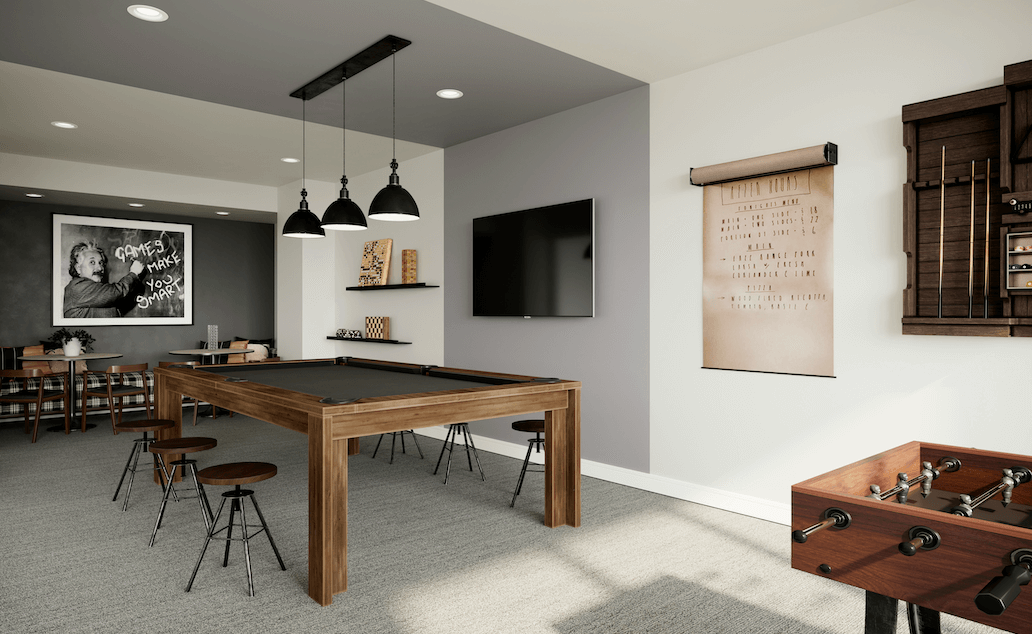
A room set aside for one person's hobbies and entertainment, typically a home bar, game room, theater, or all three. The term dates to a 1992 Toronto Star column.
Also known as: Man RoomMan SpaceGuy Cave
A man cave is a room set aside inside a home, garage, shed, or basement for one person's hobbies, entertainment, and company, furnished around his interests rather than family traffic. It is a home bar, a game room, a theater, and a trophy wall in one, and the only rule that actually holds is that the person who owns it decides what goes in it. The space can be a converted 10 by 12 spare bedroom, a half of a garage, or a full 400-square-foot basement, and the equipment inside follows the hobby: a big screen, a pool table, a bar, a workshop bench, or a sim racing rig. What makes it a cave rather than just a spare room is ownership, the sense that the space answers to nobody else.
The term itself is young, even though the concept is ancient. The first known published use ran on March 21, 1992, in the Toronto Star, when home consultant Joanne Lovering wrote, let's call the basement, man cave, in a guest column about naming rooms on a floor plan. The phrase went mainstream a year later with John Gray's book Men Are from Mars, Women Are from Venus, which argued that men retreat to a personal space, a cave, to recharge before re-engaging with the world. By 2007 the DIY Network show Man Caves turned the idea into a full genre of renovation television, and the man cave became one of the most-searched home-improvement ideas of that decade. The word is new; the impulse to claim a room for yourself is not.
A man cave is not a game room, not a home bar, and not a home theater, although it can contain all three. It is the umbrella term for a personalized retreat, while those are the names of what lives inside it. It is also not a she shed, its sister term, which describes the same idea claimed for a woman's retreat, and which HomeGoods actually registered as a service mark in 2011. And it is not a status symbol, despite the magazine spreads, because the best caves are usually the ones that cost the least and reflect the most.
What makes a room a man cave
Functionally a man cave splits into zones the way a house does. The seating zone holds the home theater gear, the sofa and the screen, and needs the dark-room discipline: light control, acoustics, and enough throw distance for the screen you picked. The refreshment zone is the home bar, a bar top, a kegerator or fridge, and the bar stools, and it usually gets the wet-bar plumbing if the cave is below grade. The activity zone is the game room core: pool table, dartboard, or gaming rig, and it needs the floor space that furniture math always underestimates. A 10 by 12 foot room comfortably holds one zone with walking room; a 12 by 18 holds two; and a full basement holds all three if the layout does not stack them on top of each other. Whatever the zones, the wiring comes first. Dedicated circuits for the fridge and the equipment, good lighting zones with dimmers, and HVAC that can actually condition the space, because a cave that is too hot, too cold, or too dim gets abandoned. Budget those systems before the furniture, because a projector on a shared circuit trips breakers mid-game and a basement that reads 45 degrees in January sits empty no matter how good the screen is. The history section on this site is a good place to start for the broader story of the retreat room concept.
Man cave vs. rec room
The distinction is audience, not content. A rec room is the family's multi-purpose entertainment space, the spot for the kids, the ping pong table, and Sunday football with whoever shows up, and its purpose is shared use. A man cave is the opposite: it is defined by a single owner's taste, and it tolerates family use on his terms rather than inviting it. The practical consequence is in the design brief. A rec room gets durable, neutral everything, because it has to survive everyone. A man cave gets the owner's retreat-room touches, the jersey wall, the neon, the themed bar, and none of it has to match the rest of the house. If the room is really for the whole household, call it a rec room and build it accordingly. If it is for one person, a cave is the honest label, and the design follows the person.
Where the term came from
The cave metaphor predates the room by centuries, as the place of solitude and self-repair, but the compound word arrived in 1992 with Joanne Lovering's Toronto Star column, the first known published use. John Gray's 1993 bestseller gave it psychological weight, describing the cave as where a man withdraws to solve problems on his own before coming back out. The pop-culture surge came in June 2007, when DIY Network premiered Man Caves, hosted by contractor Jason Cameron and former NFL lineman Tony Siragusa, who rebuilt more than a hundred basements and garages over the show's run. Retailers and media followed, and by the early 2010s the phrase was doing double duty as both a room type and a punchline, with HGTV and home-improvement coverage treating the cave as a standard fixture of American houses. For a term with such recent origins, it has proven stubbornly useful, because it names something people had been doing for generations without a word for it.
Common mistakes
The biggest mistake is building the room without the infrastructure. A man cave that skips the dedicated circuit, the moisture control, and the lighting plan ends up dark, damp, and tripping breakers, and the fix is to treat it as a real room build from day one: check the building code requirements for egress and permits before a single wall goes up. The second mistake is buying a cave instead of building one, furnishing from a catalog until the room looks like a showroom that nobody actually uses. The caves that get lived in have a centerpiece, one thing the room is really about, and everything else supports it. The third mistake is ignoring resale reality: aggressive personalization, the wall of shiplap in neon green, the bar shaped like a football, can shrink the buyer pool when the house sells. Keep the loudest touches in bolt-in pieces and the structure neutral, and the cave stays a feature instead of a liability. A cave works when it reflects its owner and still reads as a room.
Frequently asked questions
What is a man cave?
A man cave is a room set aside in a home, garage, shed, or basement for one person's hobbies and entertainment, furnished around his interests instead of shared family use. It can hold a bar, a theater, a game table, or a workshop, and the owner decides what goes in it. The first known published use of the term was a 1992 Toronto Star column, and the concept went mainstream after the DIY Network show Man Caves premiered in 2007.
What is the difference between a man cave and a game room?
A game room is a shared family entertainment space, built for everyone, with durable neutral furnishings. A man cave is defined by one owner's taste and tolerates other people's use on his terms. The design briefs differ as a result: a rec room gets everything-proof neutral furniture, while a cave gets the personal touches, the jersey wall, the themed bar, without needing to match the rest of the house. If the room is truly for the whole household, build a game room.
How much does it cost to build a man cave?
The range is enormous because the room itself is the variable. A furniture-only refresh of an existing spare room can cost $2,000 to $10,000. Converting a garage or finishing a basement runs much higher, often $20,000 to $60,000 or more once framing, drywall, wiring, HVAC, and permits are included. A full basement finish can exceed $100,000. The cheap wins are lighting, paint, and furniture; the expensive ones are plumbing, electrical, and structure. Build in phases if the budget demands it.
What does a man cave need to be usable?
Start with the infrastructure, not the decor. The room needs enough dedicated circuits for the fridge and the equipment, working heating and cooling, good lighting with dimmers, and moisture control if it is below grade. Then add the zones: seating around the screen, a bar or refreshment area, and space for the activity, whether that is a pool table, darts, or a gaming rig. A room that is comfortable, lit, and wired gets used.
Does a man cave add resale value to a home?
Usually not dollar for dollar, and it can hurt if it is finished too specifically. A tasteful finished basement or converted room adds value roughly in line with the square footage it creates, but highly personalized decor, themed bars, and aggressive styling can shrink the pool of buyers. Keep the loudest touches in bolt-in pieces and the structure neutral, so a buyer sees a finished room, not someone else's personality, and the cave stays a feature instead of a liability.
Related terms
Game Room
A room built around active games such as pool, foosball, darts, and arcade cabinets, sized and laid out for group play rather than solo retreat.
Bar & BeverageHome Bar
A built-in counter with cabinetry, storage and a sink or plug-in fridge that serves drinks in a finished room. The wet-versus-dry decision depends on the nearest drain stack.
Room Types & SpacesHome Theater
A dedicated room with a large screen, surround sound, controlled lighting and tiered seating built for an immersive cinema experience. Room dimensions and viewing angles follow THX or SMPTE standards.
Room Types & SpacesRec Room
A finished basement or spare room given over to games, movies, and casual entertaining. The rec room is the family version of a man cave: more flexible, more social, and built to take wear.
Room Types & SpacesRetreat Room
A private room in the house given over to one person's quiet: reading, meditation, a hobby, or just a chair with the door closed. The indoor sibling of the man cave and the she-shed.
Room Types & SpacesShe Shed
A small backyard structure, often a converted garden shed, used as a personal retreat and marketed as the female counterpart to the man cave. It houses a hobby: crafting, reading, or an office.
Room Types & SpacesGarage Conversion
A garage conversion turns a garage's concrete slab and bare shell into finished living space, typically a game room, home bar, or theater, with insulation, HVAC, flooring, and code-legal wiring.
Building & ConstructionBuilding Code
Legally adopted rules for residential construction: structural safety, fire protection, egress, electrical, plumbing, and energy performance, primarily the International Residential Code in the U.S.
Read more about Man Cave

Perfect Picture: Calibrate Your Man Cave Projector
Factory settings look wrong in a dark man cave. Set black level, contrast, color, gamma, and sharpness with free test patterns, no colorimeter needed.

Laundry Room to Man Cave: Plumbing, Permits & Pitfalls
Planning a laundry room man cave? Learn plumbing, ventilation, layout, permits, pitfalls, and when to call a pro. Your complete conversion guide today.

Ultimate Analog Music Studio Man Cave Guide
Discover how to design an analog music studio lounge with gear, acoustics, furniture, lighting, and decor for the ultimate creative escape in your man cave.

Soundproofing Your Man Cave: 3 Budget Tiers, Hidden Costs & Trade-Offs
Compare three budget tiers for soundproofing your man cave, from panels to floating rooms. Learn the real hidden costs and DIY vs contractor trade-offs.

Spare Bedroom to Man Cave: How to Add a Private Ensuite Retreat
Plan your spare bedroom conversion into a private man cave with ensuite. Learn about permits, wiring, budget, sequencing, and avoid common pitfalls.

How to Plan and Hire for Smart Lighting in Your Man Cave
Plan and hire smart lighting for your man cave. Covers dimmers, scenes, automation, electrical loads, and a contractor checklist. Make informed choices.

Workshop Man Cave Budget Trade-Offs: Dust Control, Electrical, Ventilation & Finishes
Learn to budget for a workshop man cave: compare low/mid/high costs for dust control, power, ventilation, and finishes. Includes hidden costs and permit fees.

Basement Man Cave Radiant Floors: Design Checklist & Trade Handoff
Plan hydronic radiant floors for your basement man cave with a concise checklist, specs, permit tips, and trade-handoff guidance to hire and manage pros safely.

Tiny Man Cave Zoning: Relax, Work & Game
Maximize a tiny man cave by zoning relaxation, work, and gaming areas—layout, lighting, and storage hacks plus what works (and what to avoid) for real results.