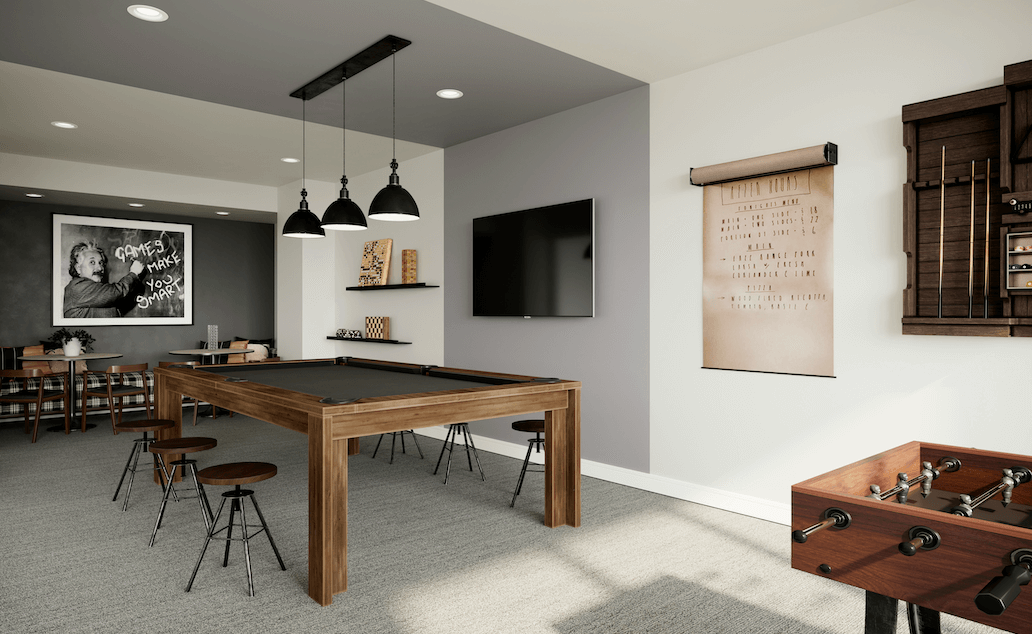
A finished basement or spare room given over to games, movies, and casual entertaining. The rec room is the family version of a man cave: more flexible, more social, and built to take wear.
Also known as: Recreation RoomRumpus RoomGames RoomPlayroom
The rec room is the room that absorbs a house’s mess and noise, and that is the point. It started as the finished basement where postwar families stacked a ping pong table, a TV, and a bar, and it still works the same way today: one flexible space that hosts game night, movie night, and the kid who wants to blast music without wrecking the living room. In a man cave build the rec room is usually the whole act, because it can hold a pool table in one corner, a theater setup in another, and a wet bar along one wall without committing to any single use.
The payoff is square footage that actually earns its keep. A rec room is typically bigger than a living room and, unlike a game room that is built around one activity, it is meant to switch purposes on short notice. A 400 square foot space with a couch, a 65 inch TV, a dartboard, and a card table handles a Tuesday card game and a Super Bowl crowd of fifteen with nothing more than furniture rearrangement. That flexibility is why builders keep adding them: a finished basement rec room adds usable square footage at a fraction of the cost of an above-grade addition, and a basic finish runs about $25 to $50 per square foot while a mid-range job with a bar and better finishes lands between $40 and $90.
A rec room is not a man cave, though the two terms blur constantly. The man cave is a personal retreat, one owner’s interests writ large across the walls, while the rec room is a family room with a game budget. The boundary matters when you sell: a neutral, flexible rec room appeals to every buyer, while a cave devoted to one person’s hobby reads as a renovation you would tear out. The sweet spot is a rec room with a corner that leans personal, which is exactly how most man cave pages on this site recommend starting.
What goes into a rec room and what it costs
The contents split into four zones you can mix freely. Entertainment means the TV or projector, seating, and audio, and it is the anchor of almost every rec room. Games cover the table sports, pool, foosball, ping pong, air hockey, darts, and arcade cabinets, plus card and board games. A food and drink corner with a mini fridge, wet bar, or popcorn machine keeps people from trailing through the kitchen. Storage and display take up the rest, shelving for board games and a wall for memorabilia.
Cost tracks the zones you add. A basic finish, drywall, lighting, flooring, and paint, runs roughly $25 to $50 per square foot. Add a wet bar with plumbing and you are looking at $40 to $90 per square foot, and a full bar plus a theater-grade audio system pushes toward $80 to $120. Labor dominates the budget in a basement because you are usually chasing moisture control, drop ceilings to hide ductwork, and a floor that tolerates spills before you ever buy a pool table. The furniture and games are the part owners overspend on, and a $2,000 pool table in a $30,000 room is not where the value sits.
Rec room vs. game room
People use the two terms interchangeably, and the furniture is the same, but the framing is different. A game room is organized around playing, one or two tables at most, with the rest of the space subordinate to them. A rec room is organized around hanging out, and games are one activity among many.
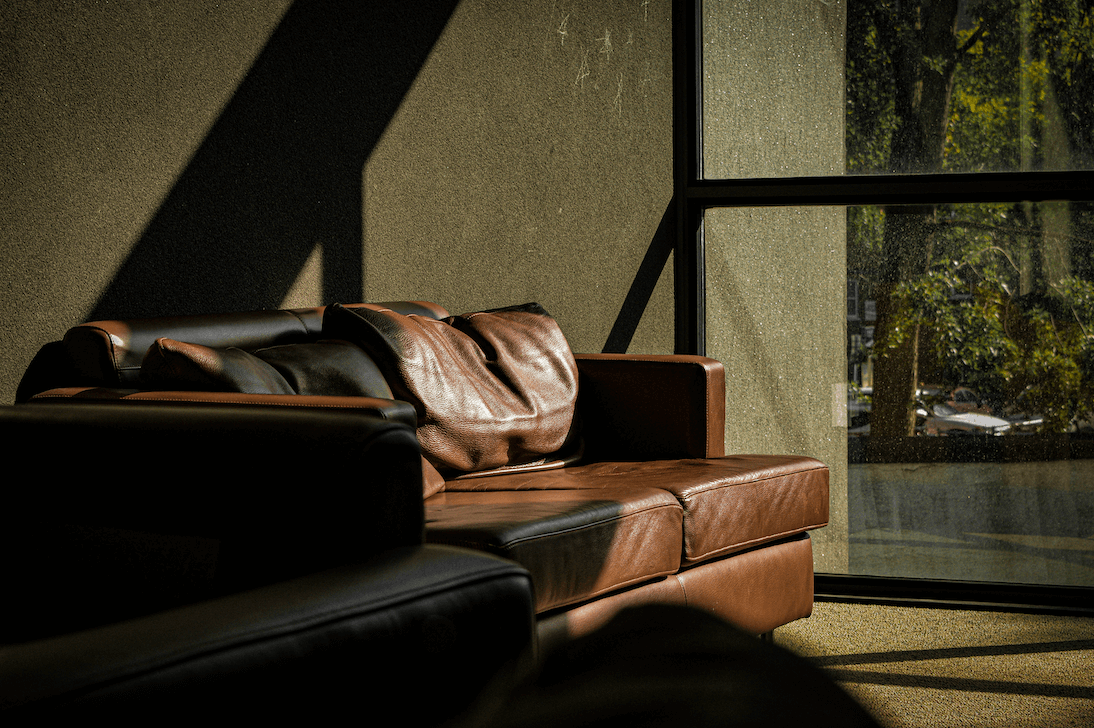
The practical difference shows up in seating. A game room seats the players, period. A rec room has to seat the non-players too, the people watching, talking, and eating, which is why a sectional sofa or a row of recliners earns its space in a rec room the way a second pool table never would. Design your room for the crowd you actually host, not the one in the catalog photo, and you will use it far more than the people who bought for the perfect layout.
Where the rec room came from
The rec room is a postwar American invention. Before the 1950s the basement was for the furnace and the laundry, and recreation happened in the living room or outside. The suburban housing boom of the 1950s and 1960s changed that: houses got cheaper basements, televisions got cheaper, and builders discovered that a finished room downstairs was the cheapest square footage a new house could advertise. By the 1960s the rec room was a middle-class status symbol, finished in wood paneling with a bar and a billiard table, and it stayed that way into the 1970s.
The term itself is a shortening of recreation room, and its cousins show how regional the naming got. In Canada and Australia the same room is often called a rumpus room, Britain says games room, and the English-speaking world has traded den, playroom, and ruckus room at various points. When the man cave arrived in the 1990s and 2000s it absorbed a lot of the rec room’s identity, but the rec room never left, it just got reframed as the social, family-friendly version of the same idea. The full story of how a finished basement became a status symbol is one of the more entertaining chapters in the history of the man cave.
Common mistakes
First, treating the rec room as a dumping ground. If it starts as the place for the old couch, the treadmill, and the boxes that do not fit upstairs, it will stay that way. A rec room needs a clear spine, one anchor activity like a TV or a pool table, and everything else arranged around it, or it reads as storage with a carpet.
Second, skipping the basement basics. A rec room that floods, smells musty, or leaks cold air through an uninsulated wall is a room nobody uses, whatever the furniture budget. Moisture control, insulation, and an egress window come before the fun stuff, and skipping permits on electrical or plumbing work can bite you at resale.
Third, over-stuffing the space. A rec room should feel like it has room to move, because it is a social space, and a pool table plus a foosball table plus a couch plus a bar in one 400 square foot room leaves no walkway at all. Buy the furniture in stages, measure clearances first, and remember that empty floor is what makes a rec room feel like a room instead of a storage closet. Give each zone a clear path, the way the floor planning guides on this site lay it out, and the room will host a poker night and a kids party without anyone climbing over anyone else.
Frequently asked questions
What is a rec room?
A rec room is a finished space, usually in a basement, set aside for casual entertainment: watching TV, playing pool, foosball, darts, or card games, and hanging out with friends. The term is short for recreation room. Unlike a dedicated game room built around one activity, a rec room is meant to switch between uses, which is why it typically has a mix of seating, a media setup, and space for games.
What is the difference between a rec room and a man cave?
A man cave is a personal retreat built around one person's interests, while a rec room is a family-oriented space meant for casual entertaining. The rec room is more flexible and neutral in its design, which tends to hold resale value better, while a man cave is more personalized and expressive. Many homes end up with a rec room that has a corner leaning in a personal direction, which blends both ideas.
How much does it cost to finish a basement rec room?
A basic finish runs about $25 to $50 per square foot and covers drywall, lighting, flooring, and paint. A mid-range project that adds a wet bar, better finishes, or a drop ceiling typically lands between $40 and $90 per square foot, and a luxury build with a full bar and premium audio can reach $80 to $120 or more. Labor dominates the cost in basements because of moisture control and the work needed to hide ductwork.
What should every rec room have?
The essentials are comfortable seating, a TV or projector, and at least one game or activity anchor, whether that is a pool table, darts, or a card table. A food and drink corner with a mini fridge or wet bar keeps people out of the kitchen, and shelving gives the games and memorabilia a home. Flexible furniture, like a sectional or a foldable card table, lets the room switch between quiet nights and bigger gatherings without redoing the layout.
Can a rec room hurt home resale value?
It can, if it is overpersonalized or built without permits. A neutral, flexible rec room that matches the rest of the home’s finish quality appeals to buyers and usually recovers 70% to 75% of its cost at resale, and in some markets up to 86%. But a room built around one owner’s niche hobby, or one with unpermitted electrical or plumbing work, can read as a liability instead of an asset.
Related terms
Man Cave
A room set aside for one person's hobbies and entertainment, typically a home bar, game room, theater, or all three. The term dates to a 1992 Toronto Star column.
Room Types & SpacesGame Room
A room built around active games such as pool, foosball, darts, and arcade cabinets, sized and laid out for group play rather than solo retreat.
Room Types & SpacesHome Theater
A dedicated room with a large screen, surround sound, controlled lighting and tiered seating built for an immersive cinema experience. Room dimensions and viewing angles follow THX or SMPTE standards.
Bar & BeverageWet Bar
A home bar built around a sink with running water and a drain, so drinks are mixed, glasses are rinsed, and cleanup happens right at the bar; dry bars have the counter and storage but no plumbing.
Entertainment & GamesPool Table
Six-pocket pocket billiards table sized 7, 8, or 9 feet, with a slate bed for tournament play. A standard 58 inch cue needs a room about 13 by 16 feet or larger, and slate tables start around $1,500.
Room Types & SpacesBonus Room
A finished, habitable room that falls short of the legal definition of a bedroom, giving the owner flexible space without triggering the code, tax, or septic weight an extra bedroom would.
Room Types & SpacesEntertainment Den
A flex space, often a converted basement, bonus room, or living room, built around a TV and casual seating rather than formal entertaining or a dedicated home office.
Room Types & SpacesMedia Room
Multi-purpose room built around a large TV and sound system for movies, sports, and gaming. Keeps daylight and flexible seating; typical installs run about $8,000 to $30,000.