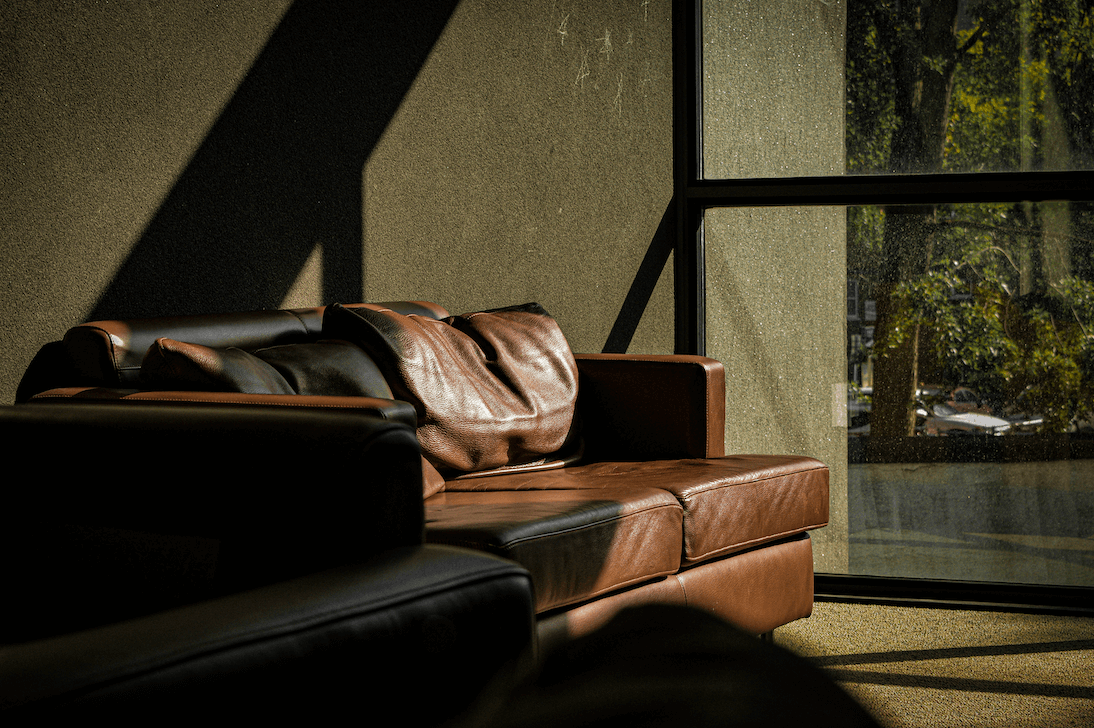
A multi-piece couch in an L or U shape that locks together into one continuous seating surface. Standard units run 95 to 110 inches wide and seat four to five.
Price bands, clearances, and what to buy first for this piece are in our man cave furniture guide.
A sectional sofa is a large multi-piece couch built in an L or U shape, with sections that lock together into a mostly unbroken seating surface. It is the default seating for a big media room because it packs the most seats into a corner, typically a main sofa section, a corner seat, a chaise, and sometimes add-ons. In a man cave it is the anchor piece, and the couch guide on this site covers how the pieces fit together and which layouts hold up in a media room. The sectional turns a rectangle of floor into seating that faces the television from every spot, which is the whole job of the room. The payoff is that seating decides whether a room is walked through or stayed in. A standard sectional runs 95 to 110 inches wide and seats four to five, small apartment units run 78 to 94, and large U-shaped builds pass 120 inches and seat up to seven. The right unit fills the wall, frames the conversation area, and, with a chaise, gives someone a full-length lounge position. The cost of getting it wrong is seating that either cannot fit the delivery route or dominates a small room, and both are expensive to fix. Room size is the honest starting point: under 200 square feet takes a unit 80 to 95 inches wide, 200 to 350 square feet takes 95 to 115, and over 350 takes 120-plus. A sectional is not a loveseat, not a regular couch, and not a set of matching chairs. It is also not a single piece, because a true sectional comes apart into modules, which is why it can reach a room a one-piece sofa cannot. And it is not automatically better than a couch: in a small room a loveseat plus a couple of recliners may beat a sectional that swallows the floor.
Sizing a sectional to the room
The buying criteria are footprint, depth, and clearance. L-shaped sectionals come in compact footprints around 95 by 95 inches, medium around 105 by 105, and large around 120 by 120, while U-shaped units run from 120 by 120 up past 130 by 140. Seating depth comes in three tiers: standard at 35 to 40 inches, deep at 40 to 45, and a chaise section at 60 to 70 inches long. Seat height runs 17 to 20 inches and overall height 30 to 38. Cushion depth tells you how you will sit: 20 to 22 inches for upright, 22 to 24 for balanced, and 24-plus for lounging. Clearance rules matter as much as the unit: main walkways want 30 to 36 inches, between the sectional and a coffee table 16 to 18, in front of recliners 24 to 30, and about 4 inches between an arm and adjacent furniture. The designer's 2/3 rule pairs the sofa with about two-thirds of the wall length, so a 180-inch wall takes a 120-inch sectional. Before buying, measure the delivery route, the doorways, the hallways, the stairs, and the corner pivots, because a doorway at 30 to 36 inches decides whether a one-piece unit fits at all, and modular pieces are the answer for tight routes.
Sectional vs. couch
The one-line distinction is modularity: a couch is a single fixed piece, and a sectional is modular and turns a corner. Two consequences follow. First, fit. A sectional uses corner space that a couch and separate chairs cannot, so it wins in big open rooms, while a couch keeps a small room from being swallowed whole. Second, flexibility. Because sectionals come apart, they move to a new house in pieces and rearrange into a different shape, and the chaise can swap to the other side. The costs are real. Sectionals run above a same-tier couch: budget sofas sit under $1,000, mid-range at $1,000 to $2,000, and luxury at $2,000-plus, while a typical modular sofa runs $2,000 to $4,000 and a mid-range five-piece sectional lands $2,500 to $6,000. A sectional also pins the layout, so a room that changes configuration every season may prefer the couch plus chairs. Match the shape to how fixed the room's purpose really is.
Where the sectional came from
Sectionals trace to the 19th century, with one account placing the origin in Virginia and the type entering homes in the Victorian era. The modern sectional is credited to designer Russel Wright, whose Modern Living furniture line in the 1930s is cited as launching the low, modular look. The sectional became a mass-market staple in mid-century America, the 1950s and 1960s, with low sleek profiles that matched the era's ranch houses and basement rec rooms. The meaning has drifted since: the word now covers a modest L-shape up to a U-shaped entertainment fortress, and buyers judge quality by frame and foam rather than by any single design lineage. Hardwood frames last 15 to 25 years, engineered plywood 8 to 12, and particleboard 5 to 8, and foam density predicts the cushions, with 1.8-density foam lasting 2 to 4 years, 2.0 lasting 4 to 6, and 2.5-plus lasting 10 to 15.
Common mistakes
The first mistake is buying on size before measuring the route. The number that matters is not the room's floor but the delivery path, because a sectional that fits the wall may not fit the doorway, the stairs, or the corner pivot. Measure every doorway, hallway, and stair width first, and prefer modular pieces for tight routes. The second is matching the cushion depth to the wrong use. A lounging-depth cushion in a room where people sit upright to play games gives a bad seat and wastes floor, so pick the depth by how the room is actually used. The third is treating seat count as a footprint. A deep-seating five-seater eats far more floor than a standard-depth one, so compute the footprint, not the label. The fourth is skimping on the frame. Particleboard frames fail in five to eight years, so a bargain sectional is often a five-year purchase, and the frame material with the foam density are the two numbers that predict whether it lasts. A quality sectional is a theater seating scale investment, and it deserves the same care.
Frequently asked questions
What is a sectional sofa?
A sectional sofa is a multi-piece couch, usually in an L or U shape, built from sections that lock together into a continuous seating surface. A typical unit includes a main sofa section, a corner piece, and often a chaise. Standard sectionals run 95 to 110 inches wide and seat four to five, while large U-shaped builds pass 120 inches. Because it turns a corner, a sectional packs more seats into a room than a couch and chairs.
What is the difference between a sectional and a couch?
A couch is a single fixed piece with one continuous shape, while a sectional is modular and turns a corner with separate sections that lock together. That makes the sectional better for big open rooms where it fills a corner, and it can be rearranged or moved to a new house in pieces. A couch suits smaller rooms and costs less. Sectionals also cost more: a typical modular sofa runs $2,000 to $4,000, where a same-tier couch lands $1,000 to $2,000.
How much does a sectional sofa cost?
Budget sofas sit under $1,000, mid-range at $1,000 to $2,000, and luxury at $2,000-plus, and sectionals cost more than a same-tier sofa. A typical buyer spends $2,000 to $4,000 on a modular sofa, a mid-range five-piece sectional runs $2,500 to $6,000, and leather modulars run $2,000 to $8,000. Large modulars run $3,000 to $10,000, and premium designer builds start around $5,000 to $14,000-plus. The frame material and foam density drive lifespan.
How do I choose the right sectional size?
Match the footprint to the room: under 200 square feet takes a sectional 80 to 95 inches wide, 200 to 350 square feet takes 95 to 115, and over 350 takes 120 inches or more. Use the 2/3 rule, which pairs the sofa with roughly two-thirds of the wall length. Check the clearances: 30 to 36 inches for walkways, 16 to 18 between the sectional and the coffee table, and 24 to 30 in front of recliners. Measure the delivery route, doorways, and stairs before buying.
How long does a sectional sofa last?
It depends on the frame and the foam. Hardwood frames last 15 to 25 years, engineered plywood 8 to 12, and particleboard 5 to 8. Foam density predicts the cushions: 1.8-density foam lasts 2 to 4 years, 2.0 lasts 4 to 6, and 2.5-plus lasts 10 to 15. Top-grain leather upholstery lasts decades, while bonded leather can peel in under five years. A cheap particleboard and low-density foam sectional is often a five-year purchase.
Related terms
Loveseat
Two-seat sofa scaled for tight rooms, typically 48 to 60 inches wide. Pairs with a recliner as secondary seating; budget to premium pricing runs about $200 to $5,000.
Furniture & SeatingRecliner
An armchair with a reclining back and a raising footrest, the default throne for movie nights. Manual, power, and wall-hugger variants change how much room the chair needs.
Furniture & SeatingOttoman
A backless, armless upholstered seat that works as a footrest, an extra chair, or a coffee table with a tray; named for the Ottoman Empire, where it was the main domestic seat.
Furniture & SeatingTheater Seating
Purpose-built home cinema recliners arranged in rows facing one screen, matched in height and often set on a riser so every seat holds the same sightline.
Furniture & SeatingFuton
A fold-flat frame and cushion, typically 6 to 8 inches thick, that converts between a sofa and a bed, turning a spare room or man cave into an overnight guest space.
Furniture & SeatingBeanbag Lounger
Oversized floor seating filled with shredded polyurethane foam or EPS beads. Foam holds its loft far longer, bead fill compresses and needs topping up.
Read more about Sectional Sofa

Best Couches for the Ultimate Man Cave
Discover durable, comfort-first couches: recliners, modular sectionals, and leather sleepers that boost game-day lounging, storage and style in your man cave.

Urban Loft Entertainment Design Essentials
Design an urban loft entertainment room with practical layout, seating, lighting, acoustics, and bar & storage strategies to build a stylish, functional space.