Two-seat sofa scaled for tight rooms, typically 48 to 60 inches wide. Pairs with a recliner as secondary seating; budget to premium pricing runs about $200 to $5,000.
Also known as: Love SeatTwo-Seat Sofa
Price bands, clearances, and what to buy first for this piece are in our man cave furniture guide.
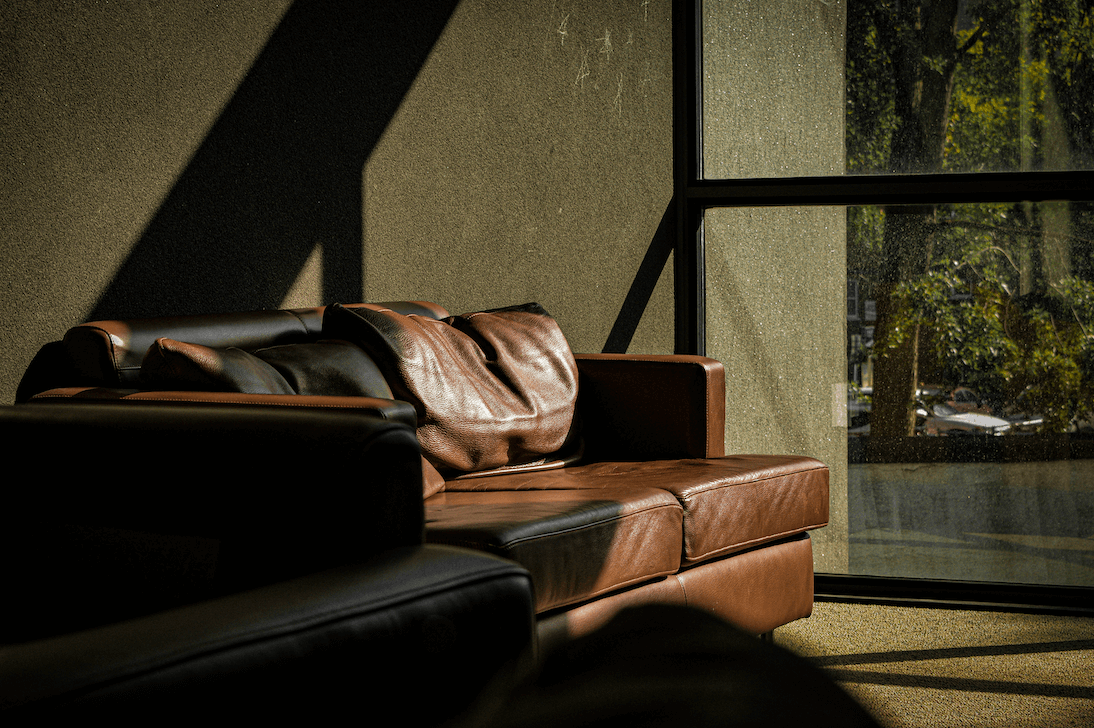
A loveseat is a two-seat sofa scaled down for tight rooms, built with the same frame, springs, and upholstery as a full couch but with roughly a third less length across the front. A standard one sits about 60 inches wide, 36 inches deep, and 32 inches tall at the back, which is why it fits under a window, along a short wall, or in a corner that a three-seater would completely dominate. In a man cave the piece earns its place as the secondary seat: a recliner takes the prime viewing spot, the loveseat carries the second viewer, and no floor space is wasted between them. It is the seating answer to a question a lot of cave builders skip, which is how to fit a couch into a room that was never designed for one. For a basement or bonus room that already holds a pool table or a bar, that saved footprint is exactly the point.
The numbers that matter are the footprint and the seat. Width bands run 48 to 52 inches for compact models, 52 to 60 for standard ones, and 67 to 72 for oversized, while seat depth runs about 20 to 24 inches and seat height lands near 18. That footprint is what separates a walkable cave from a cramped one. A three-seat sofa needs 72 to 96 inches of wall and roughly four feet of clearance in front, while a loveseat clears a 10 by 10 foot room and leaves the path to the bar open. Get the sizing right and the room keeps its function; get it wrong and every trip across the cave becomes a shuffle past the armrest. It is the seating choice that quietly decides whether a small room feels designed or just full.
A loveseat is not a small sofa in the sense that a third guest can be squeezed in, because it is engineered for two and an extra adult turns it into a lap. It is also not a tete-a-tete, the S-shaped Victorian piece that faced two sitters toward each other, and it is not a sectional, which is a modular system meant to join other pieces. Buy it for what it does: honest two-person seating with a small footprint, not a couch that fell short. When the cave is genuinely a one- or two-person space, that is not a compromise, it is the right scale.
How to size a loveseat for your cave
The buying question starts with measurements, not style. Measure the wall you plan to use, then subtract the arms, because track arms run 4 to 6 inches while roll arms run 6 to 10, so a 60-inch loveseat delivers roughly 48 to 52 inches of actual seat. In front of the piece you want 18 to 24 inches of clearance for your shins, plus a 30-inch walkway behind or beside it so the room still functions for other activities. Match the seat to the job. A lounge-style model with a 24-inch seat invites reclining through a movie, while a shallow 18-inch seat keeps posture upright for game night. Overall depth runs 30 to 40 inches, so check what sticks into the walkway, not just the width. Pricing tracks the same bands as sofas: budget fabric models run $200 to $800, mid-range builds run $800 to $2,000, and leather or power-reclining versions climb past $2,500, with custom designer pieces topping $5,000. If the cave doubles as a guest room on occasion, a loveseat with a pull-out mattress is the rare two-seater that earns its footprint twice, though the sleeping surface trades some comfort for the compactness. For a man cave that hosts movie marathons, a reclining loveseat in performance fabric outlasts a fixed-back version, because spills and snacks are part of the deal. Look for removable, washable covers if the cave doubles as the snack room, and skip the light-colored linen unless you want to live with the stains.
Loveseat vs. sofa
The distinction is seat count, not quality. A sofa seats three across 72 to 96 inches; a loveseat seats two across 50 to 64 inches, and the construction, fabric, and price per seat are otherwise the same. The consequence shows up at guest count and in the layout. A loveseat in the primary viewing position leaves the fourth person on the floor, while a sofa in the same spot anchors a whole crew. But that extra 18 to 30 inches of sofa width usually costs you wall space and a walkway. If the cave is a dedicated one- or two-person room, the loveseat is the better scale and pairs cleanly with a recliner or theater seating in the row. If the room hosts poker night or the whole family, step up to a full sectional sofa or a three-seat couch. The rule is simple: count the regular seats you actually need, measure the room, and let the square footage decide instead of the aesthetic.
Where the loveseat came from
The form traces to 18th-century England, where cabinetmakers built the courting chair, a deep, wide seat made for two people to sit close, side by side. In France the same impulse produced the tete-a-tete, a pair of seats facing each other so couples could converse in private, and Victorian parlors on both sides of the Atlantic adopted both pieces. The word loveseat arrived in the 1800s, and the American origin story that still circulates points to Charleston, South Carolina, where the porch joggling board doubled as a courting bench and small upholstered sofas carried the romance indoors. By the mid-20th century the form was factory standard, and the 60-inch two-seater became the default compact couch across every major furniture maker. The romance in the name outlived the courtship custom: what started as furniture for flirtation now simply means one fewer seat than a sofa.
Common mistakes
Three errors come up again and again. First, buying a loveseat where a sofa is needed. A two-seater in the main viewing spot guarantees a floor-seated guest on game night, and the fix is to count the regular audience before you measure walls. Second, choosing on width alone and ignoring the seat. A 24-inch lounge seat feels great for a nap and wrong for upright poker play, so match seat depth to how the room is actually used and check the 18-inch seat height against the coffee table, because a mismatch puts the table at knee level. Third, forgetting the arms and the clearance. Two 7-inch roll arms eat 14 inches of your nominal width, and a loveseat pushed flush against the wall with a coffee table in front leaves no room for your feet. Measure the seat width, subtract the arms, and keep the 30-inch walkway clear. The man cave furniture that works is the piece that leaves the room navigable, and the loveseat is at its best when it vanishes into the layout instead of dominating it.
Frequently asked questions
What is a loveseat used for?
A loveseat is a two-seat sofa scaled for smaller rooms. It works as the secondary seat in a man cave, paired with a recliner or armchair for movie night, or as the main couch in a compact space. Its real job is honest two-person seating with a small footprint. Standard models run about 60 inches wide, which lets them fit under windows, along short walls, and in corners where a three-seat sofa would crowd the room. It is not built to hold extra guests.
How is a loveseat different from a sofa?
The difference is seat count. A sofa seats three people across roughly 72 to 96 inches, while a loveseat seats two across about 50 to 64 inches, and the construction and materials are otherwise similar. A loveseat fits smaller rooms and leaves more walking space, but a sofa anchors a whole group. If you regularly host more than two people in the main seating area, the sofa is the better choice. If the room is for one or two, the loveseat is the right scale.
How much does a loveseat cost?
Budget fabric loveseats run about $200 to $800. Mid-range models from brands like Ashley and La-Z-Boy run $800 to $2,000, and premium or designer versions from brands like Restoration Hardware run $2,000 to $5,000 or more. Power-reclining loveseats typically fall between $800 and $2,500. The price follows the frame, the fabric, and the mechanism, so a performance-fabric model in a busy man cave usually costs more up front and lasts longer than a budget fabric version.
What size loveseat should I buy?
Measure the wall first, then pick a width. Compact models run 48 to 52 inches, standard loveseats run 52 to 60, and oversized versions run 67 to 72. Subtract the arms from the nominal width to get the real seat. Keep 18 to 24 inches of clearance in front for your legs and a 30-inch walkway around the piece. Match seat depth to use: a 24-inch seat suits lounging, an 18-inch seat suits upright seating.
Can a loveseat fit in a small man cave?
Yes, and that is usually its best use. A loveseat clears a 10 by 10 foot room where a three-seat sofa would swallow the floor. Put it on the wall facing the screen with a recliner beside it, or use it under a window as the secondary seat. The trade-off is guest capacity, two people max. If the cave regularly holds more people than that, a sofa or a sectional in the same wall will serve the room better.
Related terms
Sectional Sofa
A multi-piece couch in an L or U shape that locks together into one continuous seating surface. Standard units run 95 to 110 inches wide and seat four to five.
Furniture & SeatingTheater Seating
Purpose-built home cinema recliners arranged in rows facing one screen, matched in height and often set on a riser so every seat holds the same sightline.
Furniture & SeatingRecliner
An armchair with a reclining back and a raising footrest, the default throne for movie nights. Manual, power, and wall-hugger variants change how much room the chair needs.
Furniture & SeatingGaming Chair
Racing-inspired or ergonomic-hybrid seating built for long sessions at a desk, with adjustable recline, armrests, and lumbar support tuned for gaming rather than office work.
Furniture & SeatingBeanbag Lounger
Oversized floor seating filled with shredded polyurethane foam or EPS beads. Foam holds its loft far longer, bead fill compresses and needs topping up.
Room Types & SpacesMan Cave
A room set aside for one person's hobbies and entertainment, typically a home bar, game room, theater, or all three. The term dates to a 1992 Toronto Star column.
Room Types & SpacesHome Theater
A dedicated room with a large screen, surround sound, controlled lighting and tiered seating built for an immersive cinema experience. Room dimensions and viewing angles follow THX or SMPTE standards.
Read more about Loveseat

Best Convertible Sofa Beds with Storage for Your Home Hideout
Find convertible sofa beds with hidden storage that maximize comfort, durability, and space in your home hideout. Top picks for every style and budget.

Best Oversized Two-Person Beanbag Loungers for Your Man Cave
Discover oversized two-person beanbag loungers to transform your man cave: honest reviews on comfort, materials, size, durability, and smart buying tips.

Best Chairs to Upgrade Your Man Cave
Compare top recliners, accent and gaming chairs to boost comfort, style and function in your man cave, from space-saving recliners to tech-friendly seats.

Best Stadium Riser Seating for Home Theater Rows
Discover the best stadium riser seating for home theater rows, expert reviews on comfort, materials, and installation for your ultimate entertainment space.