A box with several HDMI inputs that routes one source to a single display, so a TV with too few ports connects to multiple consoles. The switch needs HDMI 2.1 and 48 Gbps to pass 4K at 120 Hz.
Also known as: HDMI SwitchHDMI SelectorHDMI Switch Box
An HDMI switcher is a small metal or plastic box with two to five HDMI input ports on one side and a single output port on the other, plus a button, a remote, or an auto-sensing circuit that selects which source the display sees. In a man cave where a gaming PC, a PlayStation, an Xbox and a streaming stick share a single HDMI port on the wall-mounted TV, the switcher is the component that stops you crawling behind the screen every time you switch from a game to a movie. A 48 Gbps HDMI 2.1 switch passes 4K at 120 Hz with HDR, VRR and ALLM intact. An 18 Gbps HDMI 2.0 switch does not. The bandwidth printed on the listing, not the version number on the box, decides whether your PS5 runs at 120 frames per second or silently drops to 60. A four-port 8K switch from a known brand like StarTech costs $40 to $80, while a budget two-port unit from an Amazon brand runs $15 to $30, and the gap in reliability tracks the price almost perfectly.
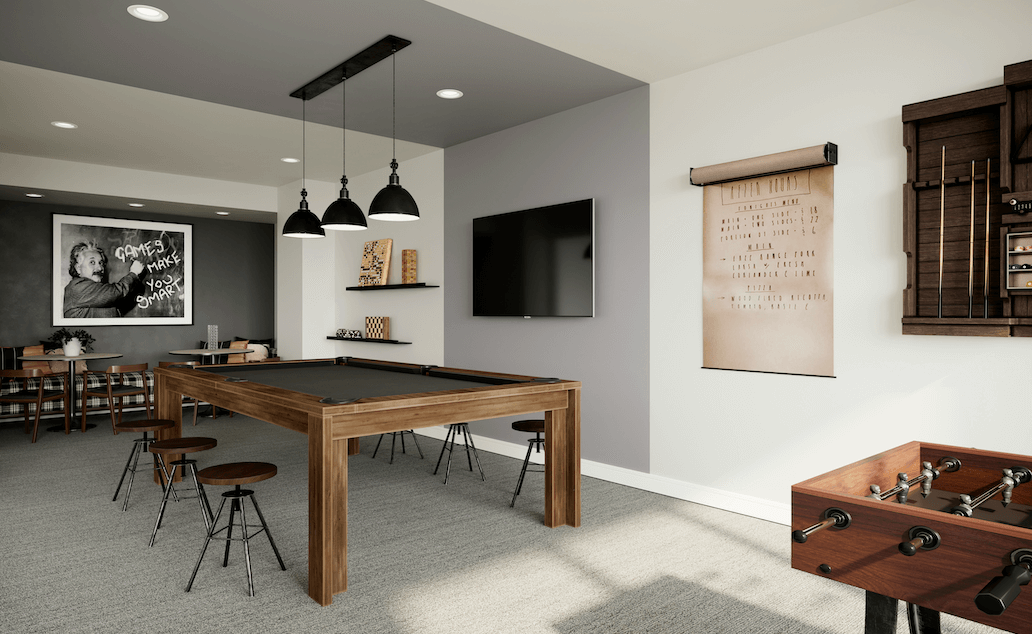
The cost of getting this wrong is a system that mostly works but never quite works right. A switch that claims 4K at 60 Hz but omits HDR passthrough strips Dolby Vision from every source the moment it enters the chain. A switch that passes video but not CEC breaks the one-remote setup. A switch that passes CEC but not ARC mutes the soundbar. These are the standard three complaints on every AV forum thread about budget switchers, and the fix is always the same: buy the spec, not the price tag, and test the whole chain with the exact devices and cables you plan to run. For a game room wall with multiple consoles, the switch is the single most likely failure point in the AV path other than the cables themselves, which is why a high-quality unit paired with game tables and arcade machines is worth planning before the first cable is pulled.
An HDMI switcher is not an AV receiver, and it is not an HDMI splitter either. A receiver switches sources and amplifies speakers. A splitter takes one source and sends it to two or more displays. A switch does one direction only: multiple sources in, one display out. The cable management challenge behind a media wall with five sources and one switch is real, and the cables multiply faster than the ports do.
Bandwidth, version numbers and the 48 Gbps line
HDMI 2.0 tops out at 18 Gbps of bandwidth, which handles 4K at 60 Hz with HDR and 4:4:4 chroma without trouble. That is enough for most sports-bar and casual movie setups even today. HDMI 2.1 raises the ceiling to 48 Gbps using Fixed Rate Link (FRL) signalling instead of the older TMDS method, and the extra headroom is what enables 4K at 120 Hz, 8K at 60 Hz, Variable Refresh Rate (VRR), Auto Low Latency Mode (ALLM), and eARC. A 2.1 switch is the only way to get 120 Hz gaming from a PS5 or Xbox Series X through a single display port, and it is also the only way to keep those features when the switch sits in a chain that already includes a 2.1-capable screen and console.
The trap in the market is that not every switch labelled HDMI 2.1 actually supports 48 Gbps. Some run at 40 Gbps or 32 Gbps depending on the chipset, and a 40 Gbps switch passes 4K at 120 Hz with 10-bit colour but may drop HDR or VRR when the signal approaches the ceiling. Check the listed bandwidth before buying, and treat any listing that does not state a number as 18 Gbps until proven otherwise. A powered switch is mandatory for 48 Gbps operation because USB bus power does not reliably drive the signal at those data rates, and every cable in the chain from source to switch to display must be Ultra High Speed certified for the full 48 Gbps rating. One old cable limits the entire chain.
Switch vs. matrix: when one display is enough
A switch routes multiple sources to one display. A matrix routes multiple sources to multiple displays, and the cost difference is the most reliable way to tell them apart at a glance. A four-port HDMI 2.1 switch costs $40 to $80. A four-by-two HDMI matrix capable of the same 48 Gbps bandwidth costs $200 to $600 because it must handle routing logic, EDID management for multiple sinks, and downscaling when a 4K source hits a 1080p display. In a single-screen man cave the switch is almost always the right answer. In a sports bar with eight TVs and four cable boxes, a matrix earns its cost on the first game day.
A switch also does not extract audio or downscale resolution on its own. If you need to send video from an HDMI source to a display while pulling audio out to a separate sound system, you need a switch with audio de-embedding or a separate audio extractor added to the chain. Some budget switches advertise this feature and then pass only two-channel PCM instead of Dolby Atmos, and the spec sheet tells you which it actually is.
Where the HDMI switch came from
HDMI itself was launched in December 2002 by a consortium of Hitachi, Panasonic, Philips, Silicon Image, Sony, Thomson and Toshiba, and the first HDMI switches appeared shortly after as HDMI inputs began outnumbering the single port early HDTVs shipped with. Version 1.0 carried 4.9 Gbps. Version 2.0 arrived in September 2013 with 18 Gbps and 4K at 60 Hz, and version 2.1 was released in November 2017, raising bandwidth to 48 Gbps and adding FRL signalling, VRR, ALLM and eARC. The HDMI Forum manages the specification. HDMI Licensing Administrator manages the compliance and cable certification, and every switch manufacturer that uses the HDMI logo pays a licensing fee whether their product actually meets spec or not. The gap between HDMI compliance and HDMI certification is the whole reason auto-switching failures and handshake problems remain common even on branded hardware.
Three ways a switch goes wrong and how to catch them first
The first failure is EDID corruption. Every time a new source connects to a display through a switch, the display sends its Extended Display Identification Data back to the source to negotiate resolution, colour space and audio format. A cheap switch strips or corrupts parts of that data, and the result is a black screen, a resolution stuck at 1080p, or multichannel audio downmixed to stereo. The fix is either a switch with built-in EDID management that caches the display’s capabilities and presents them to every source continuously, or an external EDID emulator placed between the switch and the display. Both add cost. Neither is optional on a system with mixed-resolution sources.
The second failure is HDCP handshake timeouts. High-bandwidth Digital Content Protection encrypts the signal between the source and the display, and every device in the chain must authenticate with a shared key. A switch that takes four seconds to negotiate HDCP between a PS5 and a TV produces a blank screen for four seconds every time you switch inputs, and a switch that fails the negotiation entirely plays a looping HDCP error message that cannot be dismissed without a full power cycle of every device in the chain. The fix is a switch that maintains continuous HDCP and EDID communication with every connected source simultaneously, which is the feature that separates a $60 switch from a $20 one.
The third failure is auto-switching that switches to the wrong source. A five-port auto-switch set up with a streaming stick, a console and a PC will latch onto whichever device wakes first or holds the strongest 5-volt hot-plug signal, and when the streaming stick updates its firmware at two in the morning, the switch flips to it and stays there. The fix is turning auto-switching off and using the remote, which is why a switch without a physical remote is a false economy on any setup with more than two sources.
Frequently asked questions
What is an HDMI switcher?
An HDMI switcher is a device with multiple HDMI inputs that routes one selected source to a single display, so a TV or projector with limited ports can connect to a gaming console, a streaming box, a PC and a disc player without unplugging anything. The switch sits between the sources and the screen, and you select which source is active using a button, a remote or an auto-sensing circuit. A quality switch adds negligible latency and preserves the full video and audio signal when correctly matched to the HDMI version of every device in the chain.
Do I need HDMI 2.1 on a switch for a 4K TV?
Only if the sources connected to it output at 4K 120 Hz with VRR or ALLM, which covers the PS5, Xbox Series X and modern gaming PCs. If every source runs at 4K 60 Hz or below, an HDMI 2.0 switch at 18 Gbps handles the signal without compromise. The version number on the switch needs to match the highest-bandwidth source in the chain, and a 2.0 switch will block 120 Hz signals from a 2.1 source even if the TV supports them.
Why does my HDMI switch keep losing the picture when I swap inputs?
This is almost always an EDID or HDCP handshake problem. A budget switch disconnects the signal lines when you change inputs, forcing the new source to renegotiate its entire EDID and HDCP chain with the display from scratch, which produces a black screen for two to seven seconds. A switch with continuous EDID management keeps the handshake alive on all ports simultaneously and cuts switching time to under a second. A complete failure to renegotiate means one of the devices in the chain does not support the HDCP version the content requires.
Can I use an HDMI switch with a soundbar or AV receiver?
Yes, but where the switch sits in the chain matters. Putting the switch between the sources and an AV receiver lets the receiver handle audio decoding and amplification as normal. Putting the switch after the receiver and before the TV strips the audio from the receiver unless the switch specifically passes ARC or eARC, and many budget switches do not. If the soundbar connects to the TV via ARC and the switch sits upstream of the TV, ARC passthrough must be confirmed in the switch specifications or the soundbar will go silent.
Does an HDMI switch add input lag?
A quality HDMI 2.1 switch adds less than 1 millisecond of lag, which is imperceptible. If input lag is noticeable through a switch, the switch is either performing active signal processing or upscaling rather than simple passthrough, or one of the cables in the chain is degrading the signal enough that the display’s own processing is compensating. Look for a switch described as passthrough or bypass mode, and confirm every cable in the chain is rated for the bandwidth the signal demands.
Related terms
AV Receiver
The switching, decoding and amplification hub of a surround system. Every source plugs into it, one cable leaves for the screen, and it drives every speaker in the room.
Audio/Visual & TechHome Theater Projector
A projection display that throws 4K onto a screen from 5 to 20 feet away, rated in ANSI lumens. Laser light sources last 20,000+ hours; lamp models deliver 2,000 to 4,000 hours before replacement.
Audio/Visual & TechSmart TV
A television with a streaming OS and app store built in, so it runs streaming services, sports, and games without a separate box; the platform, HDR support, and ports decide which one to buy.
Audio/Visual & TechDolby Atmos
Object-based surround format from Dolby Laboratories that places sound anywhere in three-dimensional space, including overhead, instead of locking it to fixed speaker channels.
Audio/Visual & TechCable Management
Organising, routing, bundling, labelling, and concealing AV cables to ensure fire-code compliance, signal integrity, and a clean result, using raceways, trays, sleeves, velcro, and in-wall pathways.
Audio/Visual & TechStreaming Device
A standalone box or HDMI stick that connects a TV to streaming apps over the internet, adding faster menus, wider HDR support, and one interface across the house.
Audio/Visual & TechUniversal Remote
One handset that drives a whole AV stack, working either from a preloaded database of manufacturer codes or by learning IR codes off the remotes it replaces.