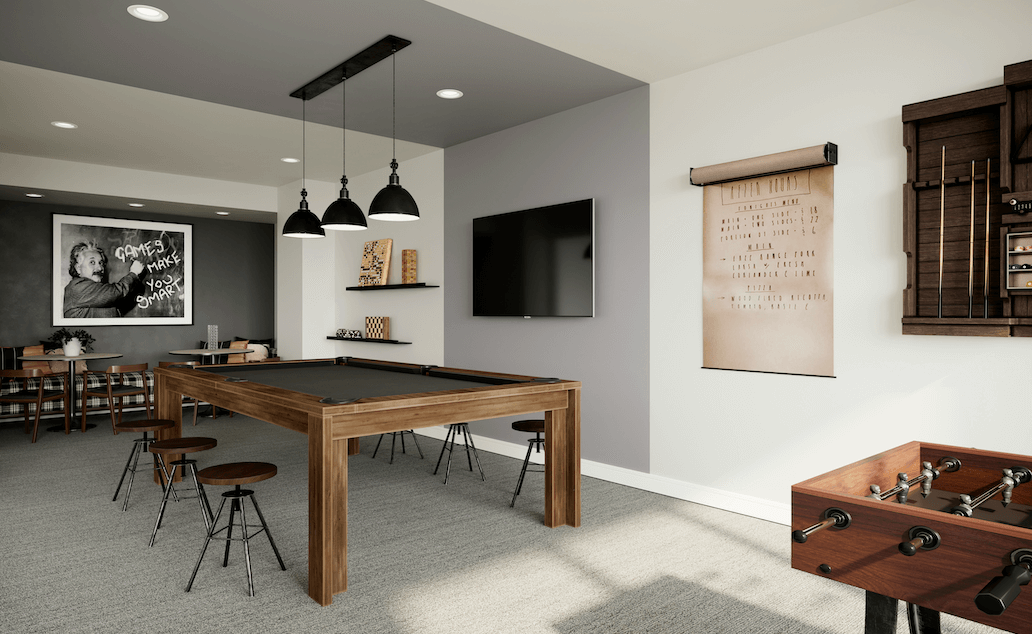
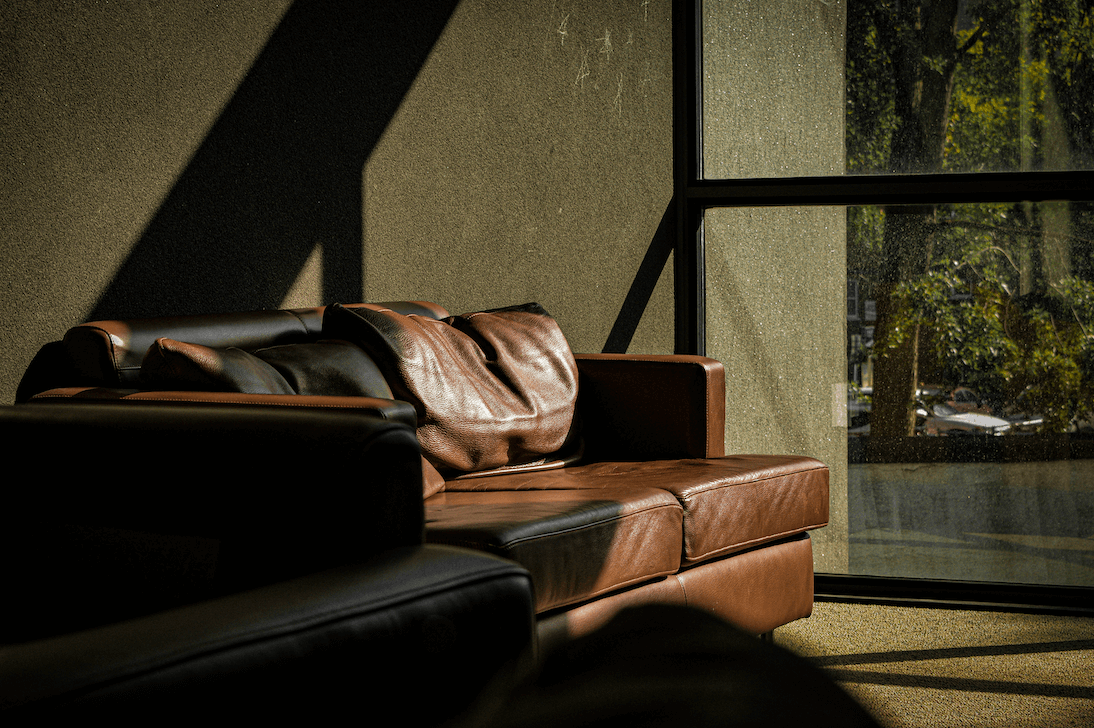
Collage of images, color swatches, and material samples that sets a room's visual direction before you buy. Digital tools like Milanote and Pinterest replaced the cork-board and printouts.
A mood board is a visual collection that settles what a room will feel like before a single dollar is spent: paint chips, fabric samples, furniture photos, and lighting references arranged together so colors and materials can be judged against each other. In a man cave build it is the cheapest design tool on the project, and the one that prevents the most expensive regret, which is buying a centerpiece sofa that matches nothing else in the room. You gather images, swatches, and notes into one composition, and the composition tells you, before you buy, whether the theme holds together.
The payoff is alignment. Interior designers build mood boards to communicate direction to clients and to cut the number of revision rounds, and a homeowner working alone gets the same benefit: the board forces decisions on palette, material, and style early, when they are free, instead of at the checkout, when they are not. A board also disciplines the budget, because once you agree on the direction you stop impulse-buying items that fit some other room. The result belongs at the front of any build, before the floor plan is drawn and long before the budget tier gets spent, and the planning and budgeting guide is where the rest of that process lives.
A mood board is not a shopping list, not a floor plan, and not a 3D rendering. It captures the mood and the material direction, while the floor plan handles the layout, the space plan handles the furniture arrangement, and a render tests the proportions. It is also not a Pinterest feed: the endless collection of pins is the raw material, and the mood board is what survives after you edit it down to what actually fits the room.
How to build a board that actually works
Start with one anchor. A beloved piece of furniture, a favorite work of art, or a single color you cannot live without gives the board its spine, and everything else has to earn its place against it. Then lock the palette: pick two or three neutrals and one accent, pull real paint chips or digital swatches, and keep the color logic consistent across every element, which is where a color temperature decision shows up once you get to lighting.
Gather materials and finishes next, wood samples, upholstery, flooring, and metal, because photographs flatten texture and the physical sample is the only honest version. Arrange the collection with a hierarchy: one image anchors the board, others support it, and everything that does not fit gets cut. Add notes explaining why each element is there, because the notes carry the reasoning that survives the meeting. Digital tools handle the gathering and sharing: Pinterest is the free starting point for raw inspiration, Milanote arranges images, notes, and swatches on a calm canvas, and Morpholio Board adds real product sourcing with prices, which matters when the board turns into a specification.
Mood board vs. Pinterest board vs. floor plan
The easiest confusion is mood board versus Pinterest board, and the difference is editing. A Pinterest board saves everything you find, with no budget, no dimensions, and no test of whether the pieces go together, and designers treat it as the collection layer, not the deliverable. A mood board is the edit: fewer images, chosen against a direction, arranged so the palette and materials can be judged as a composition. One Pinterest board can hold a thousand pins and still not tell you what the room should be.
The floor plan is a different kind of document altogether. It answers where the walls, doors, and furniture sit in plan, while the mood board answers what the room should feel like. The floor plan and the mood board are complementary, and a build is stronger when both exist before you spend, because the plan catches a sofa that is 3 inches too long and the board catches a sofa in the wrong style entirely. Do the board first, then the plan, then the budget, and the three together cover the planning side of a man cave build.
Where the mood board came from
The practice of assembling visual references to lock a look goes back to film production design, where art directors gathered sketches, photographs, and materials to agree on the look of a set before it was built. The discipline got a name in 1939 when producer David O. Selznick coined the credit production designer for William Cameron Menzies on Gone with the Wind, who supervised more than 1,500 continuity sketches for the film. Interior designers borrowed the habit of the reference board through the 20th century, and for decades it meant a cork board, a scalpel, and a stack of magazines, with fabric and paint samples pinned beside the clippings. The digital version arrived with Pinterest, which launched in 2010 and gave everyone a bottomless board to collect images on, and the dedicated tools that followed, Milanote and Morpholio Board among them, turned the mood board from a presentation aid into a working document that holds notes, links, and prices. Designers now keep two kinds of board in play: the inspiration board, which sells the direction with atmosphere, and the spec board, which carries real products with SKUs, prices, and lead times, and the strongest builds produce both, first to agree on the mood and then to source it. The boards also travel, because a digital board shares with a click, so a builder, a spouse, or a contractor can react to the same references instead of waiting for a meeting.
Common mistakes
Collecting forever and never editing. A mood board that tries to keep every nice image becomes a junk drawer that decides nothing. Fix it by setting the direction in one sentence first, then cutting every image that does not serve it, until a stranger can look at the board and name the style.
Mixing incompatible references. Pulling one mid-century chair, one industrial lamp, and one rustic shelf onto the same board produces a room that matches nothing. Fix it by naming the style keyword up front and testing each element against it, keeping at most one deliberate contrast.
Trusting photos over physical samples. Screens flatten texture and shift color, and a paint chip or wood sample under the room’s actual light tells the truth a photo cannot. Fix it by collecting physical swatches for anything you will buy and reviewing them in the room before you commit.
Forgetting the budget connection. A board full of beautiful furniture means nothing if the pieces are twice the budget, and the classic failure is a board that wins the mood argument and loses the cost one. Fix it by turning the final board into a specification list with prices and checking the total against the project budget.
Frequently asked questions
What is a mood board and why should I make one?
A mood board is a visual collection of images, color swatches, and material samples arranged to settle what a room should feel like before you buy anything. You use it to agree on palette, materials, and style while changes are still free, rather than after the furniture arrives. Designers build them to align clients and cut revisions, and a homeowner gets the same benefit: the board keeps a project from drifting and stops impulse purchases.
What should I put on a mood board?
Start with one anchor: a favorite piece of furniture, a work of art, or a color you cannot live without. Then add paint and fabric swatches, flooring and wood samples, furniture photos, lighting references, and any texture or pattern that supports the direction. Keep the palette consistent, two or three neutrals and one accent, and cut anything that does not fit. Add notes explaining each choice so the reasoning survives.
What free tools can I use to make a mood board?
Pinterest is the best free starting point for gathering raw inspiration, and you can organize saved images into boards by room or project. Milanote has a free tier and is built for arranging images, notes, color swatches, and links on a calm canvas. Canva offers free mood board templates for a polished presentation. Dedicated pro tools like Morpholio Board add product sourcing with prices, but you can start a strong board with Pinterest and Milanote alone.
What is the difference between a mood board and a Pinterest board?
A Pinterest board saves everything you find, with no budget, dimensions, or test of whether the pieces fit together. A mood board is the edited result: fewer images, chosen against a clear direction and arranged so the palette and materials can be judged as one composition. Designers treat Pinterest as the gathering layer and the mood board as the deliverable. A board full of pins does not decide anything; an edited mood board does.
Can a mood board replace a floor plan or a budget?
No. A mood board decides what the room should feel like, but it does not measure anything, so it cannot tell you whether a sofa fits or whether the build fits your budget. That is the floor plan’s job for layout and the budget’s job for money. Use all three together: the mood board first to set direction, then the floor plan to test the space, then the budget to price it. Skipping the board just moves the mistakes to the checkout.
Related terms
Floor Plan
A scaled, top-down drawing of a room showing wall placement, door swing, and dimensions, usually drawn at 1/4 inch equals 1 foot for a residential build.
Planning & BudgetSpace Plan
The to-scale working layout of a room: zones, furniture, and the walkways between them, drawn from a design program before any finishes are chosen.
Planning & BudgetBudget Tier
A cost band grouping man cave builds by scope and finish: cosmetic refreshes under $8,000, mid-range conditioned rooms $8,000 to $25,000, and full-structure builds above $25,000.
Planning & BudgetContingency Fund
A reserved portion of a construction budget, typically 5 to 20 percent of total hard costs, for unforeseen conditions and cost escalation. The line item that stops a surprise from becoming a crisis.
Planning & Budget3D Rendering
A photorealistic image generated from a 3D model of a room, used to test layout, finishes and sightlines before any money goes into materials.
Planning & BudgetCost Per Square Foot
A benchmark dividing total construction cost by finished area for comparing bids. Man cave builds range from $30 to $200 per sq ft depending on room type, finish tier, and regional labour costs.
LightingColor Temperature (Kelvin)
A measure of a light source's color appearance, from warm amber at 2700K to cool blue-white at 6500K. The Kelvin number on every bulb box decides whether a room reads as pub, workshop, or hospital.