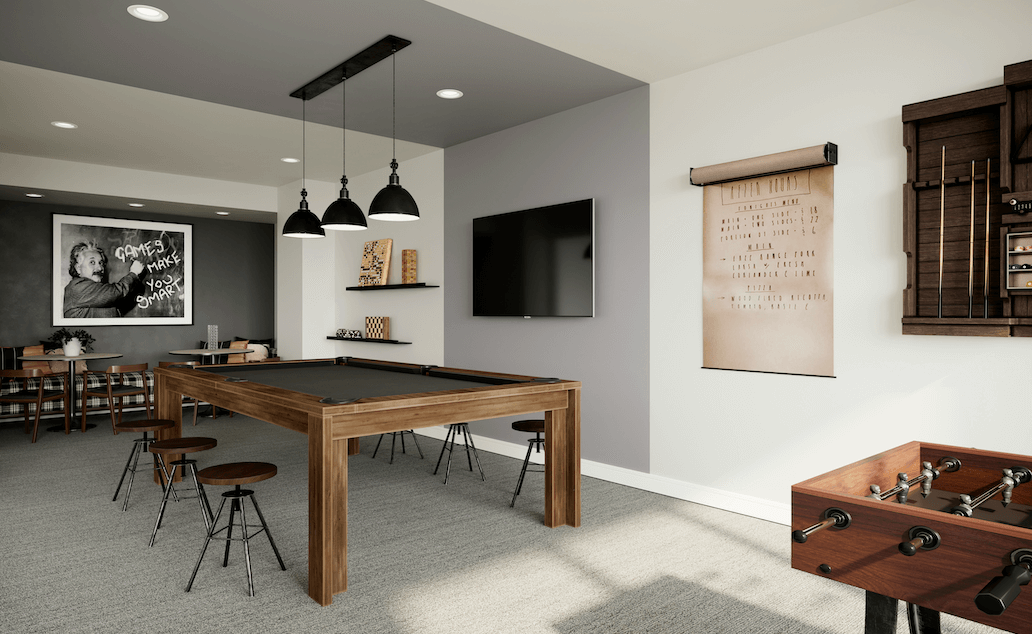
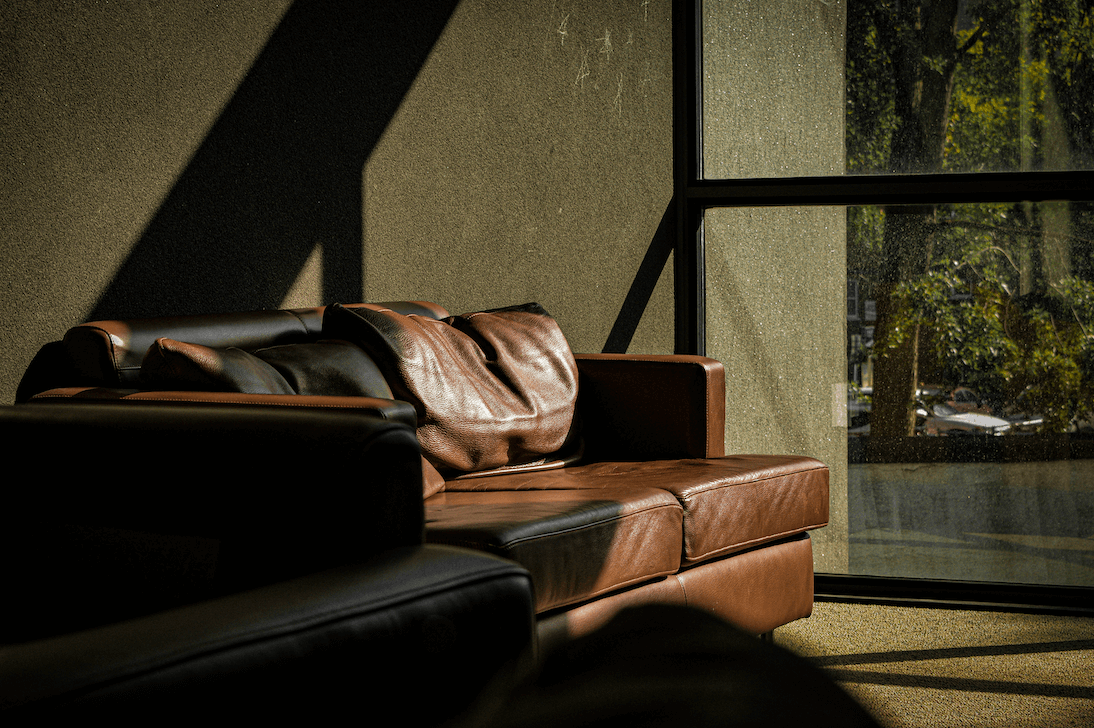
A design theme that layers Victorian-era furniture and dark wood over exposed industrial pipes, brass, gears, and warm Edison lighting for a retro-futuristic man cave.
What this look costs to build, the room it needs, and how it compares on fit is in our man cave ideas and themes guide.
A steampunk theme turns a man cave into a Victorian machine room: dark carved woods, tufted leather, brass and copper fittings, exposed pipes and gears, and a warm amber glow from vintage filament bulbs. It layers the formal decoration of the Victorian era, roughly 1837 to 1901, over the exposed mechanics of the early industrial age, so the space reads as a 19th century inventor’s workshop that never stopped running. Real builds lean on the same vocabulary everywhere, with mahogany and walnut furniture, velvet and brocade upholstery, riveted metal, and repurposed machinery turned into shelves, lamp stands, or a bar front.
The payoff is a room people stop and ask about. A brass-and-pipe palette is unusual enough that a steampunk space is identifiable from across the room, and the theme carries a built-in story that a generic entertainment bar cannot match. Lighting does a surprising share of the work: exposed filament bulbs and vintage lamps give wood and brass the warm tone that makes them look expensive. Fixture-level pricing stays approachable, from roughly $3.49 for an Edison-style LED bulb to $585 for a designer copper-and-brass pipe table lamp, so a convincing build spreads cost across a few anchor pieces rather than one splurge.
A steampunk theme is not a historical recreation, and it is not cyberpunk wearing a clockface. The style freely mixes 19th century furniture with steam machines and gadgets that never actually worked, so authenticity is beside the point. It is also not the same thing as an industrial theme, which stops at raw pipes and concrete; steampunk adds the Victorian dressing and the retro-futuristic contraptions on top. For the full build recipe, start with the steampunk man cave design guide.
What to look for in a steampunk room
The materials list is short and consistent across every convincing build. Dark woods dominate, with mahogany and walnut the favorites, set against velvet and brocade cushions and a tufted, distressed-leather sofa. Brass, copper, and iron appear as both structure and decoration: pipe shelving, gear-framed wall clocks, riveted metal panels, and exposed brick behind the bar. Repurposed machinery earns its keep as art, whether that is a pressure gauge turned into a lamp or an airship model hung above the screen.
The palette stays in a tight band: deep browns, burgundy, and burnt orange as the base, with brass and copper metallics carrying the light. Stick to those tones and almost any Victorian-consistent piece fits; add a cold gray or a neon accent and the room starts reading as something else. Lighting is where to spend first. Edison-style filament bulbs throw the warm glow that flatters wood and metal, and the fixtures span the budget: a Sunco industrial ceiling fixture at about $34.99 with bulbs included, a used pipe-desk lamp around $25, or a copper-and-brass pipe table lamp at $585. Plan the room around two or three anchor fixtures and fill in the rest with Edison bulbs in simple sockets.
Steampunk vs. cyberpunk and the industrial theme
Steampunk gets confused with two neighbors, and the line matters because the finished rooms look nothing alike. Cyberpunk is the future-facing cousin, all neon, chrome, and near-future cities. Steampunk looks backward to steam, brass, and the Victorian era, so the two share a speculative sensibility but almost no actual materials. The industrial theme is the harder call, since both lean on pipes and exposed metal. Industrial strips decoration away into raw steel, concrete, and purposeful mechanics; steampunk dresses the same bones in velvet, warm wood, and brass.
The simplest test is to imagine the room with the metal removed. An industrial space still reads as a modern loft, while a steampunk space collapses into ordinary antique furniture. A second test: steampunk adds contraptions that exist for their own sake, clocks, steam machines, airships, while industrial keeps everything purposeful. If your build is pipe shelving and raw fixtures, you are closer to industrial; the brass, leather, and Victorian furniture are what push it into steampunk.
Where the term came from
K.W. Jeter coined the word in 1987, in a letter printed in the April 1987 issue of Locus magazine that pitched a tongue-in-cheek variant of cyberpunk. He wrote, “Personally, I think Victorian fantasies are going to be the next big thing, as long as we can come up with a fitting collective term for Powers, Blaylock and myself.” “Something based on the appropriate technology of the era; like ‘steam-punks,’ perhaps.” The name covered Tim Powers’s The Anubis Gates (1983), James Blaylock’s Homunculus (1986), and Jeter’s own Morlock Night (1979) and Infernal Devices (1987).
The genre had older roots. Mervyn Peake’s Titus Alone (1959) is widely regarded as the first steampunk novel, and Michael Moorcock’s The Warlord of the Air (1971) and the television series The Wild Wild West (1965 to 1969) kept the Victorian-techno idea alive. Literary forebears include Jules Verne, H.G. Wells, Mary Shelley, and Edward Ellis’s The Steam Man of the Prairies. William Gibson and Bruce Sterling’s The Difference Engine (1990) brought steampunk broad awareness, and Paul Di Filippo’s The Steampunk Trilogy (1995) was the first book to use the word in a title. The style left the page when François Schuiten redesigned the Arts-et-Métiers Paris Metro station in 1994 with brass, cogs, and portholes, and the 2009 Oxford Museum of the History of Science staged the first major steampunk art exhibition, curated by Art Donovan, which drew more than 80,000 visitors and became the museum’s most-attended show ever.
Common mistakes
The most dangerous mistake is real steam. Decorative boilers and pipes that carry actual steam can scald and build dangerous pressure, so anything that looks like a live steam line should be non-functional or installed by a licensed professional, and every light fixture must comply with local electrical codes. No formal code governs steampunk styling itself, but plumbing that pretends to be live is where builds go wrong first.
The second mistake is full clutter. Covering every surface with gears, gauges, and contraptions turns a themed room into a crowded shelf, and the theme disappears into noise. Pick two or three focal pieces, one wall clock, one repurposed machine, one airship model, and let the palette carry the rest. Restraint reads as deliberate where inventory reads as a flea market.
The third mistake is fake décor that looks cheap. Plastic gears, printed rivets, and glossy brass paint that never tarnishes betray the costume shop, and the whole room drops in believability. Real metal, distressed leather, and surfaces allowed to develop patina or rust are what sell the look; a room built on genuine materials, even at $3.49 a bulb, looks more convincing than one covered in plastic props.
Frequently asked questions
What is a steampunk theme?
A steampunk theme is a room design that mixes Victorian-era furniture and decoration, roughly the era from 1837 to 1901, with the exposed mechanics of the industrial age. You get dark woods like mahogany and walnut, velvet and distressed leather, brass and copper fittings, riveted metal, exposed pipes, and warm Edison-style filament lighting. The result looks like a 19th century inventor’s workshop that never stopped running. The style is decorative rather than historical: it freely mixes period furniture with steam machines, clocks, and gadgets that never actually worked.
What is the difference between steampunk and cyberpunk or the industrial theme?
Steampunk looks backward while cyberpunk looks forward. Cyberpunk imagines a near-future world of neon, chrome, and technology, while steampunk is built from steam, brass, and Victorian design. The harder comparison is with the industrial theme, which also uses pipes and exposed metal. Industrial strips decoration away into raw steel and concrete, while steampunk dresses the same bones in velvet, warm wood, and brass. A simple test: if removing the metal leaves ordinary antique furniture, the room is steampunk; if it leaves a modern loft, it is industrial.
How much does a steampunk man cave cost?
A steampunk build is priced item by item rather than as a single room package. An Edison-style LED bulb runs about $3.49 each, a used pipe-desk lamp sells for around $25, a Sunco industrial ceiling fixture with Edison bulbs costs about $34.99, and a copper-and-brass Edison pipe table lamp can reach $585. Total room cost comes down to how much brass and repurposed machinery you add, so plan around two or three anchor fixtures and fill in with inexpensive bulbs and vintage finds. Wiring must comply with local electrical codes.
How do I add steampunk lighting to a room?
Start with warm Edison-style filament bulbs, which give off the amber glow that makes wood and brass look right, and confirm every fixture complies with local electrical codes. Replace the harshest overhead light with a vintage-style ceiling fixture, then add a pipe desk lamp or a copper-and-brass table lamp at a reading spot. Keep bulbs exposed wherever you can, because the visible filament is part of the look. Put dimmers on the main circuits so the room can drop to a low, warm level for evenings instead of glaring.
Is a steampunk theme practical for a man cave?
It is practical, with limits. The style is heavy: dark wood, brass, and tufted leather absorb light, so a steampunk room can feel darker and smaller than a light modern build, and you should plan layered lighting to offset that. The look only holds up with real materials, so cheap plastic gears and fake rivets ruin it fast. And because no formal code governs steampunk styling, safety falls on you, especially with decorative steam pipes, which should be non-functional or installed by a licensed professional.
Related terms
Industrial Theme
Factory-inspired decor: exposed brick and beams, raw concrete, black steel, Edison bulbs, and visible pipes and ductwork in a neutral palette of gray, black, and brown.
LightingEdison Bulb
A decorative bulb with a visible loop or spiral filament and a warm amber glow, styled after Edison's 1879 design and sold today mostly as an LED filament replica.
Decor & Wall ArtExposed Brick
A bare masonry wall, or a thin clay-brick veneer that mimics one, left without plaster or paint for texture and an industrial-loft look in a man cave or home bar.
Furniture & SeatingIndustrial Pipe Shelving
Threaded steel pipe frames with wood plank shelves, usually 3/4 or 1 in schedule 40, bolted to studs. A 3/4 in build carries 50 to 80 lb per shelf; 1 in carries 80 to 120 lb.
Decor & Wall ArtVintage Sign (Tin / Porcelain)
Original advertising signage from the porcelain enamel and tin lithograph era, priced by collectors on graphics, brand and condition, where restoration cuts resale by roughly half.
Design Themes & StylesSci-Fi / Futuristic Theme
A dark, sleek, high-tech room style built from black and gunmetal surfaces, chrome, glass, and LED light, with smart automation that makes the space feel alive and responsive.
Design Themes & StylesMid-Century Modern Theme
Design theme built on postwar furniture and materials, roughly 1945 to 1969: walnut and teak, tapered legs, molded plywood, and warm lighting. The name dates to Cara Greenberg's 1984 book.