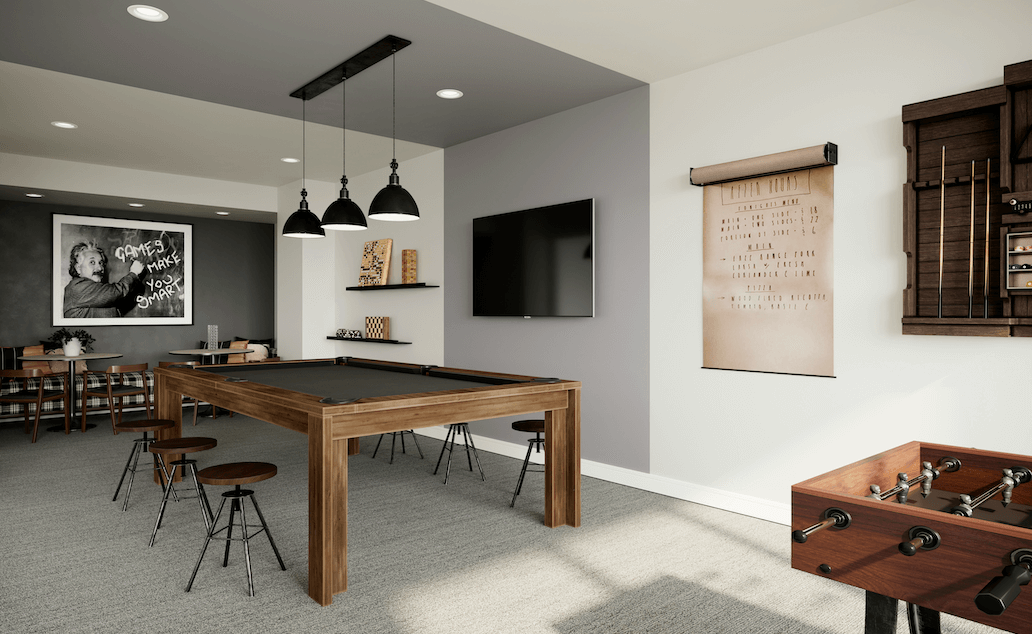
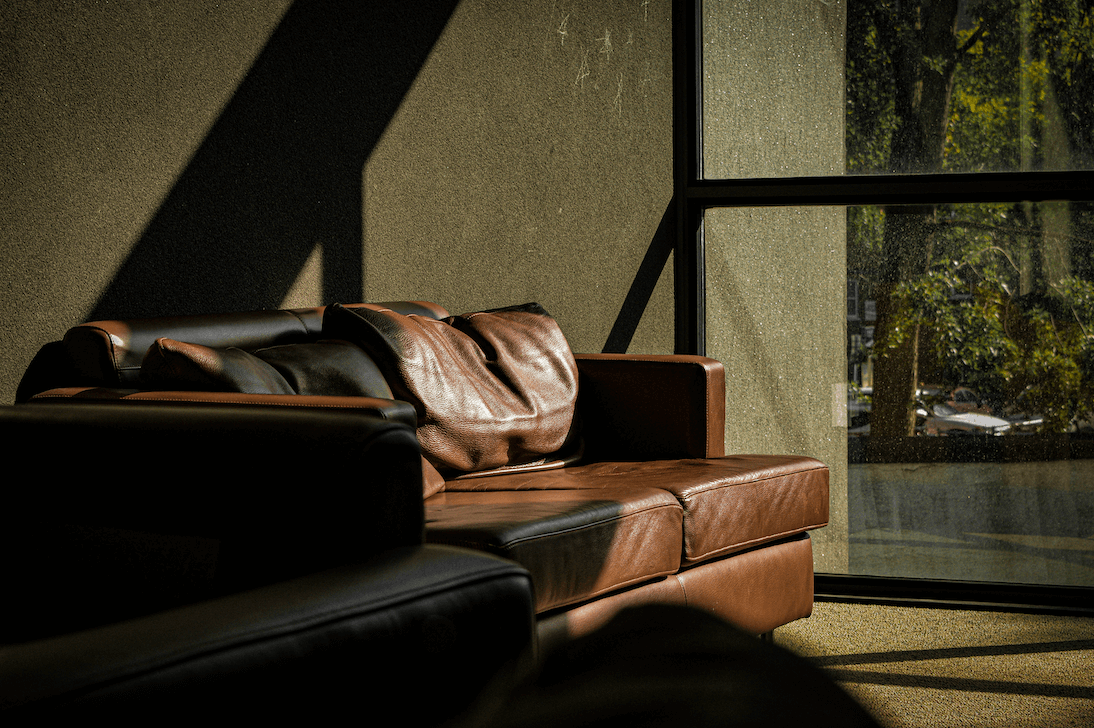
Factory-inspired decor: exposed brick and beams, raw concrete, black steel, Edison bulbs, and visible pipes and ductwork in a neutral palette of gray, black, and brown.
Also known as: Industrial ChicLoft StyleUrban Industrial
What this look costs to build, the room it needs, and how it compares on fit is in our man cave ideas and themes guide.
The industrial theme dresses a room like a converted factory: exposed brick, raw concrete, black steel, and uncoated wood doing the visible work, with building systems left on display instead of hidden. Pipes, ducts, and conduit run where they run, filament bulbs hang from pendants, and the palette stays inside grays, blacks, browns, and metal tones. It is an urban-loft look, and in a man cave it reads instantly as a workshop, a gear room, or a working bar. The exposed brick that a typical remodel hides is the whole point here.
The style borrows its credibility from real industrial history, which is why the details matter. A filament bulb is not a marketing choice: Edison's lab ran its first carbonized cotton-thread lamp on October 21-22, 1879, and the pendant light that hangs over a bar descends directly from work lighting. Concrete floors and steel beams are what factory interiors actually were. Getting the theme right means respecting that vocabulary and keeping the structure visible, not layering a warehouse costume over a standard living room.
The industrial theme is not grime. It is not rust, oil stains, or actual disrepair, and it is not the steampunk theme, which bolts gears and brass onto Victorian fantasy. Clean industrial keeps surfaces raw but the room orderly: sealed concrete, painted brick, organized steel. The line between the two is the line between a working warehouse aesthetic and a costume, and rooms that cross it end up looking abandoned rather than designed.
The palette, the materials, and the light
Start with the surfaces, because they do most of the work. Exposed brick, whether genuine or a thin veneer, sets the tone immediately, and a concrete floor sealed with a matte finish grounds the room in a way carpet never will. Add black steel in the furniture, the shelving, and the table legs, and let one wood species, walnut, oak, or reclaimed pine, warm the room without breaking the palette. The colors stay minimal: gray, black, brown, and one accent if you want one. Every material should look like it was built rather than decorated.
Texture matters more than color in an industrial room, because the palette is small and the surfaces have to carry it. Rope and canvas, blackened steel, raw-edged wood, and seamed concrete all read as industrial, while glossy plastic, brushed nickel, and polished chrome read as showroom. The honest test is whether a material would look out of place in an actual factory. If it would, it will probably fight the theme here too.
Lighting is where the theme comes alive. Edison-style filament bulbs in clear glass read as industrial instantly, whether they hang over a bar top or run down a shelf line. Pendant heads, track lights, and wall sconces all fit, and the fixture metal should match the room's steel, so black or aged brass works and polished chrome fights it. Keep color temperature warm, roughly 2400 to 3000 kelvin, because cool white light destroys the aged-metal mood. The lighting is the single cheapest way to pull an ordinary room into the theme.
Industrial vs. rustic
The one-line distinction: industrial is the city factory, rustic is the rural cabin. Both love raw material, which is why people confuse them, but they draw on opposite histories. Industrial spaces use steel, concrete, exposed brick, and filament light, and their warmth comes from industrial lamps and leather seats. Rustic spaces use heavy timber, river stone, and antique woods, and their warmth comes from fireplaces, fur, and blankets. A room cannot honestly be both.
The consequence shows in the details. An exposed steel beam with factory windows reads industrial; the same beam covered in rough-hewn oak reads rustic. A pipe shelf holding bottles of whiskey could sit in either room, but a filament pendant over polished concrete only belongs in one. Pick the one that matches the room's existing bones, a basement with concrete walls takes industrial naturally, and commit, because mixing the two palettes dilutes both.
Blend the two deliberately and you drift into a third style, the cabin-lodge theme, which leans on timber and stone rather than steel and filament. The best rule is to let the room's bones pick the palette. If the walls are concrete block or drywall over steel, industrial fits without a fight; if the room is framed in heavy timber or stone, rustic owns it. Forcing concrete and brick into a log-walled room usually ends in a space that neither style can rescue.
Where the style came from
Industrial style is adaptive reuse made into an aesthetic. The factories of the industrial revolution built the bones, exposed iron, big windows, concrete floors, and when manufacturing moved out of lower Manhattan, artists moved into the empty loft buildings. From the 1950s through the 1970s, the cast-iron warehouses of SoHo became live-work spaces, and the district's cast-iron buildings were protected as the SoHo Cast-Iron Historic District in 1973. Loft living became a fashion in its own right, and the interior look of those warehouses became the industrial style.
The market followed the artists. New York's J-51 program, signed into law in 1975, gave tax breaks for converting manufacturing buildings into housing, and developers brought the look to new construction. Manhattan Loft Corporation, founded by Harry Handelsman in 1992, was the first developer to apply the industrial style to residential projects built from scratch rather than converted. That is the origin of the pipe shelving, the urban loft theme furnishings, and the exposed-brick walls that today's home stores sell by the kit.
Common mistakes
Three errors sink most industrial rooms. The first is overdoing it until the room looks abandoned. Every material exposed, every pipe visible, every surface distressed, and the space stops reading as designed and starts reading as condemned. Restraint is the rule: one hero wall of brick, one concrete floor, one run of exposed conduit, and let the rest of the room behave normally.
The second is fighting the light. Cool white bulbs, fluorescent fixtures, and bright overhead washes break the entire mood. Warm filament bulbs, dimmers, and pools of light around seating are what make the raw materials feel like a loft instead of a warehouse. The exposed beams only read after dark if the light is warm.
The third is mixing the theme with a competing one. Drop a floral sofa or a formal chandelier into an industrial room and the two cancel out. The style tolerates a single contrast, a leather recliner, a wooden bar top, but it does not tolerate a second full theme. For a man cave the winning formula is industrial bones with one clear accent, and for the best example of that, the pipe shelving build is the place to start.
Frequently asked questions
What defines an industrial style room?
An industrial room looks like a converted factory: exposed brick, exposed steel beams and columns, concrete floors, and visible pipes, ducts, and conduit. Lighting leans on Edison-style filament bulbs in pendant fixtures and track heads, and furniture uses raw wood, black steel, and aged metal. The palette stays in gray, black, brown, and metal tones, with neutrals on the walls so the structure and lighting carry the room. The effect is a warehouse you live in, raw materials doing the decorating.
Is industrial style the same as rustic style?
No. Industrial is urban and factory-born, while rustic is rural and cabin-born. Industrial uses steel, concrete, exposed brick, and filament lighting; rustic uses heavy timber, stone, leather, and warm woods. They share a love of raw material, which is why people blur them, but the mood differs sharply: a loft with visible ducts and a log wall with a river stone fireplace do not read the same. In a man cave, industrial suits a bar or workshop aesthetic, while rustic suits a hunting lodge or cabin vibe.
What lighting works in an industrial themed room?
Edison-style filament bulbs are the signature, whether they hang bare from a pendant, sit in a track head, or glow inside a metal shade. Pair them with pendants over a bar or table and add a few sconces or track heads for task zones. Keep color temperature warm, in the 2400 to 3000 kelvin range, because cool white fights the aged-metal look. Industrial spaces were lit for work, so aim for pools of light around seating and work surfaces rather than an even, overhead wash.
How much does it cost to decorate a room in industrial style?
Budget builds run $500 to $2,500 using what is already there: paint exposed brick white or gray, leave concrete floors sealed, add Edison pendant lights and black steel furniture. Real exposed brick, polished concrete, and visible structural beams cost far more, often $5,000 to $20,000 depending on how much you strip back. Fake alternatives like brick veneer and vinyl plank look the part at a fraction of the price. The material honest to the style is a metal and wood mix, which a DIY pipe shelf or bar achieves cheaply.
Does industrial style work in a small room?
Yes, if you avoid the heavy end of the palette. Industrial rooms rely on volume and height, so a small space should keep walls light, use one strong structural element like an exposed brick wall or a black steel shelf, and let lighting carry the mood. Overload a small room with dark metal, heavy timber, and low ceilings and it reads as a cave rather than a loft. Mirror and glossy concrete reflect the little light there is. The style also pairs well with an open floor plan, so in a small home it suits a bar nook more than a full room.
Related terms
Urban Loft Theme
A room styled on converted city manufacturing lofts: exposed brick and ductwork, tall ceilings, black steel, filament bulbs and almost nothing hidden behind finish carpentry.
Decor & Wall ArtExposed Brick
A bare masonry wall, or a thin clay-brick veneer that mimics one, left without plaster or paint for texture and an industrial-loft look in a man cave or home bar.
Building & ConstructionExposed Beam
Ceiling timbers left visible instead of hidden behind drywall: either real load-bearing framing on display or a lightweight faux shell built to mimic it in a rustic room.
Building & ConstructionConduit
Metal or plastic tubing protecting wiring as a mechanical raceway. Exposed conduit on brick or concrete delivers an industrial loft look, but its core job is fire safety and code compliance.
LightingPendant Light
Single-bulb fixture that hangs from the ceiling on a cord, chain, or rod to throw focused light on a spot below. Hang the shade bottom 30 to 36 inches above a bar counter.
LightingEdison Bulb
A decorative bulb with a visible loop or spiral filament and a warm amber glow, styled after Edison's 1879 design and sold today mostly as an LED filament replica.
Design Themes & StylesSteampunk Theme
A design theme that layers Victorian-era furniture and dark wood over exposed industrial pipes, brass, gears, and warm Edison lighting for a retro-futuristic man cave.
Design Themes & StylesMotorhead / Garage Theme
Man cave style built on car culture: tool chests as furniture, petroliana signs, checkered flags, oil cans, and epoxy floors, at home in garage conversions and next to a sim rig.