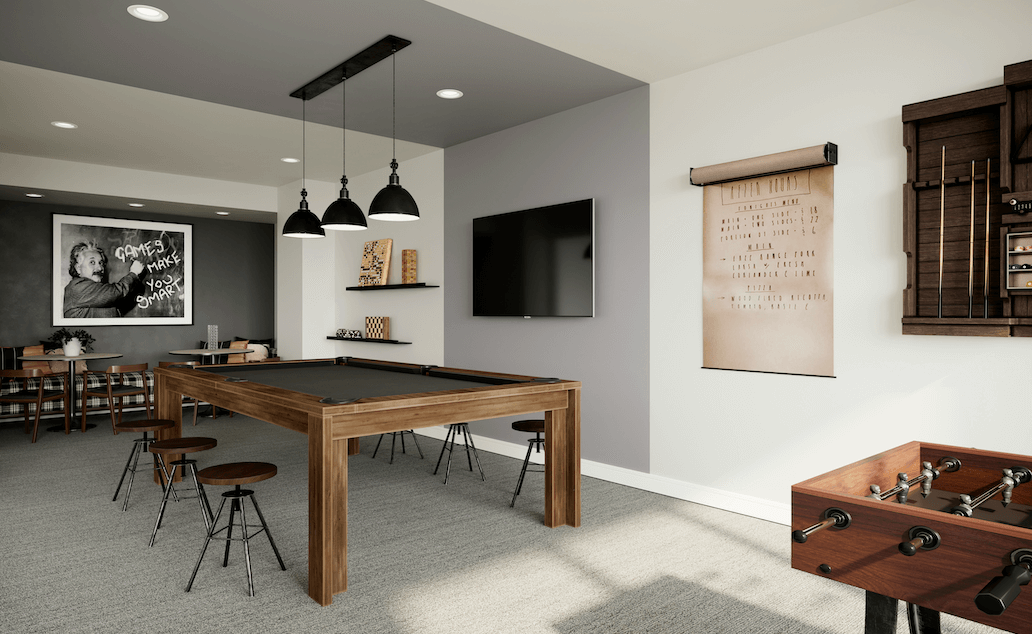
Official permission from a local government to build or use a property in a way that breaks one zoning rule, such as a setback; decided by the board of zoning appeals after a hardship hearing.
A zoning variance is official permission from a local government to use or build on a single property in a way that breaks one specific rule in the zoning code. It is a licensed exception granted to one property, for one rule, and nothing else changes: the zoning designation stays put, the rest of the ordinance still applies, and every neighbor's lot keeps its rules. In man cave terms, this is the document you chase when your planned garage bar or shed sits three feet inside a required setback, or the height cap will not fit your build. A board of zoning appeals, sometimes called the zoning board of adjustment or just the board of adjustment, decides the request at a public hearing.
The stakes show up in the schedule and the budget. Most jurisdictions run the process in one to three months, because public-notice windows of ten to thirty days plus a board meeting slot eat up the calendar. Indianapolis schedules hearings at least 35 days after filing, Peachtree Corners in Georgia quotes roughly 90 days from pre-application to the hearing, and St. Louis wraps up in two to four weeks. Filing fees typically run $100 to $1,000 or more, and the real money arrives with the professionals: a Pennsylvania township charges $5,000 for a variance application alone, land-use attorneys commonly quote $5,000 to $20,000 for contested work, and a survey or site plan adds more. The garage conversion cost guide walks through the permit and fee side of exactly this kind of project.
A variance is not a blank slate, and it is not a permit. It clears the zoning obstacle and nothing more, so you still need a building permit before you pour a footing and you still have to satisfy the building code once the zoning question is settled. It also does not change your zone. If the neighborhood rules prohibit the use you have in mind, a variance may be the wrong tool, and a use variance is a far harder ask than a dimensional one.
Two types, one hardship test
Variances split into two families, and the distinction decides how hard your fight will be. An area variance, sometimes called a dimensional variance, relaxes a physical rule such as setback, height, lot coverage, frontage, or parking count. These are the common cases for a man cave project, and the easiest to win: the ask is narrow and the harm to neighbors is usually small. A use variance permits a use the district forbids, say a home business run from a backyard shed in a residential zone, and it faces a much higher bar. Many states prohibit use variances outright, North Carolina among them by statute, so check your state's enabling law before planning around one.
The test both types face is hardship, and the word carries a precise meaning. The applicant must show that strict application creates an unnecessary hardship, that the hardship comes from conditions peculiar to the property, such as an odd lot shape, a steep slope, or an undersized parcel, and that it was not self-created. Boards also check that it stays consistent with the ordinance's intent, protects public safety, and does substantial justice. Mere inconvenience does not count, and neither does the added cost of complying with the rule. For a use variance, many boards additionally demand proof that the property cannot yield a reasonable return under any permitted use, though some states have loosened it; North Carolina relaxed its old no-reasonable-use rule in 2013.
Self-created hardship disqualifies a case. Selling off part of the lot and leaving the remainder nonconforming, or pouring footings inside the setback without a permit, are the classic traps. Buying a property knowing a variance may be justified is not self-creation, so when the hardship appeared matters as much as what it is.
The process, timeline, and what it costs
The path runs in five steps. First, confirm you actually need one by having the zoning office review your plan; if your shed complies, only the standard permit applies. Next, prepare the application: a form, a site plan or survey showing the deviation, photos, and a written hardship statement. Then notify the neighbors; nearly every jurisdiction requires mailed notice to nearby owners plus a posted sign, and the windows are real. Centerville, Ohio notifies everyone within 500 feet, and Gwinnett County, Georgia requires the sign to stand at least 15 days before the hearing. Step four is the public hearing, where you argue the hardship and answer objections. Step five is the decision: approval, approval with conditions, or denial, with an appeal to court if you lose.
Plan on one to three months, so file the variance before you order materials. On price, a simple residential variance usually runs $250 to $1,000 in filing fees; a survey, site plan, or attorney adds roughly $500 to $5,000 or more, and contested commercial cases climb higher. Steuben County, Indiana charges $400 per petition, Jacksonville, Florida runs $1,161 for commercial and $1,173 for residential, Fremont County, Colorado charges $275, and Los Angeles asks $930 for a zoning-admin deviation.
Variance versus rezoning versus conditional use
All three are ways to get what the zoning code will not give you, but they are different animals. A variance is a narrow, quasi-judicial exception to one rule for one property, it is hardship-based, and a zoning board decides it. Rezoning changes the property's entire zoning designation and the full set of rules attached to it, and it needs legislative approval, so it is a bigger and more public fight. A conditional or special use permit authorizes a use the code already anticipates as conditional, and no hardship is required at all.
If the ordinance lists your use as conditional, apply for the conditional use permit. If it flatly prohibits what you need, a variance, or a rezoning for a larger problem, is the path. And remember the permit gap: the variance settles zoning only, and the building permit is still mandatory before construction. Keep HOA restrictions separate, because a community covenant can forbid the shed or the garage height even after the city grants the variance.
Where the variance came from
The constitutional footing for zoning is Village of Euclid v. Ambler Realty Co., 272 U.S. 365 (1926), the Supreme Court decision that upheld comprehensive zoning as a valid exercise of police power. Zoning had already spread after New York City's 1916 resolution, but Euclid removed the constitutional doubt and the movement accelerated. The variance power and its boards grew up alongside zoning, and the classic board of adjustment model was fixed in the 1920s by the Standard State Zoning Enabling Act, the model statute states adopted to authorize local zoning.
That history matters practically: the hardship standard is a creation of those enabling acts and the case law around them, not of the federal government. Every state writes its own version, some prohibit use variances and others do not, and the boards answer to state law plus the local code. That is why the answer to almost any variance question is to check your municipality and your state's enabling statute before spending money on an application.
Common mistakes
The most expensive mistake is treating the variance as permission to build. Approval clears the zoning obstacle only, and construction still needs a building permit. Build on the variance and skip the permit, and an inspector can halt the job or force a tear-down.
Self-created hardship is the second killer. Splitting off part of the lot and shrinking your own setback, or starting construction in the required setback before applying, hands the board a ready reason to deny. Apply first and keep the property unchanged while the case is pending.
Underestimating the neighbor-notice step is the third. Skipping the mailed notice or pulling the sign down early hands an objecting neighbor an easy procedural win, because the board can refuse a case with defective notice. Do the mailing, post the sign for the full window, and treat the hearing as the real event it is. And do not file a use variance when an area variance fits, or vice versa; the two tests differ, and a board that sees the wrong ask usually denies it.
Frequently asked questions
What is a zoning variance in plain English?
A zoning variance is official permission to break one specific zoning rule on your property, like a setback or height limit, while everything else stays the same. Your zoning designation does not change. A board of zoning appeals reviews the request at a public hearing and grants it only when strict application would cause an unnecessary hardship, so it is an exception for a single property, not a change to the neighborhood rules.
What is the difference between a variance and a building permit?
They solve different problems. A variance is approval to deviate from a zoning rule, such as a setback, and it comes from the zoning board after a public hearing. A building permit is approval to construct, and it comes from the building department after plans are checked against the building code. The variance clears the zoning obstacle only, so you still need the permit before you build. Getting a variance approved does not mean construction can start.
How much does a zoning variance cost?
Filing fees typically run $250 to $1,000 or more for a simple residential variance, though the full range spans $100 to $1,000+ depending on the jurisdiction and project type. Real examples: Steuben County, Indiana charges $400 per petition, Fremont County, Colorado charges $275, and Jacksonville, Florida charges over $1,100. Add a survey or site plan, plus attorney fees when a case is contested, and the total often reaches $500 to $5,000 or more.
How do I apply for a zoning variance?
Confirm with the zoning office that you actually need one, then prepare the application: the form, a site plan or survey showing the deviation, photos, and a written hardship statement. Notify neighbors by mail, as nearly all jurisdictions require, and post a sign on the property for the full notice window. Attend the public hearing and argue the hardship. Expect the whole process to take one to three months. The board then approves, approves with conditions, or denies.
When will a zoning variance be denied?
A board denies a variance when the hardship does not meet the legal test. Mere inconvenience does not count, and neither does the extra cost of complying with the rule. Hardship you created yourself, like selling off part of the lot or building in the setback without a permit, is disqualifying. If the hardship comes from your own choices rather than conditions peculiar to the property, the board has no basis to grant relief. And some uses are flatly prohibited, so no variance exists to fix them.
Related terms
Building Permit
Official authorisation from the local building department needed before starting most construction work. It triggers plan review and scheduled inspections confirming the work meets code.
Building & ConstructionBuilding Code
Legally adopted rules for residential construction: structural safety, fire protection, egress, electrical, plumbing, and energy performance, primarily the International Residential Code in the U.S.
Planning & BudgetHOA Restrictions
Rules in a subdivision's CC&Rs governing what owners can build or modify on their property. Architectural review, noise limits, shed caps and parking rules can stop a man cave build before it starts.
Outdoor & Shed-Based CavesCustom Shed
A shed framed and finished to a buyer's own layout, load, and site, rather than assembled from a manufacturer's stock kit, built with insulation, wiring, and a proper foundation for year-round use.
Room Types & SpacesOutbuilding
A detached, non-habitable structure on the same lot as a dwelling, such as a shed, barn, workshop, or detached garage; the term has carried that meaning in English since the 1620s.
Room Types & SpacesGarage Conversion
A garage conversion turns a garage's concrete slab and bare shell into finished living space, typically a game room, home bar, or theater, with insulation, HVAC, flooring, and code-legal wiring.