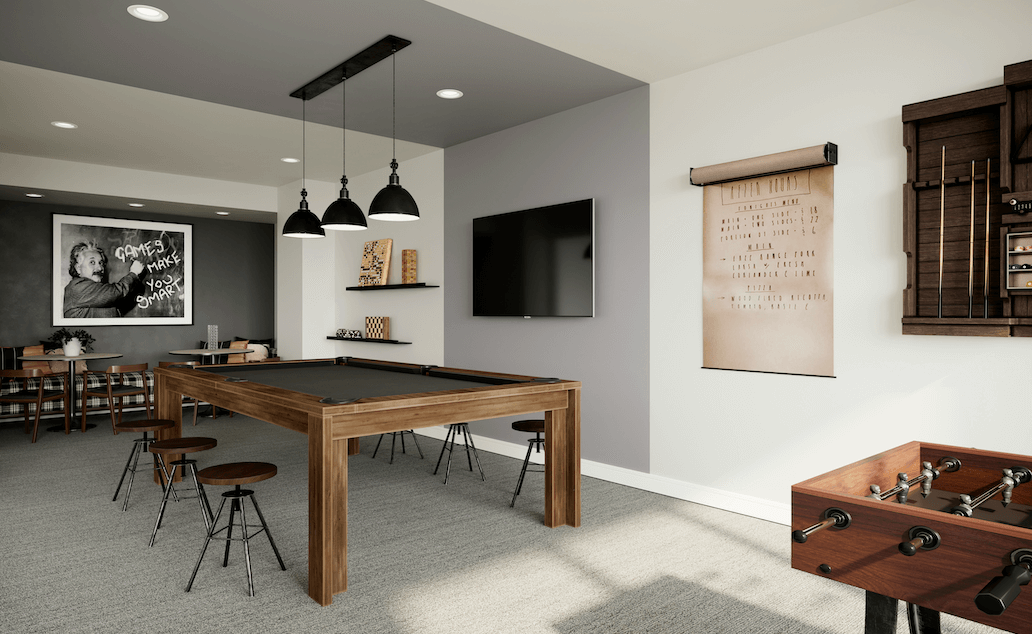
Rules in a subdivision's CC&Rs governing what owners can build or modify on their property. Architectural review, noise limits, shed caps and parking rules can stop a man cave build before it starts.
Also known as: HOA CovenantsCC&RsDeed RestrictionsHomeowners Association Rules
HOA restrictions are the rules written into a subdivision’s Declaration of Covenants, Conditions and Restrictions that govern what you can build, park, modify or make noise with on property governed by a homeowners’ association. These rules are recorded on the property deed and they run with the land, binding every owner who buys into the subdivision now and in the future regardless of whether anyone read them at closing. The specific restrictions that affect a man cave build in most associations include: architectural review requirements for any exterior modification or freestanding structure, noise restrictions that typically set quiet hours between 10 p.m. and 7 a.m., limits on shed and outbuilding size, rules against business activity conducted from the property, and parking restrictions that can block guests from leaving cars on the street during game nights. A planning budget for any build in an HOA-governed neighbourhood needs a line item for the cost of compliance and a contingency for a variance hearing, because skipping the architectural review step before breaking ground guarantees the project will stop.
The cost of getting this wrong is structural. An HOA can issue a stop-work order while the slab is still curing, fine you $25 to $250 per day until the violation is corrected (capped at $100 per violation in California as of July 2025, but uncapped in many other states where daily fines accrue), and if the fines go unpaid, place a lien on your property. In a worst-case scenario, documented in Brevard County, Florida in 2024, a homeowner who built a shipping-container man cave after the county mistakenly issued a permit was ordered by a magistrate to unstack the containers and return the property to its original condition or face $25 per day in fines, and the county commission later rejected a compromise that would have let the structure stay with exterior modifications. Even a legally issued building permit does not override CC&Rs, and the homeowner bears the consequence of the mismatch.
HOA restrictions are not zoning laws, and they are not building codes. A city zoning department cares about setbacks, lot coverage ratios and permitted uses. A building inspector cares about structural safety, electrical code and egress. An HOA cares about aesthetics: what the structure looks like from the street, what colour it is, what materials show on the exterior, whether it blocks a neighbour’s view, and whether the activity inside produces visible, audible or olfactory evidence that it exists. You can build a shed that passes every building inspection and still violate the CC&Rs because it exceeds the association’s height limit by eighteen inches, and the HOA has enforcement powers that a building department does not.
How CC&R enforcement actually works
Enforcement starts with a notice. A neighbour complains, an architectural review committee (ARC) member drives past and photographs the unapproved structure, or a routine inspection turns up a violation. The association sends a written notice describing the violation and the required correction, usually with a deadline of 10 to 30 days. In Texas, Property Code Section 209.006 requires the notice to include the amount of the proposed fine, a statement that the owner has 30 days to request a hearing, and for curable violations a reasonable time to fix the problem before the fine is assessed. Common curable violations include parking infractions, maintenance issues and construction that deviates from approved plans. Uncurable violations, which can be fined immediately, include discharging fireworks, property damage and acts that constitute a threat to public health or safety.
If the deadline passes without correction, the association may levy fines on a per-day schedule. Florida law caps fines at $100 per violation with a $1,000 aggregate cap unless the governing documents authorise a higher amount. Texas caps daily civil damages at $200 per day in justice court. California, as of July 1, 2025, caps HOA fines at $100 per violation with no late fees or accumulating penalties except for violations affecting public health or safety, a provision inserted into Assembly Bill 130, a major housing reform bill. Unpaid fines in most states can become a lien on the property, and in some states, including Texas and Florida, a lien can lead to foreclosure, though foreclosures over HOA fines are rare and typically involve thousands of dollars in accumulated debt.
The architectural review committee is the gatekeeper. Texas associations with more than 40 lots must separate directors from ARC members, provide written reasons for denials and offer a hearing before the board under SB 711 (2025). Florida’s HB 1203 (2024) prohibits an HOA or ARC from regulating the interior of a structure not visible from the frontage, an adjacent property, a common area or a community golf course, and it also prohibits restrictions on the storage of items not visible from those same vantage points. Both provisions matter for a man cave built inside an existing garage or basement: the HOA cannot tell you what colour you painted the walls inside.
What state law actually limits and what it does not
California has been the most aggressive in reining in HOA power. AB 130 (2025) caps fines at $100 per violation and bans late fees. AB 1458 (2024) lowers the quorum for board elections to 20 percent of members if the first meeting fails to reach quorum. None of these laws prevent an HOA from enforcing architectural standards, and an ARC denial based on exterior appearance is still enforceable as long as the standards are applied uniformly.
Texas has focused on transparency. SB 1588 (2021) required HOAs with more than 40 lots to separate directors from ARC members and provide written reasons for denials. SB 711 (2025) adds a requirement for HOAs to solicit ARC members through a notice process similar to board elections. Texas law also prohibits HOAs from outright banning solar panels, drought-resistant landscaping, security cameras, standby generators, swimming pool enclosures and political signs during election season, though the HOA can still regulate placement and appearance.
Florida’s HB 1203 (2024) requires HOAs with 100 or more parcels to post governing documents online by January 1, 2025, prohibits regulating interior structures and storage not visible from the street, adds criminal penalties for board members who accept kickbacks, and bans fining owners for leaving garbage cans at the curb less than 24 hours before or after collection day. The statutory fine limit remains $100 per violation with a $1,000 aggregate unless the CC&Rs authorise more, and fines cannot become a lien until they exceed $1,000.
No state law prevents an HOA from enforcing a legitimate architectural restriction on a visible exterior structure. The protections that exist apply to items the law specifically carves out: solar panels, antennas, flags, religious displays, drought-resistant landscaping and similar enumerated categories. A shed built for a man cave, a converted garage with a visible new door, or a backyard structure visible from the street all fall firmly inside the HOA’s enforcement powers in every state.
Four ways to build within HOA rules without giving up the project
The first strategy is to build the man cave inside the existing envelope of the house. A basement finish, a garage conversion that does not change the exterior appearance, or a spare bedroom turned into a bar and game room all fall outside the HOA’s architectural review jurisdiction because nothing visible changes on the outside. The noise restriction still applies, but a basement or interior room with sound isolation addresses the problem at the source.
The second strategy is to file a complete architectural review application with professional drawings, a materials list and a written explanation of how the structure complies with every relevant provision in the CC&Rs. Approvals are denied far more often for incomplete submissions than for bad designs. A clear, professionally prepared submission that addresses the specific standards in the CC&Rs shifts the burden from the ARC having to imagine compliance to the ARC having to articulate a reason for denial, and in many states the denial must be in writing with specific reasons.
The third strategy is the variance process. Most CC&Rs include a procedure for requesting a variance from a specific restriction, and the request goes to the board for a hearing and vote. Variance requests succeed in proportion to the amount of neighbour support they carry, so the practical advice is to talk to the immediately adjacent neighbours before filing anything. A signed letter from the neighbours on both sides stating they have no objection to a proposed shed or exterior modification is the single most effective piece of evidence in a variance hearing.
The fourth strategy is what the Brevard County man cave owner attempted and lost: the appeal. If the board denies a variance or an ARC denies a permit, most CC&Rs and most state laws provide a right to appeal, and the appeal goes before the board or an independent hearing officer. The appeal will fail if the restriction is clear and the violation is unambiguous, but it succeeds if the restriction was applied inconsistently, if the HOA has abandoned enforcement of similar restrictions on other properties, or if the denial was procedurally defective. Under Texas law the abandonment and waiver principle means a court may find a restriction unenforceable if the association has been so lax in enforcing it that a reasonable person would assume it is no longer valid, and evidence of previous unenforced violations provides a defence against a fine. The zoning variance process at the municipal level is a separate fight, and a win at the city does not guarantee a win at the HOA.
Frequently asked questions
What are HOA restrictions?
HOA restrictions are legally enforceable rules written into a subdivision’s Declaration of Covenants, Conditions and Restrictions (CC&Rs) that govern what property owners can build, modify, park, display or do on their property. They are recorded on the deed and run with the land, binding every current and future owner. Common restrictions affecting man cave builds include architectural review requirements for any exterior structure, noise limits with defined quiet hours, caps on shed and outbuilding dimensions, prohibitions on business activity, and parking rules that limit street parking for guests.
Can an HOA stop me from building a shed for a man cave in my backyard?
Yes, if the shed is visible from the street or a neighbour’s property and the CC&Rs require architectural review approval for outbuildings. An HOA cannot stop you from converting an interior room, a basement or an attached garage in a way that does not change the exterior appearance, because the architectural review jurisdiction generally stops at what is visible from outside the property. Florida’s HB 1203 (2024) explicitly prohibits HOAs from regulating the interior of a structure not visible from the frontage, adjacent properties or common areas.
What happens if I ignore an HOA violation notice?
The association begins levying fines on a schedule defined by the CC&Rs and state law. Fines typically start at $25 to $100 per day and increase at each stage of escalation. If unpaid, the fines can accumulate into thousands of dollars and the HOA may place a lien on the property. In extreme cases an HOA lien can lead to foreclosure, though this is rare and requires a very large accumulated debt. A better response is to request a hearing, which most states require the HOA to provide within 30 days of receiving the request.
Do state laws limit what HOAs can restrict?
Yes, but the limits are narrow. Most states have laws that prevent HOAs from outright banning solar panels, political signs during election season, the American flag, religious displays, drought-resistant landscaping, rain barrels, security cameras and standby generators. These protections vary by state and almost none of them prevent an HOA from regulating the appearance or placement of the protected items. No state law prevents an HOA from enforcing a standard architectural restriction on the size, colour, materials or location of a visible exterior structure.
How do I get HOA approval for a backyard man cave structure?
File a complete architectural review application before starting any work. Include professional drawings, a materials list, dimensions, proposed colours and a written statement explaining how the structure complies with every relevant restriction in the CC&Rs. Talk to your immediate neighbours first and get their written support. A signed letter from adjacent neighbours stating no objection is the single strongest piece of evidence in a variance hearing if the ARC denies the initial application. Approvals are denied more often for incomplete paperwork than for the design itself.
Related terms
Building Permit
Official authorisation from the local building department needed before starting most construction work. It triggers plan review and scheduled inspections confirming the work meets code.
Planning & BudgetZoning Variance
Official permission from a local government to build or use a property in a way that breaks one zoning rule, such as a setback; decided by the board of zoning appeals after a hardship hearing.
Planning & BudgetBudget Tier
A cost band grouping man cave builds by scope and finish: cosmetic refreshes under $8,000, mid-range conditioned rooms $8,000 to $25,000, and full-structure builds above $25,000.
Planning & BudgetContractor vs. DIY
The decision framework for doing renovation yourself versus hiring a pro. DIY cuts labour 40 to 60 percent on paint and flooring; electrical, plumbing, and structural work demands a hired trade.
Planning & BudgetScope of Work
The written description of what a build includes and excludes: the tasks, materials, deliverables, schedule, and exclusions that a contractor prices against and a change order amends.
Planning & BudgetCost Per Square Foot
A benchmark dividing total construction cost by finished area for comparing bids. Man cave builds range from $30 to $200 per sq ft depending on room type, finish tier, and regional labour costs.
Planning & BudgetResale Value Impact
What a man cave build does to the price of your home at sale time. Finished basements typically recoup 70% to 75% of cost; overpersonalized or unpermitted work can drag that down.
Planning & BudgetSpace Plan
The to-scale working layout of a room: zones, furniture, and the walkways between them, drawn from a design program before any finishes are chosen.
Read more about HOA Restrictions

Man Cave Backup Power: Generators, ATS, Sizing & Hiring
Plan backup power for your man cave: choose generator types, size loads, spec an ATS, handle permits, and hire the right electrician with confidence!

Garage Conversion Cost Guide: Budget Tiers, Permits & Hidden Fees
Estimate garage-to-entertainment room costs: low/mid/high price ranges, permit and hidden fees, contractor vs DIY costs, timelines and priorities plus tips.