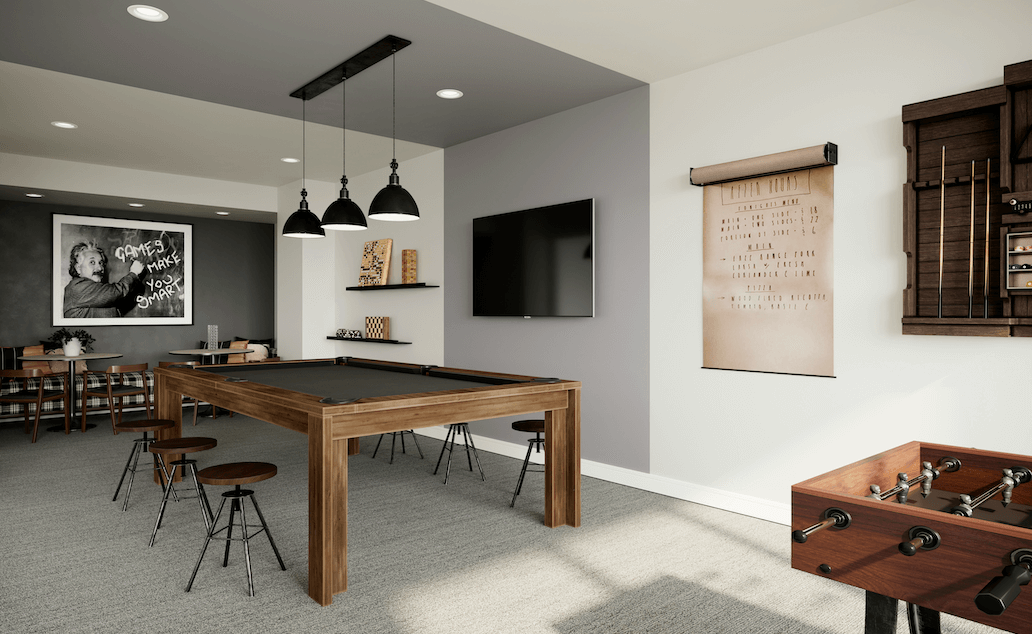
What a man cave build does to the price of your home at sale time. Finished basements typically recoup 70% to 75% of cost; overpersonalized or unpermitted work can drag that down.
Also known as: Home Resale ValueProperty Value Impact
Resale value impact is the honest answer to the question every homeowner asks before breaking ground on a man cave: how much of this will I get back if I sell? The short version is that a well-built, code-compliant man cave recovers a solid chunk of its cost, usually 70% to 75% for a finished basement, while a poorly built or overpersonalized one can add almost nothing or even hurt the sale. The long version is about appraisals, buyer behavior, and the difference between square footage that counts and square footage that does not.
The baseline numbers come from the resale-tracking industry. The Cost vs. Value reports that measure recouped costs across US markets put a finished basement around 71% of its cost returned at sale, with regional runs from the low 20s to the mid-80s depending on the market. Basements are the sweet spot of man cave projects because they add finished square footage at a fraction of above-grade cost, and a garage conversion can add 10% to 30% to a home’s value when done right. The caveat is that those numbers assume a neutral, flexible room that matches the home’s finish quality.
The appraisal side is where most owners get surprised. Finished below-grade square footage is not valued the same as above-grade space: appraisers typically rate a finished basement at 50% to 75% of the per-square-foot value of the main living areas. That is not an insult, it is how the market treats underground rooms, and it is why the ROI math always compares the cost to finish against the added appraisal value, not against the cost of above-grade space. A $50,000 basement finish in a market that values finished basements at 60% of main-floor rates adds roughly $30,000 in appraised value, before the intangible benefit of the room making the house sell faster.
Resale value impact is not the same thing as construction cost, and it is not a fixed number. It is a market figure that moves with location, finish quality, and how close the room comes to what the neighborhood already values. A custom-themed cave, a shrine to one team or one hobby, can be the exception that proves the rule: it is worth exactly what the one buyer who shares the obsession will pay, and nothing to anyone else. That is the budget planning reality every man cave build has to face before the first stud goes up.
What appraisers and buyers actually value
Appraisers value the room, not the stuff in it. A finished basement with proper walls, flooring, lighting, HVAC, and an egress window counts as finished square footage; a room full of pool tables and arcade cabinets in an otherwise unfinished basement counts as a partially finished bonus at best. The grading factors are the same ones that govern every room in the house: ceiling height, natural light, access, and finish quality matching the rest of the home.
Buyers value flexibility. The research that drives the Cost vs. Value report consistently shows that neutral, multi-use spaces sell better than hobby-specific rooms. A basement that could be a media room, a guest suite, a home office, or a gym reads to every buyer; a basement built as a shrine to one team reads only to that team’s fans. If you are building with resale in mind, hold the personality to the furniture and art, which travel with you, and keep the walls, layout, and finishes neutral.
Resale value vs. personal value
Not every man cave should be built like an investment, and the mistake is pretending otherwise. A room that recoups 60% of its cost but gives you and your family ten years of use has done its job, and a room built purely for resale with no personality is a nice space that was never fun. The two goals pull in different directions: resale wants neutral and flexible, personal use wants specific and yours.
The resolution most owners land on is the 80/20 split. Build the permanent part, the walls, the bar, the wiring, the ceiling, to resale-grade neutral quality, then spend the personality budget on removable things, art, memorabilia, games, a jukebox, a neon sign. That way the room is a fantastic man cave while you own it and a flexible finished space for the next buyer, and you stop fighting the resale math on every single purchase.
How the math moved over the decades
Finished basement value has climbed since the postwar years, when a finished rec room was a status symbol but buyers barely priced it in. The Cost vs. Value data of the 2000s and 2010s steadily nudged basement recoups upward, and the 2020s added a new driver: the post-2020 shift toward home offices, gyms, and flexible space made extra finished square footage more valuable to more buyers. Markets that love basements, the Midwest, the Northeast, and the mountain West, now recover the highest shares, while regions with shallow basements or slab construction price them differently.
The rules around the room also tightened. Egress windows, 7-foot ceiling minimums, and permanent HVAC became the gatekeepers that separate finished space that counts from finished space that does not, and unpermitted work became a disclosure problem that cuts both value and sale speed. The through-line is that the room’s value tracks how close it comes to being a real room. Build it like a renovation, pull the permits, and it earns like one.
Common mistakes
First, overpersonalizing the build itself. Painting the walls in team colors, building in a one-hobby shrine, and installing fixtures no buyer wants turns a potential asset into a liability that the next owner will pay to remove. Keep the permanent structure neutral and spend the personality money on things that unplug and come with you, the jerseys, the signs, the bar memorabilia, so the next owner sees a blank canvas, not a renovation project.
Second, skipping permits and hiding the work. Unpermitted electrical, plumbing, and structural work is a disclosure bomb at sale time, and appraisers discount or ignore finished space they cannot verify. A building permit and an inspection are cheap insurance that the room counts on the appraisal, and they protect you from a failed sale the same way they protect a buyer from a hidden fire hazard.
Third, chasing ROI on every dollar. The room that makes money at resale is the neutral, flexible one, but the man cave you actually want is specific. Spend to the quality standard, protect the code compliance, and treat the personal touches as consumption, because that is the honest split between a build that pays and a build that plays. If you price the whole project like an investment and it comes up short, the disappointment is worse than the math; price the permanent part like one and enjoy the rest.
Frequently asked questions
How much value does a man cave add to a home?
A well-built man cave in a finished basement typically recovers 70% to 75% of its cost at resale, with the national Cost vs. Value figures putting it around 71% and regional results from the low 20s to the mid-80s. The actual number depends on your market, the finish quality, and how neutral the room is. The room also makes a home sell faster in many cases, which has real value even if it does not show up on an appraisal line.
Does a finished basement increase home value?
Yes, but not at the same rate as above-grade space. Appraisers typically value finished below-grade square footage at 50% to 75% of the per-square-foot rate of the main living areas, so a basement finish adds value but not dollar-for-dollar. The national baseline is a finished basement recouping around 70% to 75% of its cost, and markets that love basements, like the Midwest and Northeast, recover more. The room must be properly finished with permanent HVAC and an egress window to count.
Is a man cave a good investment?
It depends on whether you are measuring money or use. Financially, a neutral, code-compliant finished basement recoups roughly 70% to 75% of its cost at resale, which is a solid return compared with many home improvements. But a personalized man cave, a themed bar or a hobby shrine, is consumption that may recover far less. The practical approach is to build the permanent structure to resale quality and spend the personality budget on furniture and art that you can take with you.
Does a garage conversion add value?
A permitted garage conversion can add 10% to 30% to a home’s value, which makes it one of the strongest man cave moves on paper, but there is a big catch. Most buyers and appraisers expect a house to have a garage, so converting the only garage to living space can cost you more than the conversion gains. The math works best when you have a second garage or a detached structure, and the conversion must be fully permitted and code-compliant to count on the appraisal.
What hurts a man cave’s resale value?
The three biggest killers are overpersonalization, unpermitted work, and non-compliance. A room built as a shrine to one hobby appeals only to buyers who share it, while neutral, flexible space appeals to everyone. Unpermitted electrical, plumbing, or structural work becomes a disclosure problem that can cut both the value and the sale speed. And a finished room without an egress window, proper ceiling height, or permanent HVAC may not count as finished square footage at all, which slashes the appraised value.
Related terms
ROI (Return on Investment)
The ratio of what a project pays back to what it costs. Finished basements recoup about 71% of cost at resale; overpersonalized or unpermitted builds can return far less.
Planning & BudgetBudget Tier
A cost band grouping man cave builds by scope and finish: cosmetic refreshes under $8,000, mid-range conditioned rooms $8,000 to $25,000, and full-structure builds above $25,000.
Planning & BudgetCost Per Square Foot
A benchmark dividing total construction cost by finished area for comparing bids. Man cave builds range from $30 to $200 per sq ft depending on room type, finish tier, and regional labour costs.
Planning & BudgetContingency Fund
A reserved portion of a construction budget, typically 5 to 20 percent of total hard costs, for unforeseen conditions and cost escalation. The line item that stops a surprise from becoming a crisis.
Planning & BudgetContractor vs. DIY
The decision framework for doing renovation yourself versus hiring a pro. DIY cuts labour 40 to 60 percent on paint and flooring; electrical, plumbing, and structural work demands a hired trade.
Building & ConstructionBuilding Permit
Official authorisation from the local building department needed before starting most construction work. It triggers plan review and scheduled inspections confirming the work meets code.
Planning & BudgetHOA Restrictions
Rules in a subdivision's CC&Rs governing what owners can build or modify on their property. Architectural review, noise limits, shed caps and parking rules can stop a man cave build before it starts.
Planning & BudgetZoning Variance
Official permission from a local government to build or use a property in a way that breaks one zoning rule, such as a setback; decided by the board of zoning appeals after a hardship hearing.