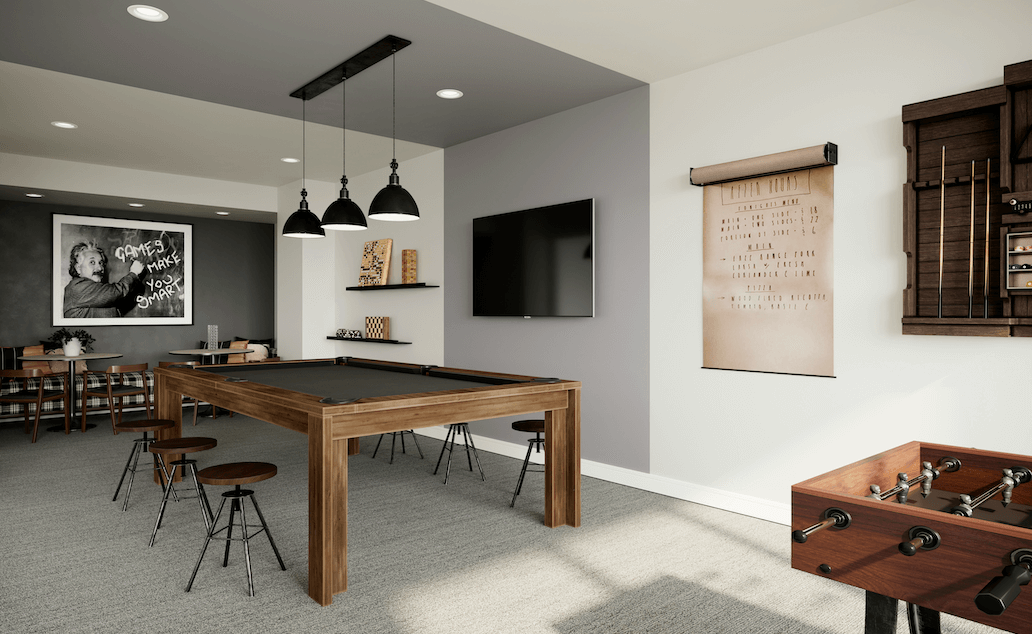
The ratio of what a project pays back to what it costs. Finished basements recoup about 71% of cost at resale; overpersonalized or unpermitted builds can return far less.
Also known as: Return on Investment
ROI, return on investment, is the ratio of what a project pays back to what it costs, expressed as a percentage, and in a man cave build it answers the question every homeowner asks before spending: how much of this will come back if I sell. The formula is simple, the gain from the investment minus its cost, divided by the cost, and the honest version for a renovation compares the added resale value against the total build cost rather than against the sticker price of the furniture. On that measure a well-planned man cave typically earns a middling return, roughly in line with other home improvements, while a badly planned one can return almost nothing. The published numbers give the range. The 2025 Cost vs. Value report from Zonda and the Journal of Light Construction puts the national average finished basement at about 71 percent of cost recouped at resale, meaning a $50,000 project tends to add roughly $35,000 to the sale price, and the National Association of Realtors' 2025 Remodeling Impact report puts the regional spread at 70 to 86 percent. Industry estimates from Angi, HomeLight, and Redfin cluster in the 70 to 75 percent band. Garage conversions, the other classic man cave container, typically add 10 to 30 percent to a home's value with an ROI of 60 to 80 percent of construction costs at resale. Those are the anchors for a cost calculation before you spend a dollar. ROI is not the same as home value, and it is not a guarantee. Appraisers value finished below-grade space at 50 to 70 percent of the per square foot rate of above-grade rooms, so a beautiful basement does not appraise like an addition, and unpermitted work is often excluded from the appraised value entirely. The ROI number is also regional and personal: a market where finished basements are the norm returns more than one where buyers ignore them, and a cave built around one owner's specific hobbies can read as a renovation the next buyer will tear out. The honest framing is that ROI measures the financial fraction, not the enjoyment, and the two rarely line up, which is why the resale value impact of the finished room deserves its own line in the planning.
How to run the numbers on a man cave build
Start with the formula and the anchors. ROI equals the added resale value minus the build cost, divided by the build cost, and the two inputs come from different places: the added value from comps, appraisals, and cost reports, and the build cost from your own estimates and bids. For a finished basement, the 2025 Cost vs. Value national figure of about 71 percent is the default anchor, with the NAR's 70 to 86 percent spread for regional adjustments, and a $50,000 mid-range basement finish lands at roughly $35,000 added at resale, per Opendoor's analysis of the report. The second step is adjusting for what buyers actually pay for. An egress window, roughly $2,500 to $5,500 installed, is the single best upgrade for value, because it is what lets a basement room legally count as a bedroom on the MLS, and that bedroom label moves comps by tens of thousands. A basement bathroom adds 10 to 15 percent to the value of the finished space, and a walk-out or daylight basement appraises at a smaller discount, 10 to 30 percent below grade, than a fully buried one. Features with poor payback are the overbuilt ones: permanent tiered theater seating, wine cellars beyond a small built-in, saunas, and wet bars, all high cost with a narrow buyer pool. Permits are the silent multiplier. Permitted work counts in an appraisal and on the MLS, while unpermitted finished space is frequently excluded from appraised value and creates financing problems at sale. The permit itself costs only a few hundred dollars, which makes skipping it one of the worst trade-offs in the ROI math, since the downside is a whole room that does not count. The discipline that protects ROI is the same for a budget tier build as for a full renovation: cap the spend so the finished home lands at or below the neighborhood ceiling, and keep the layout open rather than chopped into tiny rooms.
ROI vs. resale value impact
One-line distinction: ROI is the ratio of payback to cost, and resale value impact is the dollar figure the improvement adds to the home. A $10,000 project that adds $12,000 in value has a 20 percent ROI, while a $60,000 project that adds $70,000 also has a 20 percent ROI but moves the house's price far more. The two measures tell different stories: ROI rewards efficiency and value impact rewards scale, and a man cave build that maximizes one may sacrifice the other. The consequence for planning is that you should decide which you are optimizing before you bid. If the goal is a strong ROI, spend on the features appraisers reward, egress, bath, open flex space, and keep the budget mid-range, since below-grade premium finishes do not appraise back. If the goal is value impact, spend more overall but expect the percentage to stay roughly flat, because appraisers cap how much a basement contributes regardless of how much you spend. A finished basement returns around 71 percent whether it costs $20,000 or $70,000, so the percentage is stable and the dollars scale with the risk.
Where the term came from
ROI was born in corporate finance, not construction. The formula is credited to Donaldson Brown, an assistant treasurer at DuPont who in 1914 developed the return on investment calculation to measure the performance of the company's many divisions, and the DuPont analysis became a standard of managerial accounting through the 20th century. The idea that a ratio of gain to cost could measure any decision spread from corporate budgets into every other field that spends money, and home renovation adopted it wholesale once the resale-tracking industry, led by the Cost vs. Value report that Zonda runs with the Journal of Light Construction, started publishing recouped-cost numbers by project type. The meaning drifted as it spread. In finance ROI compares profit against invested capital for a business decision; in renovation it compares added resale value against build cost for a lifestyle purchase, and the two are different animals, because a man cave is consumed as well as sold. That drift is worth remembering when a number looks too good: the published ROI figures assume a neutral, well-built, permitted project sold in a normal market, and any of those assumptions failing pulls the real result well below the published line.
Common mistakes
The first mistake is counting the enjoyment as return. ROI in its published form measures resale value only, so the man cave that gets used for years is a lifestyle win that the percentage does not capture, and the honest planning exercise treats them separately: enjoy the room, and count the resale fraction as a bonus rather than the point. The second is overpersonalization. A cave built around one owner's team, hobby, or taste reads to an appraiser as a renovation the next buyer will tear out, and the most personalized features, tiered theater seating, wine rooms, saunas, custom bars, are exactly the ones the reports say pay back poorly. Keep the bones neutral and let the decor carry the personality, and the resale fraction holds. The third is skipping permits to save a few hundred dollars. Unpermitted finished space is commonly excluded from appraised value, which can wipe out the entire ROI on the room it was meant to save, and it creates disclosure and financing problems at sale. Pull the permits, keep the receipts, and the room counts. And remember the neighborhood ceiling: if the finished home lands above the top comparable sale, the extra spend simply does not show up in the price, so match the build to the comps, not to the dream.
Frequently asked questions
What is a good ROI on a man cave build?
A good ROI on a man cave is roughly 70 to 75 percent of cost recouped at resale, which is where finished basements land in the national averages. The 2025 Cost vs. Value report puts a finished basement at about 71 percent, and the NAR's 2025 Remodeling Impact report shows 70 to 86 percent regionally. That means a $50,000 build tends to add about $35,000 to the sale price. It is worth treating any published number as a ceiling that assumes a neutral, permitted, well-built room sold in a normal market.
How do I calculate ROI on a home renovation?
Take the added resale value the renovation creates, subtract the total build cost, divide by the build cost, and multiply by 100. For a finished basement, start from the Cost vs. Value national figure of about 71 percent of cost recouped, so a $50,000 project adds roughly $35,000 in value. Get the two inputs right: the added value from comps and appraisals, and the build cost from your actual bids including permits. The regional spread is wide, 23 to 86 percent in some markets, so local comps matter more than the national average.
Does finishing a basement increase home value?
Yes, but less than most owners expect. The 2025 Cost vs. Value report puts the national average finished basement at about 71 percent of cost recouped at resale, and the NAR's 2025 report shows 70 to 86 percent regionally, meaning a $50,000 project adds roughly $35,000 to the sale price on average. The catch is that appraisers value below-grade space at 50 to 70 percent of the above-grade rate, and unpermitted work is often excluded entirely. Adding an egress window so a basement room counts as a bedroom is the best upgrade for value.
What home improvements have the best ROI?
A man cave build typically falls in the middle of the improvement rankings. Finished basements recoup around 71 percent of cost, per the 2025 Cost vs. Value report, while garage door replacements and minor kitchen remodels historically lead the list at higher percentages. The best ROI for a man cave specifically comes from the appraiser-friendly features: an egress window, a bathroom, and an open flex space, all of which add value that buyers pay for. Permanent tiered seating, wine cellars, and saunas pay back poorly because the buyer pool is narrow. Keep the bones neutral and the percentages hold.
How much of a man cave build will I get back when I sell?
Expect roughly 70 to 75 percent of the build cost back at resale for a typical finished basement, per the 2025 Cost vs. Value report and industry estimates from Angi, HomeLight, and Redfin. The regional spread runs 70 to 86 percent in the NAR's 2025 Remodeling Impact data, and the exact figure depends on your market, the permits, and how neutral the room is. A $50,000 project tends to add about $35,000 in value. Overpersonalized or unpermitted work pulls the return down sharply, sometimes to zero.
Related terms
Resale Value Impact
What a man cave build does to the price of your home at sale time. Finished basements typically recoup 70% to 75% of cost; overpersonalized or unpermitted work can drag that down.
Planning & BudgetCost Per Square Foot
A benchmark dividing total construction cost by finished area for comparing bids. Man cave builds range from $30 to $200 per sq ft depending on room type, finish tier, and regional labour costs.
Planning & BudgetContingency Fund
A reserved portion of a construction budget, typically 5 to 20 percent of total hard costs, for unforeseen conditions and cost escalation. The line item that stops a surprise from becoming a crisis.
Planning & BudgetBudget Tier
A cost band grouping man cave builds by scope and finish: cosmetic refreshes under $8,000, mid-range conditioned rooms $8,000 to $25,000, and full-structure builds above $25,000.
Building & ConstructionBuilding Permit
Official authorisation from the local building department needed before starting most construction work. It triggers plan review and scheduled inspections confirming the work meets code.
Building & ConstructionDedicated Circuit
A branch circuit wired to power only one outlet or appliance, with a breaker sized to that single load and nothing else sharing the line.
Read more about ROI (Return on Investment)

Mini Heat-Recovery Ventilator: Fresh, Comfortable Basement Air
Learn how a compact HRV can banish basement odors, lower heating bills, and keep your space comfy—plus step-by-step install, cost & maintenance tips!

Shed-to-Man-Cave Budget Planner: Real Costs for Foundation, Utilities & Permits
Plan your shed-to-man-cave conversion with low/mid/high cost ranges, hidden fees, permit & utility estimates, contractor vs DIY costs, timelines & priorities.