Best Wall-Mounted Foldaway Tables for Small Entertainment Spaces
Last updated August 25, 2026 · By Zach Lane ·How we choose products · Affiliate disclosure

Ever stood in your room and felt like every square foot is sacred, but the table you want would swallow half of it? Same here. I’ve dealt with tight layouts, weird corners, and that constant tug-of-war between a sturdy playing surface and wanting the floor back when the evening’s over. That annoyance sent me down a rabbit hole of wall-mounted, foldaway, and multi-function tabletops until I had a toolkit of practical, high-performance options that actually work in small spaces.
This guide skips the fluff. I break down the mechanical and material details that determine longevity and playability. Expect plain talk on load ratings, hinge styles, mounting systems, surface materials, and how those things affect stability for dice, cards, ping-pong, or a full-on pub table. I’ll also point out ergonomic bits, cable-routing tricks, and maintenance tips you rarely see in glossy product pages.
Read on and you’ll know how to match a foldaway solution to your layout and usage. I’ll help you weigh tradeoffs like weight capacity versus a slim profile, engineered wood versus butcher block, and piano hinges versus locking folding brackets. If you geek out on specs and build quality like I do, this will get you hyped and ready to pick the right wall-mounted folding table for your space.

WALMANN Space Saving Wall Mounted Folding Workbench, Heavy Duty Folding Wall Table/Desk for Garage, Workshop, Holds Up to 550 lbs(Tabletop Size: 32 x 18inch)

Walnut Folding Dining Table – Compact Drop Leaf Table – Space-Saving Rectangular Kitchen and Dining Room Table for Small Homes, RVs, and Apartments

Folding Dining Room Table for 4/6 with 35.4" Extra Wide Space Saving Drop Leaf Table with Lockable Wheels & Storage, Heavy Duty Eco Solid Wood Top 300lb, Convertible Desk for Apartments/RV/Home Office

Giantex Corner Floating Desk, Wall Mounted Computer Desk with Storage Shelf, Space-Saving Writing Desk, Triangle Laptop Desk for Living Room, Study, Bedroom, Home Office & Small Spaces (White)

VINGLI 6 FT Narrow Folding Table, Tabletop Folded in Half, Premium Quality HDPE Material and Sturdy Metal Frame, Perfect for Buffet, Seminar, Party, Training, Home Work, Black

HARDURA Folding Stainless Steel Table 30X48 Inches with Legs NSF Commercial Portable Folding Prep Table for Restaurant Kitchen Home and Hotel

Giantex Wall Mounted Folding Table, 31.5" x 23.5" Wood Murphy Desk Drop-Leaf Table, Space Saving Foldable Floating Desk, Wall Desk Fold Down for Small Spaces, Study, Bedroom, Bathroom (Gray)
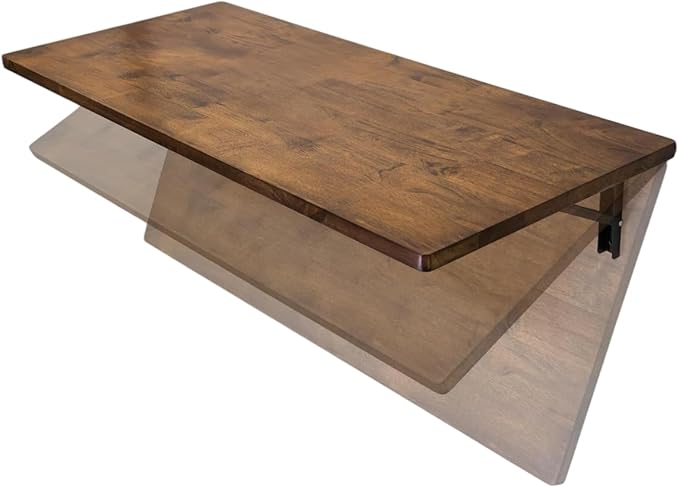
StoreYourBoard Wall Mounted Foldaway Table, Dark Wood Butcher Block Folding Desk, 40" x 18", Black Steel Brackets

Hathaway Premier Wall-Mounted Pub Table, Black
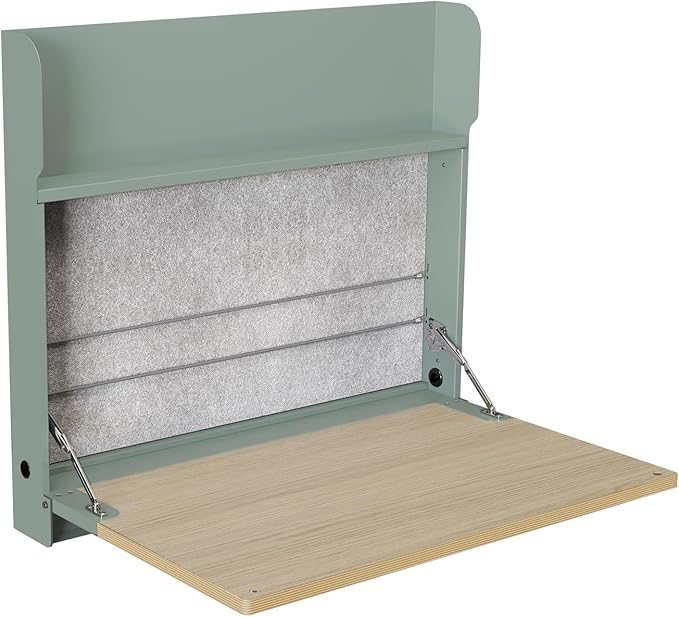
Vari Hide-Away Wall Mounted Floating Desk - 32” Foldable Murphy-Style Desk for Bedroom, Dorm, Apartment + Cable Ports, Bungee Storage, Shelf, 100 Lb Capacity + Simple Assembly (Seafoam/Light Wood)
Our Top Pick
Meet the Vari Hide-Away 32" Foldaway Wall Desk. For a room where every inch matters, this doubles as a legit game table that tucks flat against the wall when you’re done. It gives you a solid, stable surface (100 lb capacity) for board games, card nights, a laptop, or a small monitor setup. Folds down fast. Folds up out of sight just as quick. Clean, functional, and no wasted floor space.
Sturdy. Smart storage. Looks like it belongs in your space.
The features are practical, not just pretty. Built-in cable ports keep controllers, chargers, and a lamp neat. Bungee storage holds remotes or game pieces. The little shelf is perfect for drinks or a score pad. The seafoam and light wood finish adds character without shouting. Assembly is straightforward, so you get to the fun part sooner. The floating, wall-mounted look reads intentional-like you planned the room that way.
If you want a multi-use piece that behaves like a true table but disappears when you need the floor back, this fits the bill. Easy to mount, easy to use, and versatile for apartments, basements, or a tight nook. Install it, set up your favorite game, call a buddy, and enjoy the extra room when you’re done.
Wall-Mounted Foldaway Tables That Disappear When You Need Space
If your priority is a full, usable tabletop that vanishes against the wall, these are the engineering solutions you want. Wall-mounted foldaway tables use rigid backers, folding brackets or gas-assisted arms, and a sturdy top so the surface feels permanent when open but tucks away cleanly. That means you can stage the room for movies, workouts, or guests without sacrificing game night.
When sizing and selecting one, focus on a few technical priorities. First, load rating and how the load distributes across the mounting determine whether the table stays rock-solid during play. Second, the hinge and bracket mechanism defines deployment speed and long-term wear-look for hardened steel brackets, rated pivot points, or gas struts for smoother action and less sag. Third, how the table meets the wall matters: integrated back panels that transfer load to studs beat single-plate anchors that put shear stress on fasteners.
In the reviews ahead I test installation complexity, how well each keeps the top flat under lateral loads, and whether there are shim or leveling features to salvage uneven walls. You’ll learn which folding hardware types are best for heavy-duty use, which tabletop materials resist dents and spills, and what mounting practices give years of trouble-free opening and stowing in a high-use room.
WALMANN Folding Workbench
This is a no-nonsense wall-mounted folding table that punches above its size. The 32" x 18" solid wood top (0.8" thick) gives you a smooth, rounded-edge playing surface that feels more substantial than most pop-up shelves. The standout is the heavy-gauge, powder-coated folding brackets and the advertised 550 lb capacity. That means you can use it as a serious prep surface, a standing pub ledge, or a compact poker/board-game table without worrying about flex. It ships as a complete kit with brackets and mounting hardware, so you’re not hunting for parts.
Pros: rock-solid support, classy finish, folds flush when not in use. Cons: the top’s narrow for large groups, stud mounting is mandatory (not ideal for drywall-only walls), and a few users reported needing minor hinge tweaks out of the box.
Installation tips: think about placement and height-mount a touch lower for seated card nights or a little higher for standing drinks. Use a stud finder, long lag bolts, and enlist a buddy to lift during install. Small mods I recommend: add rubber bumpers to kill rattle, finish the top with a wipe-resistant coat if beer spills are a risk, and route power under the table for chargers or LED strips. If you’re squeezing a lot of function into a tight footprint, this is a practical, heavy-duty choice that keeps your floor clear and game nights legit.
Smart Drop-Leaf Designs That Maximize Floor Real Estate
Drop-leaf tables are a classic because they work. In a compact room they give instant expansion when friends arrive and quick contraction when you want the space back. Modern drop-leafs use engineered hinges, locking supports, and precision-cut leaves that align flush with the primary surface. For buyers this category boils down to geometry and mechanical stability: how the leaf is supported, how flat the seam is, and how durable the hinge will be after repeated use.
When shopping, check hinge type, leaf support method, and material thickness. Continuous piano hinges or multi-screw butt hinges hold alignment longer. Locking swing arms or positive-engagement drop-supports beat gravity-rest designs. Material thickness and core composition matter for deflection-thin veneer over low-density fiberboard will sag over time, while solid wood or braced engineered cores resist deformation and give a satisfying weight for gameplay.
I’ll call out seam tolerances, reinforcement strips under leaves, and any hardware that helps one-handed operation. You’ll also see notes on finish durability and edge protection, since those determine how the table handles knocks, spills, and elbows during intense rounds.
Furnifact Walnut Folding Table
If your room is short on floor space but you care about style, this Furnifact walnut drop-leaf table is tidy. The solid-wood build and warm walnut finish give it the heft and look of a permanent piece while folding down to a slim console when you need the room back. At full size it serves two to four players comfortably for cards or smaller board games, and when folded it tucks behind a sofa or against a wall so traffic lanes stay clear. It feels substantial in use, which matters when dice and miniatures are on the table.
As a game surface it’s about everyday versatility, not tournament-grade play. Reinforced legs and solid construction make it stable for casual games and drinks, but the manufacturer lists a strict weight limit-double-check the manual before stacking heavy audio gear or desktop rigs. Practical upgrades I recommend: add a thin felt mat for smoother card handling, stick adhesive cable clips under the top for controllers or lamps, and anchor nearby furniture to prevent accidental tipping during lively rounds. Honest note: this is a freestanding drop-leaf, not a wall-mounted foldaway. If you need a bracket-style table that folds flat to the wall, look elsewhere.
Best for someone who wants authentic wood grain and a flexible footprint. Pros: solid wood look, multi-use (dining, gaming, console), folds away cleanly. Cons: heavier to move, not designed for wall mounting, watch the stated weight limit. I once slapped on poker felt and clamp cup holders and ran an all-night poker game on it-held up great.
VASTATIO Folding Table
If you need a roomy surface that still tucks away, the VASTATIO folding table is a smart, pragmatic pick. It combines a 35.4" extra-wide drop-leaf top with an epoxy-finish surface that resists stains and wipes clean after spilled beers or rogue dice. The plywood/eco solid wood construction feels surprisingly sturdy and the frame plus metal supports handle up to 300 pounds, so it’ll take a heavy stack of board games, a full poker setup, or a temporary TV and speakers without complaining. Lockable casters make it easy to roll into place for game night and then lock rigid for play, while internal storage keeps chairs and accessories out of the way when folded.
Note: this model is free-standing, not wall-hinged, so it won’t reclaim vertical real estate the way a wall table does. That said, it shines where mobility and multi-function matter. Use it as a pop-up pub table, a card table that doubles as a desk, or a console when folded. Pros: roomy surface, sturdy build, lockable wheels, useful storage, easy-to-clean finish. Cons: heavy to maneuver at first, assembly can be fiddly, and some buyers reported missing hardware-inventory the parts before you start. Tip: lock both casters and add small felt pads where wood meets metal to stop clacking while you fold and roll.
Folding Game Tables Built for Play and Stability
A dedicated game table that folds flat against a wall has to deliver a stable play surface and predictable behavior under dynamic loads. Whether you’re flicking pucks, lining up dominoes, or slinging cards, the top needs to resist racking and keep a consistent plane. This category looks at how designers balance compact storage with torsional stiffness and edge-to-edge flatness.
When evaluating these tables prioritize rigidity and connection hardware. Cross-bracing, laminated cores, and through-bolted brackets minimize deflection. For tops, MDF with a durable laminate is dimensionally stable and plays well, while solid or butcher block tops offer higher impact resistance and can be resurfaced. Check how legs or supports attach-locking mechanisms that prevent inward collapse under lateral load are essential.
The number that separates these from ordinary wall leaves is the load rating, and the spread across the category is enormous. A light steel-and-particleboard leaf is rated around 33 pounds, a mid-tier unit around 66, and a heavy drop-down workbench with an alloy frame reaches 110. A 33 pound leaf is a laptop shelf. It is not a poker table with four people leaning on one edge, and the failure is not the top breaking, it is the bracket working loose from the wall over months.
That points at the real constraint, which is that the rating on the box describes the top and its hardware, not your wall. A top rated at 88 pounds hung on drywall anchors has the capacity of the anchors. Everything in this category has to reach studs, and on a game table it has to reach them at both ends, because the load on a game table is dynamic and off-centre in a way a desk's never is: people lean on corners, thump the surface, and pull on the edge to stand up.
Two design details are worth checking specifically for play. First, how the legs or supports lock. A folding leg that relies on friction rather than a positive latch can walk inward under lateral load, which is the collapse mode you actually need to worry about. Second, the tolerance at the hinge, because any play there shows up as a top that rocks a few millimetres when you lean on it, and that is the difference between a surface that feels solid and one that irritates everybody for the whole evening. Anti-rattle bumpers and a thin washer at the hinge interface fix most of it, and are worth fitting on installation rather than after the complaints start.
Compact Wall Desks That Pull Double Duty as Game Stations
A compact wall desk is the Swiss Army knife of a small room. By day it’s a functional workstation, by night it’s a tabletop for casual gaming. The challenge is ensuring the desk supports ergonomic computing elements while also providing a stable, play-worthy surface. That means VESA compatibility, keyboard geometry, and decent cable management in a foldable package.
Key features to inspect include the monitor-mount footprint, the ergonomics of the keyboard surface, and the desk’s rigidity when loaded off-center. Look for dedicated cable channels, grommets, or back routing shelves to avoid a spaghetti mess that interferes with folding. Structurally, check whether the desk uses a stud-mounted backer or how hinge points transfer moment to the wall.
In the upcoming reviews I’ll evaluate monitor stability during intensive inputs, keyboard tray alignment after repeated deployments, and whether cables interfere with folding hardware. If you want a desk that works as both a workspace and a reliable game surface, the details matter and I’ll point them out.
Giantex Corner Desk
If you need a compact, no-fuss workstation that tucks into a corner and keeps the room looking sharp, this Giantex floating corner desk delivers. The triangular tabletop and integrated shelf make it a tidy spot for a laptop, a small monitor, controllers, or a dedicated drink station. Engineered wood with a powder-coated finish wipes clean after spills, which is handy. The masonry-grade mounting kit means it feels remarkably solid on brick or concrete. You can pick the height that fits your bar stool or standing setup, which adds versatility beyond a fixed table.
Two practical caveats: the max load is modest (16.5 lbs), so treat it as a single-user surface rather than a heavy gear base. Also, it’s intended for concrete or brick walls; drywall will need reinforcement or a different mounting approach. Pros: space-efficient corner fit, clean modern look, easy maintenance, adjustable mounting height. Cons: limited weight capacity, installation requires masonry anchors and basic tools, not ideal for large tabletop games. Best for a compact streaming station, laptop nook, or a small bar top.
Rustic Wall-Mounted Tables That Add Character Without Compromising Performance
Rustic finishes add warmth and personality, but rustic doesn’t mean sloppy. The best rustic wall-mounted tables pair reclaimed-look surfaces with modern structural hardware so the top looks aged while behaving professionally under load. The trick is separating surface character from structural integrity.
When assessing rustic pieces inspect substrate construction and finish treatments. A reclaimed-look veneer over a stable core avoids the instability of true reclaimed planks. Check edge detailing and sealing-open grain or distressed textures must be sealed to stop moisture ingress and keep the top flat. Hardware should be robust and preferably concealed so the look doesn’t cost you weak mounting plates or undersized fasteners.
The practical trap with rustic in this specific category is thickness. A reclaimed-look plank top is often thicker than a laminate one, and folded depth is the whole point of a wall table: a good drop-leaf stows in roughly 3 inches of wall protrusion, and a chunky rustic top plus a heavier bracket can double that. Three inches disappears against a wall. Six inches is furniture you walk into in the dark.
Weigh it too, in the literal sense. Solid or thick veneered tops are heavier than the same size in laminate over a light core, and that weight is carried by the same brackets and the same two or three studs. A heavier top does not just need a higher-rated bracket; it needs the fasteners upgraded as well, because supplied screws are specified for the supplied top and nothing more.
Where rustic genuinely wins is repairability. A distressed solid or thick-veneer top can be sanded and re-oiled after a decade of drinks, and the marks it collects read as character rather than damage, which is the opposite of what happens when a laminate edge chips. If you are pairing the table with reclaimed signs and old wood elsewhere in the room, that shared ageing is the point.
Seal the edges before you hang it, not after. Open grain and distressed texture absorb moisture, and a top that takes on damp unevenly will cup, which on a wall table shows up as a leaf that no longer sits flat against the wall when folded. One coat of the same finish on the underside and the edges is fifteen minutes that prevents it.
Folded Depth, Extended Size, and the Two Numbers to Compare
Every table here has two footprints, and the listings almost always lead with the wrong one.
Folded depth is what protrudes from the wall the rest of the time, and it is the number that decides whether the table is invisible or in the way. Budget drop-leaf models get down to about 3 inches, which reads almost like a shelf and is genuinely forgettable in a hallway or behind a door. Anything past about 5 inches stops being a wall fixture and starts being furniture you have to walk around, which defeats the purpose in exactly the small rooms this page is written for.
Extended size is the other one. Common tabletops run 30 to 45 inches wide and about 15 inches deep, and larger murphy-style units reach 48 to 60 inches. Fifteen inches of depth is the figure to sanity-check against your actual use: it takes a laptop and a drink comfortably, it takes a plate and a controller, and it does not take four people playing cards, because the middle of the table is only fifteen inches from each edge.
Match the pair to the job rather than buying the biggest. A 72 inch folding banquet table rated to 1,000 pounds distributed is the wrong tool for a 40 inch wall nook, and a 33 pound wall leaf is the wrong tool for poker night. The wall-mounted foldaway table entry sets out the families side by side if you are deciding between a wall leaf and a freestanding folding table.
One measurement people skip entirely: the height you mount it at. A dining or gaming surface wants roughly 30 inches from the floor, a standing or bar surface 40 to 42, and a wall table is mounted once. Decide which one it is before you drill, because the bracket holes are the one part of this you cannot revise later without patching the wall. And check what is behind the wall at that height first, since a stud finder that also detects wiring is worth the twenty minutes it saves you, especially in a garage conversion where conduit runs are rarely where you expect.
A last practical point about where these go. A wall table folded flat is at exactly the height people set drinks on, so a folded leaf in a traffic path collects mugs. If the spot you have in mind is next to where everyone stands with a coffee or a beer, plan a shelf or a hook nearby, or accept that the folded table will be used as one.
Industrial Foldaway Tables: Heavy-Duty Hardware for High-Use Spaces
If your space goes from quiet solo sessions to rowdy game night, industrial foldaway tables bring heavy-duty hardware. This category emphasizes robust steel brackets, powder-coated finishes, and thicker tabletop substrates that resist abrasion. Industrial designs handle higher dynamic loads and rougher handling while still folding away.
Key metrics: bracket gauge, weld quality, and locking pins or detents to prevent accidental collapse. Look for rated steel gauges, corrosion-resistant finishes, and mounting plates that spread load across multiple studs. Tabletop choices in this category often include butcher block, solid core laminate, or reinforced HDPE for impact resistance and easy cleaning.
I test how brackets perform under repeated cycles, whether locking mechanisms stay tight, and how surfaces tolerate heavy use. Industrial-grade function often demands better installation hardware and more careful anchoring.
VINGLI 6ft Narrow Table
If you need a long table but don’t have the depth, this VINGLI 6ft narrow folding table punches above its slim profile. The HDPE tabletop resists dings and spills and the gray-coated metal frame locks firmly into place with a support-rod latch, so you can set up a multi-player card night, a temporary console station, or a buffet without wobble. The standout for tight spaces is the 17.7-inch depth and the ability to fold the top in half (down to roughly 35 inches long). It tucks behind a door, in a closet, or upright against a wall and is surprisingly portable thanks to the built-in handle. The 350 lb capacity also means you can stack monitors, speakers, or a heavy spread and still sleep well.
This is an excellent complement to wall-mounted foldaways when you need a flexible surface that moves with the party. Pros: space-saving footprint, no assembly, durable HDPE that cleans fast, solid lock and decent load rating. Cons: cross-bracing under the ends eats a bit of legroom and limits under-table storage, and the plastic top won’t replace felt for pro-level poker. Tip: keep a thin neoprene mat or roll-out felt handy to reduce card slippage and sound.
HARDURA Folding Stainless Table
If you want a table that can survive pizza grease and a dice storm, this 30"x48" HARDURA folding stainless table is worth a look. Built from 18-gauge Type 430 stainless steel and NSF certified, it resists corrosion and wipes clean in seconds. The fold-away legs and capped anti-slip feet make it surprisingly stable for a collapsible bench, and the spec sheet backs that up with a 660 lb load rating-plenty of capacity if you stack coolers, appliances, or a heavy centerpiece. Rounded corners are a practical touch when you’re squeezing people around the table.
Full disclosure: this is freestanding, not a true wall-mounted drop leaf. Legs fold under and it tucks into a closet or stands flat against a wall when you reclaim the floor. It’s ideal if you want a rugged, stowable surface for poker, board games, or a temporary pub table that can double as a snack station. A few buyers reported small dents on arrival and the unit is on the heavier side, so inspect packaging and be ready for two people when you move it.
Pros: built like a tank, easy to clean, high load capacity, practical feet and rounded edges. Cons: occasional cosmetic dents from shipping, heavy, and not a wall-mounted foldaway if that’s your must-have.
Getting It Into the Wall
Everything on this page hangs from a wall, which makes the wall the most important component in the system and the one nobody buys. A 110 pound rated bracket screwed into plasterboard has the capacity of plasterboard.
Here is the hierarchy, and the gaps between the tiers are larger than people expect. A fixing into a single stud through a decent bracket caps out around 45 to 50 pounds, and roughly doubles when the bracket spans two studs along its length. Skip the stud and rely on drywall alone and the number collapses: standard plastic anchors are rated for 10 to 20 pounds combined, which is a picture frame. A French cleat, two interlocking angled strips screwed into studs, carries well over 100 pounds and is the cheapest way to get a serious rating out of a timber wall. The same hierarchy governs any floating shelf, and it is worth internalising once, because it applies to everything you hang in the room afterwards.
Worth saying plainly: a wall table fails differently from a shelf, and worse. A shelf that is overloaded sags and warns you. A wall table carries its load on a lever arm reaching out from the wall, so the same weight applies far more turning force at the fixings, and when it lets go it does so all at once with somebody's hands on it. That geometry is why the mounting on these deserves more care than the price of the table suggests.
Studs in most homes sit at 16 inches on centre, and that spacing is what should decide your bracket positions rather than the other way round. If the table's mounting holes do not line up with your studs, the answer is a backer board: a length of hardwood or plywood screwed across two or three studs first, with the table mounted onto the backer wherever you like. That is standard practice rather than a bodge, it spreads the load, and it lets you mount a table anywhere along the wall regardless of where the framing landed.
Masonry and concrete change the fixings but not the logic. Sleeve or wedge anchors into solid concrete outperform anything you can get in timber, and the failure mode there is drilling into a hollow block's void rather than its web, which gives you a fixing that feels fine on installation and pulls out three months later. Drill a test hole and look at the dust.
Two things worth doing at install time, both of which take minutes. Shim the bracket so the top sits level on an out-of-plumb wall, because a table that leans is a table that puts everything on it into the corner. And upgrade the supplied fasteners: the screws in the box are specified to the cheapest wall the maker imagined, and long lag bolts or proper masonry anchors cost a few dollars against a table that stays put for a decade.
Wood Wall-Mounted Game Tables: Surface Feel Meets Structural Design
There’s nothing like a wood tabletop for tactile feedback during play. Wood gives natural friction, pleasing acoustics, and a repairable surface that ages well. But wood can move with humidity and take dings, so in a wall-mounted design it must be engineered with a stable core and proper finishes. The best wood game tables balance species, core construction, and edge reinforcement to perform over time.
When choosing a wood wall-mounted table, examine construction. Solid slabs can be great but need kiln drying and good finishing. Engineered butcher block and laminated slats often offer the best stability and reparability. Check edge profiles and radiused corners to reduce chips. Consider surface coatings; oils preserve the look but need upkeep, while hard surface finishes resist spills but change the play feel.
I’ll evaluate tabletop flatness, joint quality, and how species and finish affect gameplay. I’ll also call out under-table reinforcement to prevent sag and designs with replaceable top inserts for specialized games. Expect notes on maintenance and keeping a wooden playing surface true in a living environment.
Giantex Folding Wall Table
This compact wall-mounted foldaway table punches above its weight for tight layouts. At 31.5" by 23.5" it gives you a real working or gaming surface that tucks flat against the wall when not in use. The pine/MDF construction and triangle-support engineering deliver a surprisingly solid feel, so it works well for laptop sessions, card nights, board games, or a quick ping-pong conversion with a portable net. I liked the easy-to-clean surface and rounded corners for late-night snack cleanups. Multiple finish options let you match cabinetry or a pub-style vibe without committing to a bulky table.
Who should consider this: anyone who values reclaiming floor space and wants a dependable, no-fuss surface. Pros: real-wood elements, simple fold mechanism, light enough to install with one helper, versatile styling. Cons: the included mounting hardware can be underwhelming for drywall, so plan to use heavy-duty anchors or screw into studs. If you plan to load the edge with heavy gear, consider adding a collapsible leg for peace of mind. Practical, affordable, and space-smart.
StoreYourBoard Foldaway Table
If you want a tidy, high-quality surface that disappears when not in use, this wall-mounted foldaway table nails it. The real butcher block top (hevea hardwood) gives a warm, classic look and a solid feel under cards, dice, or snacks. The finish wipes clean and resists stains, so spilled beer or chips aren’t a disaster. The folding brackets lock and release with simple levers, making setup quick and teardown faster.
What makes it stand out is the combo of a true hardwood top with low-profile, powder-coated stainless steel brackets rated for up to 200 pounds. That means it looks nicer than cheap laminate fold tables, and it’s stout enough for consoles, a mini-bar, or multiple players leaning in. The brackets adjust for stud spacing so you can get a rock-solid mount. Heads-up: some users swapped the supplied screws for heavier anchors. If you plan to hang heavy gear, go into studs or upgrade the hardware.
Best for guys who need a multi-use surface in a small footprint-home office by day, game table by night, garage poker table on weekends, or an RV where every inch counts. Not for heavy workshop abuse or wide tournament boards. Pros: real hardwood top, solid feel, folds flat, 200 lb capacity. Cons: hardware quality could be better, width may be tight for large games, keep it dry to avoid wood issues. If you want a classy, space-saving top that elevates the room without stealing square footage, this is a strong pick.
Metal Wall-Mounted Game Tables: Precision, Durability, and Modern Styling
Metal wall-mounted tables excel when durability and precision matter. Steel and aluminum give rigid frames, thin profiles, and clean styling. They’re less prone to humidity-driven movement and can be engineered for precise folding and locking. For a high-use room, metal-based designs deliver repeatable performance with little maintenance.
Key considerations: material selection and finish, fastening methods, and corrosion protection. Cold-rolled steel offers high stiffness but needs good powder coating. Aluminum cuts weight but watch bracket thickness and fastener shear strength. Bolted connections with lock washers or threadlocker beat press-fit assemblies. Inspect hinge bearings for hardened bushings or grease fittings for longevity.
The product reviews test rigidity, hinge wear, and how metal tops behave under impact. I’ll also cover how finishes hold up to repeated contact and whether protective edges are present.
Hathaway Wall-Mounted Pub Table
This half-circle wall-mounted pub table is a smart, no-nonsense addition when floor space is sacred. Built from a solid-feeling wood frame with a matte black finish, it gives you a stable spot for 2-3 drinks, a plate, or the bits and bobs you pull from your pockets while you play. The four cue cutouts are a small but thoughtful feature for billiard rooms, keeping cues off the floor and preventing chalk marks on the wall. Its compact footprint and clean silhouette let it disappear visually when not in use, but perform when needed.
What makes it stand out is the combination of heft and minimalism. The top is thicker than you’d expect at this price point, and reviewers consistently call it sturdy. That said, the supplied mounting hardware is the weak link. Mount it into studs or swap in heavy-duty anchors or lag screws and it becomes rock-solid. With overall dimensions around 12 x 23.5 inches, don’t expect dinner for four. Pros: space-saving design, solid construction, cue rests, easy assembly. Cons: limited surface area and upgrade the mounting hardware.
Tip: mount two side-by-side for symmetry, or install a small puck light underneath for ambience and easier late-night scorekeeping.
Home Office Wall Desks That Blend Productivity with Game Night Flexibility
A home office in a small room needs furniture that supports productivity without locking the space into one use. Wall-mounted office desks must support monitors, peripherals, and cable routing while still handling recreational loads. The right design blends ergonomic height, cable management, and foldaway convenience so the desk serves both work and play.
Evaluate desks on ergonomic adjustability, mounting robustness, and integrated cable/tray solutions. VESA compatibility and monitor-arm support matter if you use big displays. Check keyboard tray ergonomics, wrist support, and whether the desk allows for a standing solution via articulating mounts. Structurally, the desk should transfer loads to multiple studs or use a full-width backer to avoid concentrated shear stress.
In these reviews I test vibration transfer when typing versus when the surface is used for a game, assess cable management pathways, and note modular accessories that boost versatility. If you want a wall-mounted desk that pulls double duty, these evaluations will help you pick one that performs in both roles.
Vari Hide-Away Desk
This compact fold-down desk is a smart pick when floor space is precious and you still want a proper playing surface. The Murphy-style panel unfolds into a stable tabletop with a surprisingly high load rating for its size, and the built-in bungee straps plus felt-lined interior make it easy to stash controllers, a deck of cards, or cables without losing them when you close it up. Two cable cutouts and a slim upper shelf keep gear tidy for streaming or a laptop-and-monitor setup. What makes it pop is how the finishing touches tie into function: modern color options, a preassembled unit, and a mounting template speed installation. Best for single-player console sessions, card nights with a friend, dice games, or a slim pub surface in a tight footprint. Not ideal if you want a full tournament-size table or regular four-player board-game nights.
Practical tip: mount into studs for rock-solid stability and pair with a folding stool you can tuck away. Pros: solid weight capacity, neat cable management, integrated storage, clean aesthetic. Cons: depth limits full group play, stud mounting required. Little detail I love-the bungee straps hold a headset like a tiny hammock, which keeps your setup looking intentional.
Pick the Right Foldaway Foundation for Your Man Cave
The core takeaway is simple. If you want repeatable, high-performance play, evaluate load ratings, hinge and bracket design, and how the top meets the wall. Wall-mounted foldaway units like the Vari Hide-Away and StoreYourBoard give the best combination of a low stowed profile and stud-transferred load paths. For heavy-duty use the WALMANN folding workbench, VINGLI narrow table, and HARDURA stainless model show industrial thinking with heavy-gauge brackets, strong latches, and high load ratings. For true sport performance the Hathaway wall-mounted pub table preserves a flat play plane with adjustable levelers and anti-tilt hardware. For dual use as a workstation, look at compact wall desks and sit-stand systems such as the Vari Hide-Away and the Giantex corner desk, where VESA compatibility, keyboard ergonomics, and cable routing are treated as structural requirements, not afterthoughts.
Answer three technical questions before you buy. First, what is your worst-case distributed load (people, gear, speakers) and does the unit’s rated capacity include a safety margin. Second, where will you anchor-solid studs, concrete, or drywall-and what mounting plate or backer will transfer shear and moment to the structure. Third, how often will you fold and unfold it, and does the hinge/bracket use hardened pivot points, gas struts, or locking detents rated for repeated cycles.
Practical installation notes I use on every job: always anchor major loads into studs or a full backer; swap supplied fasteners for long lag bolts or concrete anchors where applicable; shim and level the bracket during install to correct out-of-plumb walls; and add anti-rattle bumpers and thin washers at hinge interfaces to eliminate micro-movement that ruins playability.
Ready to act: measure the intended zone height, reach, and stud spacing now. Decide which category matches your use case: foldaway wall table for max clearance, industrial fold table for heavy duty, wood wall top for feel, or compact wall desk for dual use. Then pick the model that matches your key specs: rated load, hinge type, and mounting method. When you order, prioritize units with pre-drilled stud templates, solid bracket specs, and a clear hardware list so you can swap to higher-grade fasteners if needed. Book 60-90 minutes for install with a friend, bring a level, a long drill bit, and lag bolts, and validate flatness under a payload before you declare it game-ready.
One last, nerdy detail from experience: I cured a subtle lateral wobble on a WALMANN by adding thin stainless washers and a small bed of polyurethane between the backer and wall to dissipate micro-vibration. Tiny mechanical tweaks like that turn a good foldaway into a reliable centerpiece. Pick your category, match the specs to your usage, and don’t be shy about upgrading anchors or fasteners. Your next game night will feel intentional when the table behaves like it was built for purpose rather than improvised.