Interior style built on clean lines, neutral palettes, and few objects chosen for function. Roots run from the Bauhaus (1919) to the 1990s de-cluttering boom; the motto is less is more.
What this look costs to build, the room it needs, and how it compares on fit is in our man cave ideas and themes guide.
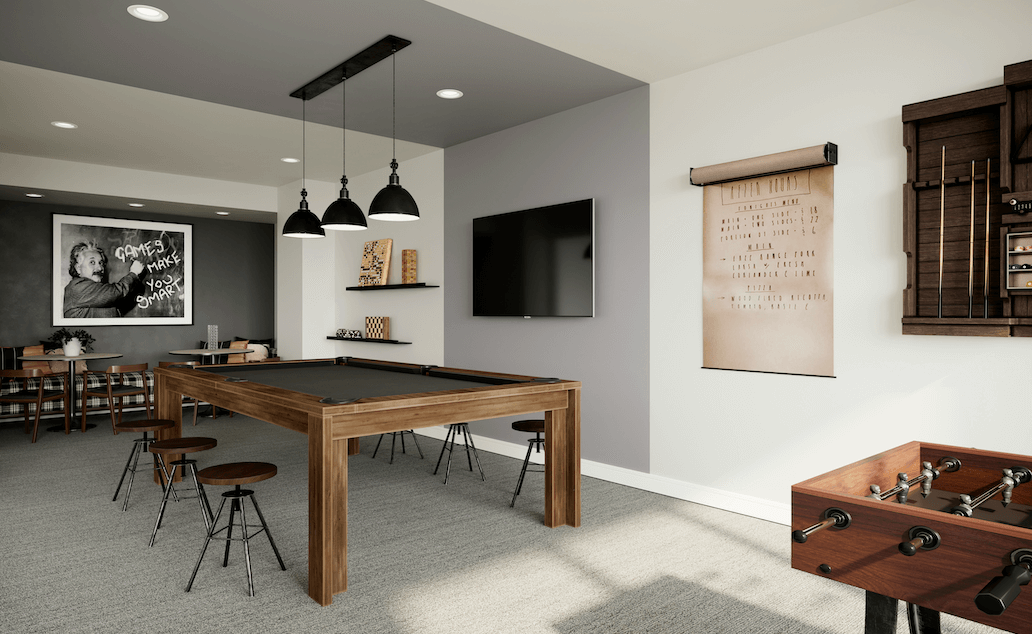
A modern minimalist man cave is a room stripped to clean-lined furniture, a tight palette of white, gray, black, and beige, and objects that each earn their place through function. It is not an empty room. It is an edited one, where negative space, the empty wall and the bare floor, does as much work as the furniture, because the eye needs somewhere to rest. The look reads as calm and orderly, and it makes a small space feel bigger than it is, which is the reason the theme keeps showing up in converted garages and bonus rooms.
The payoff is practical rather than decorative. Fewer surfaces means less to dust, a clean backdrop that hides the usual man cave clutter, and a room where the few displayed pieces, a jersey, a signed photo, a good lamp, actually get noticed instead of drowning in a crowd. The theme forces an edit, and the edit is what makes a cluttered hobby room feel deliberate, which is also why the budget concentrates: fewer pieces means the money lands on the few you keep. For the gamer’s corner, the RGB lighting and the hardware hide behind the clean lines rather than becoming the decoration.
Modern here does not mean contemporary. In design history, modern describes a specific movement, and a modern minimalist room is its most stripped-down expression. It is not the same as mid-century modern, which uses warm woods, tapered legs, and bolder color, and it is not industrial, which leans on raw steel and exposed brick. It is also not a lifestyle fad, because the room has to function, which is why the storage is built in and the surfaces stay clear.
What makes a minimalist room work
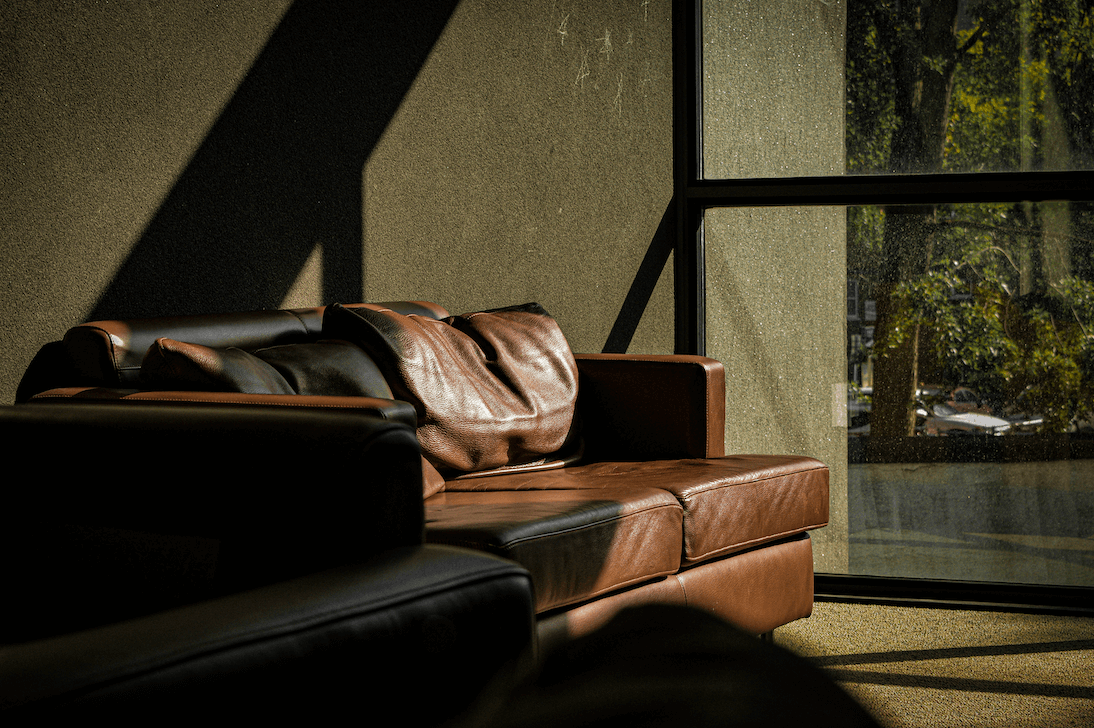
Start with the palette. Modern minimalist interiors run on neutrals, white, gray, black, and beige, with at most a single accent color used sparingly, because a limited palette keeps the room calm and lets the few strong objects stand out. Texture carries the warmth that color would otherwise provide: a wool rug, a linen sofa, matte wood, or a concrete accent wall keeps the room from reading sterile.
Furniture is where the theme wins or loses. Pieces sit on exposed legs so the floor reads through, storage is closed so clutter disappears, and every item answers a question about what it does. A sofa, a low table, a lamp, a shelf: if a piece has no function, it does not belong. Lighting does the rest, because a single overhead fixture makes a minimalist room feel like a cell. Layer it, color temperature tuned warm for the seating area and cooler for the bar, and you get the depth the sparse look needs. The related Scandinavian version adds cozy textures and soft light, which is a good bridge if the pure look runs cold for you.
Negative space is the hidden ingredient, and it takes discipline to keep. An empty stretch of wall next to a single shelf is not a mistake, it is the design, so resist the urge to fill every surface with objects. Natural light matters more here than in any other theme, because the sparse palette shows every shadow and shift, so keep windows uncovered or behind sheer curtains, and let the room change with the day. If you do add wall decor, keep it to a single arranged line rather than a full gallery wall that reads as busy.
Modern minimalist vs. mid-century modern
Modern and mid-century modern get mixed up constantly, and the difference matters when you shop. Mid-century modern is a specific postwar era, roughly 1945 to 1969, with warm walnut woods, tapered legs, organic shapes, and confident use of color, think the Barcelona chair and the Eames lounge. Modern minimalist is the harder-edged cousin: the same clean geometry, but austere materials like glass, steel, and concrete, a neutral palette, and almost no ornament.
The practical consequence is in the buying. A mid-century piece like a teak sideboard brings warmth and a specific historical character, while a minimalist room rejects that warmth in favor of raw materials and negative space. You can mix them, and many rooms do, but the mistake is treating them as the same style and buying a room full of each. Pick the one that matches the mood you want, then let the other show up in a single accent piece.
Where the style came from
The minimalist thread runs back to the Bauhaus, the German design school founded in Weimar in 1919 by Walter Gropius, which taught that form follows function and rejected ornament in favor of simple shapes and new industrial materials like tubular steel and glass. Ludwig Mies van der Rohe, a Bauhaus director who emigrated to the United States in 1937, built his career on the motto less is more, and his glass-walled Farnsworth House of 1951 set the template for pared-back domestic interiors. The word minimalist itself came from fine art: it was applied early in the 1900s to Kazimir Malevich’s stark painting The Black Square of 1915, then to the American artists of the 1960s, Donald Judd, Frank Stella, and Agnes Martin, who stripped sculpture and painting down to grids and cubes. Judd’s converted SoHo loft, sparsely furnished with his own work, carried the aesthetic into interiors. The 1990s brought the decluttering boom, a direct reaction against the fussy, frilly rooms of the 1980s, and that is the version most man cave builders know today.
Common mistakes
Buying minimalist-looking furniture without the storage. A low sofa and a floating shelf look right in the showroom and then collect the controller, the headset, and the snack wrappers, because there is nowhere to put them. Fix it by planning closed storage first: a credenza, a cabinet, or built-ins, so the room can stay clear.
Going all white and calling it done. A minimalist room with no texture reads as cold and unfinished, not calm. Fix it with one warm material, a wood floor, a linen sofa, or a wool rug, so the neutral palette has something to bounce light off.
Skipping the lighting layer. Minimalism depends on light to give the sparse space depth, and a single overhead can flatten the whole room. Fix it with lamps at different heights and a dimmer on the main circuit.
Treating minimal as cheap. The style can be done on any budget, but the temptation to fill the room with dozens of cheap accent pieces is exactly backwards. Fewer, better pieces is the whole point, so edit hard and spend the budget on the few objects you keep.
Frequently asked questions
What is a modern minimalist man cave?
A modern minimalist man cave is a room styled around clean lines, a neutral palette, and few carefully chosen objects, with every piece expected to earn its place through function. Negative space, empty walls, and clear floors, does the visual work. The result reads calm and orderly, hides clutter behind closed storage, and makes a small room feel larger. It is the edited-down end of the modern design movement.
What colors work in a minimalist room?
Stick to neutrals: white, gray, black, and beige, with at most one accent color used sparingly. The limited palette is what keeps the room calm and lets the few strong objects stand out. Texture replaces color as the source of warmth, so add a wood floor, a linen sofa, or a wool rug. If you want a focal point, a single accent wall in a natural material works without breaking the palette.
What is the difference between modern minimalist and mid-century modern?
Mid-century modern is a specific postwar era, roughly 1945 to 1969, known for warm walnut wood, tapered legs, organic shapes, and confident color, with icons like the Eames lounge and the Barcelona chair. Modern minimalist shares the clean geometry but uses austere materials such as glass, steel, and concrete, keeps a neutral palette, and drops most ornament. They mix well as accent pieces, but buying a whole room as if they were one style produces a muddle.
How do I keep a minimalist room from looking cold?
Add texture, because a neutral palette has no color to warm it. A wool rug underfoot, a linen sofa, matte wood, or a concrete accent wall gives the eye something to land on and stops the room from reading sterile. Layer lighting at different heights and tune the color temperature warm in the seating area. One or two personal objects, a framed jersey or a good lamp, complete the warmth without breaking the edit.
Is a minimalist man cave cheap to decorate?
It can be, but not automatically. The style needs fewer pieces, so the money concentrates on the few you keep, and buying fewer, better pieces often costs more upfront than a room full of budget items. What the theme saves is the long tail: no need to fill shelves and walls with accents, which is where most man cave budgets quietly drain. Start with the storage, then add furniture slowly and edit hard.
Related terms
Industrial Theme
Factory-inspired decor: exposed brick and beams, raw concrete, black steel, Edison bulbs, and visible pipes and ductwork in a neutral palette of gray, black, and brown.
Design Themes & StylesMid-Century Modern Theme
Design theme built on postwar furniture and materials, roughly 1945 to 1969: walnut and teak, tapered legs, molded plywood, and warm lighting. The name dates to Cara Greenberg's 1984 book.
Design Themes & StylesScandinavian Hygge Theme
The Danish art of cozy brought to a room: warm layered light, candles, wool and linen, pale wood, and a quiet neutral palette arranged for comfort and conversation.
Design Themes & StylesUrban Loft Theme
A room styled on converted city manufacturing lofts: exposed brick and ductwork, tall ceilings, black steel, filament bulbs and almost nothing hidden behind finish carpentry.
Decor & Wall ArtAccent Wall
One wall finished differently from the other three, in paint, wood slats, veneer stone or LED panels, to give a room a single deliberate focal point.
Decor & Wall ArtGallery Wall
A curated arrangement of framed art, photos, and memorabilia hung together on one wall, planned around consistent spacing and a shared eye-level centerline rather than added piece by piece.
Decor & Wall ArtFloating Shelf
A wall shelf with no visible bracket underneath, held level by a hidden cleat or rod anchored into wall studs so the board appears to float against the wall.