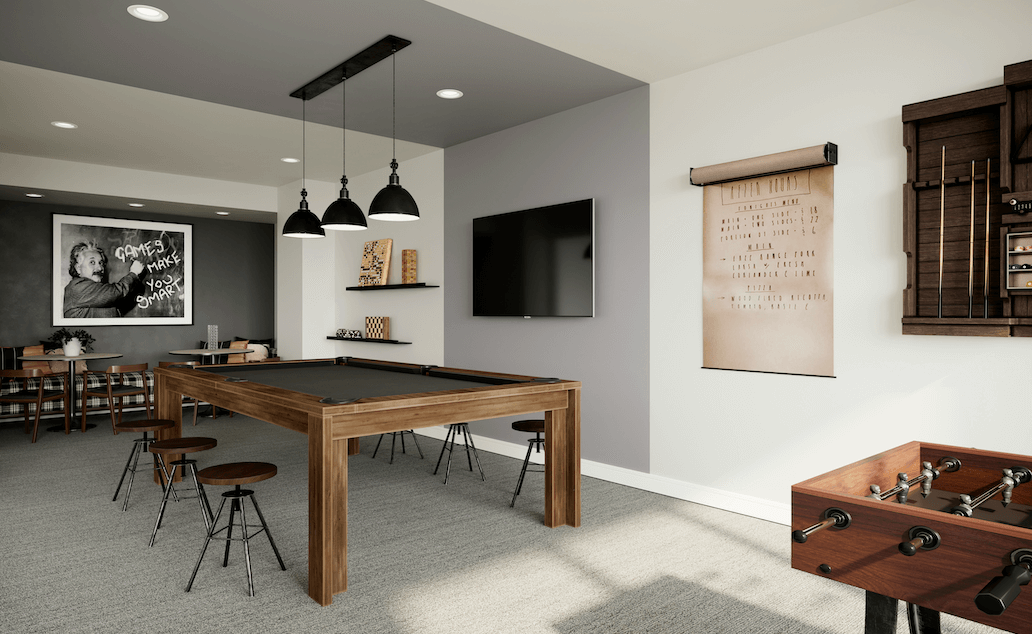
A wall-mounted sign listing the rules of private spaces, usually wood or metal, carrying humorous commandments about behavior, drinks and guests. Descended from the 17th-century tavern sign tradition.
Also known as: Man Cave Rules SignBar Rules SignTavern Rules Sign
A house rules sign is a decorated board, typically 12 by 16 inches in metal or 12 by 24 inches in wood, that hangs on the wall of a bar, a game room or a man cave and spells out the code of conduct in a tone that lands between a pub landlord’s posted notice and a joke everyone in the room already gets. The sign lists five to twelve rules: “What happens here stays here,” “No politics, no whining,” “Respect the bar,” “If you open it, finish it,” “The remote stays on the table.” These are not house policies in a legal sense. They are social signals, a way of marking territory and setting expectations without standing at the door and delivering a speech. A rules sign says this room runs on different terms than the kitchen or the living room, and that distinction is half the reason the sign exists.
The sign matters not because people read and obey each line but because it establishes the room as a distinct social zone. A house rules sign hanging above the bar does the same psychological work as the “please wait to be seated” stand at a restaurant: it cues behavior before anyone needs to enforce it. Without one, a game room is a room with games in it. With one, a game room is a room with a culture, even if that culture is mostly about who controls the playlist. The cost of skipping a sign is zero dollars and zero building code violations, but the cost is also that the space never announces itself. For a room built around hosting, a home bar, a game night setup, a watch-party den, the sign is the punctuation mark that finishes the sentence the furniture started.
A house rules sign is not a neon sign and it is not a generic piece of vintage wall art. A neon sign is a light source first and a message second; its job is to glow, to set a color temperature, to bounce off glassware and polished wood. A house rules sign is text first and decoration second, the kind of object someone stops to read when they enter a room for the first time. A vintage tin sign with an old beer logo says something about the room’s aesthetic; a rules sign says something about the room’s social contract. The two live on the same wall and do not compete, but confusing the functions means buying a neon “Bar” sign when what the room actually needed was an “Established 2019, House Rules” plaque in distressed wood.
How a rules sign becomes part of the room
A house rules sign earns its place on the wall by matching the room’s material language. In a space with exposed brick, a speakeasy theme, and brass fixtures, a 16-by-12.5-inch heavy-gauge metal sign with a distressed vintage finish, edges folded for safety, corner holes pre-drilled for screws, reads as authentic. In a room with reclaimed barn wood, a leather Chesterfield and warm Edison bulb lighting, a Kolorcoat wooden sign measuring 11.75 by 23.75 inches, handcrafted in the USA with the image applied directly to natural wood grain, looks like it has been on that wall for decades. In a modern minimalist space with clean lines and monochrome finishes, a simple acrylic sign with white lettering on black reads as intentional rather than kitschy.
Mounting height and sightline placement are the practical details that separate a design choice from an afterthought. A rules sign hung at standard artwork height, centre at 57 to 60 inches from the floor, lands at eye level for most standing adults. Above a bar at 42 inches high, mount the sign’s bottom edge at roughly 48 to 50 inches so it clears the back bar bottles and still reads from the seating side. For a sign near the room’s entrance, mount it where someone stops to take in the room, not where they walk past without pausing, which usually means the wall directly opposite the door rather than the wall the door swings into.
House rules sign versus vintage sign: message versus mood
A house rules sign communicates a social code. A vintage sign communicates nostalgia. The house rules sign says “Beer is on tap, stories stay here, show up on time for kickoff.” The vintage sign says “This room appreciates the 1950s, or craft beer history, or the golden age of petrol advertising.” Both belong in a finished room. Neither substitutes for the other. The mistake is buying a third vintage metal sign when the room has no rules sign at all, which leaves the walls full of branding and empty of personality. The fix is a rules sign that matches the vintage sign’s material, a tin rules sign hung alongside a tin beer ad reads as a collection; a glossy acrylic rules sign next to a rusted porcelain sign reads as a mismatch. For more on how signs fit into a full decorative plan, the decor and accessories section covers the range from LED signs to banners and beyond.
Where the sign tradition came from
The house rules sign descends directly from the tavern sign, a tradition with legal roots reaching back to 1393, when King Richard II of England ordered every ale house to display a sign outside so royal inspectors could identify licensed premises. Before that, Roman tabernae in Britain hung bunches of vine leaves to indicate wine was available. In colonial America, Connecticut passed a law in 1672 requiring every licensed innkeeper to put up “some suitable Signe set up in the view of all Passengers for the direction of Strangers where to go, where they may have entertainment.” Between 1750 and 1850, an estimated 5,000 tavern signs were produced in Connecticut alone, of which roughly 100 survive today. These signs served a legal function: identifying a house licensed to serve food, drink, and lodging. The transition from exterior identification sign to interior rules sign happened gradually through the 19th and early 20th centuries, as pubs and taverns began posting house rules inside as much for atmosphere as for enforcement. A lithograph titled “The Ten Tavern Commandments,” created in New York in 1873, humorously instructed Germanic immigrants on tavern etiquette and was posted in biergartens across the country. The modern man cave rules sign, as a distinct retail category, emerged alongside the man cave concept itself in the late 1990s and early 2000s, sold by bar supply companies and specialty sign makers as a finishing touch for the home bar.
Common mistakes
The first mistake is choosing rules that read like a human resources handbook. “No loud noises after 10 p.m.” and “Clean up after yourself” belong on a refrigerator whiteboard, not on a sign that defines a room’s personality. The best rules signs mix genuine expectation with humor: “If you break it, you bought it. If you spilled it, you’re cleaning it. If you asked for the remote, you’re leaving.” The joke lands because the rule behind it is real. The sign fails when it is all joke and no rule, or all rule and no joke.
The second is hanging the sign in dead space where nobody stops to read it. A rules sign mounted on the wall behind the bar, visible only to the person pouring drinks, delivers its message to exactly one person. The sign belongs where guests pause: above the entrance, on the wall opposite the door, or above the main seating area at a height where someone standing with a drink can read it without craning their neck. Treat placement the way a pub landlord treats the chalkboard specials menu: it goes where eyes naturally land.
The third is buying a sign that does not match the room’s material palette. A glossy acrylic sign in a room built around reclaimed wood, exposed brick and iron pipe hardware reads as a catalog purchase, not a curated piece. A heavy-gauge metal sign with folded edges and a distressed finish in a room with white gallery walls and mid-century furniture reads as a novelty item. The sign’s material should appear elsewhere in the room: a wood sign in a room with wood shelving, a metal sign in a room with metal stools or industrial pipe shelving. If the sign’s material appears nowhere else in the room, it will feel like a gift from someone who has never been there.
Frequently asked questions
What is a house rules sign?
A house rules sign is a wall-mounted decorative board listing a set of humorous but semi-serious rules for a private space like a home bar, a game room or a man cave. The rules typically cover guest behavior, drink etiquette, remote control custody and the general principle that what happens in the room stays in the room. The sign serves as both decoration and a social signal, establishing the room as a distinct zone with its own code of conduct. It descends from the centuries-old tradition of tavern signs.
What should I put on a house rules sign?
The best rules are specific to your room and your crowd. Start with two or three genuine expectations: no politics at the bar, guests pour their own after the first round, the person who picks the playlist keeps the aux cord. Then add three or four humorous ones: the dog is always right, stories told here cannot be repeated elsewhere, and anyone who mentions work buys the next round. Aim for five to ten rules total. Avoid generic rules that could hang in any bar in any town. The sign works because it sounds like you wrote it.
What material is best for a house rules sign?
Wood works best in rooms with warm, traditional materials: brick, leather, dark shelving, exposed beams. Metal suits industrial, garage and speakeasy-themed rooms where stainless steel, iron or chrome already appear in the furniture or fixtures. Acrylic or printed canvas fits modern minimalist spaces with clean lines and monochrome palettes. The rule is simple: the sign’s material should appear somewhere else in the room so it reads as part of the design, not a souvenir from a gift shop.
Where should I hang a house rules sign?
Hang the sign where guests naturally pause: above the entrance, on the wall opposite the door, or above the main seating area. For a bar, mount the bottom edge at roughly 48 to 50 inches from the floor so it clears back-bar bottles and reads from the seating side. For an entry wall, use standard artwork height with the centre at 57 to 60 inches. The worst placement is behind the bar visible only to the person pouring drinks, or on a wall guests walk past without facing.
What is the difference between a house rules sign and a vintage sign?
A house rules sign communicates a code of conduct; a vintage sign communicates nostalgia or brand affiliation. The rules sign is text-first and says something about how the room operates. The vintage sign is image-first and says something about the room’s aesthetic taste. Both belong in a finished room and they work best together when they share a material vocabulary, a distressed metal rules sign next to a tin beer advertisement or a carved wood rules sign near a wooden brewery plaque.
Related terms
LED Sign
Wall sign that spells out a word or shape with LED lights, usually LED neon flex on an acrylic backer. Custom pieces run $100 to $800 and last far longer than glass neon.
Decor & Wall ArtNeon Sign (Custom)
Hand-bent glass tube sign that glows under high voltage, from $300 custom pieces to franchise-era icons; LED neon flex is the modern, cheaper substitute.
Decor & Wall ArtBanner
Printed vinyl or sewn felt hung flat against the wall, sized to cover ground a framed print cannot afford to. Grommets every two to three feet do the work.
Decor & Wall ArtFlag Display
A flag mounted on a wall bracket, hung tapestry-style from clip rings, or preserved folded inside a glass-front case, from 3x5 ft sports flags to military and memorial flags.
Decor & Wall ArtChalkboard Wall
A wall coated with matte chalkboard paint that turns a prepared surface into a writable, erasable blackboard. Used for menus, scoring, and pub-style character in home bars and game rooms.
Bar & BeverageHome Bar
A built-in counter with cabinetry, storage and a sink or plug-in fridge that serves drinks in a finished room. The wet-versus-dry decision depends on the nearest drain stack.
Lifestyle & CultureGuest Book
A bound ledger, digital app, or creative alternative that visitors sign at a man cave, home bar, or private event, capturing names, messages, and the simple fact that someone showed up.
Decor & Wall ArtVintage Sign (Tin / Porcelain)
Original advertising signage from the porcelain enamel and tin lithograph era, priced by collectors on graphics, brand and condition, where restoration cuts resale by roughly half.