Light fixtures installed flush in a ceiling opening, so the lamp sits inside the ceiling and only the trim shows. LED retrofits dominate, and IC rating decides whether they can touch insulation.
Also known as: Can LightsDownlightsRecessed Downlights
Fixtures, bulbs, and colour temperature for this are covered in our decor and accessories guide.
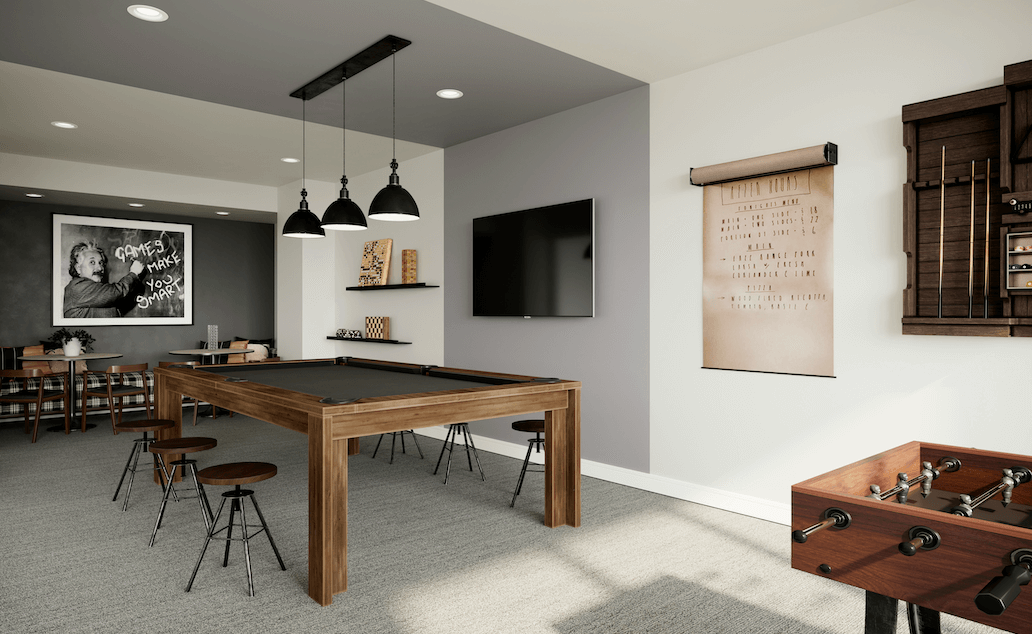
Recessed lighting is the workhorse of the man cave ceiling, and it earned the job by getting out of the way. The fixture body sits up in the ceiling cavity and only a trim ring is visible, so a room full of recessed cans reads as clean overhead light with no pendants to bump or clutter to clean. In a basement build it is usually the default choice for exactly that reason: basement ceilings are already tight, and a can light steals almost none of the height that a hanging fixture would.
The numbers explain why they took over. The US Department of Energy counted roughly 435 million recessed lighting fixtures in American homes, and almost all of the new ones are LED. A 4 inch LED downlight puts out 700 to 800 lumens, a 6 inch version clears 900, and both run at a fraction of the wattage of the incandescent bulbs they replaced. Color temperature is now selectable at the fixture, typically 2700K to 5000K, so the same can can glow warm over a bar and cool over a workbench. Retrofit kits drop into existing housings in minutes, which is why recessed lighting is the cheapest light upgrade most rooms ever get.
The catch is that a can light is only as safe as its housing rating. The two letters that matter are IC, which stands for insulation contact. An IC-rated housing is built to sit directly against insulation, and in an insulated ceiling you generally want every fixture to be IC-rated and labeled airtight, with an air leakage rate of no more than 2.0 cfm when tested under ASTM E283. A non-IC housing must stay clear of insulation, the National Electrical Code’s 410.116(B) requires at least 3 inches of clearance around a non-IC fixture, which means a ring of exposed ceiling where heat and cold bleed through.
Recessed lighting is not a single product, and that trips up first-time buyers. The housing, the trim, and the lamp or module are three separate decisions, and a retrofit LED wafer is a different animal from a full can with a screw-in bulb. It is also not a fixture for every ceiling. A 7 foot basement ceiling handles a flush can fine, but a cathedral ceiling or a tray ceiling often looks better with a pendant or a track light, and mixing recessed cans with accent lighting beats running the whole room off one row of cans.
How to lay out and choose recessed lighting
The layout math is simpler than the fixture jargon. For general room lighting, space 4 inch cans about 4 to 6 feet apart, and 6 inch cans 5 to 7 feet apart, with the first row about 3 feet off the walls. A 12 by 16 foot man cave takes six to eight 4 inch cans for even ambient light. Bump the count over a bar or a pool table, where task light matters, and dim the edges of the room so it does not feel like a warehouse.
Fixture choice breaks into three groups. Full housings with screw-in LED bulbs are the traditional route, and the housing size, 4 inch or 6 inch, sets how much light the trim can throw. Retrofit wafer kits are the modern shortcut, thin LED modules that mount directly to the drywall and fit anywhere. Gimbal and adjustable trims aim light at a wall, which is how you turn a row of cans into wall-washing for art or a display case. All three should be labeled IC if they will touch insulation, and if they sit under an attic or an unconditioned space, they need to be airtight and sealed to the ceiling.
Recessed lighting vs. can lights and surface fixtures
People use recessed lighting and can lights as synonyms, and in most rooms they are the same thing. A can light is the cylinder housing that recessed fixtures live in, and you cannot buy one without the other. The distinction that matters is recessed versus surface-mounted. A surface-mounted fixture, a dome light or a flush-mount LED panel, hangs below the ceiling and needs no ceiling cavity at all, which makes it the right answer when there is no room above the drywall to recess into.
The bigger comparison is recessed versus pendant lighting. Recessed cans spread ambient light evenly and disappear, while a pendant becomes a visual anchor and throws a pool of task light exactly where it hangs, above a bar or a poker table. A well-lit man cave uses both: recessed cans for the general layer, a pendant or two over the bar, and dimmers on everything so the room can drop to movie levels.
Where recessed lighting came from
Recessed lighting has its roots in commercial and theater lighting of the 1930s, when architects wanted bright light without the glare of exposed bulbs. The fixtures worked their way into residential construction through the 1950s and 1960s, and by the 1970s a “can light” was a standard line on any electrician’s estimate. The older fixtures were incandescent and famously hot, which is where the safety rules came from: a hot bulb buried against insulation is a fire hazard, so the IC rating was created to certify housings that could safely touch it.
The game changed with the 2010s LED wave. Cans that used to eat 65 watts now draw 9 to 12 watts for the same light, color became adjustable, and the airtight ratings that energy codes demanded turned the humble can into an energy-code workhorse. LED retrofits are why recessed lighting survives in an era where every other fixture style comes and goes with the trends.
Common mistakes
First, buying non-IC fixtures for an insulated ceiling. If the ceiling above the room has fiberglass or foam, a non-IC can needs that 3 inch clearance ring, and most people do not leave it. The result is a hot fixture buried against insulation, a code violation on inspection, and wasted heat. Check the housing label before install, and when in doubt buy IC.
Second, spacing cans by eye instead of by the layout rule. Too few cans leaves dark pools between them, too many turns the room into a showroom. Measure the room, divide by the 4 to 6 foot spacing, and dim rather than over-build, a dimmer on fewer cans beats an un-dimmable sea of lights.
Third, skipping the dimmer and the switch location. Dimmable LED cans are the difference between a utility room and a theater at night, and every row of cans should ride on a dimmer with a second switch at the door. Also seal the fixture to the drywall with a gasket or caulk, because air leakage around the housing quietly undoes your insulation work.
Frequently asked questions
What is the difference between IC and non-IC recessed lighting?
IC stands for insulation contact. An IC-rated housing is certified to sit directly against insulation without overheating, which makes it the safe choice in insulated ceilings. A non-IC housing must stay at least 3 inches away from insulation, which means cutting insulation back around every fixture and leaving a thermal gap. If your recessed lights are going into a ceiling with insulation above, buy IC-rated fixtures and look for the airtight label.
How far apart should recessed lights be placed?
For general room lighting, space 4 inch cans about 4 to 6 feet apart and 6 inch cans 5 to 7 feet apart, with the first row roughly 3 feet from the walls. A 12 by 16 foot room typically takes six to eight 4 inch cans for even coverage. The spacing can tighten over a bar or pool table where task lighting matters, and the whole layout should ride on dimmers so you can adjust the mood instead of just the on-off switch.
Can recessed lighting touch insulation?
Only if the fixture is rated IC, which stands for insulation contact. IC-rated housings are tested and certified to sit directly against insulation safely, and they should also be labeled airtight to limit air leakage. Non-IC fixtures must stay at least 3 inches away from insulation under the National Electrical Code, so if your ceiling cavity is filled with fiberglass or foam, you need IC-rated fixtures or a serious clearance ring.
How many lumens do I need from recessed lighting?
A 4 inch LED downlight typically puts out 700 to 800 lumens, and a 6 inch fixture clears 900 lumens, which is plenty for ambient lighting in a man cave. For a 12 by 16 foot room, six to eight 4 inch fixtures deliver even general light, and you add task fixtures or aimable trims over a bar or pool table. Since LED cans are dimmable and draw only 9 to 12 watts, you can install a comfortable number and dim them down for movie night.
Can recessed lighting be installed in a low ceiling?
Yes, and that is one of its main advantages. A recessed can only needs a few inches of cavity above the ceiling, so a 7 foot basement ceiling handles it fine, while a pendant or hanging fixture would eat into headroom. If there is no cavity at all, use thin retrofit LED wafer kits that mount directly to the drywall. Just check that the fixture is IC-rated if insulation is present and that it is sealed to the ceiling to prevent air leakage.
Related terms
Can Light
A recessed ceiling light consisting of a housing, trim, and bulb or LED module, mounted flush with the ceiling to provide directional or ambient light without occupying visual space.
LightingDimmer Switch
A wall-mounted control that lowers light output by chopping the AC power wave, with wiring and load ratings that differ for incandescent, halogen, and LED bulbs.
LightingColor Temperature (Kelvin)
A measure of a light source's color appearance, from warm amber at 2700K to cool blue-white at 6500K. The Kelvin number on every bulb box decides whether a room reads as pub, workshop, or hospital.
LightingAmbient Lighting
The base layer of light in a room: broad, diffuse output from ceiling fixtures, cove runs or wall washers that makes the space usable before task and accent lighting go anywhere near it.
LightingAccent Lighting
The directional third lighting layer, aimed at one object or surface at roughly three to five times the surrounding light so it reads as the focal point.
LightingTrack Lighting
An energised ceiling rail whose heads slide anywhere along it and aim independently, so a bar back or display wall can be relit without new wiring or a patched ceiling.
LightingPendant Light
Single-bulb fixture that hangs from the ceiling on a cord, chain, or rod to throw focused light on a spot below. Hang the shade bottom 30 to 36 inches above a bar counter.
LightingSpotlight
A small, aimable fixture that gathers light into a narrow cone to highlight one object, whether recessed in a ceiling or mounted on a track; accent beams typically run 15, 25, or 40 degrees.