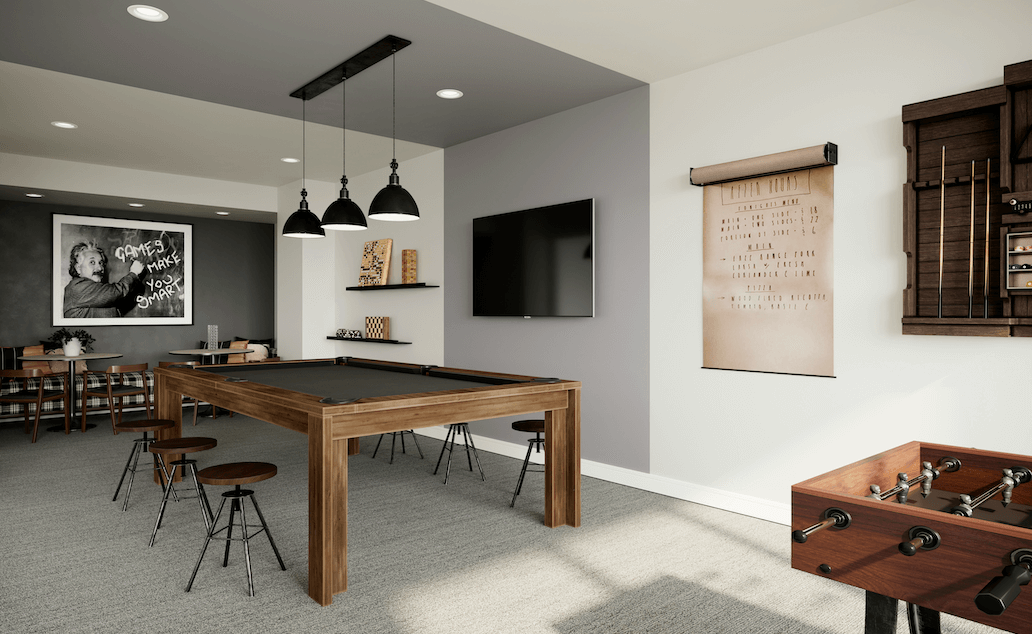
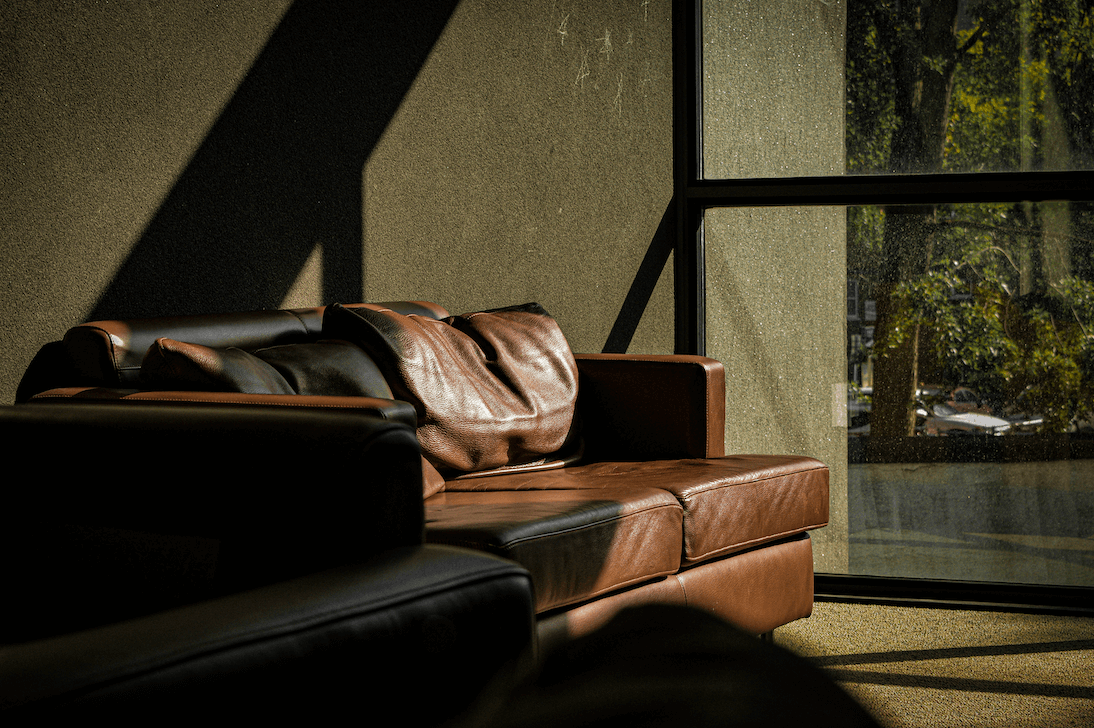
Turning an existing bedroom or unused room into a theater, game room, or bar without adding square footage, far lighter than a basement or garage project because the envelope already exists.
A spare room conversion turns an existing bedroom, office, or guest room into the room you actually want, a theater, game room, bar, or gym, without moving a wall or adding square footage. Because the envelope is already there, the work is mostly finish: flooring, lighting, paint, electrical, wiring, storage, and soundproofing laid over bones that already exist. That single fact is why it costs a fraction of a basement or garage project, which have to solve moisture, insulation, and heating before a single surface gets touched. The budget math is the headline. Converting an existing bedroom into a hobby or media room typically runs $5,000 to $30,000 all in, against $250 to $500 per square foot for a home-office addition in a high-cost area. You already own the walls, ceiling, door, window, HVAC, and insulation, so the money goes to what you can see and hear. For a cave on a realistic timeline, the spare room is usually the fastest path from an empty house to a finished space, and it is the reason most room-conversion guides list it as the budget entry point. A spare room conversion is not a remodel, and it is not an addition. It does not tear down load-bearing walls, dig a foundation, or move plumbing. When a contractor says convert the spare room, they mean finish the room that exists, not rebuild the house around it, and holding that boundary keeps the scope, the timeline, and the invoice sane.
What a conversion actually changes
The electrical plan is where most conversions are won or lost. A big-screen room or media room needs at least one dedicated circuit rated 20 amps and 120 volts on 12 AWG copper, and most complete builds want two or three, so the AV gear does not trip the bedroom's old shared breaker on the third movie. One 20 amp circuit at the 80 percent duty rule delivers about 1,900 watts of continuous load, which is less than a full rack of amps and a projector happily share. New circuits fall under the National Electrical Code as adopted by the local jurisdiction, and most areas require a permit and an inspection, so check the building department before you hire the electrician. Lighting, flooring, and paint do the visible work. Swap the single overhead fixture for layered lighting, add a switched outlet for lamps, and replace carpet or builder-grade vinyl with something that suits the new use, luxury vinyl plank for a wet bar zone or a plush carpet for a theater. Soundproofing is the detail owners most often regret skipping, because the spare room usually shares a wall with a bedroom or the kitchen, and a subwoofer on a party wall is a marriage tax. Storage goes in against the walls the layout says are dead. On the low end, the whole job lands around $5,000; a fully soundproofed, hardwired, built-in room approaches $30,000. Sound carries beyond the shared wall too. If the room sits above a garage or below a bedroom, the floor and ceiling deserve the same mass-and-decoupling treatment as the walls, and a closet packed with equipment absorbs more noise than a bare wall ever will. Plan the room's services, circuits, network drops, and light zones as one package before the drywall goes back up, because retrofitting after the paint dries costs triple the labor and double the mess.
Spare room conversion vs. basement or garage conversion
The one-line distinction: the spare room starts finished, while a basement or garage starts as a problem. A basement conversion begins with moisture and radon testing, sump pumps, below-grade waterproofing, and ducting for heat, none of which a spare room needs because its walls, egress window, and HVAC already exist. That is why a spare room conversion is cheaper and faster than the equivalent square footage downstairs. A garage is the opposite in kind: it needs insulation, climate control, a floor treatment, and usually a door swap to feel like a room at all. The trade-offs cut the other way too. A basement or garage offers more square footage and better sound isolation from the living areas, which is why a serious theater or a band room still points there. A garage conversion is often quoted at $18 to $50 per square foot for a standard two-car space, and a full below-grade build runs higher. The spare room wins on cost, speed, and simplicity, and loses on size and isolation, so the honest choice depends on what the room is for.
Where the term came from
Spare room conversion is descriptive trade language, not a coined term, and no one filed a trademark on it. Contractors and real-estate professionals have used it for decades to mean finishing an existing room for a new purpose, and it appears in every remodeling guide because the economics are so predictable. The phrase gained weight as hobby rooms multiplied: a spare bedroom became a home office, then a theater, then a gaming room, and the conversion became a category of its own. The economics have only widened the appeal. With home offices, theaters, and game rooms all competing for the same square footage, the spare room became the default answer because it costs the least and risks the least, and contractors learned to quote the job as a category rather than an open-ended remodel. The term carries no legal definition, which is a feature, because it stays flexible enough to cover a $5,000 paint-and-lights refresh and a $30,000 soundproofed theater under the same heading.
Common mistakes
The first mistake is skipping the dedicated circuits, then tripping a breaker on movie night. At minimum run one 20 amp, 120 volt circuit on 12 AWG for the AV stack, and budget for a second or third in a complete build. Cheap insurance, and the electrician is already on site. The second is cutting the room's identity as a bedroom. Real-estate guidance is blunt: bedroom count drives search results and value, and an extra bedroom can add roughly 15 to 20 percent in some markets, so converting the last spare bedroom into a media room can hurt a future sale. The fix is knowing the plan, and converting the room back to a bedroom before listing, which is a weekend of furniture moving rather than a remodel. The third is treating it like a coat of paint. A room with a shared wall, no insulation work, and builder-grade lighting will feel like a bedroom with a TV in it, so spend on the soundproofing, the circuits, and the light layers that change how the room performs, not just how it looks. And before any of it, check the permit rules, because electrical work without the local sign-off can surface as a liability at inspection time. The resale impact of every choice, the circuits, the closet, the bedroom count, is worth writing down before the first wall gets painted.
Frequently asked questions
What is a spare room conversion?
A spare room conversion is turning an existing bedroom or unused room into a different kind of space, such as a home theater, game room, bar, or gym, without adding square footage. Because the walls, ceiling, door, window, insulation, and HVAC already exist, the work is mostly finish: flooring, paint, lighting, electrical, wiring, storage, and soundproofing. It is the cheapest and fastest way to add a dedicated hobby room, because you are finishing what is already there rather than building new.
How much does it cost to convert a spare room?
Converting an existing bedroom into a hobby or media room typically costs $5,000 to $30,000 all in. The wide range reflects how much you change: new floors, lighting, and paint on the low end, and dedicated electrical circuits, built-in storage, and soundproofing on the high end. By comparison, building a dedicated media room in unfinished space runs roughly $50 to $250 per square foot, and home additions cost far more. A spare room conversion is usually the budget path.
Spare room conversion vs. basement conversion: which is cheaper?
A spare room conversion is usually cheaper and faster. A basement starts with potential problems a spare room never has: moisture, radon, sump pumps, and below-grade waterproofing, plus ducting for heat. A spare room arrives with finished walls, an egress window, and existing HVAC, so the budget goes to finishes instead of fixing the space itself. A basement offers more square footage and better sound isolation, but a spare room wins on cost, speed, and simplicity.
Do you need a permit to convert a spare room?
Usually yes, depending on what you change. Adding or moving electrical circuits is the most common trigger, since new circuits must comply with local codes that follow the National Electrical Code, and most jurisdictions require an electrical permit. If you change the room's use, such as adding a bathroom or altering structure, other permits apply. Because requirements vary by city, check with your local building department before you start, and budget time for the inspection.
Will converting a spare room hurt your home's resale value?
It can, if you eliminate the room's identity as a bedroom. Real-estate guidance is that bedroom count drives search results and perceived value, so converting the last spare bedroom into a media room can hurt, while keeping the required number of bedrooms protects you. An extra bedroom can add roughly 15 to 20 percent to value in some markets. The common fix is simple: convert the room back to a bedroom before selling.
Related terms
Garage Conversion
A garage conversion turns a garage's concrete slab and bare shell into finished living space, typically a game room, home bar, or theater, with insulation, HVAC, flooring, and code-legal wiring.
Room Types & SpacesMedia Room
Multi-purpose room built around a large TV and sound system for movies, sports, and gaming. Keeps daylight and flexible seating; typical installs run about $8,000 to $30,000.
Building & ConstructionDedicated Circuit
A branch circuit wired to power only one outlet or appliance, with a breaker sized to that single load and nothing else sharing the line.
Comfort & ClimateSoundproofing (MLV / Green Glue / Resilient Channel / Double Drywall)
Construction that stops sound crossing a partition, using mass, damping, and decoupling: mass loaded vinyl, Green Glue, resilient channel, and extra drywall to lift a wall's STC rating.
Planning & BudgetResale Value Impact
What a man cave build does to the price of your home at sale time. Finished basements typically recoup 70% to 75% of cost; overpersonalized or unpermitted work can drag that down.
Room Types & SpacesHome Theater
A dedicated room with a large screen, surround sound, controlled lighting and tiered seating built for an immersive cinema experience. Room dimensions and viewing angles follow THX or SMPTE standards.