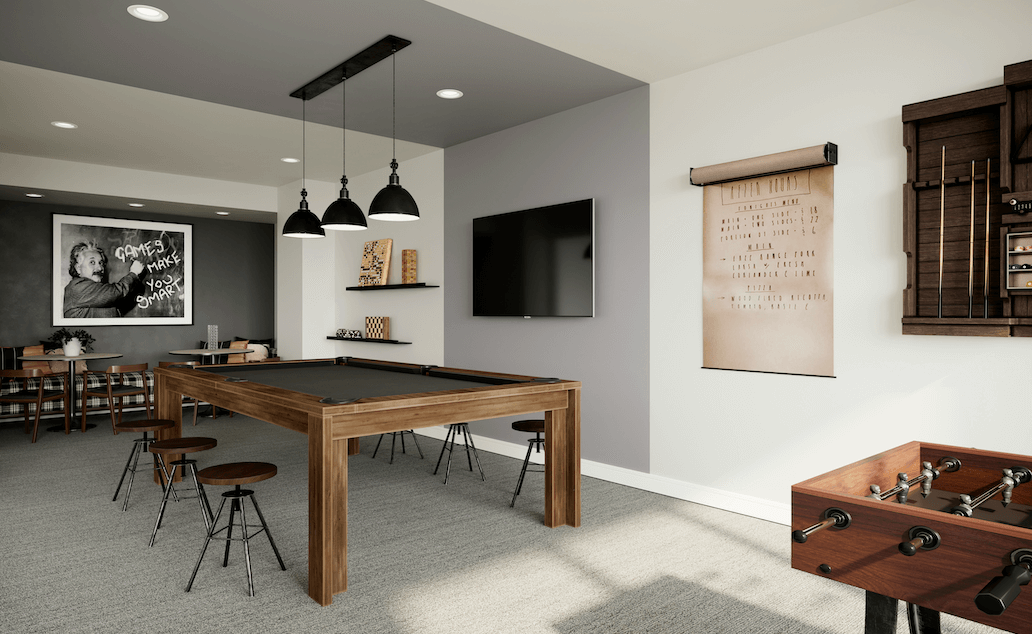
Shared, real-time viewing of a show, movie or game, either in one room or synchronized remotely across viewers’ own devices with a text or video chat layer.
Also known as: Co-Watching
A watch party is a shared viewing session of a show, a movie or a live game, and the phrase covers two formats that both answer to the name. The older one is the physical gathering, where a group sits in the same room, on the same sofa or spread across a home theater, and watches the same screen at the same time. The newer one is remote: everyone stays at their own place but presses play together, and a browser extension or an app keeps each viewer’s playback in lockstep while a text or video chat carries the commentary. A man cave is native territory for the physical version, because the whole room exists to hold people around a screen, but the remote version is how that same room keeps its crowd together when the group cannot fit or cannot travel.
The pandemic turned the remote form from a niche hobby into a mainstream habit almost overnight. The Diffusion Group, reported through Viaccess-Orca in April 2021, found that one in seven U.S. adult subscription-video users had co-watched an online show or film with friends or family during the pandemic, and that roughly 25 million U.S. adults watched synchronized on-demand video with people outside their own household in 2020. Eighteen-to-twenty-four-year-olds were the age group most likely to have co-watched, and 54 percent of people who had never tried it said they were open to it. The payoff for a man cave owner is that a good screen, comfortable theater seating and a proper media room no longer serve only the people who fit inside; they make the room the host of an event that reaches beyond its walls.
A watch party is not a movie marathon, even though the two often share a screen and a crowd. A marathon is a programming decision, a run of related films played back to back, while a watch party is a social format wrapped around a single program. It is also not one thing with one rulebook, because the in-person gathering and the remote synchronized session behave completely differently, and the confusion between those two senses is exactly what this entry exists to untangle.
How a watch party stays in sync, platform by platform
Co-viewing works because one person hosts and everyone else follows. The host controls playback, and the service broadcasts play, pause and position events to every participant, so a pause for a beer refill on the host’s couch pauses the show in every living room at once. Latency still creeps in over ordinary connections, which is why most tools include a manual re-sync button that nudges a lagging viewer back to the group position.
Each platform draws the line differently. Hulu Watch Party, launched in June 2020, requires an ad-free Hulu plan, runs only in a desktop browser and offers text chat with a manual re-sync button. Amazon Prime Video Watch Party arrived around the same time, is browser-only and not compatible with Safari, works only on titles inside the Prime Video catalog rather than purchased or rented ones, and lets the host invite up to 100 friends via a link, with every guest needing their own Prime membership. Disney+ GroupWatch shipped in September 2020 and was designed to keep playback locked in sync across the group instead of leaving each viewer on their own pace, and it lives inside the app with no extension required. Plex Watch Together takes a different route, syncing playback of content from a personal Plex server across phone, TV and console apps, with no built-in chat, which is why Plex users pair it with Discord or Zoom. The notable holdouts are Netflix and HBO Max, which never shipped a first-party group feature, so their viewers rely on third-party extensions instead.
A remote watch party versus an in-person gathering
The one-line distinction: a remote watch party splits the audience across screens, while an in-person gathering puts everyone in the same room on the same display. Everything else follows from that. In person, the sound comes out of the home theater and the jokes land in real time, but the room caps the crowd at the number of seats and every guest has to travel there. Remote, the only cap is the invite list, and the trade is that audio is only as good as each guest’s own setup while the conversation arrives over a small lag.
For a man cave the two formats complement rather than compete. A room built around a home theater and proper seating carries the in-person nights, and a laptop or tablet standing in for a guest carries the remote nights when the group is scattered across cities. The real mistake is designing for one and ignoring the other, so a sensible build keeps fixed seating for the people in the room and a spare HDMI port or a tablet ready for whoever can only join by screen.
Where the term came from
The in-person meaning is the older one, probably as old as gathering people around a screen in the first place, and no dated first use survives to cite, so this entry will not invent one. The remote meaning has a documented timeline. Teleparty, which began life as the browser extension Netflix Party and later grew to cover Netflix, YouTube, Disney+, HBO Max, Hulu and Prime Video, and Scener, a Chrome extension that adds video and text chat, both arrived around 2018 as the first dedicated co-watching services. Instagram shipped its own co-watching features in March 2020, which observers credit with kicking off the mainstream wave, and the major streamers followed through that summer: Hulu in June, Prime Video around mid-2020, Disney+ in September, with Twitch Watch Parties moving out of an October 2019 beta and opening to all U.S. Prime creators in early May 2020. The remote sense of the word entered common use inside that same 2020 window, which is why the two meanings of the term sit at such different ages.
Common mistakes
Assuming the built-in feature exists on every platform is the first. Netflix and HBO Max never shipped one, so a group that plans a watch party there without checking will be hunting for an extension at start time. Confirm the tool before you send the invite, and read whether it is browser-only or works inside the app.
Forgetting that every guest needs the same subscription is the second. Prime Video Watch Party requires everyone to hold Prime, Hulu Watch Party requires an ad-free Hulu plan, and several browser-based features will not run in Safari. Put the requirements in the invite text so nobody shows up on a platform that locks them out.
Relying on a laggy third-party sync for a live event is the third. Extensions ride on the host’s player and drift on slow connections, and the manual re-sync button exists precisely because drift is normal, so budget a moment before the big play to re-align the group. The physical version has its own failure modes: host a crowd in a room sized for four and the seating will not stretch, so check seat count and sightlines before guests arrive, and treat a high-tech home theater blueprint as the plan a real event is built on.
Frequently asked questions
What is a watch party?
A watch party is a shared, real-time viewing session of a show, movie or game. In the older sense it is a physical gathering, where a group watches one screen in the same room. In the modern, pandemic-era sense it is remote, where each viewer presses play together from their own device and a service keeps playback in sync while a text or video chat carries the commentary. Both formats answer to the same name, but they behave very differently.
What is the difference between a remote watch party and an in-person gathering?
A remote watch party splits the audience across separate screens, while an in-person gathering puts everyone in the same room on the same display. In person, the room’s audio and seating set the experience and the crowd is capped by the number of seats. Remote, the cap is the invite list, but the sound quality depends on each guest’s own setup and the conversation arrives over a small delay. For a man cave the two work best as complements: the installed screen handles the in-person nights and a laptop or tablet handles the remote ones.
How do I set up a watch party?
Pick the platform first, because each one has its own rules. On Disney+ use the built-in GroupWatch, on Hulu use Watch Party in a desktop browser with an ad-free plan, and on Prime Video use Watch Party with every guest signed in to their own Prime account. On Netflix or HBO Max there is no built-in feature, so install the Teleparty extension for synchronized playback with text chat. Invite everyone with the link, have one host control playback, and use the re-sync button if anyone’s player drifts.
Does a watch party cost anything?
The platform features are free on top of your existing subscription. Hulu Watch Party, Prime Video Watch Party, Disney+ GroupWatch and Plex Watch Together charge nothing extra, though each still requires the relevant plan, and Prime Video Watch Party needs every guest to hold their own Prime membership. The third-party tools are free as well: Teleparty runs on donations and Patreon support, and Scener is free to use. TwoSeven charged around three dollars a month on Patreon for its Hulu and Disney+ tier.
Can I run a watch party on any streaming service?
No. Netflix and HBO Max never shipped a first-party group-watching feature, so viewers there have to install an extension such as Teleparty or Scener. Several built-in features are also restricted: Hulu Watch Party requires an ad-free plan and works only in a browser, Prime Video Watch Party works only on Prime Video’s streaming catalog rather than purchased titles and is not compatible with Safari, and Twitch watch parties once required a Prime membership to host. Check the specific service’s rules before you plan the evening.
Related terms
Movie Marathon
Extended viewing session of multiple films back to back, often around a franchise, director, or genre. Descendant of the 1930s double feature; predates streaming binge-watching.
Lifestyle & CultureGame Night
A recurring get-together, often weekly or monthly, that turns a table into the main event: board games, card games, or party games instead of sports or drinks as the draw.
Room Types & SpacesHome Theater
A dedicated room with a large screen, surround sound, controlled lighting and tiered seating built for an immersive cinema experience. Room dimensions and viewing angles follow THX or SMPTE standards.
Room Types & SpacesMedia Room
Multi-purpose room built around a large TV and sound system for movies, sports, and gaming. Keeps daylight and flexible seating; typical installs run about $8,000 to $30,000.
Furniture & SeatingTheater Seating
Purpose-built home cinema recliners arranged in rows facing one screen, matched in height and often set on a riser so every seat holds the same sightline.
Lifestyle & CultureTheme Night
A recurring hosted evening with a fixed slot and a consistent group: poker on the first Friday, a monthly board game rotation, a fight card whenever the pay-per-view lands.
Miscellaneous / AccessoriesPopcorn Machine
Glass-front kettle popper that cooks corn in oil behind tempered glass, with a warming deck and interior light. Home kettles run 4 to 8 ounces, and Charles Cretors invented the first machine in 1893.