A recurring get-together, often weekly or monthly, that turns a table into the main event: board games, card games, or party games instead of sports or drinks as the draw.
Also known as: Board Game Night
Game night turns an ordinary weeknight or Sunday afternoon into a standing appointment for board games, card games, or party games with the same rotating group of friends, family, or neighbors. It happens around a dedicated card table or a dining table cleared off for the occasion, snacks within reach, phones stacked face down somewhere nobody has to look at them. Some groups run it weekly on a fixed night, others every other Sunday, and the exact schedule matters less than the habit itself. A group that keeps the same night on the calendar tends to outlast one that reschedules by text every single week.
Getting the room right decides whether the habit sticks. A cramped card table, dim overhead light, and a closet full of half-broken boxes turn a fun evening into a chore nobody wants to host twice, and hosting duties usually collapse onto whoever has the least excuse to say no. The hobby behind it has grown well past a niche: tabletop projects pulled in roughly $220 million on Kickstarter in 2024 alone, across more than 6,600 campaigns, and that funding has fed a steady stream of new games into ordinary living rooms. A group that treats the room as a real setup, not a folding table dragged out of the garage, keeps its game night running for years instead of months.
Game night is not poker night, even though both revolve around a table and a rotating guest list. Poker night centers on one game, real or informal stakes, and a format that barely changes week to week. Game night rotates through whatever is on the shelf: a party game to open, something heavier once everyone has a drink in hand, maybe a quick card game to close. It is also not a fantasy sports draft, which is a single annual event built around a spreadsheet rather than a recurring social habit. The overlap is the table and the company, not the format.
Setting up a room for game night
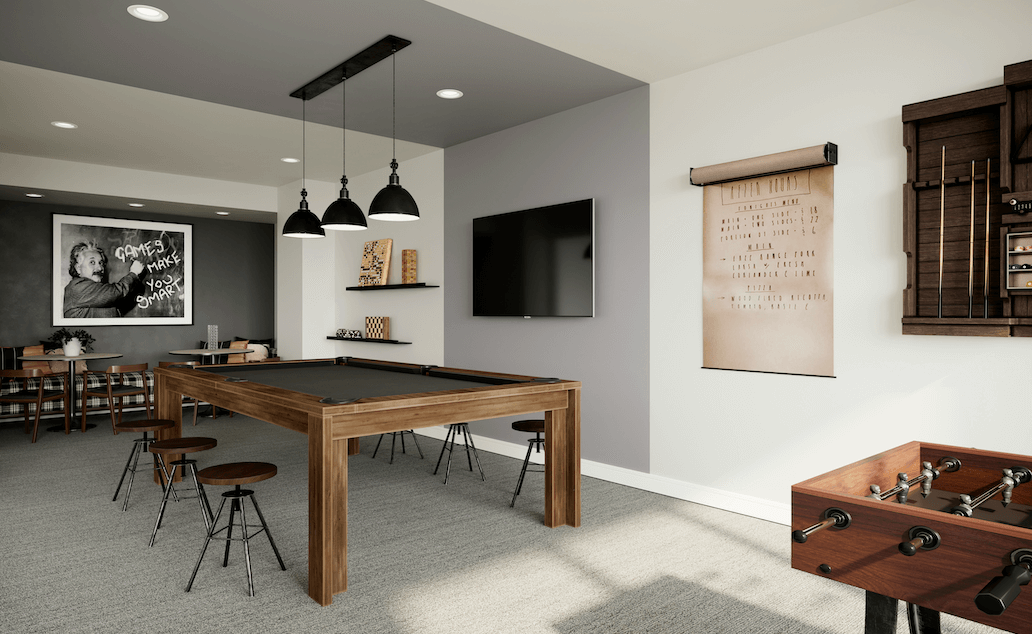
The table drives everything else. A rectangular table in the four-to-six-foot range seats six to eight players comfortably for most retail board games, while a round or square table under four feet starts to crowd once a game board and everyone's snacks and drinks land on it. Card games and party games tolerate a smaller footprint; anything with a large board, expansion pieces, or a tile-laying map wants the longer table and elbow room on both sides.
Seating matters as much as the table. Dining chairs with arms bump the table edge and box people out of reach of the board, so armless chairs or a bench along one side tend to work better for a full table of six. Lighting needs to be even and bright rather than moody: a single pendant over the center of the table throws hard shadows across cards held close to the chest, while overhead ambient light plus a lamp or two in the corners keeps small text and card icons readable without anyone squinting.
Storage is the part hosts skip and regret. A board game shelf or open cube unit within reach of the table means the next game is a thirty-second pull instead of a ten-minute dig through a closet, and it keeps boxes square instead of crushed under the weight of whatever got stacked on top. Furniture built for the purpose, from game tables to arcade cabinets, solves the table and storage problem in one purchase for a room that hosts regularly.
Party games vs. strategy and hobby games
The two ends of the shelf serve different nights. Party games such as Codenames (2015) or Cards Against Humanity (2011) explain in under five minutes, scale up to eight or more players, and finish in fifteen to ninety minutes, which makes them the right opener while people are still arriving and pouring drinks. Strategy and hobby games such as Catan (1995) or Ticket to Ride (2004) run sixty to ninety minutes, reward a group that already knows the rules, and reward replaying more than they reward a first look.
BoardGameGeek's community rates games on a weight scale from 1 to 5, where each full point roughly doubles the mental load of tracking rules and options. A weight-1 party game asks almost nothing of a new player; a weight-4 Eurogame asks for real attention and usually loses newcomers who wandered in expecting Codenames. Mixing both types across a single night, light to open and heavier once the group settles in, gets more out of a table of mixed experience than committing to one register all evening.
Where board game night came from
The current wave traces back to Klaus Teuber's Catan, first published in Germany in 1995 by Kosmos and brought to English-language shelves by Mayfair Games in 1996. It won Germany's Spiel des Jahres the year it launched and is widely credited as the first Eurogame to build a real following outside Europe, opening American living rooms to a style of play built on trading and indirect competition rather than player elimination. Catan has since sold more than 45 million copies worldwide.
BoardGameGeek, founded on January 22, 2000, gave the hobby a shared catalog and rating system that turned word of mouth into searchable data. Kickstarter did the rest on the publishing side, funding thousands of new tabletop titles a year that never would have found a traditional distributor. The board game cafe followed a similar arc: Snakes & Lattes opened in Toronto in 2010 pairing a game library with table service, a format that has since spread across North American cities and become its own small industry.
Common mistakes
Picking the wrong table for the group is the most common one. A four-person card table works fine for two couples and Codenames, then falls apart the night six people show up for Catan and someone ends up balancing a rulebook on their knees. Match the table to the largest group that regularly attends, not the smallest.
Lighting that looks good but plays badly is a close second. A single dim pendant sets a nice mood for a dinner party and makes it impossible to read a card held at arm's length across the table. Layer in a floor lamp or two at table height so no seat is stuck reading in its own shadow.
Having no plan for where the games live is the third. Boxes stacked on a closet shelf get crushed, lose pieces, and eventually stop getting pulled out at all, so the same three games run every week while the rest of the collection gathers dust. A dedicated shelf or cabinet near the table fixes this cheaply and keeps the group choosing new games instead of defaulting to whatever is already sitting out.
Frequently asked questions
What is game night?
Game night is a recurring gathering built around board games, card games, or party games, usually hosted at someone's home on a set schedule such as weekly or every other week. It centers on a table rather than a screen or a bar, with hosting duties often rotating between houses. Groups mix quick party games for newcomers with heavier strategy games once everyone is settled in, and the games played matter less than the standing habit of getting the same people around a table on a regular night.
What is the difference between game night and poker night?
Poker night centers on a single game, usually with real or informal stakes, and follows a format that barely changes from week to week. Game night rotates through whatever is on the shelf: a party game to open, a heavier strategy game once the group settles in, maybe a card game to close. Both revolve around a table and a recurring guest list, but poker night is a single-game ritual while game night is built around variety.
What size table do I need for game night?
A rectangular table in the four to six foot range comfortably seats six to eight players for most retail board games, with room left over for drinks and snacks. Smaller card games and party games tolerate a tighter table, but anything with a large board or expansion pieces needs the longer footprint and elbow room on both sides. A table that is too small forces players to hold cards awkwardly and crowds the board, which is one of the fastest ways to shorten a session.
How do you start a regular game night?
Pick a recurring slot, such as the first Sunday of the month, and stick to it rather than rescheduling by group chat every time. Rotate hosting so no one house carries the setup and cleanup every week, and keep two or three easy party games on hand for nights when the group is smaller or newer players show up. A dedicated shelf or bin for the games being played keeps setup to a few minutes instead of a search through a closet.
Do you need expensive games to run a good game night?
No. A handful of inexpensive party games such as Codenames or a deck of cards covers most nights, and the hobby's growth has pushed prices down as more publishers compete for shelf space. Heavier strategy games cost more and reward repeated play, but they are optional additions rather than a requirement. The table, the lighting, and a group that shows up consistently matter more to a good game night than the size of the game collection.
Related terms
Card Table
A square, round, or octagonal table with a padded felt surface and raised rail, sized for 4 to 8 players, with built-in cup holders and chip trays for poker, bridge, and other card games.
Entertainment & GamesBoard Game Shelf
Storage shelving deep enough to hold standard 12-inch board game boxes vertically, keeping a collection visible and safe from the damage of stacking boxes flat.
Lifestyle & CulturePoker Night
Recurring home gathering built around a card table, chips, and fixed stakes, usually Texas Hold’em. A 300 chip set covers six players; a 500 chip set handles a full table of eight or nine.
Lifestyle & CultureFantasy Sports Draft
A live snake or auction event, usually hosted at home, where fantasy football owners draft real NFL players onto rosters before the season starts.
Room Types & SpacesGame Room
A room built around active games such as pool, foosball, darts, and arcade cabinets, sized and laid out for group play rather than solo retreat.
Entertainment & GamesArcade Cabinet
A standing coin-op video game housing: wood body, marquee, control panel, monitor and game board, wired since 1985 to the 56-pin JAMMA standard that made boards interchangeable.
Read more about Game Night

Best Wall-Mounted Foldaway Tables for Small Entertainment Spaces
Find space-saving wall-mounted foldaway tables to free floor space, streamline installation, and pick durable styles that upgrade your entertainment area.

Monte Carlo Casino Room Design Guide
Transform your game room with Monte Carlo-inspired layouts, furniture, and lighting. Get practical tips for a luxurious casino atmosphere without overspending.

Restore Leather & Distressed Seating: Clean, Condition, Repair
Learn how to clean, condition and smartly repair leather and distressed seating in your den. Extend lifespan and comfort with a simple seasonal care routine now.

Best Height-Adjustable Pub Tables for Your Home Bar
Compare height-adjustable pub tables for durability, stability, and footprint. Match materials, mechanisms, sizes, and stools to upgrade your home bar.

Signature Scents for Your At-Home Getaway: Set Mood & Trigger Memories
Create a signature scent for your at-home getaway. Learn simple blends, placement tips, and what works (and what doesn't) to trigger memories and set the mood.

Top Bottle Openers & Bar Essentials for Your At-Home Getaway
Wall openers, handhelds and the bar tools worth owning. Honest picks, mounting that survives real use, and the cap catcher detail nobody mentions.

Best Coffee Tables for Your Man Lounge
Find bold, durable coffee tables that add storage, function and style to your man lounge. Top picks for quality builds that upgrade game nights and daily use.

The Ultimate Air Filtration Guide: HEPA, ERV & Carbon Filters
Plan and budget for a high-quality air filtration system. Understand HEPA, ERV, carbon filters, and how to hire the right HVAC pro for your perfect space.

How to Add Code-Compliant Egress to Your Home Hideout
Avoid costly code violations with this guide to egress rules for windows and doors in your home hideout. Plus retrofit tips for safety and compliance.