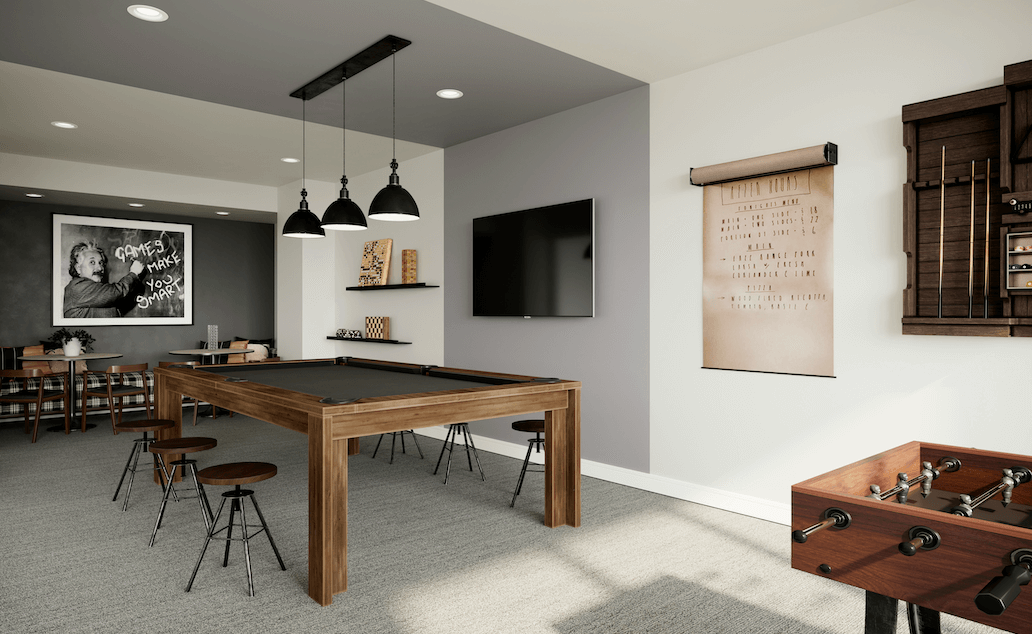
Gathering where players bring their own PCs, link them over a local network switch, and play multiplayer games together in one room. The ritual peaked in the 2000s and still runs in garage man caves.
A LAN party is a gathering where everyone drags a tower, monitor, keyboard, and mouse into one room, plugs each machine into a network switch, and plays multiplayer games on a private network instead of the internet. The switch does the real work: it connects the computers directly to one another, so a game’s data crosses a couple of meters of cable instead of being routed across the country and back. In a man cave the scene means a folding table set up in the middle of the room, a long extension cord, and a crew of friends who turned up carrying their rigs like they were hauling camping gear.
The reason anyone bothers is latency. On a local network, a packet crosses the switch in under a millisecond, and the round trip to the game keeps its delay in the low single digits of milliseconds. Over the internet, that same trip runs 20 to 100 milliseconds or more depending on distance, routing, and connection quality. For a shooter or a fighting game, that gap is the difference between reacting to something and predicting it, which is why a match on a LAN feels tighter than the same game played online even with modern broadband, and why the old hands still describe the local game as the one that felt real.
A LAN party is not an esports event, and it is not a streaming setup. Most home events run with no prize pool, no broadcast, and no audience beyond the people in the room. It is also not the same as playing online with friends, because the point is the physical co-presence: the trash talk across the table, the visible reactions, the friend leaning over to watch your kill feed. It is a social ritual that happens to need a network, and the network is the easy part.
What a good LAN night actually needs
The practical work is power and networking, in that order. Every machine needs an Ethernet port or a USB adapter, and an eight port gigabit switch costs $20 to $40, but the room is where events die. A gaming desktop draws roughly 200 to 600 watts under load, so a party of eight can pull more than 2 kilowatts from a single circuit, which sits right at the limit of a typical 15 amp breaker. Spread the rigs across two circuits, or run the event on a dedicated circuit if the room has one, and bring spare cables, because the cable is the part everyone forgets at home.
Game choice decides the night. Titles that support local multiplayer without online servers are the safe picks, because a dead internet connection then costs you nothing. Co-op shooters, arena classics, and party games all fit the format, while anything that insists on phoning home to a matchmaking server is a risk if the connection drops. Set a bracket for the crowd favorites, run it single elimination, and let the loser rotate out of the machine rather than out of the room. That keeps every seat busy and gives the night a shape instead of a free-for-all that fizzles by midnight.
Add one or two shared screens so the people waiting have something to watch, and treat the event like a party with a schedule rather than a marathon. Six to eight hours is a sensible ceiling, and past that, reflexes go and tempers follow.
LAN party vs. online multiplayer
Modern online play does everything a LAN does except the part that mattered most. Matchmaking finds opponents instantly, voice chat replaces the shouting across the room, and dedicated servers handle the routing. What it cannot replicate is the shared room: the visible reactions, the borrowed peripherals, and the fact that the game night occupies the same space as the drinks and the couch. The latency gap has also shrunk since broadband arrived, but it has not closed, and a fast online match still adds ten to fifty milliseconds that a player never feels on a local network.
The honest framing is that they serve different purposes. Online is the daily driver, and a LAN party is the event. Most people who still throw one do it for the same reason they host a poker night: the game is the excuse and the room is the point. If you want the ritual without the network fuss, the night still needs the switch, but it does not need the internet at all, and that is exactly the part that makes it feel like a deliberate act rather than a default one.
Where the LAN party came from
The LAN party’s ancestry runs back to the demoparty, a Northern European gathering where programmers showed off hand-coded graphics and music, and to MIDI Maze on the Atari ST, which in 1987 linked up to 16 computers over MIDI cables and gave home players their first networked deathmatch. Doom’s IPX multiplayer in 1993 turned the idea into a mainstream ritual, and QuakeCon, which started in 1996 in a Texas hotel room with about 40 people, gave it a name brand. The peak came in the early 2000s, when games demanded more bandwidth than the average home connection could deliver, so the only way to play them together was to sit in the same room.
The record books mark the high point. DreamHack’s Winter 2013 event in Sweden drew 22,810 visitors, with 8,714 of them bringing their own computers, and it still holds the Guinness record for the largest LAN party ever held. The scale collapsed after that as broadband caught up, but the form never died. It has come back in smaller, deliberate gatherings, often hosted by the same men who once dragged towers into basements, now in the garage caves and rec rooms they built as adults.
Common mistakes
Power before network is the first failure mode. New hosts buy the switch, then daisy-chain five power strips off one outlet and trip the breaker the moment everyone boots a game. Fix it by counting wattage and spreading rigs across circuits, or by planning the event around a dedicated circuit if the room has one.
Second is the wrong game list. A host loads a single title everyone sort of likes, and half the room ends up watching while the other half plays. Fix it with a rotating bracket or a menu of three games, so players rotate through matches instead of camping one queue.
Third is treating it like online play and assuming the internet is required. If a chosen game needs a server or a login, one router hiccup kills the night. Fix it by picking titles that run fully on the local network and by testing the whole setup together a day before the event. The night works best when the only dependencies are the switch, the power, and the people in the room, and every one of those is something you control before the guests arrive.
Frequently asked questions
What is a LAN party?
A LAN party is a gathering where players bring their own computers to one location, link them over a local network switch, and play multiplayer games together in the same room. The local connection keeps lag to a few milliseconds, far lower than online play, and the event becomes as much about the social side as the games. It peaked in the early 2000s but is still hosted regularly in homes and garages.
Why are LAN parties better than playing online?
The main advantage is latency. On a local network, a packet crosses a switch in under a millisecond and total delay stays in the low single digits, while online play adds 20 to 100 milliseconds or more. That makes shooters and fighting games feel tighter and more responsive. The second advantage is social: everyone is in one room, reactions are visible, and the night becomes an event instead of a session.
How much does it cost to host a LAN party?
A basic setup is cheap if guests bring their own machines. You need an Ethernet switch, around $20 to $40 for a good eight port gigabit model, plus cables, power strips, and extension cords. The bigger cost is power, since eight gaming desktops can draw over 2 kilowatts, so budget for running two circuits. If you provide the computers too, expect to spend more, but most events work on a bring your own rig basis.
What games are best for a LAN party?
Games that support local multiplayer without an online server are the safest choices, because they keep working if the internet drops. Arena shooters, co-op shooters, fighting games, and party classics all fit well. Pick three titles with different pacing and rotate a bracket so everyone gets to play. Avoid anything that depends on matchmaking or a login, since one router problem can end those matches.
Do I need internet for a LAN party?
No, a LAN party runs entirely on the local network, and many hosts prefer it that way. The switch connects the computers directly to each other, so all traffic between players stays on the room’s own network. Internet is only needed for downloads, patches, or games that insist on phoning home. Choosing games that run fully offline-local keeps the night safe from connection problems.
Related terms
Co-op Gaming
A video game mode where two or more players work together toward a shared goal on the same screen or local network. Couch co-op on a big screen turns a solo den into the social heart of the house.
Lifestyle & CulturePoker Night
Recurring home gathering built around a card table, chips, and fixed stakes, usually Texas Hold’em. A 300 chip set covers six players; a 500 chip set handles a full table of eight or nine.
Entertainment & GamesArcade Cabinet
A standing coin-op video game housing: wood body, marquee, control panel, monitor and game board, wired since 1985 to the 56-pin JAMMA standard that made boards interchangeable.
Lifestyle & CultureRetro Gaming
Playing games on the consoles, cartridges, and CRT displays of the 1980s and 1990s, on original hardware or faithful emulation. A hobby, a preservation movement, and a market now worth billions.
Lifestyle & CultureGame Night
A recurring get-together, often weekly or monthly, that turns a table into the main event: board games, card games, or party games instead of sports or drinks as the draw.
Lifestyle & CultureWatch Party
Shared, real-time viewing of a show, movie or game, either in one room or synchronized remotely across viewers’ own devices with a text or video chat layer.
Furniture & SeatingGaming Desk
A worktop sized and reinforced for multi-monitor rigs, sim-racing gear, and daily gaming sessions, with cable routing and often push-button height adjustment built in.
Sim Racing & Gaming TechSim Racing Rig
The rigid frame that holds a wheel base, pedals, and seat in a fixed driving position, usually aluminum profile or tubular steel, replacing a wobbly desk clamp.